Ford Axle Code H9 Revealed Expert Guide 2026

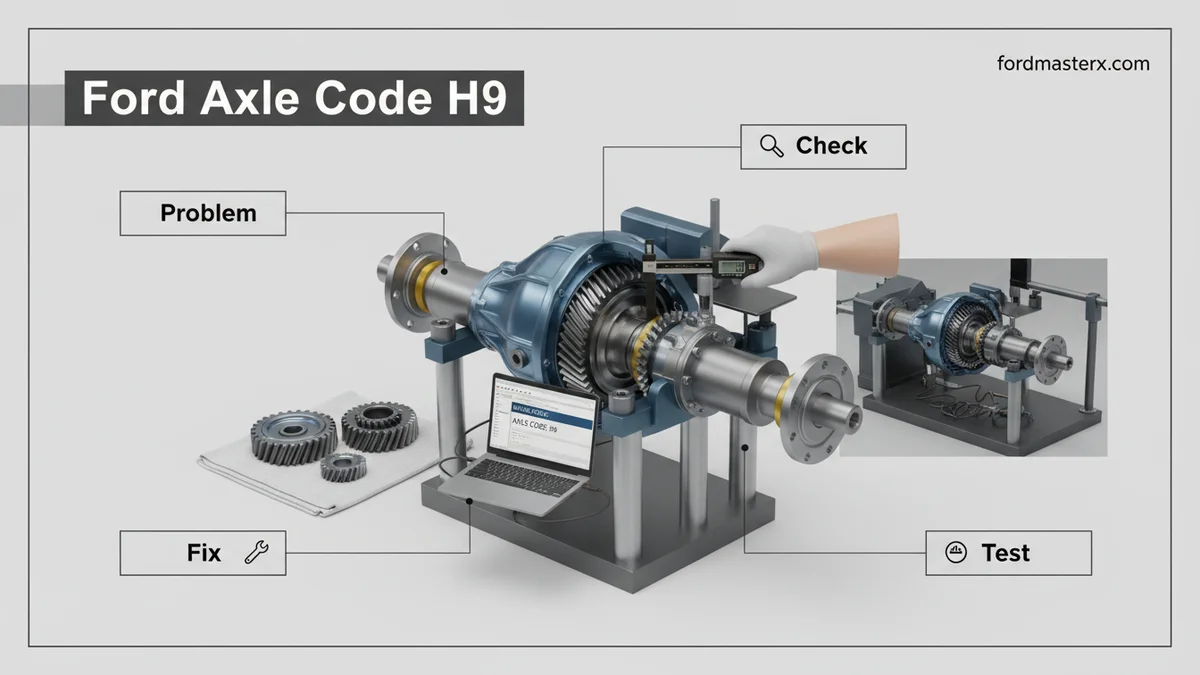
The Ford axle code H9 designates a 3.55 gear ratio with a Limited Slip differential, commonly found in 8.8-inch and 9.75-inch axles on various trucks and SUVs. This specific code is crucial for understanding your vehicle’s performance capabilities and ensuring correct part identification for maintenance or upgrades.
The Ford axle code H9 represents a specific and crucial configuration for your vehicle’s drivetrain, primarily indicating a 3.55 gear ratio paired with a Limited Slip differential. Understanding this code is essential for Ford owners, mechanics, and enthusiasts alike. It allows for accurate vehicle assessment and ensures correct part identification for maintenance or performance upgrades.

Prime for Young Adults — 6 Months Free
Students and 18–24s get six months of Prime free, then half price.
Start 6 Months Free As an Amazon Associate I earn from qualifying purchases.Knowing your axle code helps clarify your vehicle’s capabilities. It prevents potential issues when ordering replacement parts or planning modifications. Now, let us delve deeper into what these specifications truly mean for your Ford vehicle’s performance and capabilities.
Key Takeaways
- H9 signifies a 3.55 gear ratio with Limited Slip.
- Common in Ford 8.8-inch and 9.75-inch axles.
- Locate H9 on door jamb stickers or axle tags.
- Crucial for correct part identification and specs.
- Knowledge of H9 aids performance upgrades.
What Exactly Does Ford Axle Code H9 Mean?

When you encounter the Ford axle code H9, you are specifically identifying a rear axle equipped with a 3.55 gear ratio and a Limited Slip differential. This combination offers a balanced performance profile for many Ford trucks and SUVs. It provides a good mix of towing capability and fuel economy for everyday driving.
Deciphering H9 Gear Ratio
The “3.55” in the H9 code refers to the gear ratio. This means for every 3.55 rotations of the driveshaft, the wheels rotate once. A 3.55 ratio is considered a mid-range gear, providing a compromise between acceleration and top-end efficiency. It is suitable for diverse applications, from daily commuting to moderate towing. .
Understanding Limited Slip
The “H” in H9 signifies a Limited Slip (LS) differential. Unlike an open differential, which sends power to the wheel with the least resistance, a limited-slip unit can transfer power to both wheels. This significantly improves traction, especially in slippery conditions or when one wheel loses grip. . This feature makes the vehicle more capable off-road or in adverse weather.
Common Axle Dimensions
The H9 code is most frequently found in two prominent Ford axle sizes: the 8.8-inch and the 9.75-inch rear axles. These axles are known for their durability and widespread use across the Ford light truck and SUV lineup. For example, a common application for the H9 code is found on the Ford F-150, which benefits from the 3.55 ratio for balanced towing and fuel economy.
Understanding what the H9 code represents is the first step. The next is knowing precisely where to find this critical information on your own Ford vehicle.
How to Locate Your Ford Axle Code H9 Tag
To confirm your vehicle’s specific axle configuration, you must first locate its axle code. This is typically found in one of three primary places on your Ford. Checking these locations ensures you have the correct information for your vehicle.
Checking the Door Jamb
The most common place to find your Ford axle code is on the driver’s side door jamb sticker. This white manufacturer label contains various vehicle specifications. Look for a section labeled “AXLE” or a similar identifier. The code will be a single letter-number combination, such as H9. On many Ford trucks like the F-150, the axle code is printed clearly on the white manufacturer sticker inside the driver’s side door frame. [VISUAL AID NEEDED: example door jamb sticker with ‘AXLE’ section highlighted].
Inspecting the Axle Tag
Another reliable location is a small metal tag attached to the rear axle tube itself. This tag is usually held in place by one of the differential cover bolts. It often provides more detailed information, including the gear ratio and whether it’s limited slip. However, these tags can become rusted or fall off over time. [VISUAL AID NEEDED: example axle tag image].

Audible — Listen Free for 30 Days
One free credit a month and thousands of titles included.
Listen Free for 30 Days As an Amazon Associate I earn from qualifying purchases.Decoding Your VIN
For an official verification, you can use your vehicle’s VIN (Vehicle Identification Number). Many online VIN decoders, including Ford’s official resources or reputable aftermarket sites, can provide a comprehensive build sheet. This sheet will list your vehicle’s original specifications, including the axle code. This method is especially useful if physical tags are missing or unreadable.
Once you have successfully identified your axle code, it is helpful to know which specific Ford models commonly utilized the H9 axle configuration.
7 Ford Models Commonly Featuring the H9 Axle
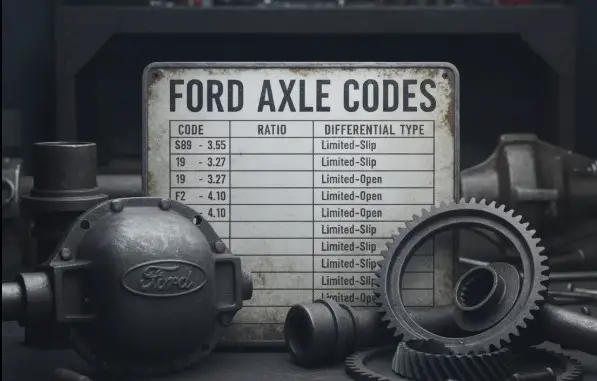
The H9 axle code, with its 3.55 gear ratio and Limited Slip differential, has been a popular choice across several key Ford platforms. These platforms particularly require a balance of towing capacity and daily driving efficiency. This configuration offers versatility for various user needs.
Popular F Series Trucks
Ford’s F-Series trucks, notably the F-150, frequently incorporated the H9 axle. This was a common option in generations from the late 1990s through the mid-2000s. It provided a dependable drivetrain for both work and personal use. Ford F-150s from the late 1990s through the mid-2000s frequently offered the H9 axle as a , versatile option. . The 3.55 gear ratio balanced fuel economy for highway cruising with sufficient torque for towing moderate loads.
Expedition Navigator SUVs
The full-size Ford Expedition and Lincoln Navigator SUVs also utilized the H9 axle. These vehicles benefited from the improved traction of the Limited Slip differential. This was particularly useful for families in varying weather conditions or for light off-road adventures. .
Midsize Ranger Pickups
While less common than in full-size trucks, some configurations of the Ford Ranger midsize pickup also featured the H9 axle. This typically applied to models aiming for a better balance of power and efficiency. It was a good option for those needing moderate hauling capabilities.
E Series Commercial Vans
The durable E-Series commercial vans sometimes came equipped with the H9 axle. These vans often served in roles requiring consistent performance under load. The H9’s combination of a capable gear ratio and enhanced traction suited their commercial applications.
Beyond knowing which vehicles feature the H9, understanding its underlying technical specifications is paramount for maintenance, repair, and potential upgrades.
What Key Specifications Define the H9 Axle?
While the H9 code primarily tells us the gear ratio and differential type, several other key technical specifications further define the axle. These impact everything from parts compatibility to upgrade potential. A deeper understanding ensures correct service and modification.
Primary Axle Sizes
The H9 axle code typically refers to either the Ford 8.8-inch or 9.75-inch rear axle. The “8.8” or “9.75” denotes the diameter of the ring gear, a critical component for strength and durability. The 8.8-inch is prevalent in F-150s and various SUVs, while the 9.75-inch is found in heavier-duty F-150s and some light-duty F-250s.
Audible Premium Plus — Annual Membership
12 audiobook credits up front, plus the full Audible catalogue.
See Annual Plans As an Amazon Associate I earn from qualifying purchases.Rear Axle Spline Count
Spline count refers to the number of splines on the axle shafts where they meet the differential. For the 8.8-inch axle with an H9 code, the common spline count is 28 or 31. The 9.75-inch axle almost exclusively uses a 34-spline count. The 8.8-inch axle often found with H9 code in F-150s typically features a 31-spline count, making it a strong base for performance builds. . Higher spline counts generally indicate a stronger axle shaft.
Common Bolt Patterns
Wheel bolt patterns are also crucial for compatibility with wheels and brakes. Ford trucks and SUVs featuring the H9 axle most commonly use a 5x135mm or 6x135mm bolt pattern for F-150s. Older models or Rangers might have a 5×4.5 inch (5×114.3mm) pattern. . Always verify your specific vehicle’s bolt pattern before purchasing wheels or related components.
Potential Performance Upgrades
The 8.8-inch and 9.75-inch axles, especially with the 3.55 gear ratio and limited-slip differential, are excellent candidates for upgrades. Enthusiasts often consider stronger axle shafts, aftermarket differential covers, or even re-gearing for more specialized applications. The aftermarket support for these axles is extensive, offering many options to enhance performance.
With such detailed technical knowledge, it becomes even more important to distinguish the H9 from other Ford axle codes. Other codes might appear similar but offer different specifications.
H9 Axle Versus Other Common Ford Codes a Comparison

While the H9 code is distinct, Ford utilizes numerous axle codes that can sometimes lead to confusion. This is particularly true when comparing different differential types or gear ratios. Accurate identification prevents costly errors in parts selection.
H9 Versus Open Diff Codes
It is easy to confuse the H9 (3.55 Limited Slip) with codes representing a standard open differential with the same 3.55 ratio. For instance, code “19” often denotes a 3.55 open differential. The key difference lies in the “H” for limited slip. An H9 axle provides superior traction in low-grip situations, which an open differential cannot match. This distinction significantly impacts vehicle handling and capability.
Comparing Similar Limited Slips
Ford uses other “L” codes to indicate limited-slip differentials with different gear ratios. For example, “L9” might indicate a 3.55 ratio, but it could refer to an older or different type of limited-slip mechanism or a conventional limited slip without the “H” prefix. Similarly, you might encounter codes like “L6” for a 3.73 Limited Slip. Each code signifies a unique ratio or differential type. Referring to an official Ford axle code chart for your specific model year is always the best practice.
Why Code Accuracy Matters
Misidentifying your axle code can lead to purchasing incorrect replacement parts like differential kits, gear sets, or even axle shafts. An incorrect differential type will also fail to deliver the expected performance. For example, installing an open differential when expecting a limited slip changes the vehicle’s driving characteristics dramatically. Always double-check your code to ensure proper compatibility and performance. This precision ensures your Ford performs as intended.
Frequently Asked Questions About Ford Axle Code H9
What Does “H9” Mean on a Ford Axle?
The Ford axle code H9 signifies a 3.55 gear ratio combined with a Limited Slip differential. This configuration balances performance and fuel efficiency, offering improved traction over standard open differentials. It is commonly found in Ford trucks and SUVs.
Where Can I Find the H9 Axle Code on My Ford?
You can typically find your Ford axle code on the driver’s side door jamb sticker. Look for the “AXLE” section. Alternatively, check a metal tag attached to the rear axle housing or use an online VIN decoder for your vehicle’s build specifications.
Which Ford Models Commonly Use the H9 Axle?
The H9 axle code is prevalent in various Ford F-Series trucks, such as the F-150. It also appears in SUVs like the Expedition and Navigator, and sometimes in Ranger pickups and E-Series vans. This setup is popular for its versatile performance.
What Are the Benefits of a 3.55 Gear Ratio With Limited Slip?
A 3.55 gear ratio offers a good balance between highway fuel economy and adequate torque for towing or hauling. The Limited Slip differential enhances traction, distributing power to both wheels for better grip in slippery conditions or off-road situations.
Can I Upgrade My H9 Axle?
Yes, the 8.8-inch and 9.75-inch axles, often with the H9 code, have extensive aftermarket support. You can upgrade components like axle shafts, differential covers, or even change gear ratios for specific performance needs. Always consult with a qualified mechanic for modifications.
Understanding Your Ford Axle Code H9 for Optimal Performance
Identifying your Ford axle code H9 correctly is more than just knowing a number. It provides critical insight into your vehicle’s mechanical heart. This knowledge empowers you to make informed decisions about maintenance, repairs, and potential performance enhancements for years to come. Whether you own an F-150 or an Expedition, understanding this code helps unlock its full potential.
Always verify your specific vehicle’s information through official Ford resources or trusted automotive databases. This ensures accuracy when working with such vital components. By understanding your Ford axle code H9, you gain a clearer picture of your vehicle’s capabilities. This helps you maintain or upgrade it effectively, ensuring reliable performance in 2026 and beyond.
Full axle & spec guide: Ford Axle Code Chart (F-150, F-250 & F-350)