Ford Engine Paint Colors by Era and Component
Match classic Ford engine paint colors to the block or valve covers, compare Corporate Blue enamel codes, and choose a finish using original evidence.

Ford engine guides covering EcoBoost 2.7/3.5, 5.4 Triton, 6.7 Powerstroke and all Ford engine families
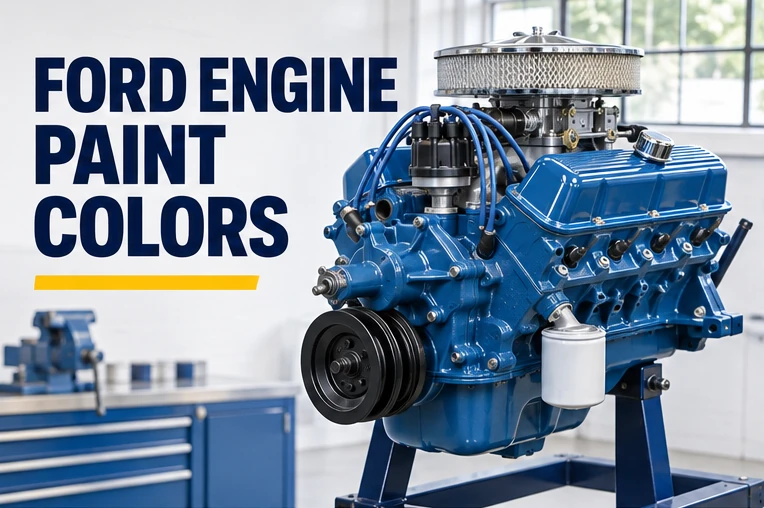
Match classic Ford engine paint colors to the block or valve covers, compare Corporate Blue enamel codes, and choose a finish using original evidence.
The Ford 3.5L V6, both the naturally aspirated Duratec 35 and the turbocharged EcoBoost, times its camshafts with colored chain links aligned to marks on the crankshaft sprocket and the VCT camshaft sprockets. The crankshaft mark is a timing dot, installed facing out. Two different primary chains share this engine family, and they do not…
The F-150 3.5L EcoBoost uses twin parallel turbochargers, not one turbo and not a hot-V layout. Each turbo bolts to its own bank’s exhaust manifold outlet. A shared front-mounted charge air cooler sits between the compressors and the throttle body. Hardware, output and wastegate type all changed by generation. Most pages online still show one…
A 1967 Mustang S-code is any Mustang built with Ford’s 390 cubic inch FE V8, the GT’s only big block. Ford rated it at 320 hp and 427 lb-ft of torque. It used a Holley four-barrel carburetor, not the Autolite some references list. This guide covers the full data plate and VIN breakdown. It covers…
A Ford 4.6L V8 is really three different engines sharing one name: 2V, 3V and 4V. Bank 1 (passenger side) holds cylinders 1 through 4. Bank 2 (driver side) holds 5 through 8, and the firing order is 1-3-7-2-6-5-4-8. Which one you have changes where the PCV valve sits and what the cam design looks…
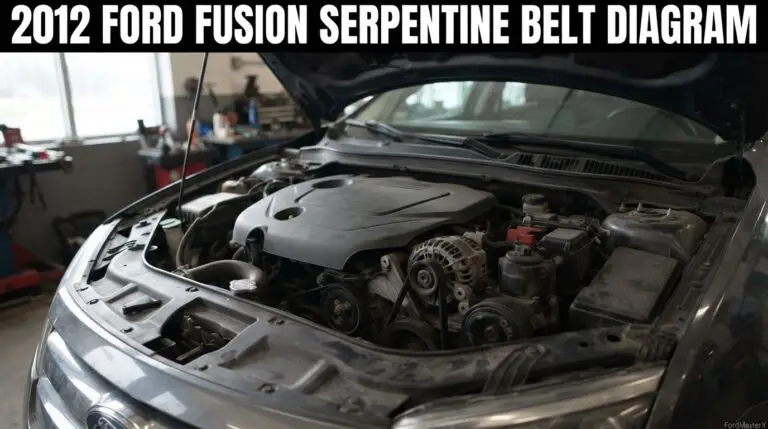
The 2012 Ford Fusion uses four different serpentine belt setups by engine. Belt part numbers, tensioner rotation direction, torque specs and power steering differences, confirmed against Ford’s factory workshop manual.
The 1965 Ford Mustang K-code isn’t just a car; it’s the heartbeat of early American high-performance. While the standard pony car captured the imagination of the public, the K-code variant solidified the Mustang’s credentials on the street and the track. Identifying a genuine factory-built K-code is notoriously difficult in a market flooded with ‘clones’ and…

Experiencing a nagging ‘Check Engine’ light and a noticeable rough idle in your Ford F-150 with the robust 5.4L engine? The P0353 diagnostic trouble code specifically targets an issue with the ignition coil circuit for cylinder #3, a common yet often misunderstood fault that can severely impact your truck’s performance and longevity. This expert guide…

For many Ford owners, the promise of EcoBoost engine technology, lauded for its blend of power and fuel efficiency, has been overshadowed by persistent mechanical issues, leading to significant financial burdens and profound frustration. These defects, ranging from critical engine failures to problematic transmissions, have ignited widespread consumer complaints and, inevitably, substantial legal action. If…
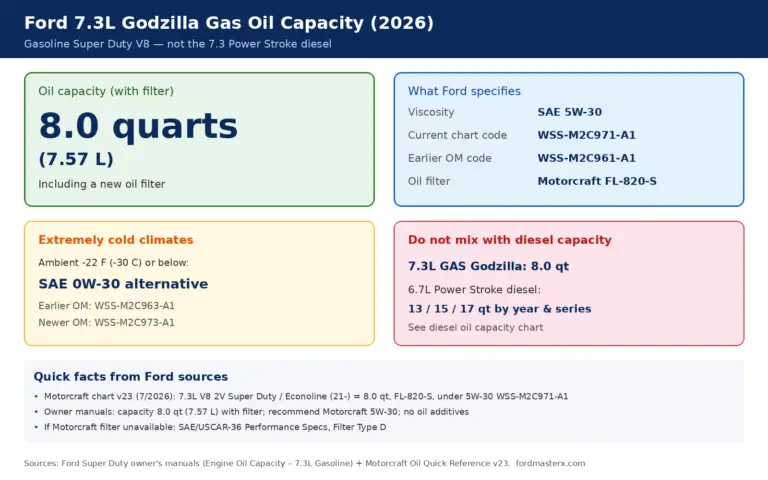
Quick answer: The Ford 7.3L gasoline “Godzilla” V8 takes 8.0 quarts (7.57 L) of SAE 5W-30 with a new filter. Ford’s Motorcraft Oil Quick Reference (v23, 7/2026) lists that fill under WSS-M2C971-A1 with Motorcraft FL-820-S. Earlier Super Duty owner’s manuals print WSS-M2C961-A1 for the same 8.0 qt / 5W-30 fill. This is the gas Super…

The Ford 2.7 EcoBoost V6 has earned a reputation as one of Ford’s most versatile engines—small in size but big on performance. Whether you’re behind the wheel of an F-150, Bronco, or Edge, this engine delivers impressive horsepower, torque, and fuel efficiency. For truck and SUV owners who want reliable towing power, smooth highway driving,…
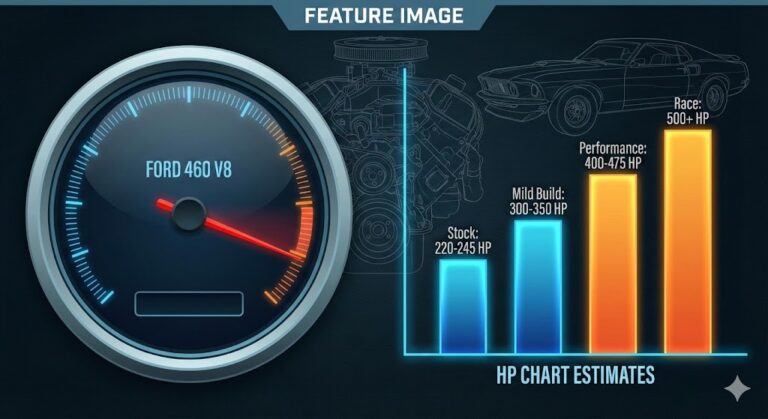
In the pantheon of American automotive engineering, few powerplants command the sheer physical presence and historical weight of the Ford 460. Known internally as the “Lima” engine—named for the Ohio plant where it was forged—and part of the broader “385 Series” family, the 460 cubic inch (7.5L) V8 represents the zenith of Ford’s displacement wars….

Quick answer: Ford FE engines (1958–1976 cars and light trucks) and their FT medium/heavy-truck versions (1964–1978) all share a 4.63 in bore spacing and a 10.17 in deck height. Displacement comes from four strokes (3.30, 3.50, 3.785 and 3.98 in) paired with bores from 3.875 to 4.232 in. The 390 is 4.05 × 3.785 in,…
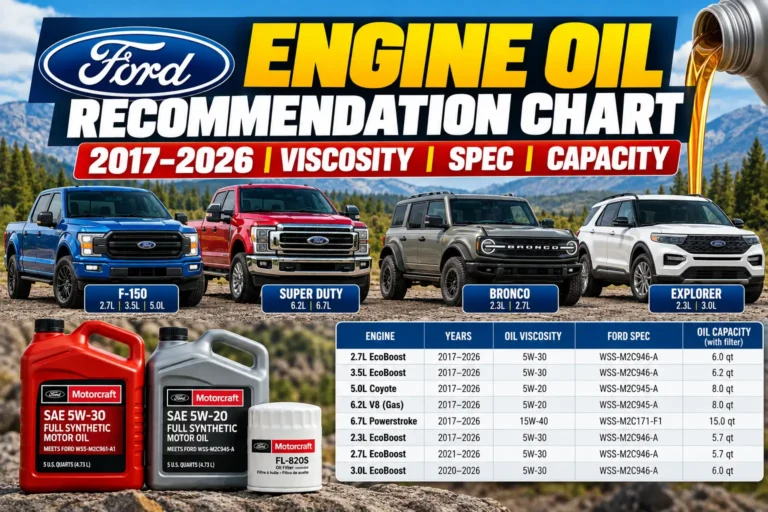
Most modern Ford gas engines take Motorcraft SAE 5W-30 meeting WSS-M2C971-A1: the 2.0L, 2.3L, 2.7L, 3.0L and 3.5L EcoBoost, the 7.3L V8 and, from 2021, the 5.0L V8 in the F-150 and Mustang. The 3.3L V6 and earlier 5.0L V8s use 5W-20 (WSS-M2C970-A1), hybrids and newer 1.5L EcoBoost engines use 0W-20 (WSS-M2C972-A1), the 6.7L Power…
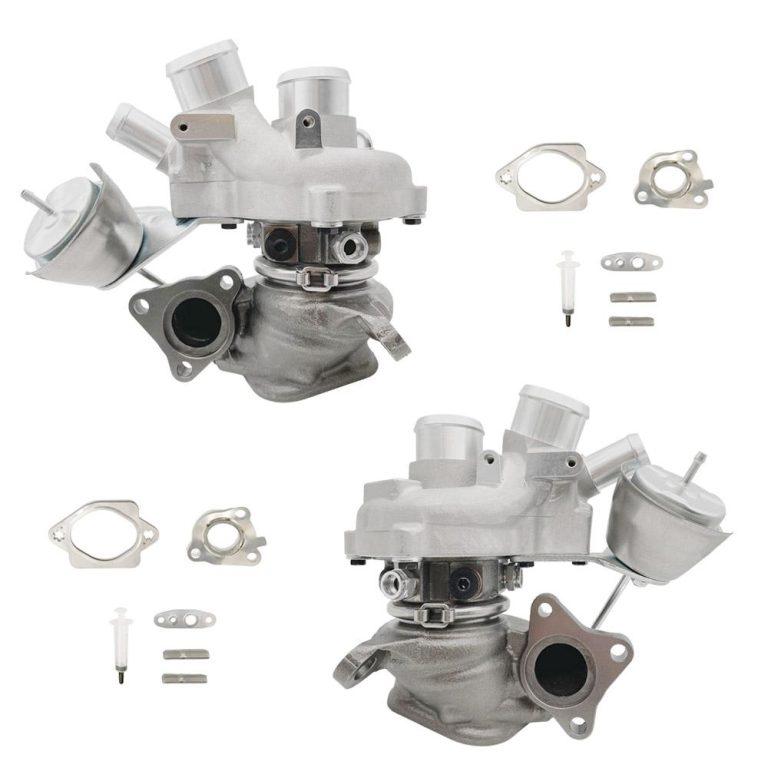
Get an in-depth guide on the cost and details of replacing turbos on a 3.5 Ecoboost; understand the benefits and implications of such replacements.
Dive into our comprehensive guide to 3.5 Ecoboost cam phaser replacement. Packed with step by step instructions, expert insights, and tips for a successful task completion.
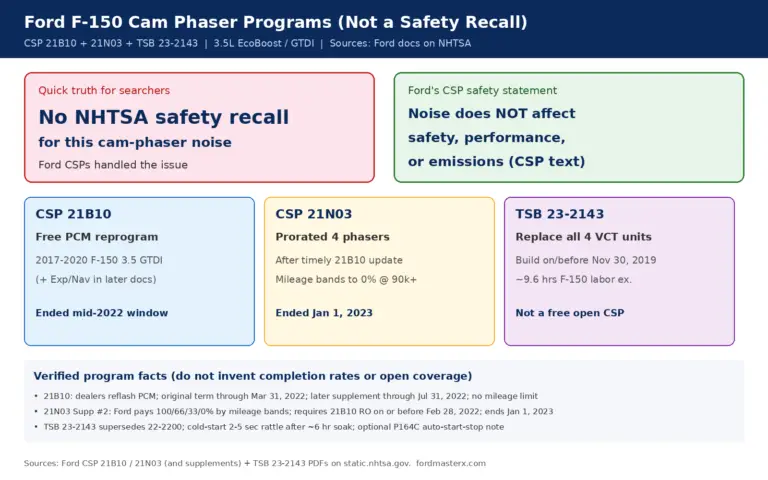
Quick answer: There was no NHTSA safety recall for Ford F-150 cam phasers. What owners call the “cam phaser recall” was Ford Customer Satisfaction Program 21B10 (free PCM reprogram) plus 21N03 (prorated replacement of all four cam phasers / VCT units after 21B10). Coverage applied to certain 2017–2020 F-150 and 2018–2020 Expedition / Navigator trucks…
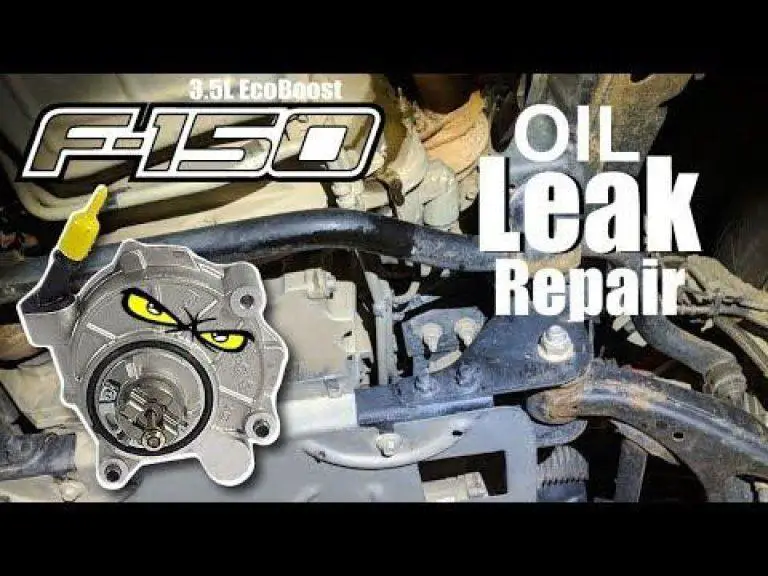
Common oil leaks on Ford 3.5 EcoBoost are often caused by faulty oil pan gaskets, valve cover gaskets, and front crankshaft seals. Oil leaks can cause engine damage and decrease performance if not addressed promptly. Regular maintenance and inspections can help prevent oil leaks. The Ford 3.5 EcoBoost engine is a high-performance, fuel-efficient engine that…
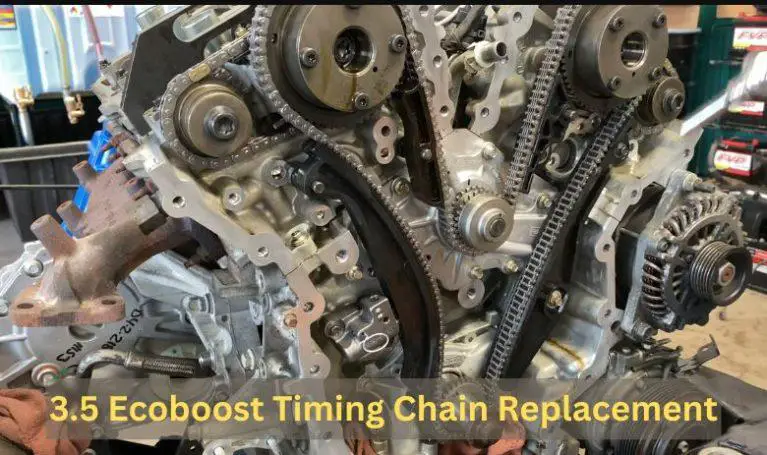
The 3.5 EcoBoost timing chain is responsible for maintaining the synchronous operation of the engine’s valves and pistons. Over time, the timing chain can stretch or wear, leading to engine misfires, reduced power output, or even engine failure. Replacing the primary timing chain involves removing the valve covers and engine front cover to reach the…
Learn about the lifespan of turbos in 3.5 Ecoboost engines. This guide explores factors affecting longevity, symptoms of a failing turbo, and maintenance tips to optimize their lifespan.
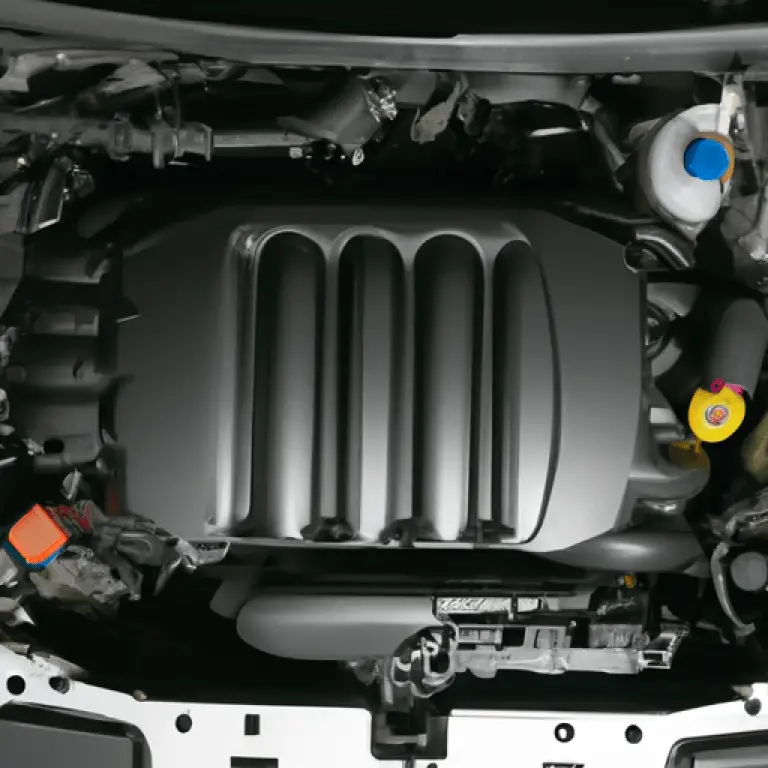
Explore our ultimate guide on the 3.5 Ecoboost PCV valve location, a vital but often overlooked car component. Learn its functions, how to locate, test, and replace it.
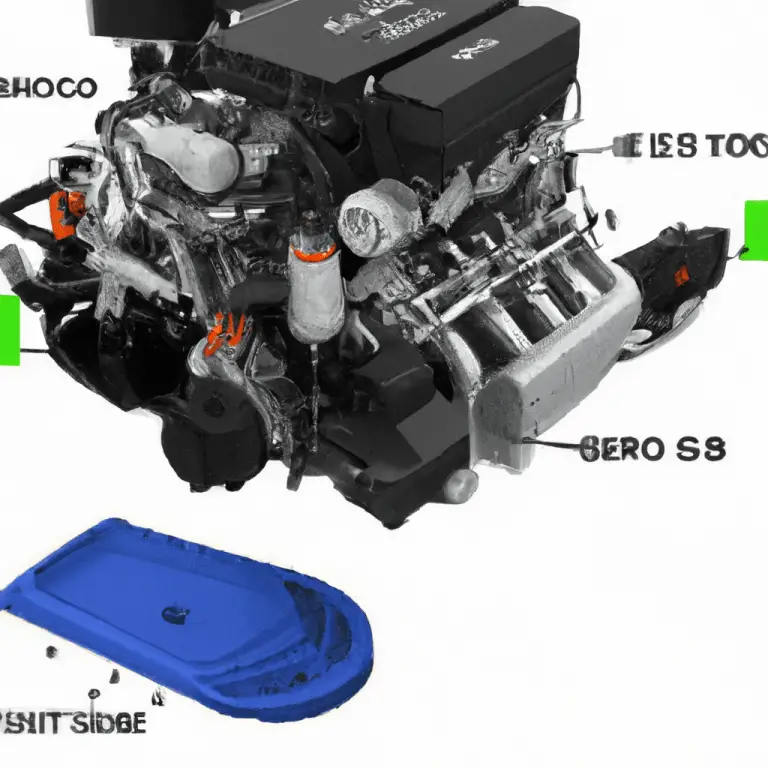
Discover step-by-step instructions on how to locate the 3.5 Ecoboost Map Sensor in Ford vehicles and ensure its efficient performance. Detailed guide with images.