
1965 Ford Mustang K-Code Analyzed for Collectors

The 1965 Ford Mustang K-code isn’t just a car; it’s the heartbeat of early American high-performance. While the standard pony car captured the imagination of the public, the K-code variant solidified the Mustang’s credentials on the street and the track. Identifying a genuine factory-built K-code is notoriously difficult in a market flooded with ‘clones’ and reproduction parts, where the distinction between a standard 289 and the elite “Hi-Po” version can mean tens of thousands of dollars in valuation. This guide provides the expert knowledge required to authenticate, value, and understand the true Hi-Po 289 Mustang.

The Legacy of the 1965 Ford Mustang K-Code
Recommended Best Deal Products



📤 Share Image
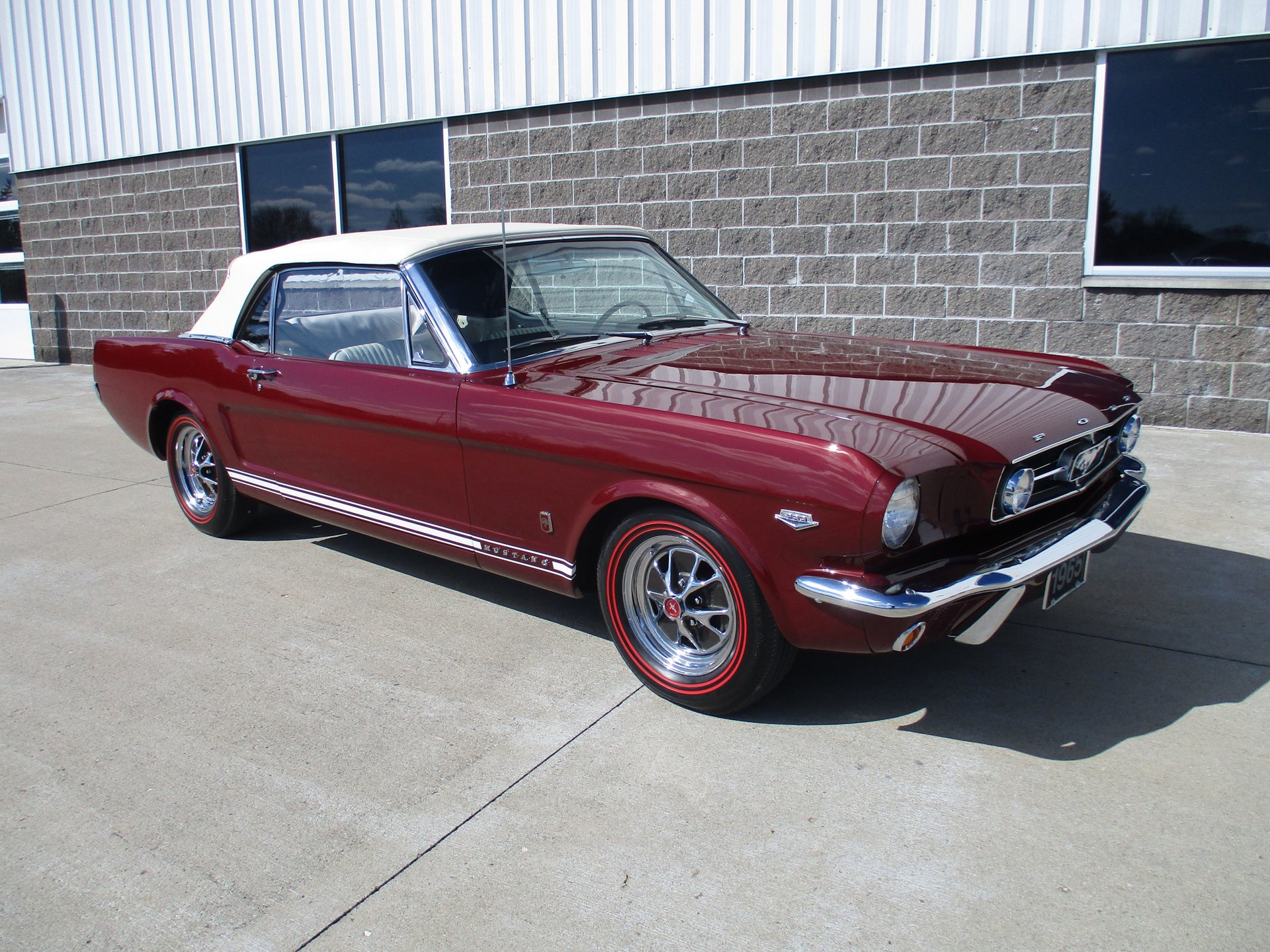
The High-Performance 289 Legacy
The 1965 Ford Mustang K-code, often referred to as the “Hi-Po,” was introduced to satisfy a specific market demand for high-performance capability. While the standard Mustang was a stylish, accessible vehicle, the K-code was the engine that provided the raw mechanical muscle needed to legitimize the model as a serious performance contender. This engine option served as the direct predecessor to the race-bred powerplants found in the legendary Shelby GT350, effectively bridging the gap between a daily commuter and a track-ready machine.

K-Code vs. Standard V8 Performance
It is a common error to conflate the D-code or the more common A-code 289 engines with the K-code. The A-code was a standard 4-barrel V8 offering ample power for the average driver, but it utilized conventional internal components designed for longevity and smooth operation. The K-code, conversely, was a boutique, low-production factory option built with heavy-duty internals intended for sustained high-RPM use. Where an A-code might satisfy the enthusiast, the K-code commands the attention of the serious collector due to its status as a factory-installed performance upgrade.
Technical Specifications of the Hi-Po 289 Engine Bay
Internal Mechanical Upgrades
The mechanical integrity of the 1965 Ford Mustang K-code is unparalleled for its era. The engine featured a specialized rotating assembly, including a stronger crankshaft and connecting rods, designed to handle the stresses of a 10.5:1 compression ratio. Most critically, the transition to solid-lifter camshafts allowed the engine to sustain high revolutions per minute without the “valve float” common in hydraulic lifter setups of the period.
Drivetrain and Exhaust Efficiency
Beyond the engine block, the K-code required a robust drivetrain to transfer its 271 horsepower to the road. This included the inclusion of the heavy-duty 9-inch rear axle, which provided the structural durability necessary for performance driving. The following table summarizes the primary performance differences that set the K-code apart from its siblings.
How to Authenticate a Real 1965 Ford Mustang K-Code
📋
Authentication Procedures
The first step in verification is the Vehicle Identification Number (VIN). A genuine 1965 Ford Mustang K-code will feature the letter ‘K’ in the 5th position of the string. If the character is ‘A’, ‘D’, or ‘C’, it is not a factory-built K-code, regardless of the components currently installed in the vehicle.
Inspect the engine block for the specific Hi-Po casting numbers. These are typically located near the starter motor or behind the flywheel. Professionals look for the specific assembly date codes that match the production window of the chassis. Documentation, such as the original build sheet or an owner’s history, acts as the final confirmation of authenticity.
Common Pitfalls When Buying a 1965 Ford Mustang K-Code
Avoiding the Clone Trap
The market is heavily saturated with “clones”—standard Mustangs that have been retrofitted with high-performance parts. A seller might present a vehicle featuring the iconic Hi-Po air cleaner, dual-point distributor, or even the correct badges as a “factory K-code.” However, without the ‘K’ in the VIN, these parts are merely aftermarket upgrades. Relying on visual identification alone is the most common reason collectors overpay for non-authentic vehicles.
Do not assume that the presence of high-performance internal parts guarantees a K-code. Many restorers build “Hi-Po” clones that perform as well as, or better than, the original. While these cars have value, they do not possess the collector-grade pedigree of a verified factory K-code.
Documentation and Market Value
Documentation is the currency of the collector car market. For a 1965 Ford Mustang K-code, the difference in valuation between a car with an ironclad paper trail and one without can be substantial. Always prioritize vehicles that include original sales invoices, Marti Reports, or service records that explicitly mention the high-performance option. Missing paperwork is a significant red flag in high-stakes transactions.

Audible — Listen Free for 30 Days
One free credit a month and thousands of titles included.
Listen Free for 30 Days As an Amazon Associate I earn from qualifying purchases.By The Numbers
Horsepower Rating
Compression Ratio
Expert Final Assessment
The 1965 Ford Mustang K-code remains a cornerstone of the American performance era. Its scarcity and specific factory-installed engineering make it a desirable, yet frequently misunderstood, collector vehicle. Understanding that this model is defined by its VIN and verified internal build—not by individual aftermarket accessories—is the foundation of any informed investment.
Verification requires a rigorous check of the VIN, engine stamping, and original documentation. Clones are pervasive, and the risk of mistaking a well-built standard Mustang for an authentic Hi-Po 289 is significant for the uninitiated. To protect your investment, always consult with a certified Mustang appraiser who has specific experience with K-code history before finalizing any purchase. Proper due diligence will ensure that you acquire a genuine piece of Ford’s high-performance heritage.
1965 Ford Mustang K-code: Frequently Asked Questions
What does the K in K-code refer to?
The ‘K’ is the engine code character found in the fifth position of the Ford VIN for 1965 Mustangs. It denotes that the vehicle was factory-equipped with the 289 cubic-inch High-Performance ‘Hi-Po’ V8 engine, which was built with heavy-duty components and specialized internal specifications distinct from the standard 289 options available at the time.
Is a K-code Mustang significantly faster than a standard 289?
Yes, it is notably faster. The K-code was rated at 271 horsepower, compared to the 200 or 225 horsepower found in standard 289 engines. This increase is primarily due to higher compression, more aggressive camshaft profiles, and better-breathing exhaust headers. While not a modern supercar, it provides a much more responsive and spirited driving experience than the base models.
Did all K-code Mustangs come with manual transmissions?
For the 1965 model year, the vast majority of K-code Mustangs were equipped with the heavy-duty 4-speed manual transmission. While automatic transmissions were technically available later in the production cycle, the K-code was engineered specifically for drivers seeking maximum performance, making the 4-speed the industry standard for this configuration.
How many 1965 K-code Mustangs were produced?
Production numbers for the 1965 K-code Mustang are relatively low compared to the total Mustang output for that year. Records indicate that approximately 7,273 units were produced with the Hi-Po engine. Because of this limited run, these vehicles are considered highly collectible and are sought after by professionals who value historical accuracy and rarity.
Does a K-code Mustang require specialized maintenance?
Due to the solid-lifter camshaft design, the K-code engine requires more frequent valve lash adjustments than a hydraulic-lifter engine. To ensure reliable performance, owners should perform regular oil changes with ZDDP-rich oil to protect the flat-tappet camshaft. Following an expert maintenance schedule is essential to preserve the engine’s integrity and long-term value.