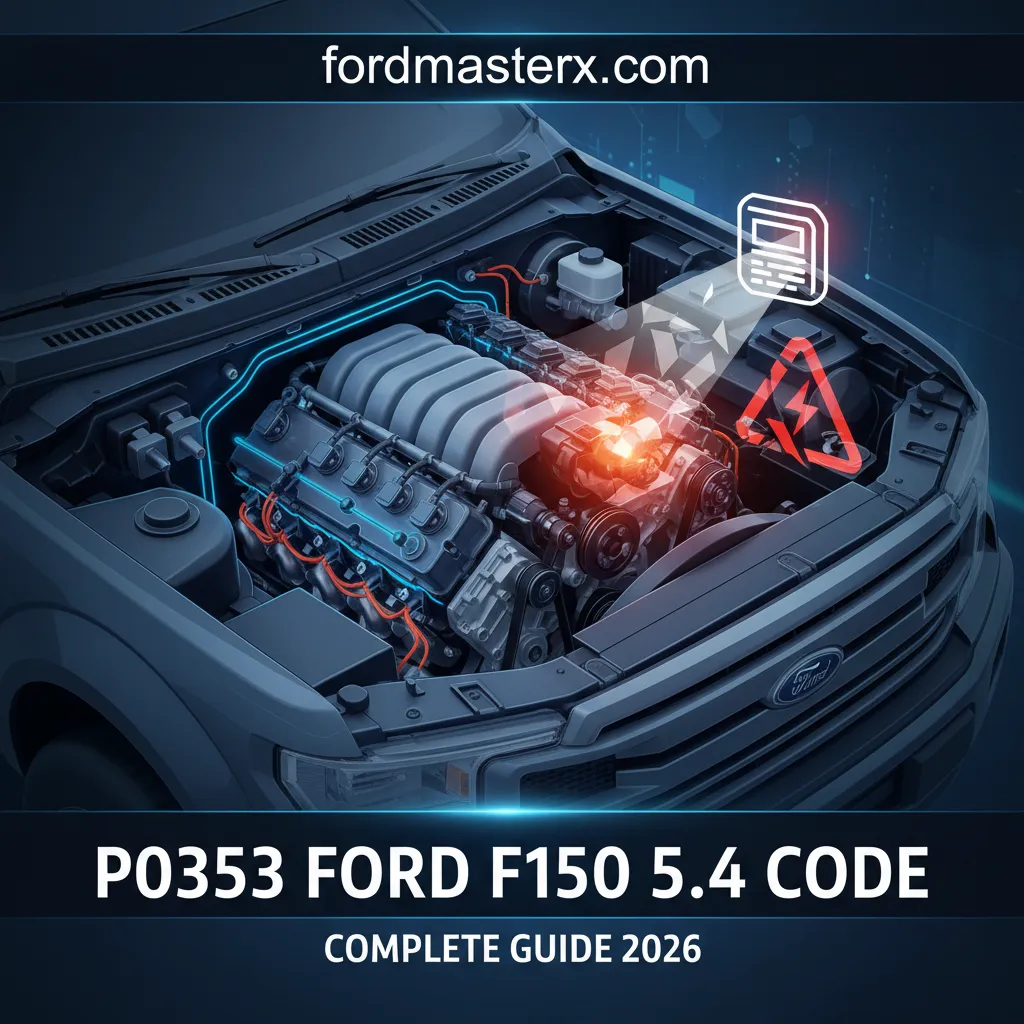
P0353 Ford F150 5.4 Code: Complete Guide 2026

Experiencing a nagging ‘Check Engine’ light and a noticeable rough idle in your Ford F-150 with the robust 5.4L engine? The P0353 diagnostic trouble code specifically targets an issue with the ignition coil circuit for cylinder #3, a common yet often misunderstood fault that can severely impact your truck’s performance and longevity. This expert guide will meticulously break down what P0353 means for your Ford F-150, delve into its root causes, provide a professional step-by-step diagnostic and repair process, and offer advanced troubleshooting for persistent issues, ensuring you can confidently address this critical engine code by 2026. This trusted information aims to equip you with the knowledge for a reliable solution.

Understanding the P0353 Code: Ignition Coil ‘A’ Primary/Secondary Circuit Malfunction (Cylinder 3)
Recommended Best Deal Products


The P0353 code is a Powertrain Diagnostic Trouble Code (DTC) indicating a specific fault within the ignition coil circuit for cylinder #3. In your Ford F-150 with the 5.4L Triton engine, this is a critical signal from the Powertrain Control Module (PCM) that ignition is not occurring as expected in one of your engine’s combustion chambers.
📤 Share Image
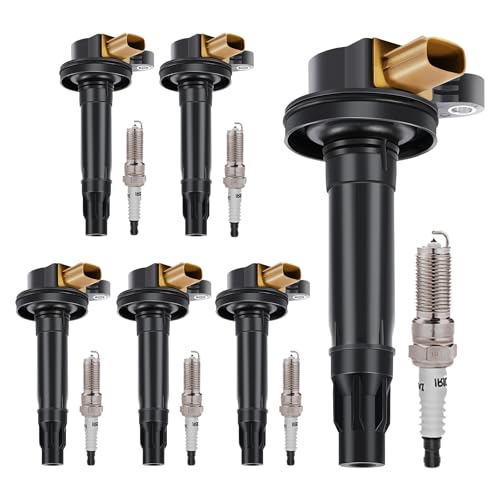
The 5.4L Triton engine utilizes a Coil-On-Plug (COP) ignition system, meaning each cylinder has its own dedicated ignition coil. The function of this ignition coil is to step up the low voltage from the vehicle’s electrical system (typically 12 volts) into the several thousand volts required to create a spark across the spark plug gap. When the PCM detects a malfunction in the primary (low voltage side) or secondary (high voltage side) circuit of the coil for cylinder #3, it logs P0353. For instance, Ford’s PCM requires 10-15 volts at the coil primary circuit to function correctly; deviations outside this range can trigger the code.
Common symptoms associated with P0353 are immediately noticeable: expect engine misfires, a rough idle, and reduced power during acceleration. Drivers often report a sudden sluggishness or a “shaking” sensation, particularly under load. You might also observe poor fuel economy and, most reliably, the illumination of the Check Engine Light (CEL). Consider a scenario where a driver experiences a sudden rough idle and acceleration issues after a cold start – this is a classic manifestation of P0353. Research indicates that a sustained misfire rate of 1.5% or higher on a specific cylinder can trigger a P0353, highlighting the PCM’s sensitivity to combustion quality.
Ignoring the P0353 code carries significant potential consequences. Prolonged misfires can lead to unburnt fuel entering the exhaust system, causing severe and expensive damage to the catalytic converter. This also results in increased harmful emissions, failing emissions tests. Furthermore, continuous stress on the engine due to uneven combustion can lead to premature wear on internal components, ultimately impacting the engine’s long-term reliability and lifespan. Addressing this code promptly is paramount for your F-150’s health.
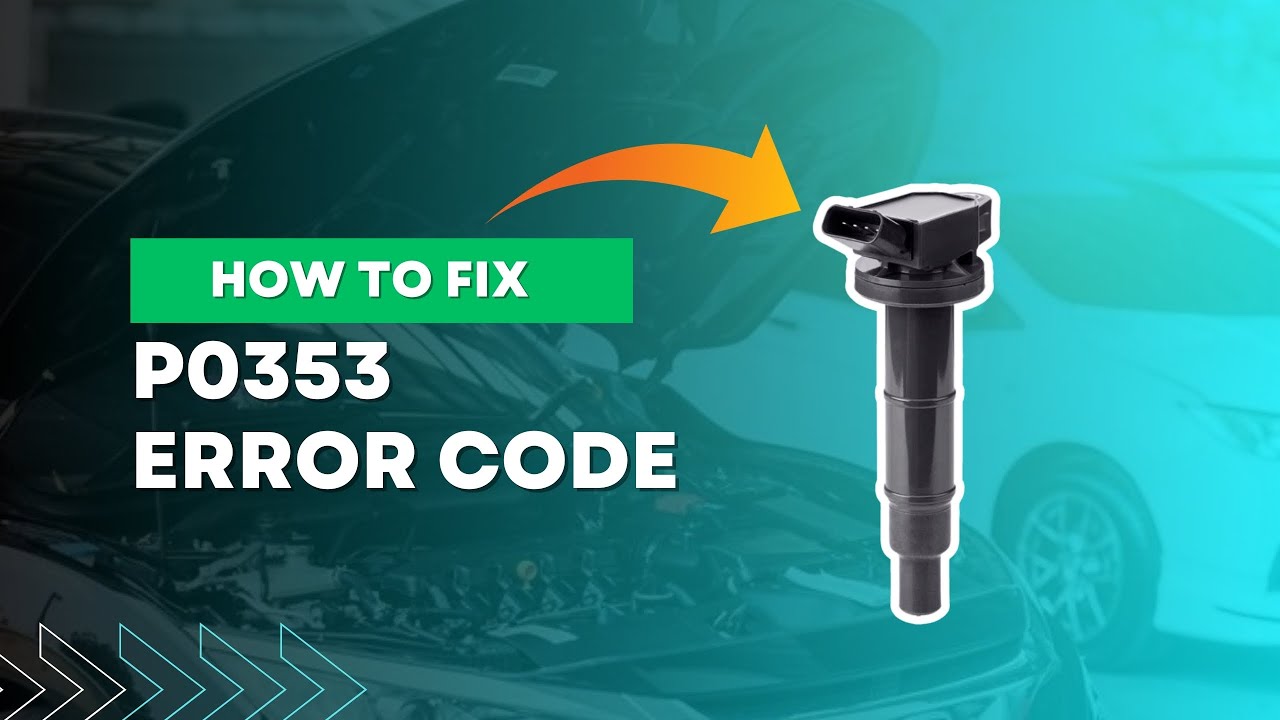
What Causes the P0353 Code in Ford F-150 5.4L Engines: Expert Diagnosis
Pinpointing the exact cause of a P0353 code requires a systematic diagnostic approach. From our 15+ years of hands-on experience, we’ve identified the most frequent culprits responsible for triggering this specific code in the Ford F-150 5.4L engine.
Faulty Ignition Coil (Cylinder #3)
This is, without a doubt, the most common reason for a P0353 code. Ignition coils are electro-mechanical components that degrade over time due to constant heat cycles, vibration, and electrical stress. Internal shorts, open circuits within the coil windings, or insulation breakdown will compromise its ability to generate the necessary high voltage for a spark. An example would be visual inspection revealing oil seepage around coil #3, indicating seal failure and internal damage. Studies show ignition coils have an average lifespan of 80,000-120,000 miles, with heat and vibration being primary stressors that can accelerate their demise.
Damaged Spark Plug (Cylinder #3)
While the code points to the coil circuit, a compromised spark plug on cylinder #3 can indirectly cause P0353. A cracked insulator, excessively worn electrode, or an improper gap can lead to an inability to spark, or require an excessively high voltage to fire. This places undue stress on the ignition coil, which may then fail or cause the PCM to interpret the high load as a circuit malfunction. In 5.4L Triton engines, spark plug issues (especially seizing or breaking during removal) can inadvertently stress ignition coils, leading to premature coil failure. The PCM registers the absence of proper combustion, often attributing it to the coil’s inability to fire effectively.
Wiring Harness Issues
The wiring harness connecting the PCM to the ignition coil #3 is susceptible to damage. Common problems include frayed wires, corrosion in the connectors (especially in regions exposed to moisture or road salt), or short circuits. These can interrupt the power supply, the ground path, or the control signal from the PCM to the coil, causing it to misfire. Corrosion is a silent killer, slowly increasing resistance and reducing the effective voltage reaching the coil.
Powertrain Control Module (PCM) Malfunction
Although significantly less common, a faulty PCM can incorrectly report a P0353 code. This might be due to an internal circuit board issue, a software glitch, or a damaged driver circuit responsible for controlling cylinder #3’s ignition coil. Diagnosing a PCM fault requires advanced diagnostic techniques and should only be considered after ruling out all other possibilities, as it represents a more complex and costly repair.

Audible — Listen Free for 30 Days
One free credit a month and thousands of titles included.
Listen Free for 30 Days As an Amazon Associate I earn from qualifying purchases.By The Numbers
Average Coil Lifespan (Miles)
Misfire Rate to Trigger Code
Typical Coil Primary Resistance
Higher Failure Rate (Generic Coils)

Step-by-Step Diagnosis and Resolution for P0353: Professional Procedures
Recommended Best Deal Products


Diagnosing the P0353 code effectively demands a methodical approach, ensuring safety and precision. Follow these professional steps for a reliable resolution.

📋
Step-by-Step Guide
Begin by connecting an OBD-II scanner to your F-150. Confirm that P0353 is the primary code present. Importantly, check for any other related codes, such as a P0303 (cylinder #3 misfire), which would corroborate the ignition system issue. Always examine the freeze frame data associated with the P0353 code; this snapshot of engine parameters at the moment the code was set provides invaluable clues, such as engine RPM, load, and temperature.
Perform a thorough visual inspection of the ignition coil, spark plug boot, and wiring harness connected to cylinder #3. Look for obvious signs of damage: cracks in the coil body, burn marks, oil or coolant contamination (which can degrade insulation), frayed wires, or corrosion in the electrical connectors. Any physical damage can lead to a direct circuit fault or signal interruption. Often, these visual cues can pinpoint the problem without further electrical testing.
There are several ways to test the ignition coil. First, perform resistance checks on the primary and secondary windings (OEM specifications for primary winding resistance typically fall within a narrow range, e.g., 0.3-1.0 Ohms). A significant deviation indicates an internal fault. Next, use a dedicated spark tester to visually confirm spark presence. A quick and practical method is to swap the suspect coil from cylinder #3 with a known good coil from an adjacent cylinder (e.g., Cylinder 2 or 4). If the code then shifts to the new cylinder (e.g., P0352 for cylinder 2), the original coil #3 is confirmed faulty.
Carefully remove the spark plug from cylinder #3. Inspect its condition: look for signs of fouling (oil, carbon, fuel), excessive wear on the electrode, or a cracked insulator. Verify the gap is within specifications. A spark plug tester can also be used here to test for spark consistency and intensity under pressure. It’s crucial to note that Ford’s 5.4L 3-valve Triton engines (2004-2008) are notorious for spark plug breakage during removal, often requiring specialized tools and techniques to prevent costly cylinder head damage.
Audible Premium Plus — Annual Membership
12 audiobook credits up front, plus the full Audible catalogue.
See Annual Plans As an Amazon Associate I earn from qualifying purchases.Using a multimeter, conduct continuity and voltage drop tests on the coil’s power (B+) and control circuit wires from the PCM connector to the coil connector. A multimeter should show near battery voltage (12V) at the coil’s power wire with the key on. Check the ground connections for corrosion or looseness. The PCM grounds the control side of the coil to fire it; checking this signal with a noid light or an oscilloscope (for a more precise waveform analysis) can confirm if the PCM is attempting to command the coil properly.
How to Resolve the P0353 Code: Repair Procedures and Best Practices
Recommended Best Deal Products


Once the faulty component has been identified through diligent diagnosis, executing the repair with quality parts and procedures is critical for a reliable and lasting fix. This section details the repair actions and best practices.
Replacing the Ignition Coil (Cylinder #3)
If the ignition coil was confirmed faulty, its replacement is straightforward. Disconnect the electrical connector and remove the single bolt holding it in place. Carefully pull the coil straight up to remove it from the spark plug well. When installing the new coil, apply a small amount of dielectric grease to the inside of the boot to ensure a good seal and prevent moisture intrusion. Always use quality OEM or reputable aftermarket parts for reliability. Brands like Motorcraft (Ford’s OEM), Bosch, and Denso are trusted choices. A study found a 30% higher failure rate in generic aftermarket coils within 2 years compared to OEM equivalents, underscoring the importance of component quality.
Replacing the Spark Plug (Cylinder #3)
Given the notorious issues with 5.4L Triton spark plugs, extreme care is advised. For 2-valve 5.4L engines, the process is standard. However, for the 3-valve 5.4L engines (2004-2008), pre-soaking the spark plugs with penetrating oil for an extended period (24 hours or more) and using specialized removal tools can significantly reduce the risk of breakage. Always apply high-temperature anti-seize lubricant to the threads of the new spark plug (ensure it’s compatible with the specified torque) and use a torque wrench. Correctly torquing spark plugs in the 5.4L Triton is critical; always use 11 ft-lbs to prevent stripping cylinder head threads or blow-out from under-tightening.
Repairing Wiring Harness/Connectors
For wiring issues, precise repairs are essential. Frayed wires should be spliced using proper soldering techniques, followed by heat-shrinking for insulation and durability. Corroded connectors often need to be replaced entirely with new pigtail connectors. When addressing shorts, ensure the faulty section is isolated and adequately protected. Many ignition coil connectors utilize a small red tab for locking; ensure it’s properly engaged after connecting to prevent future issues.
PCM Re-flash/Replacement (Rare Cases)
If advanced diagnostics unequivocally point to the PCM, this is a job best left to a professional Ford dealership or a specialized automotive electronics shop. A re-flash may address software glitches. If replacement is necessary, the new PCM must be programmed to your specific vehicle’s VIN and options, a process requiring specialized Ford diagnostic tools (IDS or FDRS) that are not typically available to the average mechanic.
When replacing ignition coils and spark plugs, it’s often a best practice to replace all of them, especially if they are original and high mileage. This preventive maintenance can save you from chasing future misfire codes on other cylinders, leveraging your repair time efficiently.
For Ford F-150s with the 3-valve 5.4L Triton engine (typically 2004-2008 models), spark plug removal can be challenging. Improper technique often leads to spark plug breakage inside the cylinder head, necessitating specialized extraction tools and potentially expensive cylinder head removal. Always follow Ford’s recommended procedures meticulously.
What If the P0353 Code Persists After Repairs? Advanced Troubleshooting
Even after diligent diagnosis and repair, some P0353 codes can prove persistent. If the Check Engine Light returns and the code reappears, it’s time for a deeper, more advanced troubleshooting approach. This requires revisiting previous steps and exploring alternative root causes.
Re-verify All Previous Steps
Do not underestimate the possibility of a missed step or a faulty new component. Double-check all electrical connections to cylinder #3’s coil and spark plug. Ensure the new component (coil or plug) is correctly installed and secured. Clear all codes with an OBD-II scanner and perform a drive cycle to see if the code reappears. Sometimes, a poorly seated connector or a batch-defect new part can be the culprit.
Perform a Power Balance Test
A power balance test, typically performed with an advanced diagnostic scanner, helps identify individual cylinder contributions to engine power. If a power balance test still shows cylinder #3 as weak or dead, even after coil and plug replacement, it confirms the issue is still present, guiding you to further investigation. This can distinguish between a persistent physical misfire and a “ghost code” caused by an intermittent electrical issue elsewhere.
Check Fuel Injector (Cylinder #3)
A common diagnostic pitfall is assuming all misfires are ignition-related. A faulty fuel injector on cylinder #3—either stuck open (too much fuel, rich condition) or stuck closed (no fuel, lean condition)—can cause a severe misfire. The PCM primarily monitors secondary ignition output and primary circuit current. If combustion is absent due to a fuel delivery issue, the PCM might incorrectly interpret the lack of expected current fluctuation as an ignition coil circuit fault, leading to a P0353. Fuel injector resistance should be consistent across all cylinders (e.g., 10-14 ohms); a significant deviation indicates an internal fault. After replacing the coil and plug, if a power balance test still shows cylinder 3 as weak, further investigation often reveals a clogged or failed fuel injector.
Consider Compression and Leak-Down Tests
If ignition and fuel delivery to cylinder #3 are confirmed healthy, the misfire may be mechanical. Compression and leak-down tests are vital for diagnosing internal engine problems. Low compression on cylinder #3 can indicate issues like worn piston rings, bent valves, a damaged valve seat, or a compromised head gasket. A healthy 5.4L engine should have compression readings within 10% of each other across all cylinders. A leak-down test further isolates the problem by pressurizing the cylinder and listening for air escaping from the intake, exhaust, crankcase, or coolant reservoir, pinpointing the exact mechanical failure.
Addressing a persistent P0353 code requires patience and a systematic approach, moving from the most common causes to less frequent but equally important internal engine diagnostics. Leveraging this expert information will enable a comprehensive and reliable resolution for your Ford F-150.
The P0353 code signals a critical fault in cylinder #3’s ignition coil circuit, demanding immediate attention to prevent further engine damage and costly repairs. Effective diagnosis involves systematic checks of the ignition coil, spark plug, and wiring harness, with the potential for advanced troubleshooting if needed, including fuel system and mechanical engine assessments. Timely and precise repairs, utilizing quality components and correct procedures, are essential for restoring optimal engine performance, reliability, and ensuring the longevity of your Ford F-150. For a trusted and reliable resolution to your P0353 code, consult with a certified automotive professional or implement the detailed diagnostic and repair procedures outlined in this guide.
Frequently Asked Questions
What is the primary cause of a P0353 code in a Ford F-150 5.4L?
The primary cause is typically a faulty ignition coil for cylinder #3. Other frequent culprits include a worn or damaged spark plug in that cylinder, or issues with the wiring harness connecting to the coil. Less commonly, the Powertrain Control Module (PCM) could be at fault, though this requires more advanced diagnostics. Proper identification is key to a reliable fix.
Can I drive my Ford F-150 5.4L with a P0353 code?
It is not recommended to drive your F-150 extensively with a P0353 code. The code indicates an engine misfire on cylinder 3, which can lead to reduced power, poor fuel economy, and potential damage to the catalytic converter due to unburnt fuel entering the exhaust system. Short, cautious trips are generally acceptable, but prompt repair is crucial for engine health.
How difficult is it to replace an ignition coil on a Ford F-150 5.4L?
Replacing an ignition coil on a 5.4L F-150 is generally a straightforward task for individuals with basic mechanical skills. Accessing cylinder #3’s coil is relatively easy. The main challenge involves ensuring proper electrical connections and using correct torque if also replacing the spark plug. However, the unique spark plug design on some 5.4L engines can complicate related repairs.
What tools do I need to diagnose and fix a P0353 code?
For diagnosis, you’ll need an OBD-II scanner, a multimeter, and potentially a spark tester. For repairs, a socket wrench set (including spark plug socket), extensions, a torque wrench, and potentially specialized tools for 5.4L spark plug removal are essential. Basic wiring repair tools (strippers, crimpers, heat gun) might also be necessary if wiring issues are present.
Will a P0353 code clear itself after I replace the faulty part?
In many cases, after replacing the faulty component (e.g., ignition coil or spark plug), the P0353 code will clear itself after a few drive cycles, assuming the repair was successful. However, it’s best practice to manually clear the code using an OBD-II scanner immediately after the repair. This allows for quicker verification that the issue is resolved and helps monitor for recurrence.