
5 Inch Straight Pipe 6.7 Powerstroke: Best Kits & Benefits

Upgrading to a 5-inch straight pipe is the most effective way to achieve a deep, aggressive exhaust note and significantly lower Exhaust Gas Temperatures (EGTs) on a 6.7 Powerstroke. Because this modification removes factory emissions components, a DPF-delete capable tuner is strictly required for the vehicle to operate.
Prime Day Pick
Limited-time Prime Day price. Check current discount on Amazon.
🎯 Key Takeaways
- A 5-inch pipe provides a deeper, throatier tone than a 4-inch system.
- DPF-delete tuning is mandatory to prevent engine limp mode.
- 304 Stainless steel is the best choice for rust-prone, snowy climates.
- Reducing backpressure leads to faster turbo spool-up and lower EGTs.
- Verify your specific wheelbase and cab size to ensure proper kit fitment.
If you are looking to maximize the sound and cooling efficiency of your 6.7 Powerstroke, a 5-inch straight pipe is the definitive upgrade. Moving from the stock diameter to a massive 5-inch setup significantly reduces backpressure and drops Exhaust Gas Temperatures (EGTs) by up to 200 degrees during heavy towing. The best kits currently on the market are manufactured by MBRP, Flo-Pro, and Jamo Performance, each offering specific benefits regarding fitment and material durability.
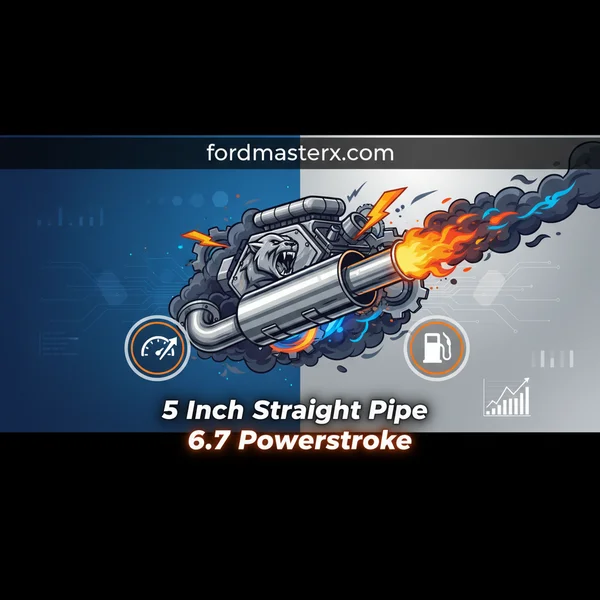
Choosing the right kit depends on your specific truck configuration and local climate. Whether you drive a Crew Cab Long Bed (CCLB) or a standard Regular Cab, these manufacturers provide modular designs that include extension pipes to fit all wheelbases. By removing the restrictive factory components and installing a straight-through 5-inch pipe, you allow your turbo to spool faster while achieving that deep, gutteral roar that a 4-inch pipe simply cannot replicate.
Prime Day Pick
Limited-time Prime Day price. Check current discount on Amazon.
Top 5-Inch Straight Pipe Exhaust Kits for 6.7 Powerstroke
When shopping for a 5-inch kit, the primary goal is finding a system that fits your truck without requiring custom fabrication or welding. Most high-quality kits are designed as “bolt-on” solutions that utilize the factory hanger locations. Here are the leading brands that dominate the 6.7 Powerstroke market:

MBRP (The Industry Standard)
MBRP is often the first choice for 6.7 owners because of their massive distribution network and price-point variety. Their 5-inch systems are known for precise mandrel bends that ensure consistent airflow. MBRP kits generally include all necessary clamps and hangers, making them a favorite for DIY installers.
Prime Day Pick
Limited-time Prime Day price. Check current discount on Amazon.
- Installer Series: Most affordable, made from aluminized steel.
- XP Series: Mid-tier, utilizing 409 stainless steel for better corrosion resistance.
- Armor Pro: The premium 304 stainless option for trucks in the rust belt.
Flo-Pro and Jamo Performance
Flo-Pro has built a reputation specifically in the diesel world for having the most “forgiving” fitment. Their kits often include extra-long extension pipes that you can cut to length based on your specific wheelbase. Jamo Performance, on the other hand, is the go-to brand for enthusiasts who prioritize aesthetics. Jamo kits are frequently praised for their high-quality welds and the polished finish of their stainless steel options.
Fitment and Wheelbase Considerations
Your 6.7 Powerstroke’s wheelbase determines which extension pipes you will use from the kit. Most 5-inch straight pipe kits are “universal” for the following configurations:
Prime Day Pick
Limited-time Prime Day price. Check current discount on Amazon.
- Regular Cab 8′ Bed: 137-inch wheelbase (requires significant cutting of the extension pipe).
- SuperCab 6.75′ Bed: 142-inch wheelbase.
- Crew Cab 6.75′ Bed: 156-inch wheelbase.
- Crew Cab 8′ Bed: 172-inch wheelbase (uses the full length of the provided pipes).
Material Comparison: Aluminized vs. 409 vs. 304 Stainless Steel
The material you choose for your 5-inch straight pipe is the biggest factor in the kit’s price and its lifespan. While every material provides the same performance and sound benefits, their reaction to road salt and humidity varies drastically. You should choose your material based on where you live and how long you plan to keep the truck.
Aluminized Steel (Budget Friendly)
Aluminized steel is the most popular choice for owners on a budget or those living in dry, western climates. It consists of heavy-duty steel coated in an aluminum-silicon alloy to resist corrosion. However, once the coating is scratched or chipped by road debris, the underlying steel will begin to rust. In states that use heavy road salt, an aluminized 5-inch pipe may only last 3 to 5 years.
Prime Day Pick
Limited-time Prime Day price. Check current discount on Amazon.
409 Stainless Steel (The Middle Ground)
409 stainless is a “ferritic” steel that contains enough chromium to resist structural failure from rust, though it will develop a brownish surface oxidation over time. It is significantly more durable than aluminized steel. If you want a kit that will last the life of the truck but don’t care if the pipe stays shiny, 409 is the most cost-effective long-term solution.
304 Stainless Steel (The Premium Choice)
304 stainless steel is the highest quality material available for a 6.7 Powerstroke exhaust. It has a high nickel and chromium content, making it virtually impervious to rust and corrosion. You can polish 304 stainless to a mirror finish, and it will stay that way even after years of exposure to harsh winters. Most Jamo and high-end MBRP kits utilize 304 stainless for their top-tier offerings.
- Best for dry climates: Aluminized Steel.
- Best for longevity on a budget: 409 Stainless Steel.
- Best for show trucks and salt-heavy roads: 304 Stainless Steel.
Why Diameter Matters for Materials
Because a 5-inch pipe has more surface area than a 4-inch pipe, it is more susceptible to “ringing” or “tinny” sounds if the metal is too thin. High-quality 16-gauge 409 or 304 stainless steel provides a thicker wall that helps resonate that deep, low-frequency rumble that 6.7 Powerstroke owners crave. Avoiding “cheap” unbranded kits ensures you get the wall thickness necessary to prevent exhaust drone in the cab.
Performance Benefits: EGT Reduction and Turbo Spool-Up Improvements
While the aggressive exhaust note is usually the first thing owners notice, the internal performance gains are where the 5-inch straight pipe truly shines. By replacing the restrictive factory emissions equipment with a massive 5-inch diameter tube, you are essentially removing a “cork” from your 6.7 Powerstroke’s throat. This allows the engine to move air more efficiently, which is the secret to diesel longevity and Stroke engine history and specifications”>power.

Drastic Reduction in Exhaust Gas Temperatures (EGTs)
High EGTs are the silent killer of diesel engines, especially when towing heavy loads or running aggressive tunes. A 5-inch straight pipe provides a much larger volume for hot gases to expand and escape. Because the exhaust can exit the system faster, heat doesn’t soak back into the cylinder heads and turbocharger. Many drivers report a 150°F to 200°F drop in peak EGTs after making the switch.
- Better Towing Reliability: Lower temps mean you can pull grades without constantly watching your pyrometer.
- Engine Longevity: Reduced heat stress protects your valves and head gaskets from premature failure.
- Thermal Efficiency: The engine runs cooler overall, often leading to slightly better fuel economy during highway cruising.
Enhanced Turbo Spool-Up and Response
The 6.7 Powerstroke utilizes a sophisticated Variable Geometry Turbo (VGT). This turbo relies on exhaust pressure to spin the turbine. By eliminating backpressure with a 5-inch pipe, the turbo can “spool up” much faster. You’ll notice that the lag between hitting the pedal and feeling the torque is significantly reduced.
- Immediate Throttle Response: The truck feels lighter on its feet during city driving and merging.
- The Signature Whistle: Without the mufflers and filters, the turbo’s natural whistle becomes much more audible and distinct.
- Increased Peak Flow: At high RPMs, the 5-inch diameter ensures the engine isn’t fighting its own exhaust to produce power.
Essential Requirements: Tuning, Fitment, and Wheelbase Considerations
Before you purchase a 5-inch kit, you need to understand that this isn’t a simple “plug and play” modification like a cold air intake. Because you are modifying the exhaust architecture of a modern diesel, there are several technical requirements that must be met to keep the truck running correctly.
The Necessity of Custom Tuning
If you install a straight pipe on a 6.7 Powerstroke without a recalibrated ECM, the truck will immediately enter “Limp Mode.” The factory computer expects to see specific pressure readings from the DPF and sensors. You must use a custom tuner (like an EZ LYNK or SCT) to bypass these sensors and adjust the engine parameters for the new airflow.
- Sensor Bypassing: Tuning tells the computer to ignore the missing EGT and NOx sensors.
- Optimized Mapping: Proper tunes take advantage of the 5-inch flow to maximize horsepower and torque.
- Transmission Tuning: Many owners also opt for “TCM” tuning to help the transmission handle the increased power.
Fitment and Wheelbase Specifics
Not all 6.7 Powerstroke trucks have the same frame length. Whether you have a Regular Cab, SuperCab, or Crew Cab with a long or short bed will dictate which kit you need. Most high-quality 5-inch kits are designed as “universal fit” for all wheelbases, meaning they include an extra length of pipe that you may need to trim during the installation process.
- Cab and Bed Configuration: Always verify your wheelbase (e.g., 156″ or 172″) before ordering.
- Hanger Locations: 2011-2016 models and 2017+ models have different hanger positions; ensure your kit matches your specific year range.
- Spare Tire Clearance: 5-inch pipes are bulky. You may need to slightly adjust your spare tire heat shield to prevent rubbing or rattling.
Conclusion
Upgrading to a 5-inch straight pipe on your 6.7 Powerstroke is one of the most transformative modifications you can make. It solves the issue of restrictive backpressure, significantly lowers EGTs, and provides that iconic, deep diesel growl that every truck enthusiast craves. While it requires the addition of a custom tuner and careful attention to your truck’s wheelbase, the rewards in performance and driving enjoyment are well worth the effort.
Next Steps: First, verify your local regulations regarding exhaust modifications. Once you’re ready, select a high-quality aluminized or stainless steel kit that matches your truck’s year and cab configuration. Don’t forget to pair your hardware with a reputable tuning platform to ensure your Powerstroke runs as smooth as it sounds!
Ready to unlock your truck’s full potential? Start browsing our top-rated 5-inch kits today!
❓ Frequently Asked Questions
How does a 5-inch straight pipe affect Exhaust Gas Temperatures (EGTs)?
By removing the restrictive DPF and muffler, exhaust gases exit the engine with significantly less backpressure. This leads to a notable drop in EGTs, which protects the turbocharger and improves engine longevity, especially when towing heavy loads.
What is the difference between MBRP, Flo-Pro, and Jamo kits?
MBRP is widely available and budget-friendly, while Flo-Pro is highly regarded for its precise fitment and heavy-duty hangers. Jamo is often preferred by those looking for premium stainless steel options and high-end finishes for their 6.7 Powerstroke.
Is a 5-inch pipe harder to install than a 4-inch pipe?
The installation process is similar, but 5-inch pipes have tighter clearances around the frame and spare tire. You may need to spend more time adjusting the pipe position to ensure it doesn’t rattle against the truck’s chassis.
Will a 5-inch straight pipe cause excessive ‘drone’ in the cab?
Because it is a larger, open pipe, there will be more interior noise than stock. However, many 6.7 owners find the 5-inch drone more pleasant than the 4-inch because the sound is a lower, more melodic frequency.
Can I install this on a 2023 or 2024 Ford 6.7 Powerstroke?
Fitment for the newest models is specialized, and tuning options are currently more restricted and expensive. It is vital to check with a performance specialist to ensure your specific ECM version can be tuned for a straight pipe.
Does the straight pipe kit include the downpipe?
Most standard kits are ‘downpipe-back,’ meaning they start after the factory downpipe. You can purchase a ‘turbo-back’ system or a separate 4-inch downpipe to maximize flow from the turbo outlet to the tailpipe.