What Do Headers Do on a Truck? Power Gains & Benefits

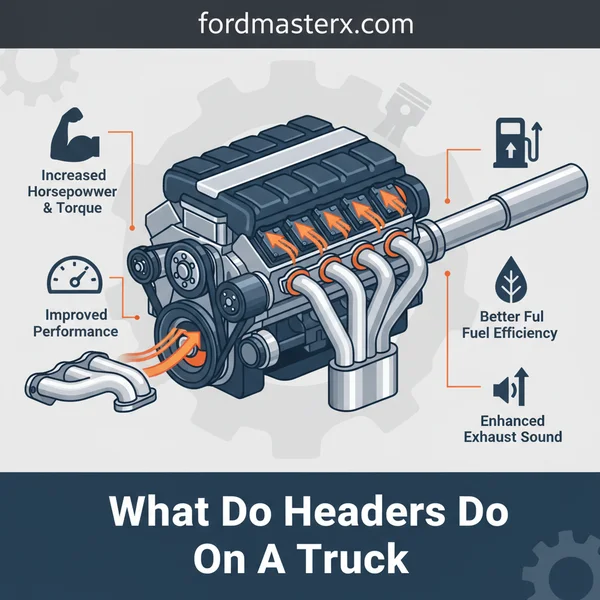
Aftermarket headers improve truck performance by eliminating exhaust backpressure and enhancing scavenging through individual primary tubes. Unlike restrictive factory manifolds, headers allow the engine to breathe more efficiently, resulting in significant increases in horsepower, torque, and a deeper exhaust note.
Prime Day Pick
Limited-time Prime Day price. Check current discount on Amazon.
🎯 Key Takeaways
- Headers use individual tubes to prevent exhaust gases from colliding and creating backpressure.
- Exhaust scavenging creates a vacuum that pulls spent gases out of cylinders faster.
- Expect performance gains ranging from 10 to 25 horsepower on most truck engines.
- Headers are typically made of thin-walled steel, which amplifies the engine’s natural sound.
- Ceramic-coated headers help manage increased engine bay temperatures compared to stock cast-iron.
Exhaust headers are the most effective way to unlock restricted power in your truck’s engine by optimizing how it “exhales.” While your factory exhaust manifold is designed for cheap manufacturing and noise suppression, aftermarket headers focus purely on efficiency and flow. By giving each cylinder its own dedicated pipe, you eliminate the internal “traffic jam” of exhaust gases that usually robs your truck of potential horsepower and torque.
For a truck owner, this upgrade matters practically because it changes how your engine handles a load. Whether you are towing a heavy trailer or merging onto a busy highway, headers allow the engine to breathe better under stress. This leads to more responsive throttle input, cooler operating temperatures, and a noticeable increase in pulling power where you need it most in the RPM range.
Prime Day Pick
Limited-time Prime Day price. Check current discount on Amazon.
The Science of Scavenging: How Headers Optimize Exhaust Flow
The primary goal of a header is to reduce backpressure. In a standard engine, backpressure acts like a wall that the piston must push against to clear out burnt gases. When you reduce this resistance, your engine spends less energy pushing air out and more energy pushing your truck forward. However, the real “magic” of a header isn’t just about size—it is about a phenomenon called scavenging.

Eliminating Backpressure and Pulse Interference
Inside a factory manifold, all cylinders dump their exhaust into one cramped chamber simultaneously. This creates a chaotic environment where the pressure wave from one cylinder can actually push back against the exhaust leaving another cylinder. Headers solve this by using individual, tuned-length tubes for each exhaust port. This separation ensures that each “pulse” of gas has a clear, unobstructed path to the collector, preventing interference and reducing the workload on your pistons.
Prime Day Pick
Limited-time Prime Day price. Check current discount on Amazon.
- Individual Runners: Each cylinder gets a dedicated pipe to prevent gas collision.
- Smoother Transitions: Mandrel-bent tubes maintain a consistent diameter to prevent bottlenecks.
- Reduced Pumping Losses: The engine wastes less horsepower trying to clear the combustion chamber.
The Vacuum Effect: Exhaust Scavenging Explained
High-performance headers utilize the kinetic energy of moving gas to create a vacuum effect known as scavenging. As a high-velocity pulse of exhaust travels down a header tube, it leaves a low-pressure zone (a partial vacuum) behind it. If the header is designed correctly, this vacuum reaches the exhaust valve just as it opens for the next cycle. This literally pulls the remaining exhaust out of the cylinder and helps draw in a fresh charge of air and fuel, significantly boosting combustion efficiency.
Head-to-Head: Factory Cast-Iron Manifolds vs. Performance Headers
When you look at a factory manifold next to a set of aftermarket headers, the physical differences are jarring. Most trucks come from the factory with “log-style” manifolds made of heavy cast iron. These are designed to be compact and durable, but they are notoriously restrictive. Performance headers, usually made from stainless or mild steel, prioritize the path of least resistance to maximize gas velocity.
Prime Day Pick
Limited-time Prime Day price. Check current discount on Amazon.
Restrictive Designs and Heat Retention
Factory manifolds are thick and bulky, which helps dampen engine noise but causes two major problems: weight and heat. Cast iron holds onto heat much longer than the thin-walled tubing used in headers. This heat soaks into the engine bay, which can raise intake temperatures and reduce overall air density. Furthermore, the interior of a cast manifold is often rough and “pitted,” creating turbulence that slows down the exhaust flow before it even reaches the downpipe.
- Cast Iron: Heavy, retains heat, and features a rough internal surface.
- Log Style: Short, abrupt turns that force exhaust pulses to crash into each other.
- Durability vs. Flow: Built to last 200,000 miles without cracking, but at the cost of 15-25 horsepower.
Precision Engineering for Maximum Velocity
Aftermarket headers use mandrel-bent tubing to ensure the pipe diameter never shrinks, even in tight bends. While a factory manifold might have sharp 90-degree turns that act like a brick wall for airflow, headers use long, sweeping curves. This keeps the exhaust gas moving at a high velocity. In the world of truck performance, velocity is king; the faster you move the air out, the faster you can bring new power in. By replacing a 30-pound cast-iron restriction with a lightweight, tuned header, you are fundamentally changing the volumetric efficiency of your engine.
Prime Day Pick
Limited-time Prime Day price. Check current discount on Amazon.
This improved flow doesn’t just add peak horsepower at high RPM. For truck owners, the real benefit is the shift in the torque curve. Because the engine doesn’t have to fight its own exhaust, you often see a significant gain in low-end torque. This makes the truck feel lighter on its feet and much more capable when you are hauling a heavy payload up a steep grade.
Performance Impacts: Horsepower, Torque, and Fuel Efficiency Gains
When most truck owners look into headers, they are chasing the numbers. By streamlining the exhaust flow, you are effectively allowing your engine to work less to “exhale.” This efficiency directly translates into more power making it to the ground. While results vary based on your engine size and other modifications, the performance shift is usually immediate and noticeable.

Unlocking Hidden Horsepower and Torque
The primary benefit of a header upgrade is the increase in horsepower and torque. Stock manifolds often create a “backlog” of exhaust gases that push back against the cylinders. High-quality headers eliminate this backpressure through a process called scavenging. As exhaust pulses move rapidly through the individual tubes, they create a vacuum effect that pulls the next pulse out of the engine even faster.
- Low-End Torque: Long-tube headers are particularly famous for boosting low-end torque, which is essential for trucks used for towing or hauling heavy loads.
- Top-End Horsepower: Shorty headers or tuned long-tubes help the engine breathe better at high RPMs, giving you that extra “push” when passing on the highway.
- Average Gains: Most truck owners can expect a gain of 10 to 25 horsepower, depending on whether they choose shorty or long-tube designs.
The Fuel Efficiency Connection
It might seem counterintuitive that adding power can save fuel, but headers can actually improve your MPG. When your engine doesn’t have to fight against backpressure, it operates more efficiently. If you maintain a steady driving style and don’t keep your foot on the floor to hear the new exhaust note, you may see a slight increase in fuel economy because the engine is pumping more freely.
Secondary Effects: Exhaust Tone and Heat Management Considerations
Beyond the raw performance data, headers change the personality of your truck. They alter how it sounds and how it manages the intense heat generated during the combustion process. These “side effects” are often what make headers one of the most rewarding modifications for enthusiasts.
Tuning Your Truck’s Voice
If you want your truck to sound like a powerhouse, headers are the way to go. Because the tubing is typically thinner than a heavy cast-iron manifold, you will hear more of the mechanical “rhythm” of the engine. The sound becomes crisper, more defined, and significantly more aggressive under acceleration.
- The “Rumble” Factor: Headers tend to provide a deeper, more resonant tone compared to the muffled, choked sound of stock manifolds.
- Material Matters: Stainless steel headers often produce a brighter, “pingier” sound, while thicker-walled ceramic-coated headers offer a more muted, refined growl.
- Drone Control: Be aware that headers will increase the overall volume of your exhaust system, so pair them with a good muffler to avoid unwanted cabin drone.
Managing Under-Hood Temperatures
One critical consideration when installing headers is heat management. Stock manifolds are thick and hold heat well, but aftermarket headers have more surface area and can radiate significant heat into the engine bay. This can potentially affect nearby components like spark plug wires, brake lines, or plastic clips.
Practical Tip: To keep your engine bay safe, consider ceramic-coated headers. This coating acts as a thermal barrier, keeping the heat inside the tubes and moving it out the back of the truck rather than letting it soak into your engine bay. Alternatively, using high-quality heat shields or specialized wire boots can prevent your new power from melting your existing hardware.
The Bottom Line on Truck Headers
Adding headers to your truck is one of the most effective ways to bridge the gap between “stock” and “high-performance.” By improving exhaust scavenging, you unlock significant gains in horsepower and torque while giving your engine a much-needed efficiency boost. Beyond the power, you get the added benefit of a deep, aggressive exhaust note that makes your truck stand out from the crowd.
If you are ready to take the next step, start by researching whether long-tube or shorty headers fit your specific truck model and local emissions laws. Once you have a set in mind, consider a ceramic coating to keep those under-hood temperatures in check. Your truck has plenty of hidden potential—it’s time to let it breathe and experience the power for yourself!
❓ Frequently Asked Questions
How does exhaust scavenging work in truck headers?
Scavenging occurs when high-velocity exhaust pulses move through a primary tube, creating a low-pressure vacuum behind them. This vacuum effectively ‘sucks’ the next exhaust pulse out of the cylinder, reducing the engine’s workload and increasing efficiency.
Why are factory exhaust manifolds considered restrictive?
Factory manifolds are usually heavy cast-iron ‘logs’ that dump all exhaust gases into one common chamber. This causes the gases to collide and create backpressure, forcing the engine to work harder to push exhaust out of the cylinders.
Can headers help with towing and hauling?
Absolutely. By increasing low-end torque, especially when using long-tube headers, the engine can move heavy loads more easily, which reduces strain during acceleration and hill climbs.
Do headers increase engine bay temperatures?
Yes, because steel headers are thinner than cast-iron manifolds, they radiate more heat. Many truck owners opt for ceramic coatings or heat wraps to keep engine bay temperatures under control and protect nearby components.
Are headers street legal in all states?
Not necessarily. In states with strict emissions like California, headers must have a CARB (California Air Resources Board) Executive Order number to be legal for street use.
What are the common materials used for truck headers?
The most common materials are stainless steel for corrosion resistance and mild steel for budget-friendliness. Many are finished with a ceramic coating to provide heat insulation and prevent rust over time.