Ford F-150 Transmission Fluid Change Cost: 2024 Price Guide

A professional Ford F-150 transmission fluid change typically costs between $180 and $350 at independent shops, while dealerships can charge $250 to $500 or more. The total price is heavily influenced by whether your truck has the 6-speed or 10-speed transmission and if you choose a simple drain or a full flush.
🎯 Key Takeaways
Recommended Best Deal Products

- Expect to pay $180-$350 at independent shops for standard fluid service.
- DIY kits generally cost between $60 and $120 for parts and fluid.
- The 10R80 10-speed transmission requires more expensive Mercon ULV fluid.
- A full transmission flush is $100-$200 more expensive than a drain and fill.
- Servicing every 30,000-60,000 miles prevents multi-thousand dollar transmission failures.
You should expect to pay between $180 and $350 for a professional transmission fluid change at an independent shop, or $250 to $500+ at a Ford dealership. If you choose to handle the job yourself, the cost of materials typically ranges from $60 to $120. These prices vary based on your specific model year, the type of fluid required, and whether you are performing a simple pan drop or a full machine flush.

Prime for Young Adults — 6 Months Free
Students and 18–24s get six months of Prime free, then half price.
Start 6 Months Free As an Amazon Associate I earn from qualifying purchases.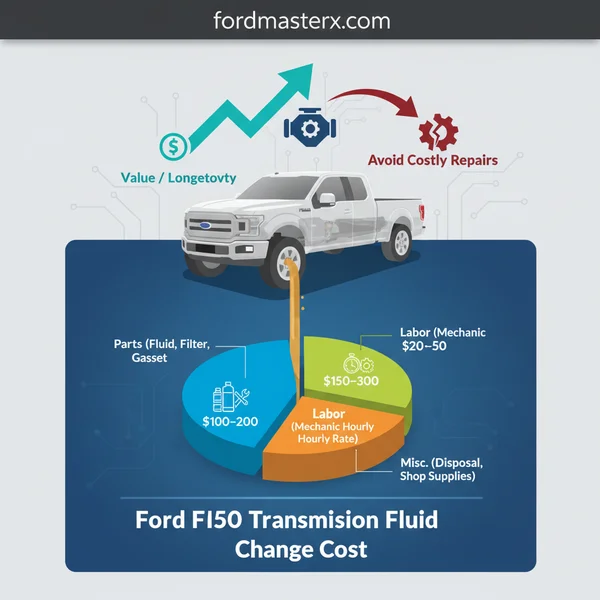
Staying on top of this service is vital for the longevity of your Ford F-150. Your transmission generates significant heat, especially when towing or hauling heavy loads, which causes the fluid to break down over time. Fresh fluid ensures smooth shifting and protects the internal components from premature wear. Spending a few hundred dollars now prevents a total transmission failure that could cost you upwards of $5,000 in the future.
Cost Breakdown: DIY vs. Independent Shops vs. Dealerships
The total price you pay depends largely on who is turning the wrench. Labor rates are the biggest variable, but the quality and markup of the transmission fluid also play a significant role in the final invoice.

Professional Service: Independent Shops and Dealerships
Most F-150 owners opt for professional service to avoid the mess and ensure the fluid levels are precisely calibrated. Here is what you can expect to pay at different service centers:
- Independent Mechanics ($180–$350): These shops usually offer the best balance of quality and value. Labor rates typically range from $90 to $150 per hour. They may use aftermarket fluids like Valvoline or Castrol that meet Ford’s specifications, which helps keep the price down.
- Ford Dealerships ($250–$500+): Dealerships charge a premium for their specialized knowledge and OEM Motorcraft parts. While more expensive, they use the exact fluid formulated for your 6R80 or 10R80 transmission. They are also more likely to have the high-end machinery required for a total system flush rather than a simple drain.
- Quick Lube Centers ($150–$250): These facilities are often the cheapest professional option, but they may not always change the transmission filter. Always verify if the filter is included in their quoted price.
The DIY Route: Savings and Necessary Supplies
If you have a set of jack stands and a drain pan, you can save a significant amount of money. The DIY cost is strictly for parts and fluid, which generally breaks down as follows:
- Transmission Fluid: $50–$90 (Typically 6 to 12 quarts depending on the service depth).
- Replacement Filter: $15–$30.
- Pan Gasket (if not reusable): $10–$20.
- Total DIY Cost: $75–$140.
Doing it yourself allows you to choose high-performance synthetic fluids, which can provide better heat resistance than the standard fluid used at budget shops. However, keep in mind that many newer F-150s lack a traditional dipstick, making the refilling process more technical and time-consuming.
Ford F-150 Transmission Service Made Easy: Your Essential Action Plan
Maintaining the transmission in your Ford F-150 is the single most important thing you can do to ensure your truck reaches the 200,000-mile mark and beyond. Whether you are driving a classic 11th gen or a modern 10-speed 14th gen, transmission repairs are notoriously expensive, often ranging from $3,500 to $6,000 for a total rebuild. By performing a fluid and filter change yourself, you can keep your costs between $120 and $200, compared to the $300 to $500 a dealership might charge. This guide will walk you through the process of a “pan drop” service, which is the safest way to refresh your fluid without the risks associated with high-pressure machine flushes.
Step 1: Assessing Costs and Gathering Specific Supplies
What you need: Vehicle manual, 6 to 8 quarts of Motorcraft Mercon LV or ULV fluid (depending on your year), a replacement transmission filter, a new pan gasket (if not reusable), and a budget of approximately $130.
Instructions: Before turning a single wrench, you must verify your specific fluid requirements. Most F-150s from 2009–2017 use Mercon LV, while the newer 10-speed transmissions (2017–present) require Mercon ULV. Buying in bulk (cases of 12) online is often 30% cheaper than buying individual quarts at an auto parts store. A DIY kit including the filter and fluid typically costs $120–$150. If you take it to a local shop, expect to pay for 2 hours of labor ($200) plus a markup on parts ($150). Doing it yourself saves you nearly $250 in labor and markups while ensuring the job is done with high-quality OEM parts.
Pro Tip: Avoid “universal” transmission fluids. Ford transmissions are highly sensitive to viscosity; using a non-spec fluid can lead to harsh shifting and premature clutch wear within just a few thousand miles.

Audible — Listen Free for 30 Days
One free credit a month and thousands of titles included.
Listen Free for 30 Days As an Amazon Associate I earn from qualifying purchases.Step 2: Safely Securing and Leveling the Vehicle
What you need: A heavy-duty floor jack, four jack stands, and a level surface (garage floor).
Instructions: It is critical that the truck is perfectly level when you check the fluid later, so do not just lift the front end. Lift the front of the truck by the frame rails and place it on stands, then repeat the process for the rear. Ensure there is enough clearance for you to slide comfortably underneath with a large drain pan. If your F-150 is a 4×4 model, you may notice the transmission skid plate or the exhaust cross-pipe is in the way. Take the time now to spray any rusty bolts with penetrating oil, as these will need to be removed to access the transmission pan bolts.
Pro Tip: Give the truck a “shake test” once it is on the stands. If it wobbles at all, reposition the stands. You will be applying significant force to the pan bolts, and you need the vehicle to be rock-solid.
Step 3: Accessing the Dipstick and Measuring Port
What you need: A 19mm wrench or socket and a pair of heat-resistant gloves.
Instructions: Modern Ford F-150s (specifically those with the 6R80 or 10R80 transmissions) do not have a traditional dipstick under the hood. Instead, there is a small “stubby” dipstick located on the passenger side of the transmission case, tucked behind a 19mm heat shield cap. With the engine cool, use your wrench to loosen this cap. This is also the port where you will be adding new fluid later. Removing it now helps the fluid drain faster by preventing a vacuum effect. Be careful, as this port is located very close to the catalytic converter, which can stay hot for a long time after the engine has been shut off.
Pro Tip: If the 19mm cap is stuck, do not round it off. Use a 6-point socket rather than a 12-point wrench to get a better grip on the shallow bolt head.
Step 4: The Pan Drop and Fluid Drainage
What you need: A 10mm socket, a large 15-quart drain pan, and plenty of shop rags or cardboard.
Instructions: Most F-150 transmissions do not have a drain plug, meaning you must lower the entire pan to release the fluid. Position your drain pan directly under the transmission. Start by loosening all the 10mm bolts around the perimeter of the pan, but do not remove them yet. Once loose, remove the bolts from the rear and the sides, leaving the front two bolts in place but loosened significantly. Use a flathead screwdriver to gently pry the rear of the pan down. The fluid will begin to pour out over the edge of the pan. This is notoriously messy, so go slowly. Once the flow slows down, support the pan with one hand while removing the final front bolts.
Pro Tip: If your pan is stuck to the gasket, do not shove a screwdriver between the pan and the transmission housing, as you could score the aluminum. Instead, tap the side of the pan with a rubber mallet to break the seal.
Step 5: Filter Replacement and Magnet Cleaning
What you need: A new OEM filter, brake cleaner, and a lint-free microfiber cloth.
Audible Premium Plus — Annual Membership
12 audiobook credits up front, plus the full Audible catalogue.
See Annual Plans As an Amazon Associate I earn from qualifying purchases.Instructions: With the pan removed, the filter will be visible. It is usually held in place by friction and an O-ring, though some years have a small T-30 Torx bolt. Pull the filter straight down; be prepared for another half-quart of fluid to splash out. Ensure the old orange O-ring comes out with the filter; if it stays in the transmission, use a plastic pick to remove it. Next, look at the bottom of the transmission pan. You will find a round magnet. This magnet captures fine metal shavings. Remove it, clean it thoroughly with brake cleaner, and wipe the entire pan until it is spotless. Inspect the shavings—fine “dust” is normal, but large metal chunks indicate internal failure.
Pro Tip: Before installing the new filter, coat the new O-ring with a small amount of fresh transmission fluid. This ensures a proper seal and prevents the O-ring from tearing during installation.
Step 6: Resealing and Reinstalling the Pan
What you need: A torque wrench (inch-pounds) and the original gasket (if it is the reusable metal-core type).
Instructions: Most factory Ford gaskets are high-quality reusable units. If it isn’t cracked or torn, wipe it clean and reuse it. Place the gasket on the pan and lift the pan back into position. Start all 10mm bolts by hand to avoid cross-threading. Once finger-tight, use your torque wrench to tighten the bolts in a “criss-cross” or “star” pattern. This ensures even pressure and prevents leaks. For most F-150 models, the torque spec is approximately 80 to 100 inch-pounds (not foot-pounds!). Overtightening will crush the gasket and warp the pan flange, leading to permanent leaks that require a total pan replacement.
Pro Tip: Never use RTV silicone on a transmission pan gasket unless the manufacturer specifically calls for it. Stray bits of dried silicone can break off and clog the delicate valve body passages.
Step 7: The Refill Process
What you need: A fluid transfer pump and the 6–8 quarts of fresh Mercon fluid.
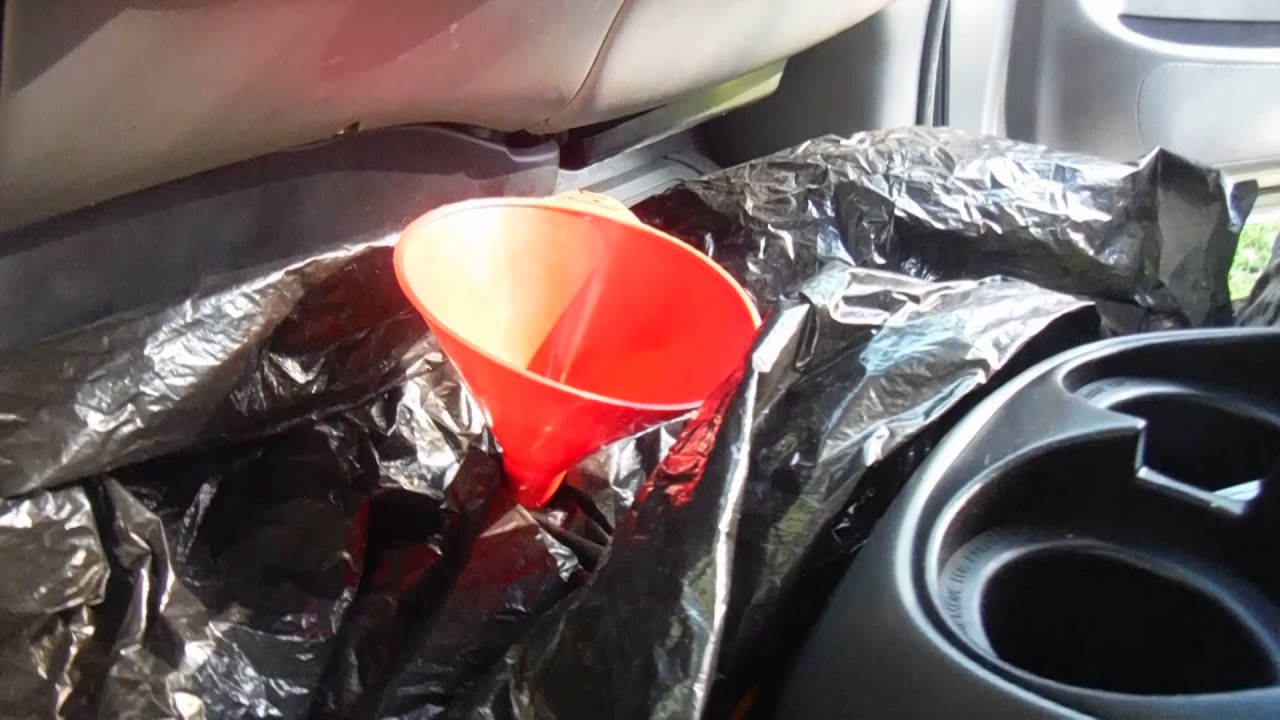
Instructions: Because the fill port is on the side of the transmission, you cannot use a standard funnel. You must use a hand-operated or pneumatic fluid transfer pump. Insert the output hose into the fill port (where you removed the 19mm cap in Step 3). Pump in about 5 to 6 quarts of fluid. At this point, fluid may start to run back out of the hole because the engine is off and the fluid hasn’t circulated into the torque converter. Stop pumping, temporarily replace the cap, and start the engine. With the engine running in Park, continue pumping the remaining fluid until you reach the initial “cold” mark on the stubby dipstick.
Pro Tip: Always keep the engine running while topping off the fluid. If you turn the engine off with the fill plug removed, the fluid in the lines will drain back into the pan and overflow out of the fill port.
Step 8: Temperature Verification and Level Check
What you need: An OBD-II scanner (or the truck’s digital dash display) and your 19mm wrench.
Instructions: Transmission fluid expands significantly when heated, so a final level check must be done at operating temperature. Drive the truck for 10-15 minutes or let it idle until the transmission temperature reaches 175°F–195°F (80°C–90°C). Park on a level surface with the engine still running. Carefully remove the 19mm cap again (watch out for the hot exhaust!). Pull the stubby dipstick and wipe it. Reinsert it fully, pull it back out, and check that the fluid is within the cross-hatched “Hot” zone. If it is low, add half a quart at a time. Once the level is perfect, tighten the 19mm cap securely.
Pro Tip: Use the “Productivity Screen” on your dashboard (if equipped) to monitor the “Trans Temp” in real-time. This is more accurate than waiting for the needle on the analog gauge to move.
✅ Final Checklist
- Verify that the 19mm fill plug heat shield is tight and not rattling.
- Check the perimeter of the pan for any weeping or active drips after the test drive.
- Ensure the transmission temperature stayed within the 175°F–200°F range during the drive.
- Confirm that the gear shifts are smooth and there is no “searching” or hesitation under acceleration.
- Double-check that you have properly disposed of the old fluid at a recycling center.
Important Notes:
- Safety: Always wear eye protection. Transmission fluid is pressurized and can cause irritation. The exhaust pipes near the fill port can exceed 400°F; wear long sleeves or heat-resistant mechanics’ gloves.
- When to seek help: If your old fluid smells burnt or looks like “strawberry milkshake” (indicating coolant contamination from a failed radiator), take the truck to a professional immediately.
- Estimated Time: 2 to 3 hours for a beginner; 1 hour for an experienced DIYer.
- Estimated Cost: $120–$180 for DIY; $350–$500 for professional service.
Factors Influencing Price: Fluid Types, Filters, and Model Years
Not every Ford F-150 uses the same transmission setup. The year your truck was built and the specific transmission it houses will dictate the type of fluid you need and the complexity of the labor involved.
Fluid Requirements and Capacity
The type of fluid required is the primary driver of the parts cost. Ford has transitioned through several fluid specifications over the last two decades:
- Mercon V: Used in older 4-speed and early 6-speed models. It is generally the most affordable, often costing $6–$9 per quart.
- Mercon LV (Low Viscosity): Required for most 6R80 6-speed transmissions (roughly 2009–2017). This fluid is mid-range in price, usually $8–$12 per quart.
- Mercon ULV (Ultra Low Viscosity): Used in the modern 10R80 10-speed transmissions (2017–present). This is a specialized, high-tech fluid that often costs $12–$18 per quart at the dealership.
Because the 10-speed transmissions require this more expensive ULV fluid and often have higher fluid capacities for a full flush, owners of newer F-150s should expect their service costs to be on the higher end of the estimates.
Labor Complexity and Accessibility
The design of your truck can also impact the labor time a shop bills you for. For example, some F-150 models have exhaust components or crossmembers that partially block access to the transmission pan. If a mechanic has to spend extra time dropping a portion of the exhaust to reach the pan bolts and replace the filter, you can expect the labor charge to increase by $50 to $100.
Additionally, newer models with the “sealed” transmission design require a specific pump to refill the fluid from underneath the vehicle. This requires more effort than simply pouring fluid down a dipstick tube, which is why labor costs for 2017+ models are typically higher than for older trucks.
Transmission Flush vs. Drain and Fill Cost Comparison
When you take your Ford F-150 to the shop, you will likely be offered two different services: a simple drain and fill or a complete transmission flush. The cost difference between these two can be significant, often ranging from $100 to over $250 depending on the method used.
The Price Gap Between a Flush and a Drain
A standard drain and fill is the more affordable option, typically costing between $150 and $250. During this service, the technician removes the pan and replaces about 40% to 60% of the total fluid. It is a cost-effective way to refresh the additives in your system without a massive bill. However, because much of the old fluid remains in the torque converter, it is less thorough than a flush.
Why Your F-150 Choice Impacts the Final Bill
A transmission flush is a more intensive process that uses a machine to cycle out nearly 100% of the old fluid. Because this requires significantly more Mercon V or Mercon ULV fluid—sometimes up to 12 or 16 quarts—the price jumps to $250 to $450. Here are a few things to keep in mind regarding these costs:
- Fluid Volume: Modern 10-speed Ford transmissions (10R80) require specific, high-tech fluids that cost more per quart than older formulations.
- Filter Replacement: A drain and fill almost always includes a new filter. Surprisingly, some flush services skip the filter, so always ask if it is included in the quote.
- Labor Time: A flush takes longer to set up and execute, which will be reflected in the labor hours on your invoice.
Long-Term Financial Benefits of Regular Transmission Maintenance
It is easy to look at a $300 service bill and feel a bit of “sticker shock,” but in the world of Ford F-150 ownership, this is actually a massive money-saver. Transmission maintenance is essentially an insurance policy against the most expensive mechanical failures your truck can face.
Avoiding the $6,000 Transmission Rebuild
The average cost to rebuild or replace a modern Ford F-150 transmission currently ranges from $4,500 to $7,000. When you compare that to a $250 fluid change every 45,000 to 60,000 miles, the math is simple. Regular maintenance prevents the buildup of metal shavings and heat—the two biggest killers of Ford transmissions. By keeping the fluid clean, you are effectively extending the life of your truck by years.
Improving Resale Value and Fuel Efficiency
Beyond avoiding a total breakdown, fresh fluid provides immediate financial perks that help offset the initial cost. Well-maintained transmissions shift smoother and operate more efficiently, which can provide a slight boost in miles per gallon (MPG). Additionally, a documented history of transmission services is a huge selling point if you ever decide to trade in your F-150.
- Lower Operating Temps: New fluid manages heat better, protecting expensive electronic sensors inside the transmission.
- Smooth Performance: Proper fluid levels and quality prevent “gear hunting,” which reduces wear and tear on the engine.
- Buyer Confidence: A stack of maintenance receipts can allow you to ask for a premium price when it comes time to sell.
Conclusion
Maintaining your Ford F-150 doesn’t have to be a guessing game when it comes to costs. While you can expect to pay anywhere from $150 to $450 for a transmission fluid service in 2024, the investment pays for itself by preventing catastrophic mechanical failure. Whether you choose a quick drain and fill or a comprehensive flush, the goal is the same: keeping your truck on the road and out of the repair shop.
Ready to take action? Start by checking your owner’s manual for your specific mileage interval. Then, call two or three local shops to compare quotes for your specific F-150 model year. Staying proactive today ensures your truck stays “Built Ford Tough” for many miles to come!
❓ Frequently Asked Questions
Why is the transmission fluid change for a newer F-150 more expensive?
Newer F-150 models use the 10R80 10-speed transmission which requires Mercon ULV (Ultra Low Viscosity) fluid. This fluid is more expensive than older versions, and the labor required to properly check the fluid levels on these units is more intensive than on older 6-speed models.
What is the difference in cost between a drain and fill and a full flush?
A drain and fill replaces about 5-7 quarts of fluid and typically costs $180-$300. A full flush uses a machine to replace all 13+ quarts in the system, which drives the price up to $350-$550 due to the high volume of fluid and specialized equipment used.
How often should I pay for this service to avoid transmission failure?
While Ford’s official manual suggests longer intervals, most mechanics recommend a fluid change every 30,000 to 60,000 miles, especially if you tow frequently. Spending $300 on preventative maintenance can save you from a $5,000 to $8,000 transmission replacement later.
Does the service cost usually include a new transmission filter?
In a standard ‘pan drop’ service, a new filter and gasket are typically included in the $200-$350 price range. However, some quick-lube shops perform a suction-only fluid exchange that skips the filter; always ask for a quote that includes the filter replacement.
Are there extra fees when getting this done at a Ford dealership?
Dealerships often add ‘shop supplies’ or hazardous waste disposal fees that can add $20 to $50 to your bill. It is best to request an ‘out-the-door’ price quote when scheduling your appointment to avoid surprises.
Can I save money by using aftermarket transmission fluid?
While aftermarket fluids are cheaper, using anything other than licensed Motorcraft Mercon LV or ULV fluid can void your warranty and lead to shifting issues. Saving $30 on fluid is not worth the risk of damaging a sophisticated 10-speed transmission.