
Best Tuner for 6.0 Powerstroke with EGR Delete: Top 2024 Picks

The SCT X4 combined with custom tunes from Gearhead or PHP is the premier solution for managing a 6.0L Powerstroke with an EGR delete. These tuners are essential for disabling the Check Engine Light (CEL) and ensuring the cooling fan operates correctly without the EGR valve signal.
Prime Day Pick
Limited-time Prime Day price. Check current discount on Amazon.
🎯 Key Takeaways
- SCT X4 is the top hardware choice for custom 6.0L tuning.
- Custom tunes outperform canned tunes for engine and head gasket safety.
- Tuners prevent ‘limp mode’ by managing EGR flow codes (P0401/P0404).
- Proper tuning ensures the cooling fan clutch engages correctly post-delete.
- Monitoring oil and coolant deltas is critical for 6.0L health.
To get the best results from your 6.0 Powerstroke after an EGR delete, you need an SCT X4 or Livewire TS+ paired with custom files from reputable tuners like PHP (Stroke engine technical history and specifications”>Power Hungry Performance) or Gearhead. The hardware provides the interface, but the custom tuning is what actually “turns off” the EGR logic within the PCM. This setup ensures your truck doesn’t just stop throwing codes, but actually operates with the correct cooling and fueling parameters required for a deleted engine.
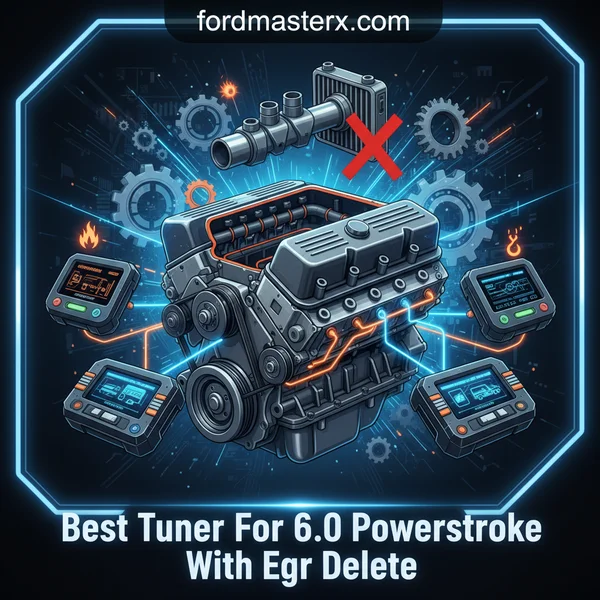
Deleting the EGR hardware is only half the battle. Without the right software, your PCM will constantly look for exhaust gas recirculation that isn’t happening, leading to P0401 or P0404 trouble codes. More importantly, a deleted 6.0L without a proper tune often suffers from a confused cooling fan clutch. Choosing the right tuner prevents these issues while protecting your head gaskets from the increased cylinder pressure that can occur when the EGR system is no longer there to bleed off heat and pressure.
Prime Day Pick
Limited-time Prime Day price. Check current discount on Amazon.
Top Hardware Comparisons: SCT X4, Livewire, and Edge Insight
When it comes to the 6.0 Powerstroke, the hardware market is dominated by two names: SCT and Edge. However, they serve very different purposes for a deleted truck. You must distinguish between a “monitor” and a “tuner” before spending your money.

SCT X4 vs. SCT Livewire TS+
The SCT X4 is the gold standard for the 6.0 platform. It is a handheld device that allows you to store up to ten custom tune files. It is purely functional—you plug it in, flash the truck, and can either leave it plugged in to monitor basic PIDs or put it in the glovebox. It is the most cost-effective way to load the custom files necessary to manage an EGR delete.
Prime Day Pick
Limited-time Prime Day price. Check current discount on Amazon.
The SCT Livewire TS+ offers the same tuning capabilities but features a large touchscreen display. For a deleted truck, the Livewire is superior if you want to keep a constant eye on your EOT (Engine Oil Temperature) and ECT (Engine Coolant Temperature) spread. Since you’ve removed the EGR cooler, monitoring these temperatures is vital to ensure your oil cooler doesn’t clog and lead to further engine failure.
- SCT X4: Best for enthusiasts on a budget who just want the truck to run right.
- SCT Livewire TS+: Best for those who want a permanent dash-mounted gauge solution.
- Compatibility: Both devices support the .cef and .flsh custom file formats used by the best 6.0 tuners.
The Role of the Edge Insight CTS3
It is a common mistake to think the Edge Insight CTS3 can “tune out” an EGR delete. The Insight is a monitor only. While it is arguably the best-looking display for the 6.0 dash, it does not rewrite the PCM’s logic. Many owners choose to use an SCT X4 to flash the “delete tune” and then use an Edge Insight CTS3 for their daily gauges. If your goal is to stop P0401 codes, the Edge alone will not work; you must have an SCT device to load the actual software changes.
Prime Day Pick
Limited-time Prime Day price. Check current discount on Amazon.
Why Custom Tuning (PHP/Gearhead) is Essential for Deleted Engines
Canned tunes—the pre-loaded settings that come on a tuner from the factory—are generally unsafe for a deleted 6.0 Powerstroke. These tunes are designed for “average” trucks and often do not account for the specific airflow changes that happen when you remove the EGR system. Custom tuning is the only way to ensure your engine remains reliable over the long haul.
Managing the Fan Clutch and Cooling Logic
The most critical reason to use custom tuning after an EGR delete is the cooling fan engagement. On many 6.0L strategy codes, the PCM uses data from the EGR valve to help determine when to engage the electronic fan clutch. When you delete the EGR, the fan may fail to ramp up when the engine gets hot because the “data loop” is broken. Custom tuners like Gearhead rewrite this logic so the fan clutch relies solely on coolant and oil temperatures, ensuring your truck doesn’t overheat while towing.
Prime Day Pick
Limited-time Prime Day price. Check current discount on Amazon.
- P0401/P0404 Suppression: Custom tunes don’t just “clear” the code; they disable the diagnostic routine entirely so the light never triggers.
- VGT Turbo Control: Tuners can adjust the vanes on your turbo to account for the lack of exhaust gas recirculation, preventing “turbo bark” and improving spool times.
- Fan Calibration: Custom files ensure the fan clutch hits 100% duty cycle when ECT reaches 210-215°F, regardless of EGR status.
Avoiding the “Canned Tune” Head Gasket Trap
The 6.0 Powerstroke is notorious for lifting heads. Canned tunes often increase horsepower by simply dumping more fuel and advancing timing aggressively. In a deleted engine, this can lead to massive cylinder pressure spikes. Custom tuners like Power Hungry Performance (PHP) focus on “Engine Longevity” files. They optimize the injection timing to provide a broader power band without hitting the peak pressures that stretch factory head bolts. If you are running a deleted truck on stock head bolts, a custom “Tow” or “Street” tune is your best insurance policy against a $5,000 head gasket job.
Solving the Cooling Fan and CEL Issues Post-EGR Delete
Performing an EGR delete on a 6.0 Powerstroke is a common move for longevity, but it often brings two unexpected guests to the party: a persistent Check Engine Light (CEL) and a cooling fan that refuses to behave. Because the engine control module (ECM) expects to see data from the EGR valve, removing it causes the computer to “hunt” for a signal that no longer exists, often resulting in diagnostic trouble codes like P0401 or P0404.
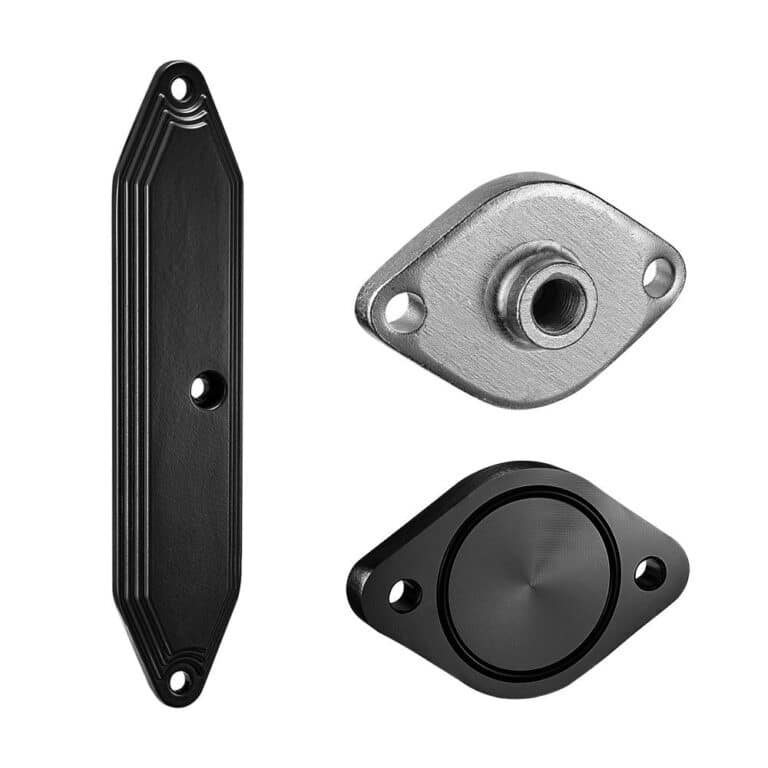
Clearing Persistent “Check Engine” Lights
In many 2005–2007 models, the truck’s computer is smart enough to realize the EGR flow is missing. This doesn’t just result in an annoying light on your dash; it can sometimes lead to a “soft limp mode” where the engine pulls back on timing or boost. A high-quality tuner, such as the SCT X4 or BDX, allows you to upload custom tunes that specifically tell the ECM to ignore the missing EGR sensors. This keeps your dashboard clear and ensures your truck stays in its optimal fueling map without trying to compensate for hardware that isn’t there.
Restoration of Fan Clutch Functionality
One of the most overlooked aspects of an EGR delete is the impact on the electronic fan clutch. On the 6.0 Powerstroke, the PCM uses the EGR valve position as part of the logic to determine how fast the cooling fan should spin. When the valve is removed or unplugged, the fan may default to a low-speed setting, leading to overheating during heavy cruises or towing.
- Software Overrides: Premium tuners can recalibrate the fan logic to trigger based solely on Engine Coolant Temperature (ECT) and Oil Temperature.
- Manual Controls: Some advanced tuners allow you to manually adjust the fan engagement percentage for high-heat scenarios.
- Consistency: Proper tuning ensures your fan engages at the right time, protecting your engine from the very heat issues the delete was meant to help solve.
Critical Engine Parameters to Monitor via Tuner Gauges
The 6.0 Powerstroke is a “high-maintenance” engine that rewards owners who pay attention to the data. Once you have installed a tuner for your EGR delete, the most valuable feature you gain isn’t the horsepower—it is the real-time monitoring. Using a tuner with a digital display, like the Edge Insight CTS3, allows you to catch small problems before they become catastrophic engine failures.
The Vital “Delta”: EOT vs. ECT
The most important numbers on your screen will always be your Engine Oil Temperature (EOT) and Engine Coolant Temperature (ECT). On a healthy 6.0, these two numbers should stay within 15 degrees of each other once the engine is up to operating temperature.
- The 15-Degree Rule: If your oil is consistently more than 15 degrees hotter than your coolant, your oil cooler is likely clogging.
- Preventative Action: Monitoring this “delta” allows you to replace a failing oil cooler before it ruptures and sends oil into your cooling system.
Fuel Pressure and FICM Voltage
Beyond temperatures, your tuner acts as a diagnostic window into your fuel system. Low fuel pressure is the leading cause of 6.0 injector failure, yet the factory dashboard has no gauge for it. Similarly, the Fuel Injection Control Module (FICM) voltage should never dip below 45 volts (ideally staying at 48V).
- FICM Main Power: If you see this drop to 42V or lower while cranking, your FICM is failing and will eventually kill your injectors.
- Exhaust Gas Temperatures (EGT): Essential for those running “hotter” tunes; keeping EGTs under 1,250°F during long hauls protects your turbo and pistons from heat soak.
- Boost Levels: Monitoring boost helps identify potential “stuck” vanes in the Variable Geometry Turbo (VGT).
Conclusion
Tuning your 6.0 Powerstroke is no longer just about adding power; it is the final, essential step in completing an EGR delete correctly. Without a proper tuner to recalibrate the ECM, you risk dealing with annoying dash lights, improper cooling fan operation, and a lack of visibility into your engine’s most critical vitals. By choosing a device that offers both custom tuning and robust data logging, you ensure your truck runs cooler, cleaner, and much more reliably for years to come.
Next Steps: First, identify whether your truck requires a simple “canned” tune or a custom file based on your specific modifications. Then, invest in a mounting solution that keeps your tuner’s display in your line of sight so you can monitor your “deltas” in real-time. Ready to transform your truck? Pick the right tuner today and give your 6.0 the brain it deserves!
❓ Frequently Asked Questions
How does a tuner handle the cooling fan issue after an EGR delete?
On many 6.0L models, the cooling fan clutch logic relies on the EGR valve signal. Quality custom tunes rewrite this logic so the fan engages correctly based on actual oil and coolant temperatures.
Why is the SCT X4 preferred over ‘canned’ tuners for the 6.0L platform?
The SCT X4 allows for custom files from specialists like Gearhead or Blessed Performance. These files offer better transmission shift points and safer fuel mapping than generic, pre-loaded tunes.
Can a tuner help prevent head gasket failure on a 6.0 Powerstroke?
Yes, by managing cylinder pressure, timing, and boost more precisely than a stock or generic tune, custom tuners reduce the stress on the factory head bolts.
What specific EGR codes does a tuner need to address?
A tuner for a deleted 6.0L must address P0401 (Insufficient Flow) and P0404 (EGR Performance) to keep the truck out of limp mode and keep the dash clear of lights.
Is there a difference between tuning a 2003 vs a 2006 for an EGR delete?
Early 2003-2004 models often do not trigger a CEL when the EGR is deleted, whereas 2005-2007 models require a tuner to prevent constant error codes and fan issues.
Can I use a tuner to monitor my EOT and ECT deltas?
Absolutely, devices like the SCT Livewire or Edge CTS3 are vital for watching the difference between Engine Oil and Coolant temperatures, which signals oil cooler health.