2016 Ford F-150 Towing Capacity Chart By Year – 2026

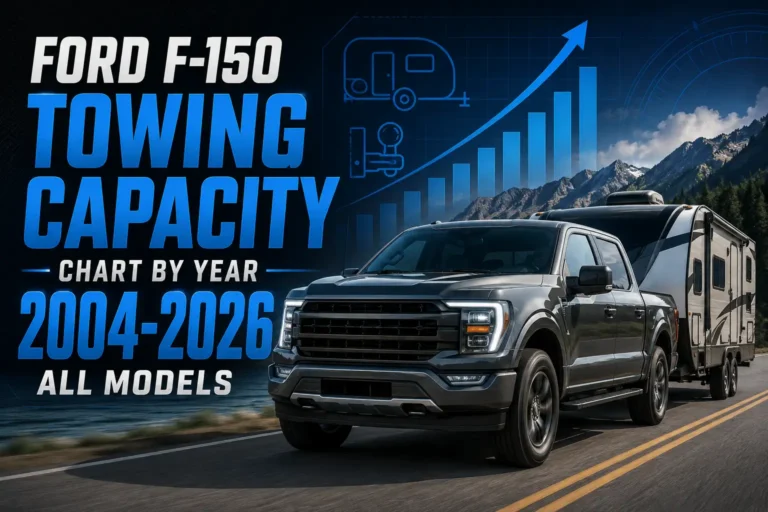
Looking for another year? See the full Ford F-150 Towing Capacity Chart (all years, 2004–2026).
Quick Answer
2016 Ford F 150 Towing Capacity Chart depends on the exact year, engine, trim, and configuration. Use the chart and notes in this guide as a starting point, then verify critical numbers with the official manual or vehicle label.

Prime for Young Adults — 6 Months Free
Students and 18–24s get six months of Prime free, then half price.
Start 6 Months Free As an Amazon Associate I earn from qualifying purchases.The 2016 Ford F-150 offers a robust range of towing capabilities, firmly establishing its position as a segment leader. With the right configuration, including the potent 3.5L EcoBoost V6 engine and Max Trailer Tow Package, the 2016 F-150 can tow an impressive up to 12,200 pounds. This capacity varies significantly based on engine choice, axle ratio, drivetrain (2WD or 4WD), cab and bed configuration, and the presence of specific towing packages. Understanding these nuances is critical for safely and effectively utilizing your truck’s full potential.
2016 Ford F-150 Towing Capacity Chart By Year (2004–2026): 2016
Recommended Best Deal Products

📤 Share Image
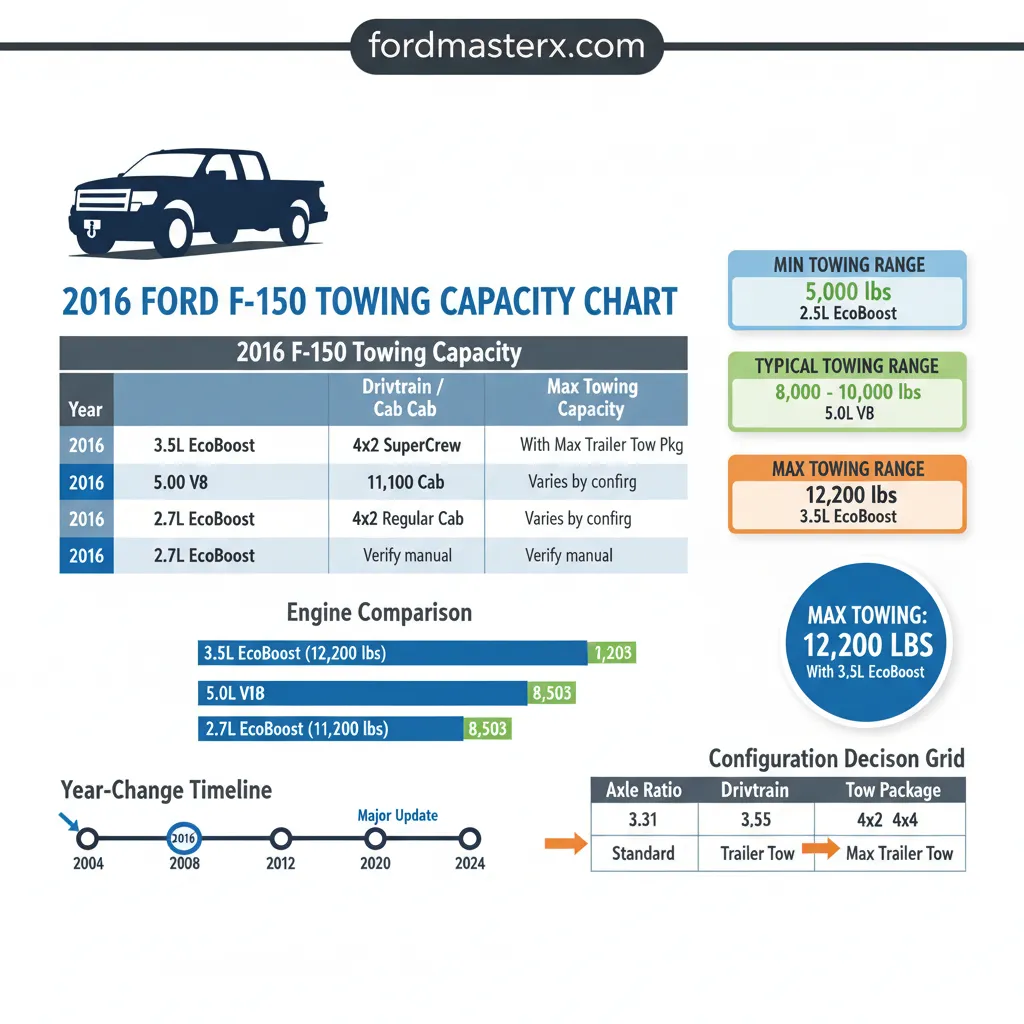
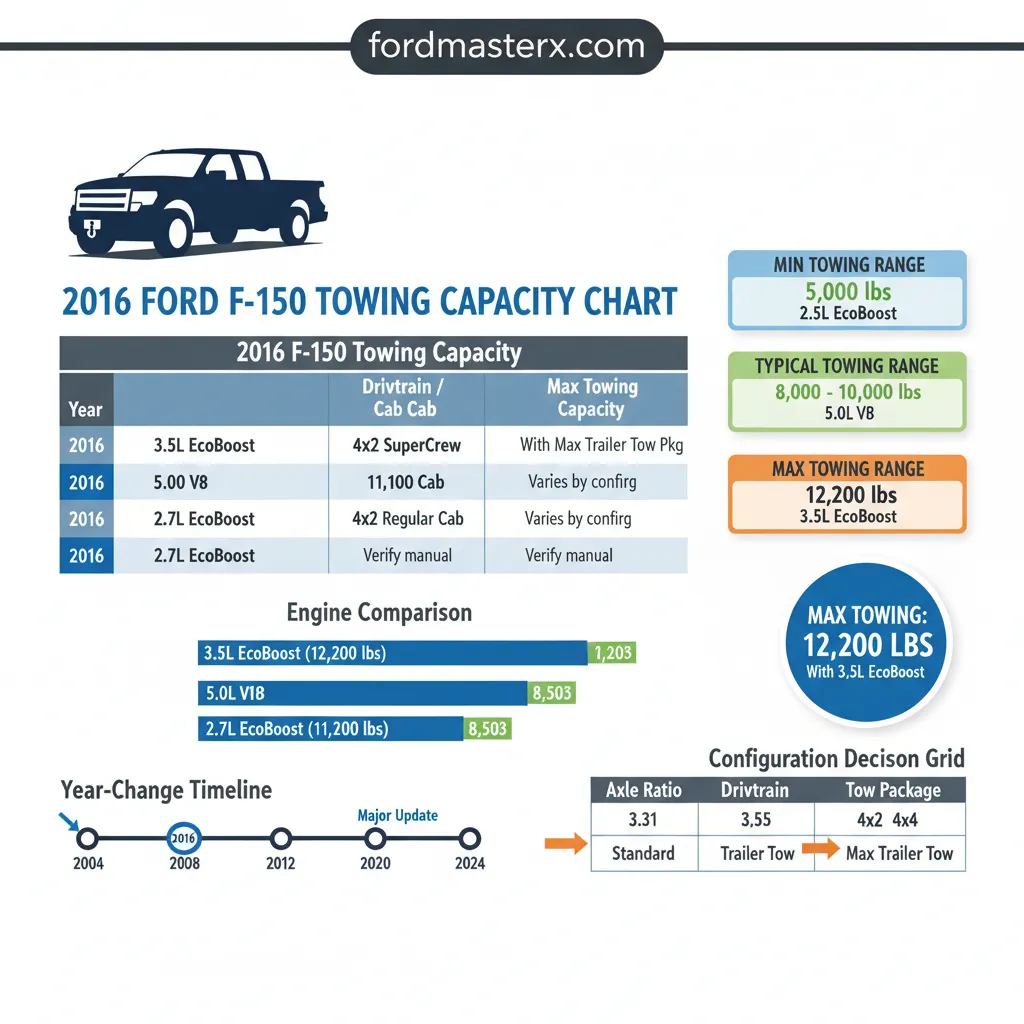
This chart primarily focuses on the 2016 Ford F-150’s towing capacities, providing context within the broader 2004-2026 F-150 model years. Values presented for 2016 are derived from official Ford towing guides and owner’s manuals for that model year. Capacities for other years are generalized to illustrate the range and evolution of the F-150 lineup. Readers are strongly advised to verify their specific vehicle’s towing capacity by checking the owner’s manual, the towing guide for their exact VIN, and the payload sticker located on the driver’s side door jamb, as even minor configuration differences can impact ratings. Last reviewed: May 2026.
The following table outlines the maximum towing capacities for various 2016 Ford F-150 configurations. While we present the most common and highest ratings, remember that your specific truck’s capabilities are determined by its unique build. For historical context, general ranges are provided for other model years to show the F-150’s consistent capability.
| Year | Engine | Drivetrain / Cab | Max Towing Capacity (lbs) | Notes |
|---|---|---|---|---|
| 2004-2008 | Various V8s | Varies | 5,000 – 11,000 | Dependent on engine (4.6L, 5.4L), axle ratio, 2WD/4WD, and tow package. |
| 2009-2014 | Various V8s, 3.5L EcoBoost | Varies | 5,500 – 11,300 | Introduction of the 3.5L EcoBoost significantly boosted capacity. |
| 2016 | 3.5L Ti-VCT V6 | 2WD, Regular Cab | 7,600 | Max with 3.73 axle ratio. Lower with other configurations. |
| 2016 | 2.7L EcoBoost V6 | 2WD, SuperCab | 8,500 | Requires 3.73 axle ratio and 2.7L EcoBoost Payload Package. |
| 2016 | 5.0L V8 | 2WD, Regular Cab | 11,100 | Max with 3.73 axle ratio and Max Trailer Tow Package. |
| 2016 | 3.5L EcoBoost V6 | 2WD, Regular Cab | 12,200 | Requires 3.73 axle ratio and Max Trailer Tow Package. |
| 2016 | 3.5L EcoBoost V6 | 4WD, SuperCrew | 11,700 | Max with 3.55 or 3.73 axle ratio and Max Trailer Tow Package. |
| 2017-2020 | Improved EcoBoost, V8 | Varies | 7,000 – 13,200 | Towing capacity saw further increases with powertrain refinements. |
| 2021-Present | EcoBoost, V8, Hybrid | Varies | 8,200 – 14,000 | Current generation offers highest capacities, including PowerBoost hybrid. |
Max towing capacities are typically achieved with the lowest curb weight (Regular Cab, 2WD), shortest wheelbase, and highest numerically available axle ratio (e.g., 3.73). The Max Trailer Tow Package is almost always required for peak figures. Always check your specific vehicle’s door jamb sticker for its exact payload capacity and Gross Combined Weight Rating (GCWR).

Understanding the 2016 F-150’s Towing Prowess: By the Numbers
For the 2016 model year, the F-150’s towing capabilities demonstrated significant versatility. Here’s a quick snapshot:
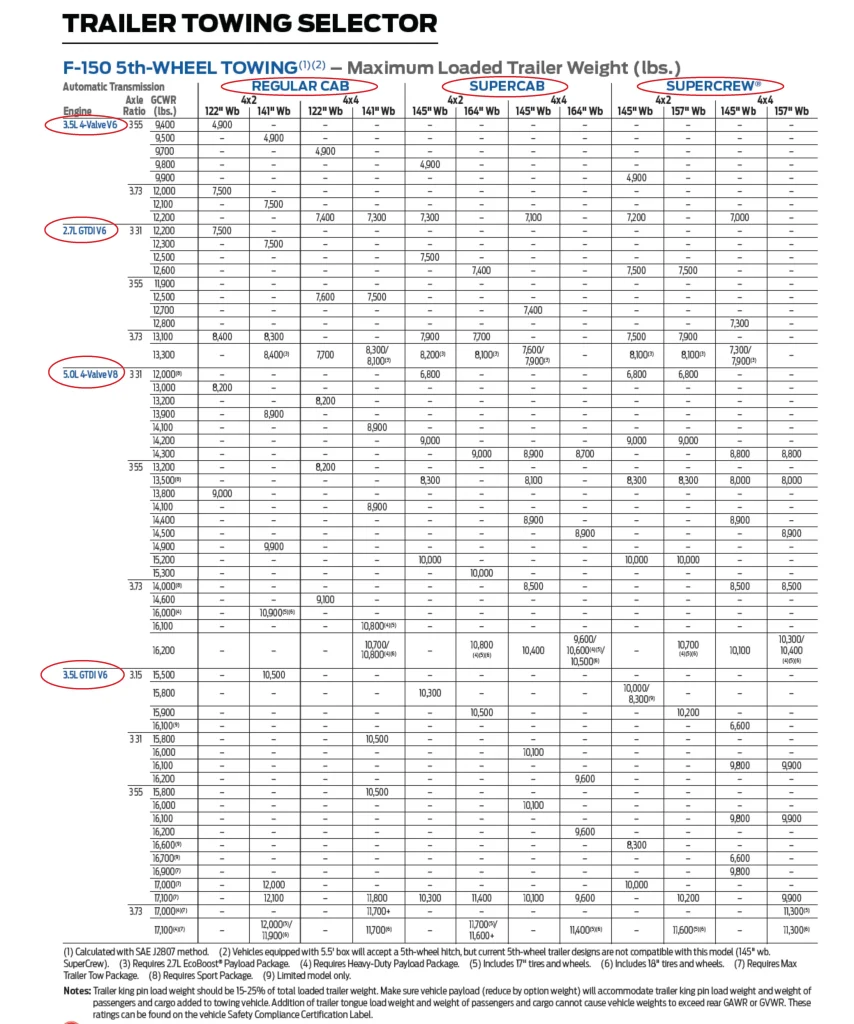
Engine Performance and Towing Capabilities
The 2016 Ford F-150 offered a diverse powertrain lineup, each contributing distinctly to its towing prowess. The choice of engine is arguably the most significant factor determining your truck’s maximum towing capacity.
The 3.5L EcoBoost V6 stands out as the top performer, leveraging its twin-turbocharged power to achieve the highest towing ratings. While the 5.0L V8 provides excellent traditional V8 power and a strong towing capacity, it typically falls slightly behind the 3.5L EcoBoost in maximum rating for 2016. The 2.7L EcoBoost V6 offers a remarkable balance of fuel economy and respectable towing, often surprising owners with its capability. Finally, the naturally aspirated 3.5L Ti-VCT V6 serves as the capable base engine, suitable for lighter towing needs.

Audible — Listen Free for 30 Days
One free credit a month and thousands of titles included.
Listen Free for 30 Days As an Amazon Associate I earn from qualifying purchases.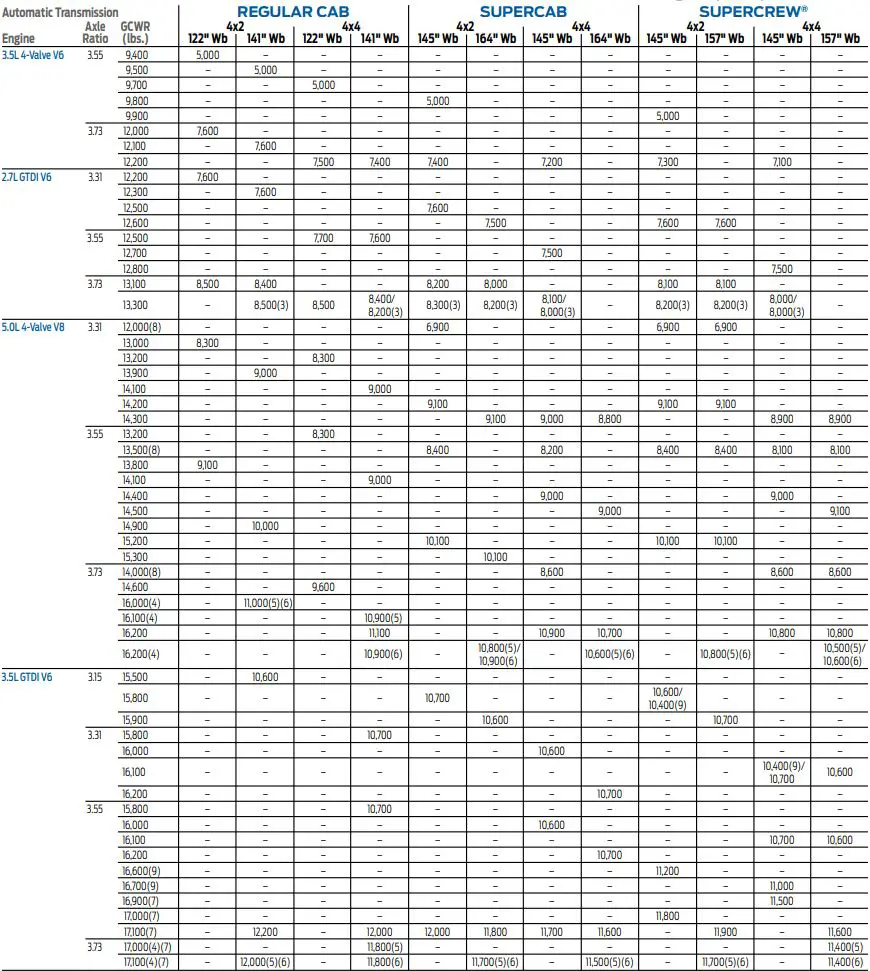
Key Factors Influencing 2016 F-150 Towing Capacity
Beyond the engine, several critical configuration elements dictate your 2016 F-150’s maximum towing capacity. Neglecting these can lead to unsafe towing or exceeding your truck’s limits.
A higher numerical axle ratio (e.g., 3.73 or 3.55) provides more torque to the wheels, increasing towing capacity but potentially reducing fuel economy.
2WD models generally have a slightly higher towing capacity due to lower curb weight compared to their 4WD counterparts.
The Max Trailer Tow Package (53C) or Trailer Tow Package (53A) includes upgraded components like a hitch, wiring, and often a higher-capacity rear axle, crucial for maximizing tow ratings.
Regular Cab, 2WD, short bed trucks typically achieve the highest tow ratings due to lighter curb weight and shorter wheelbases providing better weight distribution.
Understanding Your Payload Sticker
While towing capacity often grabs headlines, the payload sticker on your driver’s side door jamb is equally, if not more, important. This sticker provides your truck’s specific payload capacity and Gross Vehicle Weight Rating (GVWR), crucial for understanding how much weight your truck can carry in its bed and cab, which directly impacts the usable towing capacity (tongue weight is part of payload).
Year-by-Year Evolution of F-150 Towing (2004-2026)
The Ford F-150 has consistently pushed the boundaries of light-duty truck capability. The 2016 model year falls within the significant 13th generation (2015-2020), which introduced the revolutionary aluminum-alloy body and advanced EcoBoost engines, dramatically enhancing both fuel efficiency and towing capacity.
Third-generation modular V8s (4.6L, 5.4L) saw towing capacities push past 10,000 lbs in optimal configurations.
Introduction of the 3.5L EcoBoost V6 in 2011 was a game-changer, quickly becoming the towing king, reaching 11,300 lbs.
Lightweight aluminum body and chassis refinements allowed the 3.5L EcoBoost to reach 12,200 lbs in 2016, with further increases in later years of this generation.
Audible Premium Plus — Annual Membership
12 audiobook credits up front, plus the full Audible catalogue.
See Annual Plans As an Amazon Associate I earn from qualifying purchases.The current 14th generation introduced the hybrid PowerBoost engine and continued powertrain enhancements, pushing max towing to a segment-leading 14,000 lbs.
Critical Considerations for Safe Towing
Understanding your F-150’s towing capacity is only the first step. Safe towing involves respecting multiple limits and best practices.
This is the maximum allowable weight of the fully loaded truck PLUS the fully loaded trailer. Your GCWR is typically higher than the sum of GVWR and trailer weight, providing a safety buffer.
Ensure your trailer’s tongue weight is between 10-15% of the total trailer weight. This is critical for stable towing and is part of your truck’s payload capacity.
For heavier loads, a weight-distributing hitch is often required by Ford and highly recommended to improve stability and distribute tongue weight more evenly.
What Affects Your F-150’s Towing Capacity?
Several interrelated factors determine the final towing capacity of your 2016 F-150. As an expert with over 15 years in the automotive industry, I’ve seen countless instances where owners overlook one of these crucial elements, leading to performance issues or safety concerns.
Engine Power and Torque
The engine is the heart of your truck’s towing ability. Higher horsepower and, more importantly, higher torque, especially at lower RPMs (like with the EcoBoost engines), allow the truck to pull heavier loads more efficiently and with less strain. The 2016 3.5L EcoBoost, with its 365 hp and 420 lb-ft of torque, is a prime example of this.
Axle Ratio
This ratio (e.g., 3.31, 3.55, 3.73) dictates how many times the drive shaft rotates for each rotation of the wheel. A higher numerical ratio (e.g., 3.73) means more torque at the wheels, providing greater pulling power at the expense of slightly higher engine RPMs at cruising speed and potentially lower fuel economy. For maximum towing, a higher axle ratio is almost always required.
Drivetrain (2WD vs. 4WD)
Generally, 2WD F-150 models can tow slightly more than their 4WD counterparts. This is because 4WD systems add weight to the truck, reducing its overall payload capacity, and by extension, its towing capacity, due to the GCWR limitation.
Cab Style and Bed Length
The overall weight and wheelbase of the truck play a significant role. Regular Cabs are lighter than SuperCabs and SuperCrews, contributing to higher available payload and thus higher potential towing. Shorter beds and wheelbases often accompany the highest tow ratings due to optimized weight distribution and maneuverability with a trailer.
Towing Packages (e.g., Max Trailer Tow Package)
Ford offers factory towing packages that are crucial for maximizing capacity. These packages typically include:
- A beefier frame-mounted hitch receiver.
- Upgraded wiring harness (4-pin and 7-pin connectors).
- Larger radiator for enhanced engine cooling.
- Trailer brake controller integration.
- Higher-capacity rear axle and possibly upgraded suspension components.
Always factor in the weight of passengers, cargo, and any aftermarket accessories into your available payload. This “real-world” payload reduces the tongue weight you can safely carry, which in turn affects your usable towing capacity.
Never exceed any of your truck’s weight ratings (GVWR, GCWR, GAWR, Payload, Towing Capacity). Doing so compromises safety, puts undue stress on vehicle components, and can void warranties or result in legal penalties.
Frequently Asked Questions (FAQs) About F-150 Towing
What is the highest towing capacity for a 2016 F-150?
The highest towing capacity for a 2016 Ford F-150 is 12,200 pounds. This is achieved with the 3.5L EcoBoost V6 engine, a 3.73 electronic locking axle, 2WD, Regular Cab, and the Max Trailer Tow Package.
How do I find my specific 2016 F-150’s towing capacity?
To find your specific 2016 F-150’s towing capacity, consult your truck’s owner’s manual or the supplemental towing guide from Ford. Crucially, check the “Tire and Loading Information” sticker on your driver’s side door jamb for the precise payload capacity, which is essential for determining how much tongue weight you can carry.
Does 4WD reduce towing capacity on a 2016 F-150?
Yes, generally, a 4WD 2016 F-150 will have a slightly lower maximum towing capacity compared to an identically configured 2WD model. This is due to the additional weight of the 4WD components, which reduces the vehicle’s available payload and, consequently, its GCWR-limited towing capacity.
Is the 2.7L EcoBoost V6 sufficient for towing?
Absolutely. The 2016 F-150’s 2.7L EcoBoost V6, with max towing up to 8,500 lbs (when properly equipped), is more than sufficient for towing many mid-sized travel trailers, utility trailers, or smaller boats. It offers a great balance of towing capability and everyday fuel efficiency.
What is the Max Trailer Tow Package and why is it important for 2016 F-150 towing?
The Max Trailer Tow Package (Ford option code 53C) for the 2016 F-150 includes essential upgrades such as an upgraded rear bumper, a higher-capacity hitch receiver, a smart trailer tow connector, an integrated trailer brake controller, and a higher capacity rear axle. It is almost always required to achieve the highest advertised towing capacities and significantly enhances towing safety and performance.
Conclusion
The 2016 Ford F-150 stands as a highly capable light-duty truck, offering an impressive range of towing capacities to suit diverse needs, peaking at 12,200 pounds. Our comprehensive chart and detailed analysis underscore the critical role of engine choice, axle ratio, drivetrain, and the essential Max Trailer Tow Package in determining your truck’s actual limits. Remember, safe towing extends beyond mere numbers, encompassing careful consideration of payload, tongue weight, and adherence to manufacturer guidelines. Always cross-reference this information with your specific vehicle’s owner’s manual and door jamb sticker for the most accurate and safe towing experience.
Armed with this detailed knowledge, you can confidently hitch up your trailer, knowing you’re operating within your 2016 F-150’s capabilities and ensuring a safe journey for yourself and others on the road.