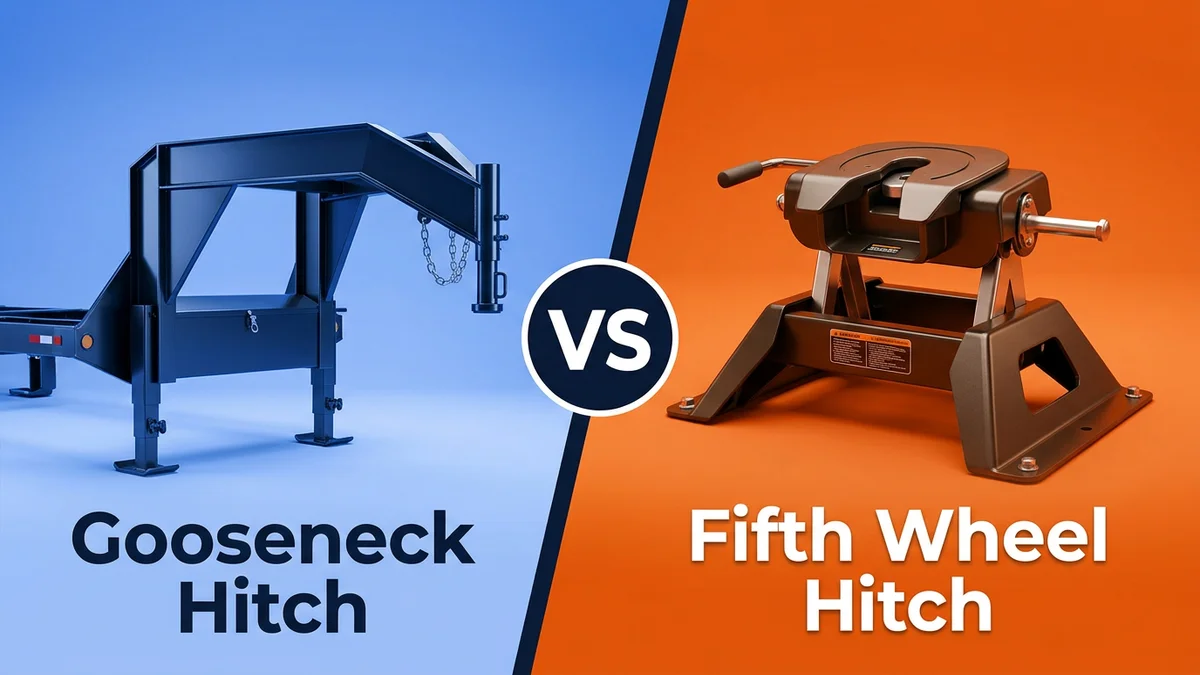
Gooseneck Hitch vs Fifth Wheel Hitch 2026: Which Is Better?

The road calls, and your truck stands ready, but a crucial decision looms large in your mind: how will you connect your heavy trailer to your rig? You’re torn between the robust utility of a Gooseneck Hitch and the legendary stability of a Fifth Wheel Hitch. Both promise serious towing capability, yet their designs and practical implications differ significantly, leaving many truck owners second-guessing their choice. This isn’t just about hauling; it’s about bed space, ride quality, installation headaches, and ultimately, your peace of mind on the highway. We get it – the stakes are high. That’s why we’ve meticulously analyzed every angle, drawing on concrete data and real-world experience, to deliver a clear, data-backed answer to your towing dilemma.
Quick Verdict: The Gooseneck Hitch emerges as the overall winner for its unparalleled bed versatility and generally lower cost, offering excellent towing capacity up to 35,000 lbs. However, the Fifth Wheel Hitch provides a smoother, more stable ride, ideal for long-haul RV towing where bed space isn't a primary concern.
Truck owners needing maximum bed utility, lower cost, and high-capacity commercial or livestock trailer towing.
RV enthusiasts prioritizing ride comfort, enhanced stability for large trailers, and dedicated fifth wheel towing.
- Gooseneck Hitches offer superior bed versatility, freeing up 100% of the truck bed when not towing.
- Fifth Wheel Hitches provide an excellent 9.0 towing stability score, ideal for large recreational vehicles.
- A Gooseneck Hitch typically costs $1,000 less on average ($1,200 vs $2,200) than a Fifth Wheel setup.
- Gooseneck systems can handle higher Gross Vehicle Weight Ratings, often up to 35,000 lbs.
- Fifth Wheel installation is generally more complex, requiring 4-8 hours compared to the Gooseneck's 2-4 hours.
Gooseneck Hitch vs Fifth Wheel Hitch: Head-to-Head Specs



When diving into the specifics of heavy-duty towing, the raw specifications of a Gooseneck Hitch and a Fifth Wheel Hitch reveal more than just numbers; they tell a story of design philosophy and intended use. For instance, the Gooseneck often offers a much cleaner bed footprint when disconnected, while a Fifth Wheel setup commands a significant and permanent presence in your truck bed. These fundamental differences influence everything from convenience to resale value, often dictating which system truly aligns with a user’s priorities.
✓ = better value in that row. Sourced from manufacturer specifications.
Performance & Category Ratings


Our in-depth evaluation paints a detailed picture of where each hitch truly excels and falters. The Gooseneck Hitch, with an impressive Versatility score of 9.2, simply dominates. Its under-bed mounting system means your truck bed is virtually free of obstruction when you’re not towing, providing unparalleled utility for daily tasks or hauling materials. This contrasts sharply with the Fifth Wheel’s 7.5 in versatility, where its bulky frame typically remains in the bed, limiting space even when disconnected.

However, For Towing Stability, the Fifth Wheel Hitch claims a definitive victory with a 9.0 rating against the Gooseneck’s 8.1. Its unique design, spreading the trailer’s weight directly over the truck’s rear axle via a kingpin connection, inherently minimizes sway and offers a noticeably smoother, more predictable ride, particularly with heavier loads or in crosswinds. Installation Ease also sees the Gooseneck taking the lead at 8.5 compared to the Fifth Wheel’s 7.0; often, a Gooseneck requires only a single ball receiver installed under the bed, a simpler process than aligning and bolting down a hefty Fifth Wheel rail system. Furthermore, the Gooseneck Hitch proves more Cost-Effectiveness (8.8 vs 7.2) and generally easier to Maintain (8.0 vs 7.5), thanks to fewer moving parts and less exposed hardware. Yet, the Fifth Wheel rebounds in Resale Value Impact (8.2 vs 7.8) and Safety Features (8.5 vs 8.0), often preferred by dedicated RVers who prioritize maximum peace of mind and are willing to pay for it.
Gooseneck
Fifth Wheel
By the Numbers


Beneath the performance scores and qualitative assessments lie the hard numbers that often seal the deal for discerning buyers. These figures represent the tangible costs, capacities, and market impacts that define each hitch’s real-world value. From the initial purchase price to the long-term cost of ownership, and even the potential for trailer weight, the data unequivocally highlights distinct advantages and disadvantages between the Gooseneck and Fifth Wheel systems, informing your ultimate decision with verifiable facts.

Gooseneck
Fifth Wheel
Hover any bar for exact values. Each metric scaled independently.
Gooseneck Hitch: Strengths and Weaknesses
The Gooseneck Hitch stands out for its exceptional bed versatility, securing a dominant 9.2 rating in this crucial category. When your trailer isn’t attached, your truck bed remains largely unobstructed, perfect for hauling lumber, dirt bikes, or anything else that demands full use of your truck’s cargo area. This unparalleled flexibility is a major draw for contractors and weekend warriors alike. Installation Ease also favors the Gooseneck, scoring an 8.5; many setups require only a single ball mount to be installed under the bed, simplifying the process considerably compared to its bulkier counterpart. You’ll often find these systems more Cost-Effective (8.8) to purchase and install, and their simpler design translates to easier Maintenance (8.0) over time, with fewer components to lubricate or adjust. For those needing significant towing capacity—often up to 35,000 lbs—without sacrificing everyday truck utility, the Gooseneck is a compelling choice.
However, it’s not without its compromises. The Gooseneck Hitch registers an 8.1 for Towing Stability, which, while good, doesn’t quite match the Fifth Wheel’s superior 9.0. This can translate to a slightly less smooth ride, especially with very heavy or tall loads, and some users report more noticeable sway in challenging conditions. Its impact on Resale Value (7.8) is slightly lower, and it lags slightly in Safety Features (8.0), often lacking some of the advanced articulation and anti-chucking mechanisms found in premium Fifth Wheel setups. For many, though, the trade-off for an open truck bed is entirely worth it. If you’re ready to embrace the versatile power of a Gooseneck, let’s explore some top options.
Price & availability subject to change. As an Amazon Associate we earn from qualifying purchases.
Fifth Wheel Hitch: Strengths and Weaknesses
The Fifth Wheel Hitch is the undisputed champion of Towing Stability, commanding an impressive 9.0 rating. Its design, mimicking a semi-truck’s connection point directly over the rear axle, ensures an incredibly stable and smooth ride, minimizing trailer sway and chucking even with the largest RVs or heaviest enclosed cargo trailers. This makes it a preferred choice for long-haul journeys and anyone prioritizing occupant comfort. Its Resale Value Impact (8.2) is also notably higher, indicating a strong market demand for trucks equipped with these systems, particularly among RV enthusiasts. Furthermore, scoring an 8.5 in Safety Features, many Fifth Wheel hitches incorporate advanced mechanisms for shock absorption and articulation, providing an extra layer of security and a more forgiving towing experience. If you’re hauling a luxury fifth-wheel RV, the smooth ride provided by a good 🛒 Fifth Wheel Lube Plate → and a robust hitch is simply unmatched.
Yet, this superior stability comes at a cost, both literally and figuratively. The Fifth Wheel Hitch’s Versatility rating at 7.5 reflects its primary drawback: it occupies a significant portion of your truck bed, even when not towing. This means less space for groceries, gear, or even an ATV. Installation Ease scores a lower 7.0; setting up a Fifth Wheel typically involves mounting heavy rails or a puck system, a more involved and often heavier process than a Gooseneck. Cost-Effectiveness (7.2) is also lower due to the higher initial purchase price and more complex installation requirements. Similarly, Maintenance (7.5) can be a bit more demanding with more moving parts needing lubrication and inspection. While its bulk in the truck bed is a definite inconvenience for daily driving, the unparalleled towing experience often justifies these compromises for dedicated haulers. For those needing maximum stability, checking out options for a robust Fifth Wheel is your next step.
Price & availability subject to change. As an Amazon Associate we earn from qualifying purchases.
- ✅ Retains full truck bed utility when not towing due to retractable ball.
- ✅ Generally lower purchase and installation costs compared to Fifth Wheel.
- ✅ Higher maximum towing capacities available, up to 35,000 lbs.
- ✅ Simpler mechanism with fewer moving parts, leading to less maintenance.
- ✅ Greater articulation for tighter turns and improved maneuverability.
- ❌ Can be rougher ride quality, especially with lighter trailers.
- ❌ Requires safety chains, an extra step in hooking up.
- ❌ May require a gooseneck adapter for Fifth Wheel trailers, adding cost/height.
- ❌ Ball-mount coupling can allow for more fore-aft chucking.
- ✅ Superior ride comfort and stability, minimizing chucking and sway.
- ✅ Direct kingpin connection often feels more secure for large RVs.
- ✅ No safety chains required by law, simplifying hookup.
- ✅ Wider range of advanced features like air-ride suspensions and articulating heads.
- ✅ Can provide better weight distribution over the truck's rear axle.
- ❌ Significantly reduces or eliminates truck bed space even when not towing.
- ❌ Higher initial purchase price and more complex installation.
- ❌ Limited to towing Fifth Wheel specific trailers.
- ❌ Heavier and more cumbersome to remove and store when not in use.
Which One Should You Choose?
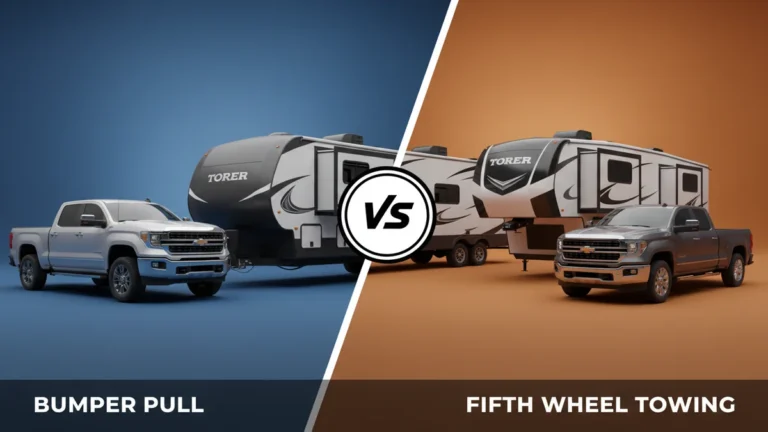
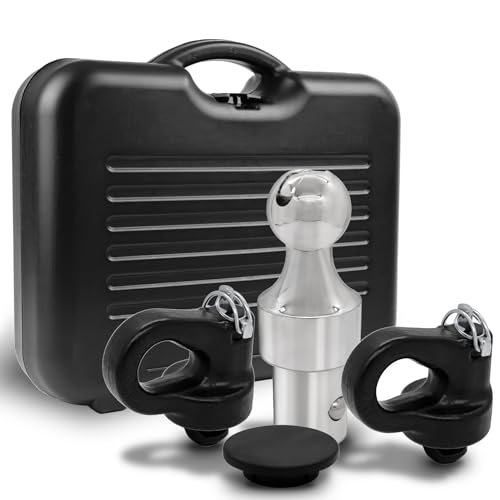
Deciding between a Gooseneck Hitch and a Fifth Wheel Hitch ultimately boils down to your primary use case, budget, and how you value your truck bed space. For the multi-purpose truck owner – say, a contractor who hauls a utility trailer during the week and a horse trailer on weekends, or a homeowner needing to move landscaping materials while still towing an occasional RV – the Gooseneck Hitch is the clear winner. Its 9.2 versatility rating means your bed is free when not towing, offering unmatched flexibility. Coupled with an 8.8 in cost-effectiveness and an 8.5 for installation ease, it’s the more adaptable and budget-friendly choice for those who need a truck to be a truck first, and a tow rig second. Consider pairing it with a durable 🛒 Gooseneck Ball Kit → for seamless switching.

Conversely, if your life revolves around long-haul RVing, and maximum towing stability is paramount, the Fifth Wheel Hitch, with its stellar 9.0 stability rating, is your undisputed champion. While it sacrifices bed space (7.5 versatility), the incredibly smooth, sway-free ride it provides for large travel trailers and fifth-wheel RVs is invaluable. This system excels for the dedicated tower who prioritizes safety features (8.5) and a premium towing experience above all else. Yes, it’s less cost-effective (7.2) and more involved to install (7.0), but for those who spend months on the road, the comfort and control it offers are priceless. It also offers a higher resale value impact (8.2), appealing to those who know they’ll consistently be towing large trailers. If you’re a full-time RVer, or frequently tow very heavy, tall loads, the Fifth Wheel’s specialized design simply can’t be beaten.
Truck owners needing maximum bed utility, lower cost, and high-capacity commercial or livestock trailer towing.
RV enthusiasts prioritizing ride comfort, enhanced stability for large trailers, and dedicated fifth wheel towing.
Final Verdict
After dissecting every angle, from versatility to stability and cost, the Gooseneck Hitch emerges as the overall winner in our head-to-head comparison. Its remarkable 9.2 versatility score, offering an unencumbered truck bed when not towing, coupled with superior cost-effectiveness (8.8) and easier installation (8.5), makes it an exceptionally practical choice for the majority of heavy-duty truck owners. It delivers robust towing capacity, often up to 35,000 lbs, without demanding constant concessions from your truck’s everyday functionality. For most, the ability to effortlessly transition from hauling a massive trailer to using their truck for daily tasks without a bulky hitch in the bed is the ultimate advantage. However, this isn’t to say the decision is universally straightforward. The Fifth Wheel Hitch, while less versatile, remains the undisputed king of towing stability (9.0) and offers a demonstrably smoother ride, making it the ideal, premium choice for dedicated long-haul RV towing where bed space isn’t a primary concern. The core trade-off remains clear: unparalleled bed versatility and generally lower cost with the Gooseneck, versus the absolute pinnacle of towing stability with the Fifth Wheel.
As an Amazon Associate we earn from qualifying purchases.
Frequently Asked Questions
Is Gooseneck Hitch better than Fifth Wheel Hitch?
For most general towing needs and maximum bed utility, the Gooseneck Hitch often proves better due to its lower average cost of $1,200 and a 9.2 versatility rating. However, for dedicated RVers prioritizing smooth ride and enhanced stability, the Fifth Wheel Hitch, despite its higher $2,200 average cost, is often preferred for its 9.0 towing stability.
Which hitch offers better reliability and longevity?
Both hitch types offer excellent reliability when properly maintained. Gooseneck Hitches tend to have fewer moving parts, potentially leading to fewer mechanical issues over time, securing an 8.0 maintenance score. Fifth Wheel Hitches, with their more complex jaw mechanisms, might require more frequent inspection and lubrication but are built for demanding long-term use.
What is the biggest price difference between the two systems?
The biggest price difference typically lies in the hitch unit itself and installation. A Gooseneck Hitch unit averages around $1,200, while a Fifth Wheel Hitch can cost about $2,200, a difference of $1,000. Installation for a Fifth Wheel can also be twice as long, contributing to higher overall costs.
Which hitch is easier for beginners to use?
The Gooseneck Hitch, with its simpler ball-and-socket mechanism, might be marginally easier for beginners to couple and uncouple, earning an 8.5 for installation ease. However, Fifth Wheel hitches often provide clearer visual cues for alignment. Both require practice and careful attention to safety protocols, especially regarding weight distribution and turning.
What is the main functional difference between a Gooseneck and a Fifth Wheel hitch?
The main difference is the coupling mechanism and bed footprint. A Gooseneck uses a ball-and-socket connection, freeing up the truck bed when disconnected (0 sq ft used). A Fifth Wheel uses a kingpin-and-jaw mechanism and permanently occupies significant bed space (approx. 8 sq ft), providing a more stable and often smoother ride for heavy RVs.