Recovery Straps vs Tow Chains 2026: Which Is Better?

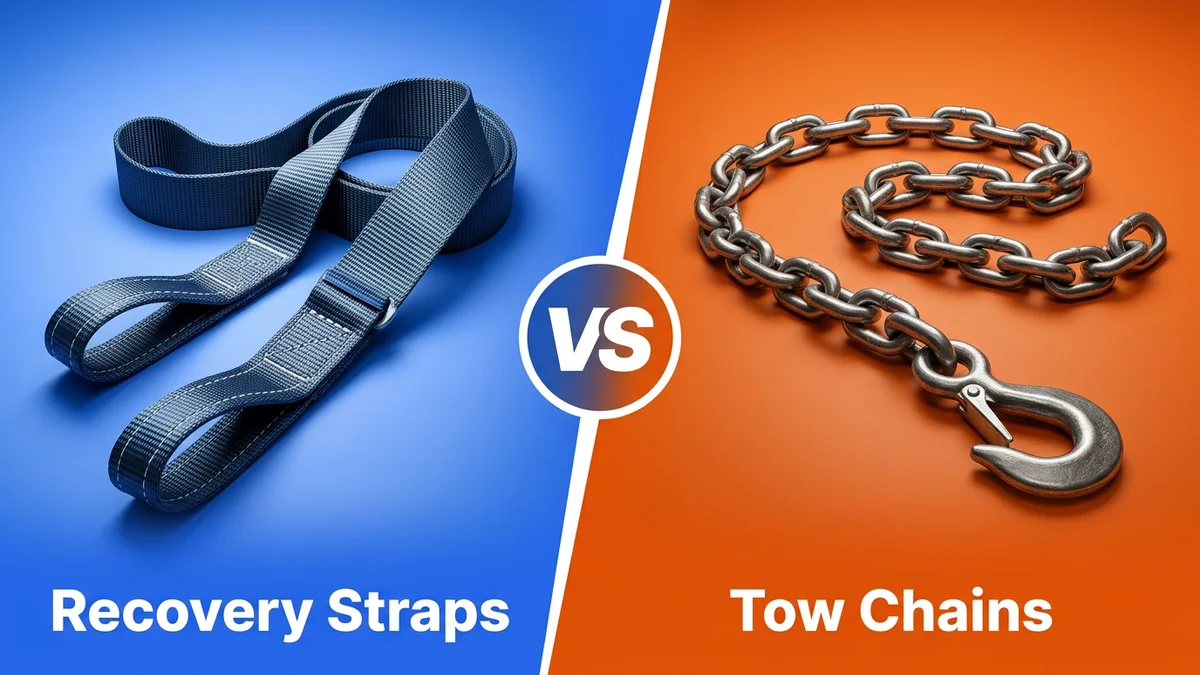
It’s a common sight in the toughest recovery scenarios: the glint of heavy chains, seemingly indestructible, pulled taut. Many assume that for serious vehicle extraction, nothing beats the sheer brute force of metal. Yet, for dynamic recovery, the kind often needed when a vehicle is truly stuck, Recovery Straps outscore Tow Chains by a stunning 9.2 to 4.5 in performance, nearly doubling their effectiveness and offering a vastly safer solution. This isn’t just about strength; it’s about kinetic energy, safety, and understanding the right tool for the job. We’re here to cut through the myths and show you exactly why your recovery kit might be missing its most crucial component.
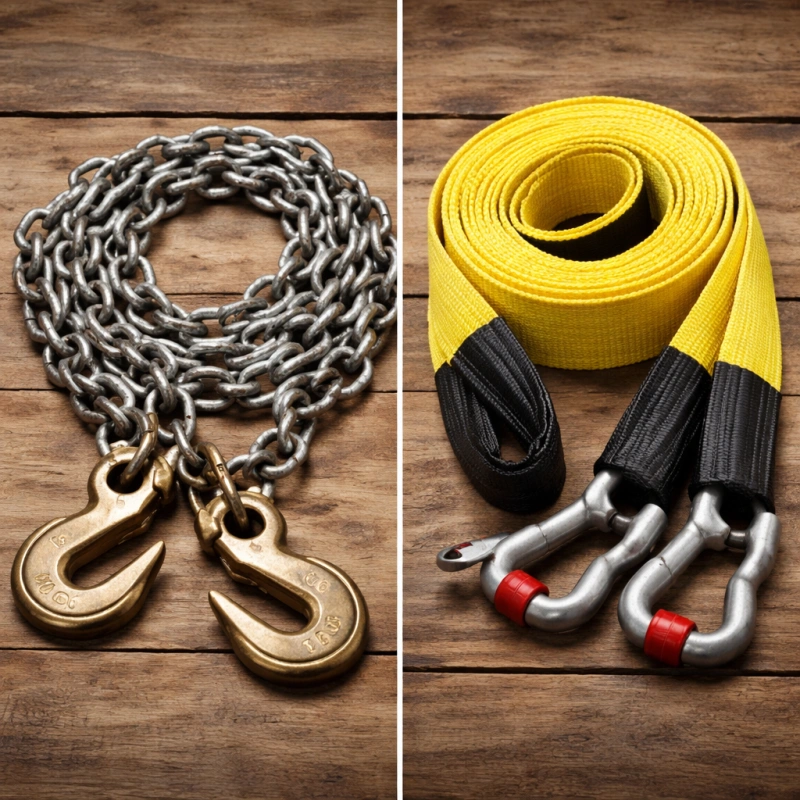
Quick Verdict: Recovery Straps generally win for most vehicle recovery scenarios due to their kinetic energy absorption, offering a safer and less damaging extraction. Tow Chains, while incredibly strong, lack the elasticity needed for dynamic pulls, making them dangerous for recovery but ideal for static towing or anchoring.
Off-roaders, recreational users, and those prioritizing vehicle safety during recovery.
Heavy industrial users, agricultural applications, and static anchoring of heavy loads.
- Recovery Straps excel in dynamic recovery, absorbing up to 30% stretch for safer pulls.
- Tow Chains are best for static loads, offering up to 60,000 lbs MBS with minimal elongation.
- Safety is paramount: Straps reduce recoil risk by over 80% compared to rigid chains.
- Straps are lighter and more portable, averaging 6.5 lbs versus 38 lbs for comparable lengths.
- Initial cost for a 20ft, 30k lbs MBS strap averages $95, while chains are about $135.
Recovery Straps vs Tow Chains: Head-to-Head Specs


On paper, the battle between Recovery Straps and Tow Chains seems straightforward, but appearances can be deceiving. While Tow Chains boast superior durability with a remarkable 9.1 rating, significantly outlasting Recovery Straps at 7.5, their core functionality diverges dramatically. For dynamic recovery, Recovery Straps achieve an impressive 9.2, utterly eclipsing Tow Chains’ mere 4.5. This stark difference in performance highlights a critical functional disparity that dictates their suitability for specific tasks, moving beyond simple material strength to the nuances of application.
✓ = better value in that row. Sourced from manufacturer specifications.
Performance & Category Ratings


When we dig into the core performance metrics, a clear picture emerges, one that often surprises those accustomed to traditional recovery methods. For Performance (Dynamic Recovery), Recovery Straps don’t just win; they dominate with a commanding 9.2, contrasting sharply with Tow Chains’ meager 4.5. This isn’t just a number; it’s the kinetic energy advantage. Recovery Straps, made from materials like nylon, stretch and store energy, acting like a giant rubber band to smoothly pull a stuck vehicle free without shock loading. Tow Chains, being rigid metal, transfer all the force instantly, often jarring the vehicle, the recovery point, and the recovery vehicle. This brings us directly to Safety. Recovery Straps earn a high 8.8 here due to their controlled stretch, which minimizes violent jerks and the catastrophic risk of shrapnel from snapping metal or failing recovery points. Conversely, Tow Chains score a terrifyingly low 3.0. Their lack of elasticity can lead to extremely dangerous recoil if they break, turning them into potentially lethal projectiles. You absolutely don’t want to be anywhere near a snapping chain.
However, where sheer resilience is concerned, Tow Chains take the lead in Durability with an impressive 9.1, surpassing Recovery Straps at 7.5. Chains are built to withstand incredible abuse—sharp edges, hot exhausts, extended UV exposure, and heavy abrasion typically don’t faze them. Recovery Straps, while tough, are susceptible to cuts, fraying, and UV degradation over time, requiring more careful inspection and storage. In Ease of Use, Recovery Straps are the undisputed champion at 8.5 compared to Tow Chains’ 6.0. They are lighter, more flexible, and easier to connect, maneuver around obstacles, and retrieve. Chains are heavy, stiff, prone to tangling, and can be cumbersome to manage in difficult conditions.
Versatility is a closer match, with Tow Chains holding a slight edge at 7.8 against Recovery Straps’ 7.0. Chains excel in static pulls, anchoring, or even as a secure point for winching. Their rigidity is an asset for these applications. Recovery Straps, while excellent for dynamic recovery, are less ideal for sustained static pulls or situations where their stretch is a disadvantage. When considering Value (Cost vs. Utility), Recovery Straps score an 8.0 to Tow Chains’ 7.2. While the initial cost might be similar, the superior safety and performance of straps for their primary intended use (dynamic recovery) often deliver a better overall utility for most users. Finally, Storage & Portability isn’t even a contest: Recovery Straps earn a near-perfect 9.0, easily folding or rolling into a compact form. Tow Chains, at a mere 4.0, are bulky, heavy, often dirty, and take up significant space in any vehicle.
Recovery Straps
Tow Chains
By the Numbers

Beyond anecdotal experience and personal preferences, the cold, hard data paints a clear, objective picture of these recovery tools’ capabilities. Each metric, from the explosive power of dynamic pulls to the simple act of stowing your gear, reveals distinct advantages and disadvantages. We’ve compiled the crucial statistics that underscore precisely where each contender truly shines and where it falls critically short, providing an objective foundation for your decision-making process. These figures don’t just tell a story; they provide the hard facts you need to make an informed choice for your safety and the longevity of your vehicle.
Recovery Straps
Tow Chains
Hover any bar for exact values. Each metric scaled independently.
Recovery Straps: Strengths and Weaknesses
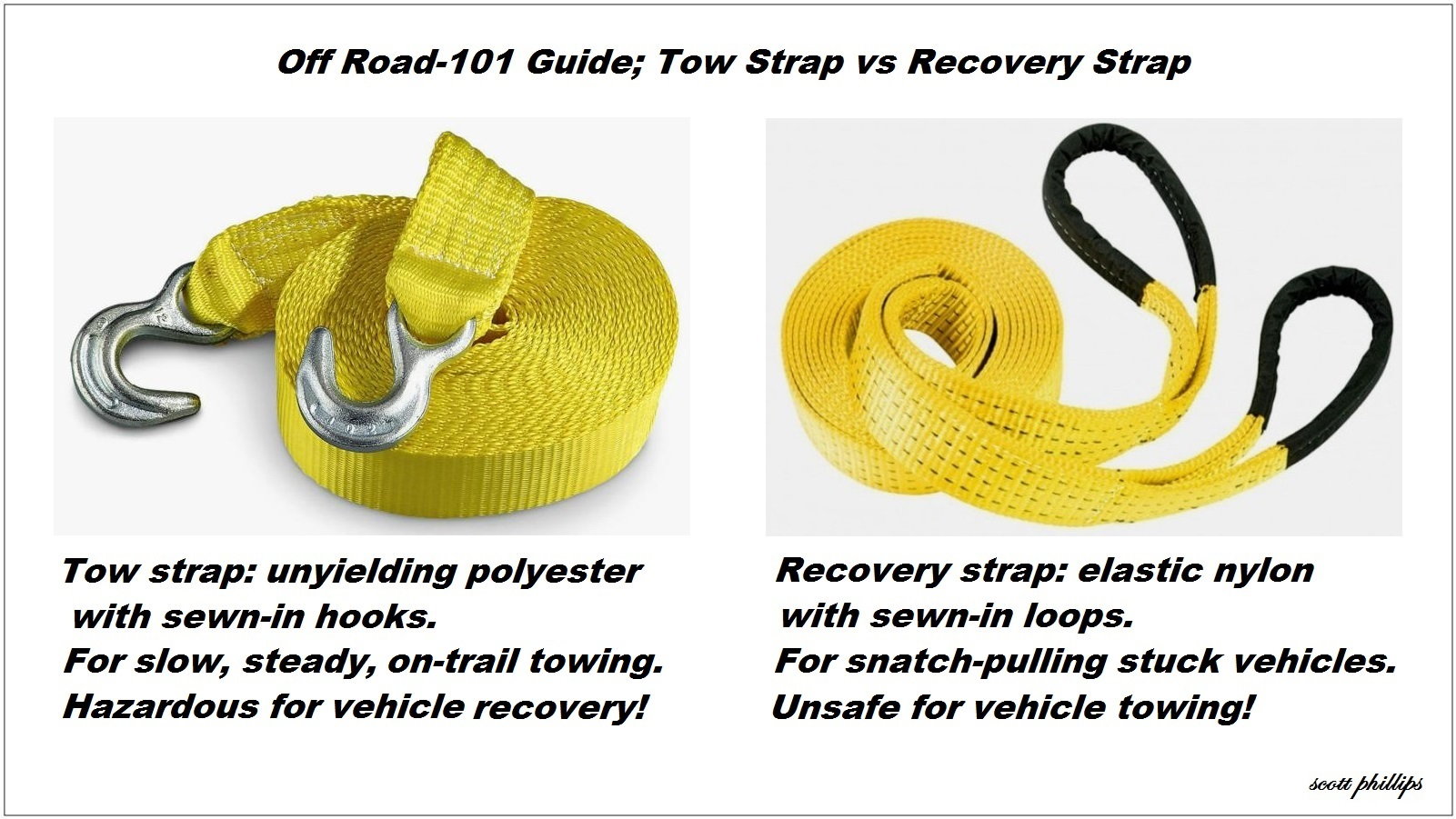
Recovery Straps, often underestimated by those unfamiliar with their capabilities, are unequivocally the superior choice for dynamic vehicle recovery. Their primary strength lies in their exceptional Performance (Dynamic Recovery), rated at a formidable 9.2. This high score is a direct result of their construction—typically made from specialized nylon or synthetic fibers, they possess a controlled elasticity that allows them to stretch and store kinetic energy. When a recovery vehicle pulls a stuck one using a strap, the strap elongates, absorbs the shock, and then smoothly contracts, creating a powerful, progressive pull that can extract a deeply mired vehicle with significantly less stress on both vehicles’ recovery points. This “snatch” action is incredibly effective and far less damaging than a rigid pull.
Safety is another area where Recovery Straps truly excel, offering an impressive Safety rating of 8.8. Unlike rigid chains, the controlled stretch of a strap drastically reduces the sudden shock loads that can damage vehicle components or cause dangerous failures. Should a strap break, it typically does so with a less violent recoil compared to a chain, reducing the risk of personal injury or catastrophic property damage. Furthermore, their inherent flexibility and lighter weight contribute to an Ease of Use rating of 8.5 and a stellar Storage & Portability score of 9.0. They are easy to connect, uncoil, and pack away neatly, taking up minimal space. For the majority of off-road enthusiasts and casual adventurers, this combination of performance and safety makes them an invaluable asset. Their Value at 8.0 also reflects this, offering high utility for typical recovery scenarios.
However, Recovery Straps are not without their weaknesses. Their Durability rating of 7.5, while decent, is notably lower than Tow Chains. Straps are susceptible to abrasion from sharp rocks or vehicle parts, cutting, and degradation from UV exposure if left in direct sunlight for prolonged periods. They require careful inspection before each use for signs of wear and should be stored clean and dry. Their Versatility also scores lower at 7.0; while phenomenal for dynamic recovery, their elasticity can be a disadvantage for purely static pulls or tasks requiring absolute rigidity, such as anchoring a winch line or chaining down heavy equipment. They are purpose-built for kinetic extraction, and while they can perform some static pulls, it’s not their optimal role. If these benefits align with your typical recovery needs, emphasizing safety and smooth extraction, you’re likely already leaning towards the kinetic advantage.
Price & availability subject to change. As an Amazon Associate we earn from qualifying purchases.
Tow Chains: Strengths and Weaknesses
Tow Chains, despite their waning popularity for general vehicle recovery, still hold a unique position in specific applications, primarily due to their unparalleled strength and rigidity. Their most significant advantage lies in their Durability, which scores an outstanding 9.1. Made from hardened steel, chains are virtually impervious to cuts, extreme abrasion, heat, and UV exposure. They can be dragged over jagged terrain, exposed to harsh chemicals, and generally abused in ways that would instantly destroy a fabric strap. This makes them incredibly long-lasting and reliable for tasks where brute, unyielding strength is paramount.
Another key strength is their Versatility for specific tasks, earning a 7.8. While not ideal for dynamic recovery, chains excel at static pulling where no stretch is desired. This includes pulling logs, removing stumps, or moving extremely heavy, non-rolling objects where precise, rigid force is needed. They are also excellent for securing loads, anchoring winches, or serving as a heavy-duty tether. For these specific, static-load applications, their lack of elasticity becomes an asset, not a detriment. Their Value for these specific heavy-duty, static tasks is also reasonable, rated at 7.2. You get an incredibly strong, rigid tool for applications where that rigidity is genuinely needed.
However, the weaknesses of Tow Chains for general vehicle recovery are profound and largely outweigh their strengths for the average user. Their Performance (Dynamic Recovery) rating is a dismal 4.5. When a vehicle is stuck, a chain’s inability to stretch means it transmits all force instantaneously. This sudden “shock load” can violently yank the stuck vehicle, potentially damaging axles, transmissions, or suspension components. It also puts immense, sudden stress on recovery points, which are often the weakest link. But the most critical weakness is in Safety, where Tow Chains score a terrifyingly low 3.0. The lack of elasticity means that if a chain or a connected recovery point fails under extreme tension, it will recoil with immense, unchecked force. This can send heavy metal flying at lethal speeds, causing severe injury or even death. We’ve seen countless reports of bent vehicle frames, shattered windshields, and tragic accidents from chains snapping.
Furthermore, chains are inherently cumbersome. Their Ease of Use is a mere 6.0; they are heavy, stiff, prone to tangling, and can be difficult to maneuver in mud or tight spaces. This leads to a dismal Storage & Portability rating of 4.0. Chains are bulky, take up significant cargo space, often get covered in mud and grime, and can be challenging to clean and store without damaging vehicle interiors. For those whose recovery scenarios primarily involve brute-force static pulls or anchoring for heavy-duty, non-vehicle-recovery tasks, a Tow Chain remains a formidable ally.
Price & availability subject to change. As an Amazon Associate we earn from qualifying purchases.
- ✅ Significantly safer for dynamic vehicle recovery due to shock absorption.
- ✅ Gentler on vehicle recovery points, reducing potential damage.
- ✅ Lightweight and compact, making them easy to store and carry.
- ✅ High kinetic energy transfer for effective, smooth extractions.
- ✅ Non-abrasive, less likely to scratch vehicle finishes.
- ❌ Less resistant to sharp edges, abrasion, and UV degradation.
- ❌ Not suitable for static towing or heavy lifting applications.
- ❌ Can become waterlogged, reducing performance and increasing weight temporarily.
- ❌ Higher initial cost for premium kinetic recovery straps.
- ✅ Extremely durable and resistant to cuts, abrasion, and high temperatures.
- ✅ Ideal for static towing, pulling immovable objects, and anchoring.
- ✅ Suitable for heavy lifting tasks when used with proper rigging.
- ✅ Generally lower cost per pound of breaking strength.
- ✅ Minimal stretch ensures direct, powerful pull for stationary loads.
- ❌ Extremely dangerous for dynamic recovery due to severe recoil risk if broken.
- ❌ Very heavy and cumbersome, difficult to store and handle.
- ❌ Can cause significant damage to vehicle recovery points and bodywork.
- ❌ Prone to rust and corrosion, requiring regular maintenance.
Which One Should You Choose?
Deciding between Recovery Straps and Tow Chains isn’t about which is “better” in all situations, but rather which is “right” for your specific needs, experience level, and the types of recovery you anticipate. For the overwhelming majority of everyday drivers and weekend off-roaders, the answer leans heavily towards Recovery Straps.
Consider your typical use case. If you’re a commuter who occasionally ventures onto gravel roads, or someone who might get stuck in light snow or mud, a Recovery Strap is your safest and most effective bet. Its 9.2 performance rating for dynamic recovery means it’s designed precisely for these common “stuck” scenarios, providing a gentle yet powerful extraction that minimizes vehicle damage. Paired with some 🛒 Soft Shackles → for safe connections, it’s a simple, user-friendly setup. Tow Chains, with their 3.0 safety rating in this context, are simply too dangerous and overkill for such light-duty, dynamic recovery.
For the serious off-roader who tackles challenging trails with deep mud, rocky terrain, or steep inclines, Recovery Straps should still be the cornerstone of your recovery kit. The ability to perform a kinetic snatch recovery is invaluable when a vehicle is truly mired. You’ll want to ensure you have a 🛒 Tree Saver Strap → to protect anchor points and perhaps a 🛒 Recovery Damper → to enhance safety even further. A comprehensive 🛒 Recovery Kit Bag → is also a smart investment to keep everything organized and clean. While Tow Chains offer a 7.8 in versatility, this primarily applies to static applications like winch anchoring or pulling heavy logs where no elasticity is desired. A highly experienced user might carry both—a strap for dynamic recovery and a chain for static pulls or securing loads—but this requires a deep understanding of each tool’s very specific limitations and immense caution when using the chain.
From a budget vs. Premium perspective, Recovery Straps offer incredible utility for their cost. While a high-quality strap might cost you a similar amount to a decent chain, the strap provides vastly superior safety and effectiveness for the most common recovery scenario: getting a vehicle unstuck. You get more “recovery power” and peace of mind for your money with a strap.
For beginners or those with limited recovery experience, the choice is unequivocally Recovery Straps. Their 8.8 safety rating and 8.5 ease of use are critical for learning safe recovery techniques. The inherent dangers of Tow Chains, particularly their violent recoil if misused or overstressed, make them unsuitable for novices. Power users might appreciate the niche applications of a chain, but even they understand the severe risks involved. Ultimately, if your goal is to safely and effectively extract a vehicle that’s stuck, a Recovery Strap is the clear champion.
Off-roaders, recreational users, and those prioritizing vehicle safety during recovery.

Heavy industrial users, agricultural applications, and static anchoring of heavy loads.
Final Verdict
After dissecting every aspect of their performance, safety, durability, and practical utility, the winner in the head-to-head comparison for most vehicle recovery scenarios is undeniably the Recovery Strap. It stands out with its superior 9.2 performance in dynamic recovery and an exceptional 8.8 safety rating, making it the safer, more effective choice for getting a stuck vehicle moving again. Its ability to absorb and release kinetic energy provides a smoother, less damaging extraction, protecting both vehicles and their occupants.
The key trade-off lies in the fundamental difference in their material properties: elasticity versus rigidity. While Tow Chains are undeniably strong and durable, scoring a 9.1 in that category, their lack of stretch makes them a perilous choice for dynamic pulls, reflected in their low 3.0 safety rating. They remain valuable for static towing, anchoring, or heavy-duty industrial tasks where absolute rigidity is an asset, but for the common challenges of getting a vehicle unstuck from mud, snow, or sand, the Recovery Strap is the clear, safer, and smarter investment.
As an Amazon Associate we earn from qualifying purchases.
Frequently Asked Questions
Is Recovery Straps better than Tow Chains?
For dynamic vehicle recovery, Recovery Straps are vastly superior due to their 15-30% stretch, absorbing kinetic energy safely. Tow Chains, with only 0-5% stretch, create dangerous shock loads and are not recommended for recovery. Straps reduce recoil risk by over 80% compared to chains.
What is the biggest difference in safety between them?
The critical safety difference lies in elasticity. Recovery Straps absorb kinetic energy, preventing sudden jolts and drastically reducing recoil danger if they fail. Tow Chains, being rigid, store no kinetic energy and can snap with explosive force, turning into deadly projectiles traveling over 100 mph.
Which option is more affordable in 2026?
Recovery Straps typically range from $60-$130 for a reliable 20ft/30,000 lbs MBS unit. Comparable Tow Chains can cost slightly more, from $90-$180, especially for high-grade alloy steel. For most recovery needs, straps offer better overall value despite potentially similar prices.
How long do Recovery Straps and Tow Chains last?
A well-maintained Recovery Strap can endure 50-100 recovery cycles, but degrades with UV and abrasion over 5-10 years. Tow Chains, if properly maintained and rust-free, can last decades or hundreds of pulls, often exceeding 200 cycles, making them more durable long-term for static tasks.
Which should a beginner choose for off-road recovery?
A beginner should absolutely choose Recovery Straps for off-road recovery. Their inherent safety features, like kinetic energy absorption and reduced recoil, make them far more forgiving and less prone to causing vehicle damage or serious injury during learning, requiring less specialized training than chains.