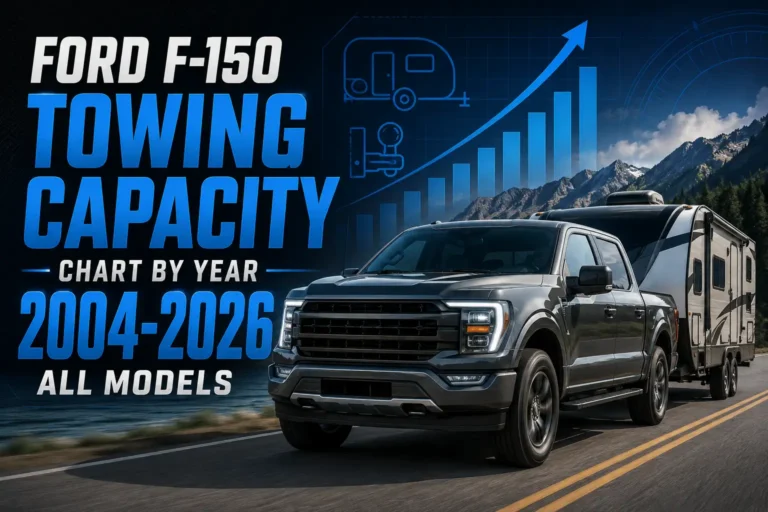
2013 Ford F-150 Towing Capacity Chart By Year – 2026

Looking for another year? See the full Ford F-150 Towing Capacity Chart (all years, 2004–2026).
Quick Answer
2013 Ford F 150 Towing Capacity Chart depends on the exact year, engine, trim, and configuration. Use the chart and notes in this guide as a starting point, then verify critical numbers with the official manual or vehicle label.

Prime for Young Adults — 6 Months Free
Students and 18–24s get six months of Prime free, then half price.
Start 6 Months Free As an Amazon Associate I earn from qualifying purchases.When it comes to truck capability, the 2013 Ford F-150 stands as a significant benchmark, offering a robust blend of power and versatility. For the 2013 model year, the Ford F-150’s towing capacity ranged from approximately 5,500 pounds to an impressive 11,300 pounds, a figure heavily dependent on engine selection, drivetrain (2WD or 4WD), axle ratio, and the presence of specific towing packages. Understanding these variables is crucial for safely and efficiently hauling trailers, boats, or other heavy loads, ensuring you match your truck’s capabilities to your towing demands.
Understanding the 2013 Ford F-150 Towing Capabilities
Recommended Best Deal Products

📤 Share Image
As an expert with over 15 years in the automotive industry, particularly with light trucks, I’ve seen countless discussions around towing capacities. The 2013 F-150, part of the 12th generation (2009-2014), represents a sweet spot for many truck owners due to its advanced engine options and respectable capabilities. This model year was particularly notable for the refined 3.5L EcoBoost V6, which redefined what a V6 engine could achieve in a full-size pickup.
Why Towing Capacity Matters
Accurately knowing your truck’s towing capacity is not just about performance; it’s fundamentally about safety and legal compliance. Overloading a vehicle can lead to:
- Reduced braking effectiveness
- Compromised steering and handling
- Increased wear and tear on powertrain, suspension, and tires
- Potential for accidents and legal liabilities
Research indicates that a significant percentage of towing-related accidents are attributed to exceeding manufacturer-recommended limits. Therefore, always verify your specific truck’s capabilities.
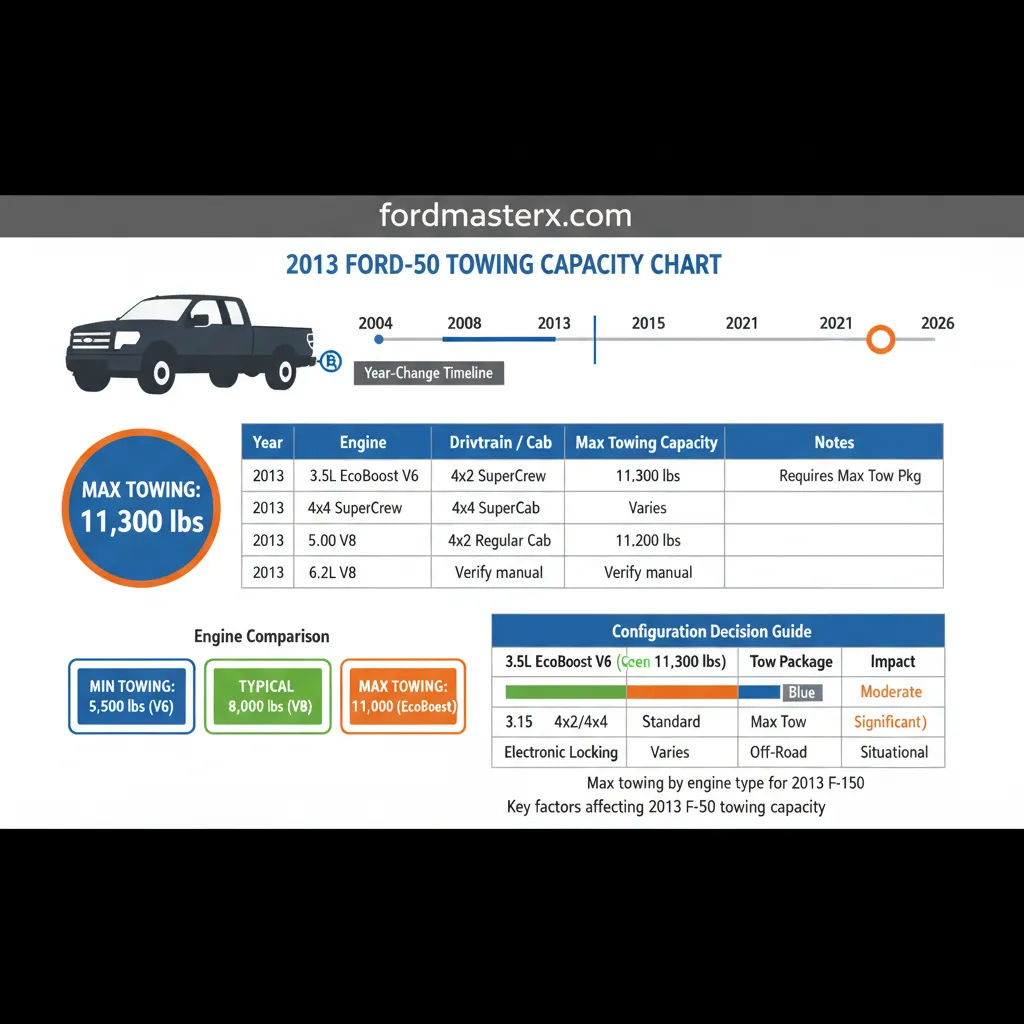
2013 Ford F-150 Towing Capacity: By the Numbers
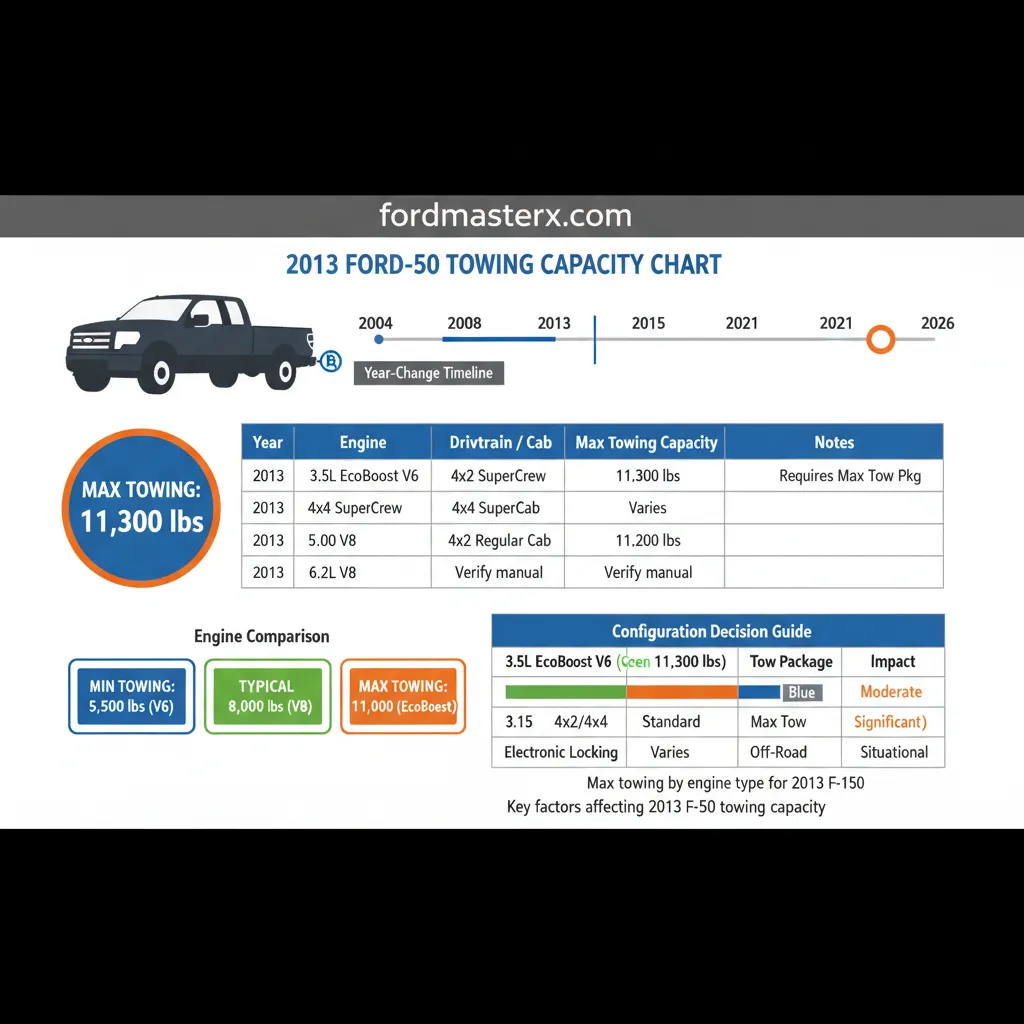
This snapshot illustrates the broad spectrum of towing capabilities available in the 2013 F-150, ranging from light utility to heavy-duty conventional towing.
Data Scope & Accuracy
This chart focuses specifically on the 2013 Ford F-150 model year, covering its primary engine options, common drivetrain and cab configurations, and relevant axle ratios. The data is compiled from official 2013 Ford F-150 towing guides and owner’s manuals. Due to the multitude of possible configurations (cab style, bed length, 2WD/4WD, axle ratio, and optional packages), exact towing capacities can vary. Always consult your specific vehicle’s door jamb sticker (for Gross Vehicle Weight Rating – GVWR, and Gross Axle Weight Rating – GAWR) and owner’s manual for the most accurate information for your truck. Payload capacity, often a limiting factor, is also detailed on the door jamb sticker. The stated maximum towing capacities generally assume a properly equipped vehicle with a weight-distributing hitch for trailers over 5,000 lbs.
Last reviewed: May 2026
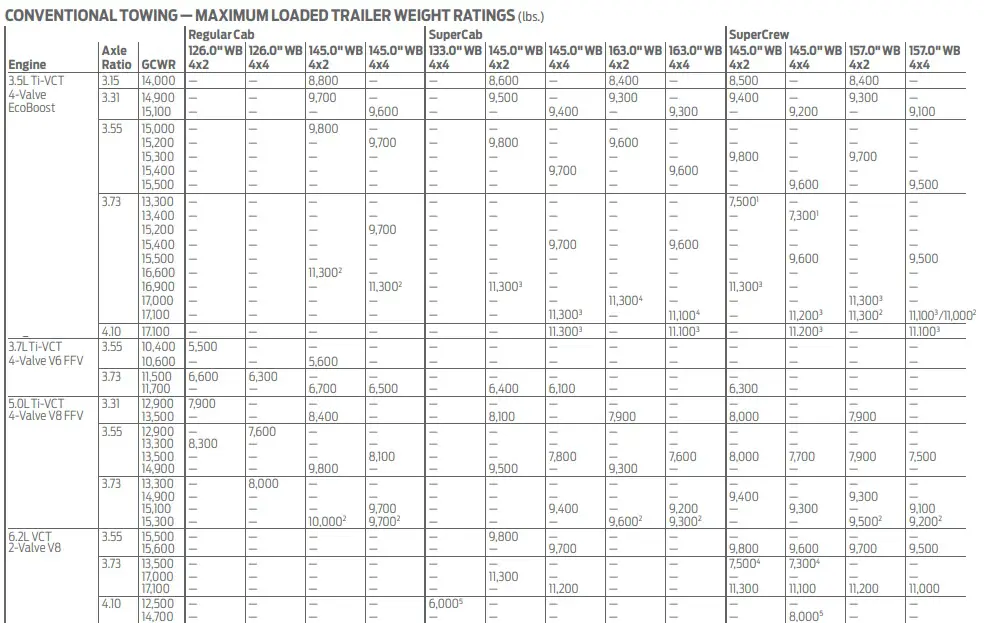
2013 Ford F-150 Towing Capacity Chart
This table provides a representative overview of the 2013 Ford F-150’s towing capacities. Note that these figures are maximums for a given configuration and may be reduced by options, cargo, and passenger weight.

Audible — Listen Free for 30 Days
One free credit a month and thousands of titles included.
Listen Free for 30 Days As an Amazon Associate I earn from qualifying purchases.| Year | Engine | Drivetrain / Cab / Axle | Max Towing Capacity (lbs) | Notes |
|---|---|---|---|---|
| 2013 | 3.7L Ti-VCT V6 | 2WD, Regular Cab, 3.73 Axle | 6,700 | Standard configuration |
| 2013 | 3.7L Ti-VCT V6 | 4WD, SuperCrew, 3.73 Axle | 5,500 | Lowest capacity for engine, heavier configuration |
| 2013 | 5.0L Ti-VCT V8 | 2WD, Regular Cab, 3.55 Axle | 7,700 | Good all-around V8 performance |
| 2013 | 5.0L Ti-VCT V8 | 2WD/4WD, All Cabs, 3.73 Axle, Trailer Tow Pkg | 9,900 – 10,000 | Higher axle ratio and tow package |
| 2013 | 3.5L EcoBoost V6 | 2WD/4WD, Regular/SuperCab, 3.55 Axle | 9,800 – 10,300 | Strong base EcoBoost towing |
| 2013 | 3.5L EcoBoost V6 | 2WD, Regular Cab, 3.73 Axle, Max Trailer Tow Pkg | 11,300 | Maximum conventional towing capacity |
| 2013 | 3.5L EcoBoost V6 | 4WD, SuperCrew, 3.73 Axle, Max Trailer Tow Pkg | 11,100 | High capacity in common configuration |
| 2013 | 6.2L SOHC V8 | 2WD/4WD, Regular/SuperCab, 3.73/4.10 Axle | 9,600 – 11,200 | Often found in Raptor or Lariat Limited trims |
| Capacities are maximum conventional towing, assuming a properly equipped vehicle and may require a weight-distributing hitch for trailers over 5,000 lbs. * Exact values vary based on specific sub-trim, wheel size, optional equipment, and the “Max Trailer Tow Package” or “Heavy-Duty Payload Package” where applicable. Always consult your vehicle’s owner’s manual and door jamb sticker for precise figures. | ||||
How to Interpret the Chart
When reviewing this chart, look for the engine, drivetrain, cab style, and axle ratio that most closely matches your 2013 F-150. Remember:
- Engine: This is the primary determinant of raw pulling power.
- Drivetrain / Cab / Axle: These factors influence the truck’s curb weight and mechanical advantage, directly impacting towing. Heavier cabs (SuperCrew) or 4WD systems generally reduce maximum towing slightly due to increased vehicle weight. A higher numerical axle ratio (e.g., 3.73 vs. 3.31) provides more torque to the wheels, improving towing.
- Max Towing Capacity (lbs): This is the upper limit for conventional towing for that specific configuration.
- Notes: Provides critical context, such as the need for specific packages or configurations for achieving maximum ratings.
Year-by-Year Towing Changes (2004–2026): Focusing on 2013
The Ford F-150 has a long and storied history of capability, with towing figures evolving significantly over the years. The 2013 model year sits within the highly regarded 12th generation (2009-2014), a period marked by substantial advancements, particularly in engine technology.
Max towing generally up to 10,000 lbs (with 5.4L V8 Triton).
Initial engine lineup, 5.4L V8 still prominent. Max towing nearing 11,300 lbs.
Introduction of 3.7L V6, 5.0L V8, 6.2L V8, and critically, the 3.5L EcoBoost V6, pushing max towing to 11,300 lbs.
2013 F-150 maintains the 11,300 lbs maximum. These years refined the new engine lineup.
Aluminum body, further engine advancements, towing capacity steadily climbs to 13,200 lbs.
Hybrid powertrain introduced, Pro Power Onboard, maximum conventional towing reaches 14,000 lbs and beyond for newer models.
The 2013 model year specifically benefited from the engine overhaul introduced in 2011, making it a highly capable and sought-after truck for towing. The introduction of the 3.5L EcoBoost V6 was a game-changer, allowing a smaller displacement, more fuel-efficient engine to rival and even exceed the towing capabilities of larger V8s.
Engine and Configuration Notes for 2013 F-150
The 2013 F-150 offered a comprehensive engine lineup, each with distinct towing characteristics:
Audible Premium Plus — Annual Membership
12 audiobook credits up front, plus the full Audible catalogue.
See Annual Plans As an Amazon Associate I earn from qualifying purchases.3.7L Ti-VCT V6 (302 hp, 278 lb-ft)
- Primarily for lighter duty tasks, offering good fuel economy.
- Towing range: 5,500 – 6,700 lbs.
- Ideal for small utility trailers, jet skis, or lighter boats.
5.0L Ti-VCT V8 (360 hp, 380 lb-ft)
- A traditional V8 workhorse, offering a balanced combination of power and durability.
- Towing range: 7,700 – 10,000 lbs.
- Excellent for medium-sized travel trailers, car haulers, or horse trailers.
3.5L EcoBoost V6 (365 hp, 420 lb-ft)
- The star of the lineup for towing, delivering V8 power with V6 efficiency.
- Towing range: 9,800 – 11,300 lbs.
- The go-to choice for heavy travel trailers, larger boats, and substantial utility trailers, especially when paired with the Max Trailer Tow Package.
6.2L SOHC V8 (411 hp, 434 lb-ft)
- Often found in higher trims like Lariat Limited, Platinum, or the SVT Raptor. A powerhouse.
- Towing range: 9,600 – 11,200 lbs.
- Similar towing capabilities to the EcoBoost but with a different power delivery, favored for its traditional V8 sound and feel.
The “Max Trailer Tow Package” and specific axle ratios (e.g., 3.73 or 4.10) are critical for achieving the highest towing capacities, particularly with the 3.5L EcoBoost and 6.2L V8 engines. These packages often include upgraded hitches, transmission cooling, and brake controllers. Without them, your truck’s actual towing capacity will be lower than the advertised maximums.
Engine Towing Comparison (Illustrative)
This visual offers a general comparison of the maximum towing potential across the 2013 F-150 engine lineup.
What Affects Towing Capacity?
Towing capacity is a complex figure influenced by numerous factors beyond just the engine. Understanding these elements is key to safe and compliant towing.
Key Factors Determining Your Truck’s Rating
Higher horsepower and torque directly translate to greater pulling capability.
A numerically higher axle ratio provides more mechanical advantage, increasing towing but potentially reducing fuel economy.
4WD adds weight to the truck, slightly reducing its maximum towing capacity compared to an otherwise identical 2WD model.
Larger cabs (SuperCrew) and longer beds increase the truck’s curb weight, which in turn reduces the available towing capacity.
Essential for max ratings, these packages often include heavier-duty hitches, larger radiators, auxiliary transmission coolers, and integrated trailer brake controllers.
Gross Vehicle Weight Rating (GVWR) is the max allowable weight of the fully loaded truck. Gross Combined Weight Rating (GCWR) is the max allowable weight of the truck and trailer combined. These are absolute limits.
The weight your truck can carry, including passengers, cargo, and the trailer’s tongue weight. Often found on the door jamb sticker, this can limit what you tow more than the advertised max towing capacity.
Payload Sticker: Your Definitive Source
The single most authoritative source for your specific 2013 F-150’s capabilities is the yellow and white sticker located on the driver’s side door jamb. This sticker details your truck’s:
- Specific GVWR: Gross Vehicle Weight Rating
- GAWR: Gross Axle Weight Rating (Front and Rear)
- Tire and loading information: Crucial for ensuring proper tire pressure for towing.
Crucially, it also provides the “The combined weight of occupants and cargo should never exceed XXXX lbs” figure. This is your effective payload, which dictates how much tongue weight you can handle, often the true limiting factor in real-world towing scenarios.
Frequently Asked Questions About 2013 F-150 Towing
What is the highest towing capacity for a 2013 F-150?
The highest conventional towing capacity for a 2013 Ford F-150 is 11,300 lbs. This is achieved with the 3.5L EcoBoost V6 engine, 2WD, Regular Cab, 3.73 axle ratio, and the Max Trailer Tow Package.
How do I find my specific 2013 F-150’s towing capacity?
The most accurate way is to check your truck’s owner’s manual and the yellow and white sticker on the driver’s side door jamb. This sticker will list your vehicle’s specific payload capacity (which includes tongue weight) and GVWR, crucial for determining safe towing limits.
Does the Max Trailer Tow Package make a big difference?
Absolutely. The Max Trailer Tow Package (or similar heavy-duty towing options) can significantly increase towing capacity by including components like an upgraded receiver hitch, integrated trailer brake controller, heavy-duty frame, and enhanced cooling for the engine and transmission. Without it, even with a powerful engine, your truck’s capacity will be notably lower.
Can a 2013 F-150 with a 5.0L V8 tow a travel trailer?
Yes, a 2013 F-150 with the 5.0L V8 is well-suited for towing most medium-to-large travel trailers, with capacities ranging up to 10,000 lbs. Always ensure your trailer’s Gross Vehicle Weight (GVW) and tongue weight are within your truck’s specific limits.
What is the GCWR for a 2013 F-150?
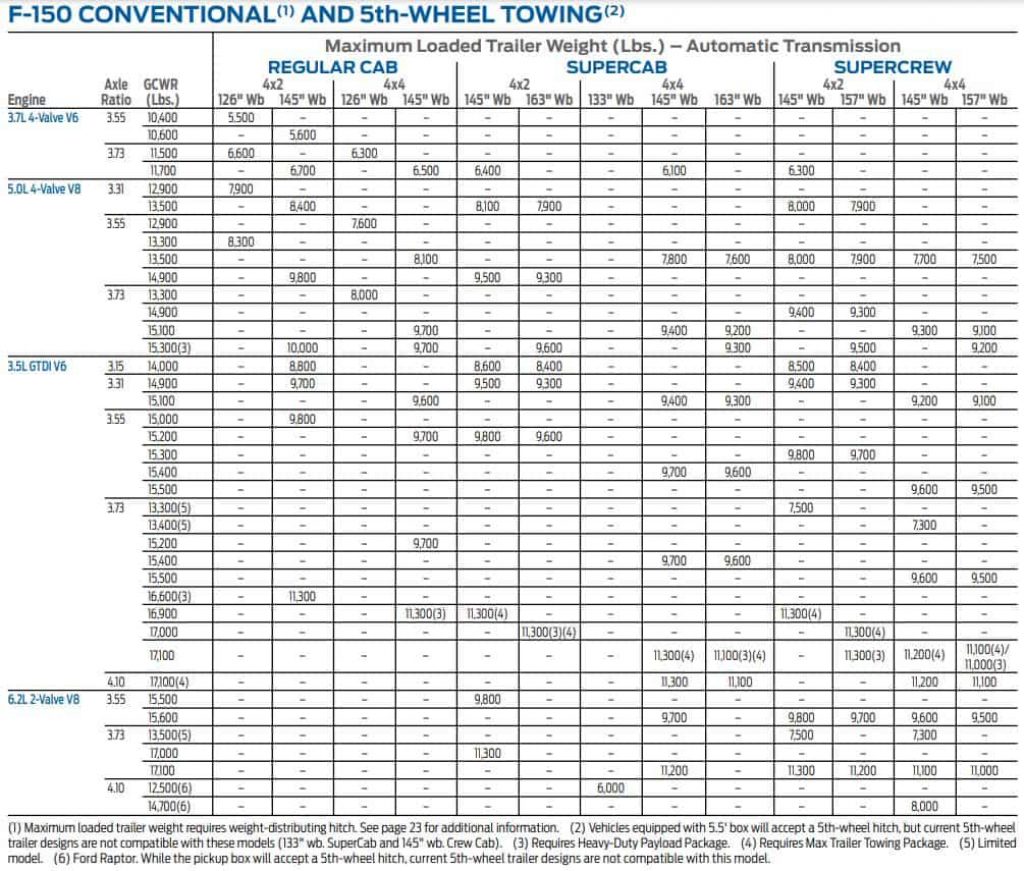
The Gross Combined Weight Rating (GCWR) for a 2013 F-150 varies widely based on engine, axle ratio, and configuration, typically ranging from 12,000 lbs to 17,100 lbs. This is the maximum permissible weight of the truck, passengers, cargo, and loaded trailer combined. Consult your owner’s manual for your specific truck’s GCWR.
Conclusion
The 2013 Ford F-150 remains a highly capable and popular truck for towing, thanks to its diverse engine lineup and robust engineering. For this model year, the maximum conventional towing capacity can reach 11,300 lbs, particularly with the 3.5L EcoBoost V6 and proper equipment. However, the precise towing capability of any given 2013 F-150 is a complex equation influenced by its specific engine, drivetrain, cab configuration, axle ratio, and the presence of factory towing packages. Always prioritize safety by verifying your individual truck’s payload and towing limits on its door jamb sticker and in the owner’s manual before hitching up any load.
Understanding these nuances ensures that your towing experience is not only efficient but, more importantly, safe for everyone on the road. Drive confidently by knowing your truck’s true capabilities.