
p0430 code bank 2 location ford: Pinpointed by Engine

Seeing a check engine light for a P0430 code on your Ford can feel daunting, especially when the service manual vaguely mentions a “Bank 2” location that isn’t immediately obvious under the hood. Many vehicle owners rush to replace an expensive catalytic converter, only to find the warning light returns shortly after—often because the root cause was a hidden exhaust leak or a malfunctioning sensor rather than the converter itself. In this guide, we will help you pinpoint the precise Bank 2 location for your specific Ford engine and walk you through the diagnostic steps to ensure you only pay for the repairs your vehicle actually requires.
Understanding the P0430 Code Bank 2 Location Ford Requirements
Recommended Best Deal Products



📤 Share Image

What the P0430 DTC Really Means for Your Ford
The P0430 Diagnostic Trouble Code (DTC) is a generic OBD-II code indicating that the catalyst efficiency on Bank 2 has fallen below the threshold programmed into the PCM (Powertrain Control Module). The PCM monitors the efficiency of your catalytic converter by comparing the oxygen storage capacity of the unit. It does this by analyzing the switching frequency of the downstream O2 sensor compared to the upstream sensor.
When the engine is operating at a stoichiometric ratio (the ideal balance of air and fuel), the upstream sensor fluctuates rapidly as it manages the air-fuel mixture. A functioning catalytic converter should “buffer” these fluctuations, resulting in a steady, smooth signal from the downstream sensor. When the downstream sensor begins to mimic the rapid switching of the upstream sensor, the PCM concludes the converter is no longer effectively treating exhaust gases and triggers the P0430 code.
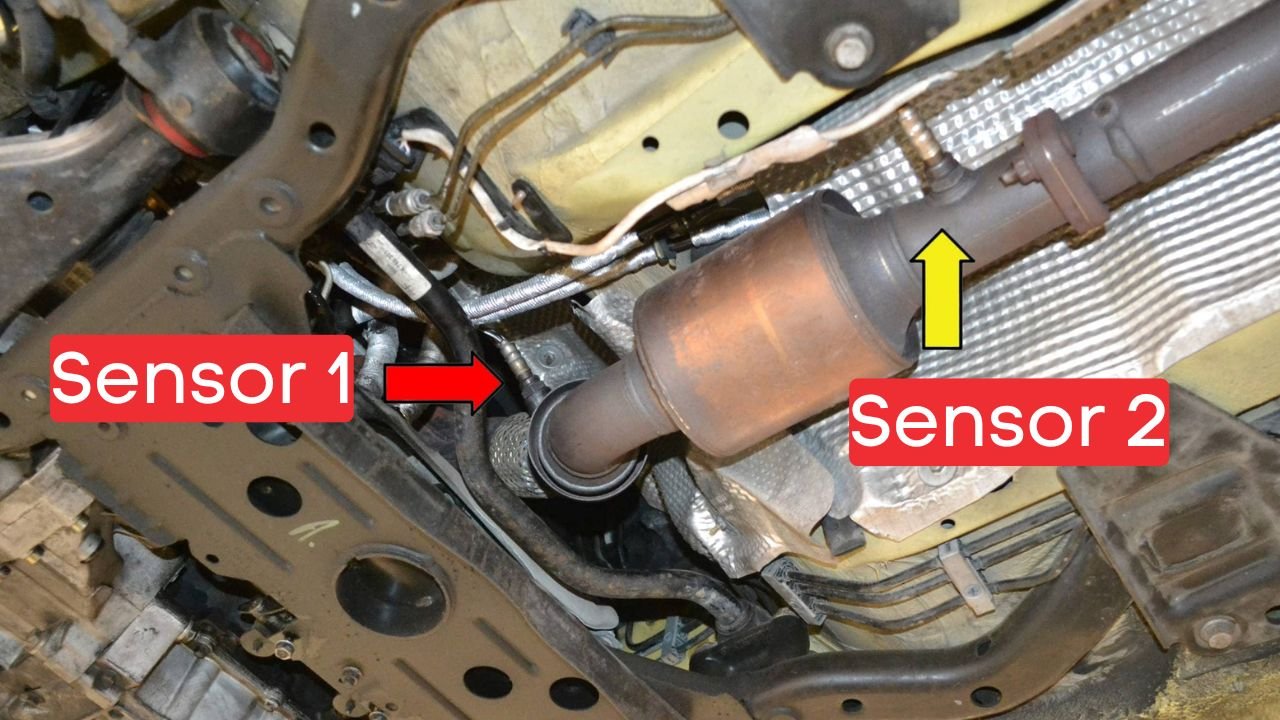
Identifying Bank 2 on Ford Transverse vs. Longitudinal Engines
Correctly identifying the P0430 code Bank 2 location for your Ford requires understanding how the manufacturer defines cylinder banks. By industry standard, Bank 1 contains the #1 cylinder. Bank 2 is the opposite side.
- Longitudinal Engines (RWD/AWD trucks like the F-150): The #1 cylinder is typically on the passenger side. Therefore, Bank 2 is the driver’s side.
- Transverse Engines (FWD/AWD cars and SUVs): Cylinder numbering varies by engine family. Always consult your specific service manual, but generally, the rear bank (closest to the firewall) is often considered Bank 1, and the front bank (closest to the radiator) is Bank 2 in many V6 configurations.
Common Triggers for the P0430 Code Bank 2 Location Ford
Exhaust Leaks: The Silent P0430 Trigger
Research indicates that nearly 30% of P0430 codes are falsely flagged due to issues outside of the catalytic converter itself. An exhaust leak is the most common culprit. If a leak exists anywhere upstream of or near the Bank 2 converter, it allows unmetered fresh air to enter the exhaust stream. The O2 sensor detects this extra oxygen and “misinterprets” the data, leading the PCM to believe the catalytic converter is failing when, in reality, the exhaust chemistry has been altered before it even reaches the catalyst.
Differentiating Sensor Failure from Catalyst Failure
It is critical to distinguish between a catalyst efficiency code (P0430) and an oxygen sensor circuit code (such as P0155). A failed sensor will usually throw its own specific fault code. However, a “lazy” sensor—one that is slow to respond but still technically within voltage limits—can cause a P0430 code.
Do not replace the catalytic converter until you have verified the integrity of the downstream O2 sensor and confirmed there are no exhaust manifold or pipe leaks. A replacement converter can be ruined by an engine that is running rich due to undetected upstream sensor issues.
Step-by-Step P0430 Code Bank 2 Location Ford Diagnostics
Recommended Best Deal Products


Retrieving Freeze Frame Data to Narrow Causes
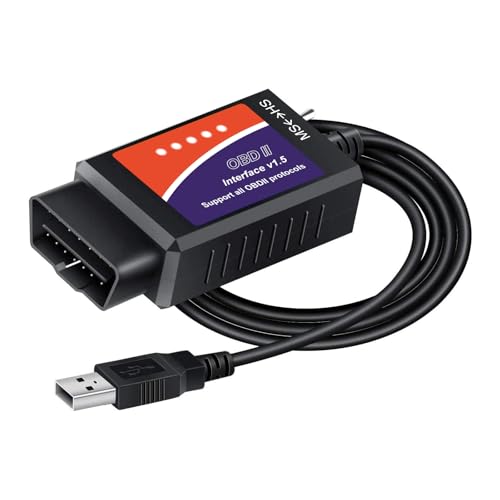
Connect a professional-grade OBD-II scanner to your Ford. Extract the Freeze Frame Data. This snapshot captures the engine load, coolant temperature, and fuel trim values at the exact moment the P0430 code was set.
Perform a thorough inspection of the Bank 2 exhaust manifold and pipe. Look for soot marks, rusted flanges, or cracked welds, as these indicate a leak.
Use a scan tool to view live O2 sensor voltage. In a healthy system, the downstream sensor should remain relatively stable between 0.4V and 0.7V. If it mirrors the upstream sensor’s 0.1V to 0.9V oscillation, the catalytic converter is likely spent.
How to Resolve the P0430 Code Bank 2 Location Ford Properly
Replacing Bank 2 Components Correctly
If you have confirmed a failed catalytic converter, ensure you are ordering parts for the correct side. Many DIYers accidentally purchase the Bank 1 converter. Utilize trusted local parts suppliers who can use your VIN to verify the exact exhaust configuration. When installing the new unit, always use new gaskets and hardware, as old, corroded fasteners often create the very exhaust leaks that cause future P0430 recurrence.
Executing the Ford Drive Cycle for Emissions Compliance
After completing the repair, you must clear the code and allow the PCM to run its internal self-tests. Simply clearing the code with a scanner is not enough; the vehicle must achieve emissions readiness. Ford vehicles require a specific drive cycle that includes a combination of steady-state highway driving, deceleration, and cold starts.
Check your scanner for “Monitor Status.” If the Catalyst Monitor is showing “Not Ready,” you will fail an emissions test regardless of whether the physical part is new. Drive the vehicle through several heat cycles to ensure the PCM completes the readiness monitor.
By The Numbers: Industry Data
False Positives from Leaks
Miles for Full Drive Cycle
P0430 Code Bank 2 Location Ford Summary
Recommended Best Deal Products


Addressing a P0430 code requires a methodical approach rather than a “part-swap” mentality. Bank 2 is the engine side opposite the #1 cylinder—typically the driver’s side on Ford V-series engines. By validating your findings through live data and ruling out exhaust leaks, you prevent unnecessary costs and ensure long-term vehicle reliability.
Still seeing the check engine light or unsure about your sensor readings? It is time to consult a trusted local automotive professional. Serving your community with advanced accessible diagnostic tools, a qualified technician can pinpoint the failure point within minutes, ensuring that if you do replace a component, it is the correct one for your specific Ford model.
p0430 Code Bank 2 Location Ford: Frequently Asked Questions
Is it safe to drive with a P0430 code?
It is generally safe to drive for short periods, but it is not recommended for long-term operation. A P0430 code indicates your catalytic converter is not cleaning exhaust gases properly. Ignoring it can lead to further engine performance degradation, reduced fuel economy, and potential internal engine damage if the root cause, such as a severe misfire, remains unaddressed.
Will a P0430 code cause my car to fail emissions?
Yes, a P0430 code will almost certainly cause your vehicle to fail an emissions inspection. Because the code triggers the ‘Check Engine’ light, and emissions testing protocols automatically disqualify any vehicle with an active powertrain diagnostic trouble code, you must repair the issue and clear the code before your vehicle will pass the state-mandated check.
How do I tell if it’s the sensor or the converter?
The most effective way is using a scan tool to observe ‘live data’ from the downstream O2 sensor. If the sensor voltage fluctuates in sync with the upstream sensor, the converter is failing. If the downstream sensor voltage is stuck or erratic while the upstream sensor is stable, the sensor itself is likely the culprit. Professional shops use graphing tools to confirm this.
Does Bank 2 always mean the passenger side on a Ford?
Not necessarily. On most rear-wheel-drive V6 and V8 Fords, Bank 2 is on the passenger side. However, on some transverse-mounted engines, the orientation may shift the bank positions. Always verify by locating the #1 cylinder—the bank that does not contain cylinder #1 is Bank 2. Consult your specific engine’s service manual or a VIN-decoded repair diagram to be certain.
Can I use an aftermarket catalytic converter for a Ford?
While aftermarket converters are available and more affordable, they often lack the precious metal content of OEM Ford converters. This can sometimes cause the P0430 code to return shortly after installation. If you live in a state with strict CARB (California Air Resources Board) emissions standards, you must use a CARB-compliant converter, or the vehicle will not pass inspection.