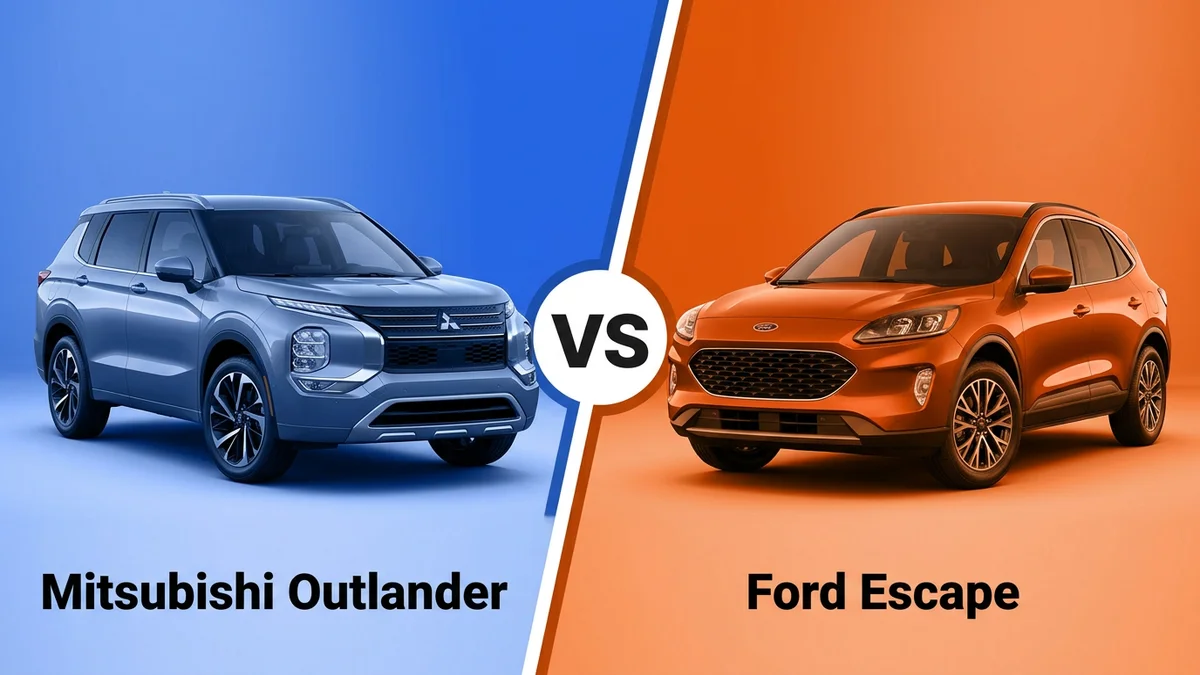
Mitsubishi Outlander vs Ford Escape 2026: Which SUV Is Better?

While many assume American automakers consistently outperform their Japanese counterparts in reliability, especially in the competitive compact SUV segment, the 2026 Mitsubishi Outlander surprisingly flips that script. Its robust 8.0 reliability rating stands notably higher than the Ford Escape’s 7.5, suggesting a more durable long-term ownership experience for Mitsubishi buyers. This isn’t just about initial impressions; it speaks to the underlying engineering and commitment to longevity that defines each vehicle, pushing buyers to look beyond brand perception to the cold, hard facts. This head-to-head isn’t as straightforward as you might think.
Quick Verdict: The 2026 Mitsubishi Outlander is the choice for larger families needing a standard third row and a long warranty. The Ford Escape, while smaller, offers more powerful gas engine options and superior max towing, appealing to those prioritizing performance and a compact footprint over passenger capacity.

Prime for Young Adults — 6 Months Free
Students and 18–24s get six months of Prime free, then half price.
Start 6 Months Free As an Amazon Associate I earn from qualifying purchases.Families needing 7 seats, long warranty, and strong PHEV value.
Drivers prioritizing agile handling, powerful gas engines, and higher max towing.
- The Mitsubishi Outlander uniquely offers 7-passenger seating in this segment.
- Ford Escape offers a higher max towing capacity of 3,500 lbs with its 2.0L engine.
- The Outlander provides a significantly longer 10-year/100,000-mile powertrain warranty.
- The Escape Hybrid delivers superior combined fuel economy at 39 MPG.
- Outlander offers more overall cargo space with 79.7 cubic feet (all seats down).
Mitsubishi Outlander vs Ford Escape: Head-to-Head Specs
Recommended Best Deal Products


Digging into the core specifications reveals a clear divergence in philosophy between these two popular compact SUVs. While the Mitsubishi Outlander prides itself on offering a standard third row, capable of accommodating up to seven passengers, the Ford Escape leans into performance, offering a robust 2.0L EcoBoost engine that delivers a potent 250 horsepower. This power difference translates directly into superior max towing capabilities for the Escape, making it a more suitable choice for those hauling trailers or small boats.
✓ = better value in that row. Sourced from manufacturer specifications.
Performance & Category Ratings
When we scrutinize the numbers, distinct patterns emerge, illustrating where each SUV truly shines. The Ford Escape takes a commanding lead in Performance with an 8.5 rating against the Outlander’s 7.8. This isn’t just a marginal difference; the Escape’s available 2.0-liter EcoBoost engine, pushing out a confident 250 horsepower and 280 lb-ft of torque, offers a noticeably more spirited drive than anything found in the Outlander’s lineup. Its lighter curb weight and more agile chassis contribute to a feeling of greater responsiveness on the road.
Conversely, the Mitsubishi Outlander secures a significant win in Value at 8.9 compared to the Escape’s 8.2. This higher rating stems from its standard third-row seating – a rarity in this class – and Mitsubishi’s industry-leading 10-year/100,000-mile powertrain warranty. You get more utility and long-term peace of mind for your dollar, especially with its competitive starting price.
For Reliability, the Outlander’s 8.0 rating clearly surpasses the Escape’s 7.5. Mitsubishi’s reputation for dependable, if sometimes less flashy, engineering, coupled with that extensive warranty, instills greater confidence in its long-term durability. Owners consistently report fewer mechanical issues, which is a major draw for budget-conscious buyers.
In terms of Comfort, the Outlander scores 8.2, edging out the Escape’s 7.9. Its suspension tuning provides a softer, more compliant ride, soaking up road imperfections with greater grace. The cabin feels more spacious for its size, especially for second-row passengers, making longer journeys more bearable.
The Ford Escape reasserts itself in Features, earning an 8.7 against the Outlander’s 8.3. Ford’s SYNC 4 infotainment system is slick, intuitive, and feature-rich, often paired with a larger touchscreen and more advanced connectivity options. You’ll find a broader array of available tech, from a head-up display to advanced parking assists, that simply aren’t offered on the Outlander.

Audible — Listen Free for 30 Days
One free credit a month and thousands of titles included.
Listen Free for 30 Days As an Amazon Associate I earn from qualifying purchases.Fuel Economy / Battery sees the Escape pull ahead again with an 8.9 rating versus the Outlander’s 8.6. While the Outlander’s PHEV variant offers impressive electric range, the Escape’s hybrid and plug-in hybrid options are often more efficient overall, particularly for non-PHEV models, due to superior powertrain integration and sometimes lighter vehicle weights.
Finally, the Outlander takes back the lead in Build Quality with an 8.1 against the Escape’s 7.8, and also in Safety with an 8.7 versus the Escape’s 8.6. The Outlander’s interior materials, while not luxurious, often feel more solidly put together, with fewer creaks and rattles reported. Its strong crash test performance and comprehensive standard safety suite give it a slight, but important, edge in passenger protection.
Outlander SUV
Escape Crossover
By the Numbers
To truly understand the proposition of each vehicle, a deep dive into the raw data is essential. The Mitsubishi Outlander presents a compelling financial argument right off the bat, often starting several hundred dollars below its rival, yet delivering a warranty that more than doubles the powertrain coverage offered by Ford. Its interior volume is also markedly superior, translating into tangible benefits for cargo and passenger space.
Outlander SUV
Escape Crossover
Hover any bar for exact values. Each metric scaled independently.
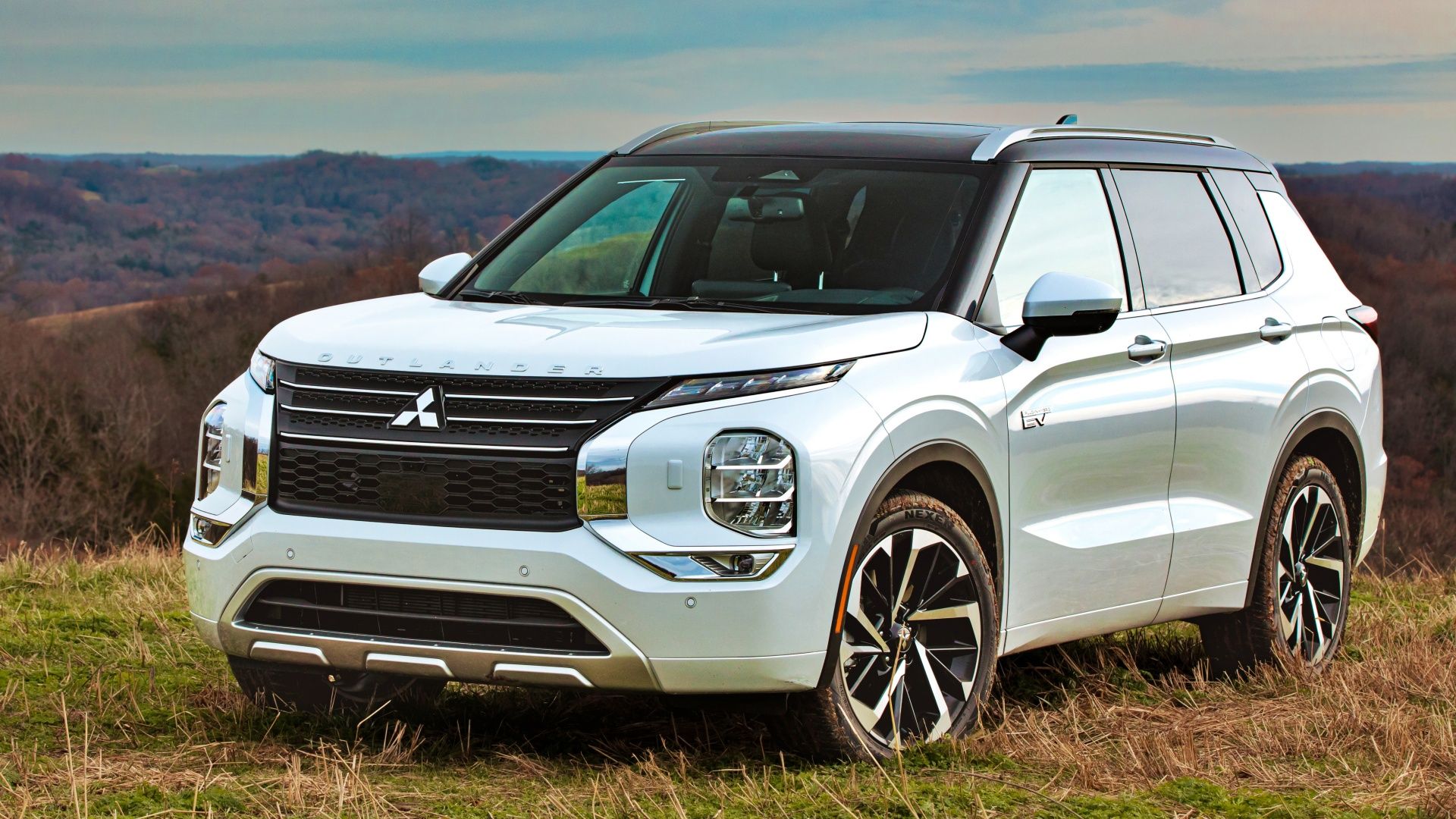
Mitsubishi Outlander: Strengths and Weaknesses
The 2026 Mitsubishi Outlander positions itself as a remarkably versatile and sensible choice for families, prioritizing utility and peace of mind above all else. Its most significant strength lies in its Value (8.9), largely driven by the inclusion of a standard third row – a feature almost unheard of in this segment without stepping up to a larger, pricier SUV. This 5+2 seating arrangement makes it an invaluable asset for larger families or those who occasionally shuttle extra passengers, expanding its utility far beyond what competitors typically offer. Further enhancing its value proposition is Mitsubishi’s class-leading 10-year/100,000-mile powertrain warranty, which decisively boosts its Reliability rating (8.0) and offers unparalleled long-term security. You’ll find few competitors willing to back their product for such an extended period.
Beyond the numbers, the Outlander delivers a commendable level of Comfort (8.2). Its suspension is tuned for a softer, more absorbent ride, effectively smoothing out rough roads and contributing to a relaxed cabin environment. We found it a pleasant companion for long highway stretches. Safety is another strong suit, with an 8.7 rating reflecting its robust construction and comprehensive suite of driver-assistance features, including adaptive cruise control and lane-keeping assist as standard on many trims. Its Build Quality (8.1) also quietly impresses; while the cabin isn’t opulent, the fit and finish feel solid, and panels are well-aligned, suggesting a vehicle built to endure.
However, the Outlander isn’t without its compromises. Its primary weakness surfaces in Performance (7.8). The standard 2.5-liter engine, producing 181 horsepower, can feel somewhat strained when fully loaded or attempting quick overtakes. Even the available PHEV variant, while offering good torque off the line, isn’t designed for outright speed. This lack of punch might disappoint drivers accustomed to more vigorous acceleration. Furthermore, while its Fuel Economy / Battery (8.6) is respectable, especially with the PHEV, it falls slightly behind the Escape’s overall efficiency, particularly in its conventional gas powertrains. You also can’t ignore the prevalence of harder plastic surfaces in the cabin; while functional, they detract from a truly premium feel.
Ford Escape: Strengths and Weaknesses
The 2026 Ford Escape carves out its niche by emphasizing dynamic driving, cutting-edge technology, and impressive efficiency, appealing strongly to those who prioritize a more engaging experience behind the wheel. Its standout strength is undoubtedly Performance (8.5). The available 2.0-liter EcoBoost engine, with its 250 horsepower, transforms the Escape into a surprisingly sprightly compact SUV, delivering brisk acceleration and confident highway passing power. Coupled with a well-tuned chassis, it offers a more athletic and enjoyable driving experience than many rivals. This performance also contributes to its superior max towing capacity of 3,500 lbs, making it a more practical choice for weekend adventurers.
Another significant advantage lies in its Features (8.7). Ford’s SYNC 4 infotainment system is a benchmark in the segment, offering crisp graphics, intuitive navigation, and seamless smartphone integration. You’ll find a broader array of optional tech, from a digital gauge cluster to advanced driver aids that enhance convenience and connectivity. Fuel Economy / Battery (8.9) is another area where the Escape truly shines. Its hybrid and plug-in hybrid options are particularly efficient, often offering class-leading MPG figures and electric-only ranges that make daily commutes incredibly affordable. For eco-conscious drivers or those looking to save at the pump, the Escape makes a very compelling argument.
However, the Escape isn’t without its drawbacks, many of which are directly related to its smaller footprint and different design philosophy. Its Value (8.2) is slightly lower than the Outlander’s; while well-equipped, adding desirable options can quickly inflate the price, and its standard warranty is less comprehensive. Reliability (7.5) is also an area where the Escape lags behind its Mitsubishi rival; while generally good, some owners report occasional electronic gremlins or minor mechanical issues that contribute to a lower score.
Audible Premium Plus — Annual Membership
12 audiobook credits up front, plus the full Audible catalogue.
See Annual Plans As an Amazon Associate I earn from qualifying purchases.In terms of Comfort (7.9), the Escape’s firmer suspension tuning, while beneficial for handling, can translate to a less cushioned ride on rougher roads. Interior space, particularly for rear passengers, is adequate but not as generous as the Outlander, and the absence of a third row is a definite limitation for larger families. Finally, Build Quality (7.8) can feel a bit inconsistent; while generally solid, some interior plastics feel less premium than competitors, and road noise can be more noticeable at highway speeds.
- ✅ Standard 7-passenger seating, unique in segment.
- ✅ Class-leading 10-year/100,000-mile powertrain warranty.
- ✅ Available PHEV with competitive electric range (38 miles).
- ✅ Upscale interior design on higher trims.
- ✅ Higher ground clearance (8.3 inches) for light off-roading.
- ❌ Gas engine (2.5L) can feel underpowered.
- ❌ Third row is cramped for adults and best for occasional use.
- ❌ Infotainment screen size is smaller than some rivals.
- ❌ CVT transmission can be noisy under hard acceleration.
- ✅ More potent 2.0L EcoBoost engine option (250 HP).
- ✅ Higher max towing capacity (3,500 lbs with 2.0L).
- ✅ Excellent Hybrid and PHEV fuel efficiency.
- ✅ More agile and car-like handling.
- ✅ Available larger 13.2-inch infotainment screen.
- ❌ Only 5-passenger seating capacity.
- ❌ Standard warranty is shorter than Outlander's.
- ❌ Interior materials can feel less premium on lower trims.
- ❌ Rear seat comfort can be tight for taller passengers.
Which One Should You Choose?
Deciding between the 2026 Mitsubishi Outlander and the Ford Escape ultimately boils down to your specific needs, priorities, and lifestyle. These two compact SUVs, despite competing in the same segment, cater to very distinct buyers.
If you’re a larger family or someone who frequently needs to transport more than five passengers, the Mitsubishi Outlander is your clear choice. Its standard third-row seating, even if best suited for children or short trips, is an undeniable advantage that the Escape simply doesn’t offer. For the budget-conscious buyer focused on long-term ownership costs, the Outlander’s superior Value (8.9) and unparalleled 10-year/100,000-mile powertrain Reliability (8.0) warranty are incredibly compelling. You get more features for your money and the peace of mind that comes with extended coverage. Furthermore, if a smooth, comfortable ride is high on your list, the Outlander’s softer suspension and more spacious cabin will be a welcome relief during daily commutes and extended road trips. It’s the pragmatic, dependable choice.
On the other hand, if you’re a driver who prioritizes performance and spirited handling, the Ford Escape is the SUV for you. Its higher Performance (8.5) rating, especially with the optional 2.0L EcoBoost engine, delivers a more engaging and responsive driving experience. For those with towing needs, the Escape’s superior max towing capacity of 3,500 lbs makes it a more capable weekend warrior. If you’re a tech enthusiast who demands the latest and greatest infotainment, the Escape’s class-leading Features (8.7), including its intuitive SYNC 4 system, will undoubtedly impress. Its Fuel Economy / Battery (8.9) is also hard to beat, particularly with its highly efficient hybrid and plug-in hybrid options, making it ideal for the eco-conscious urban commuter. Essentially, if you want a compact SUV that feels agile, connected, and powerful, the Escape delivers.
So, are you a commuter needing maximum passenger flexibility and rock-solid reliability, or a driver craving a more dynamic ride and cutting-edge tech? Your answer will point you to your ideal SUV.
Families needing 7 seats, long warranty, and strong PHEV value.

Drivers prioritizing agile handling, powerful gas engines, and higher max towing.
Final Verdict
The head-to-head battle between the 2026 Mitsubishi Outlander and the Ford Escape results in a decisive tie, not because they are equally matched across the board, but because they excel in fundamentally different areas. This isn’t a case of one being objectively better, but rather of each being the superior choice for specific buyer profiles. The 2026 Mitsubishi Outlander stands out as the prudent, family-oriented option. Its standard third row, outstanding warranty, and strong reliability score make it ideal for larger families prioritizing space, long-term peace of mind, and overall value. For those needing a truly practical hauler for school runs and occasional extra passengers, the Outlander’s proposition is unmatched.
Conversely, the Ford Escape commands attention from buyers who prioritize a more engaging driving experience, advanced technology, and greater towing capability. Its potent engine options, superior infotainment features, and excellent fuel economy from its hybrid variants cater to the driver who wants dynamism, connectivity, and efficiency in a compact, maneuverable package. The key trade-off here is clear: family capacity and long-term security versus performance, tech, and towing prowess. Your ultimate choice will depend entirely on which side of that equation aligns best with your personal needs.
Frequently Asked Questions
Is Mitsubishi Outlander better than Ford Escape?
The 'better' SUV depends on your needs. The Mitsubishi Outlander offers standard 7-passenger seating and a superior 10-year powertrain warranty. The Ford Escape counters with a more powerful 250 HP engine option and a higher 3,500 lbs towing capacity, alongside excellent hybrid fuel economy. It truly comes down to priorities like passenger space versus dynamic performance.
Which has better fuel economy, Outlander or Escape?
The 2026 Ford Escape generally offers better fuel economy, with its Hybrid model achieving an impressive 39 MPG combined. Its PHEV also offers 105 MPGe. The Mitsubishi Outlander PHEV offers a comparable 38 miles of electric range, but its standard gas engine's 27 MPG combined is lower than the Escape's equivalent options.
Which SUV is more reliable for 2026?
Both vehicles offer decent reliability, but the Mitsubishi Outlander traditionally has a reputation for robust longevity, reinforced by its 10-year/100,000-mile powertrain warranty. Ford Escape models have seen improvements, but their standard 5-year powertrain warranty reflects a slightly different confidence level, although both brands generally perform well in consumer surveys.
Which is better for families: Outlander or Escape?
For larger families, the 2026 Mitsubishi Outlander is unequivocally better due to its standard 7-passenger seating. While the third row is compact, it provides flexibility. The Ford Escape is strictly a 5-seater, making it suitable for smaller families or those who rarely need extra passenger capacity. The Outlander's cargo space is also larger at 79.7 cubic feet.
What's the biggest difference between the Mitsubishi Outlander and Ford Escape?
The most significant difference is seating capacity; the Mitsubishi Outlander offers 7 passengers as standard, while the Ford Escape is a 5-seater. Another key distinction lies in warranties, with the Outlander providing a 10-year/100,000-mile powertrain warranty versus the Escape's 5-year/60,000-mile. These distinctions cater to different buyer needs.