Ford Ignition Coil E Location: Finding Cylinder #5

In Ford diagnostic terms, Ignition Coil E refers specifically to Cylinder #5. If you are seeing a P0355 code, the issue is located on Bank 2, which is typically the driver’s side on V8 engines or the front bank on transverse V6 models.
🎯 Key Takeaways
Recommended Best Deal Products
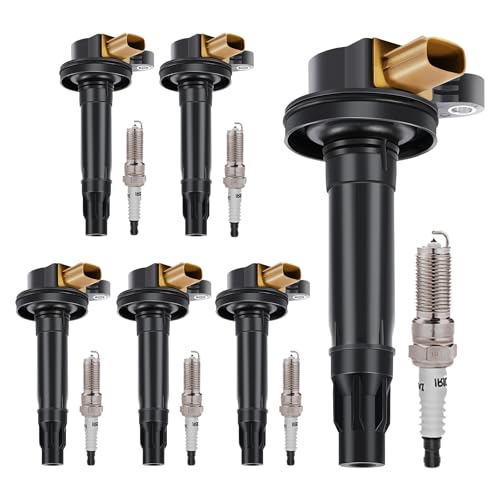


- Ignition Coil E always maps to Cylinder #5 in Ford’s diagnostic logic.
- Diagnostic trouble code P0355 specifically identifies a fault with Coil E.
- On Ford V8 engines, Cylinder 5 is the front-most cylinder on the driver’s side.
- On transverse V6 engines (3.5L/3.7L), Cylinder 5 is in the front bank near the radiator.
- The letter ‘E’ follows the sequence:A=1, B=2, C=3, D=4, E=5.
If your Ford diagnostic tool or an OBD-II scanner displays a fault for Ignition Coil E, you are dealing with a misfire or circuit issue specifically on Cylinder #5. Unlike some manufacturers that use complex naming conventions, Ford’s diagnostic system follows a straightforward alphabetical sequence where the letter correlates directly to the numerical order of the cylinders. When you see “Coil E,” your vehicle’s computer is pointing its finger at the fifth cylinder in the firing sequence, which corresponds to the physical cylinder number five on your engine block.

Prime for Young Adults — 6 Months Free
Students and 18–24s get six months of Prime free, then half price.
Start 6 Months Free As an Amazon Associate I earn from qualifying purchases.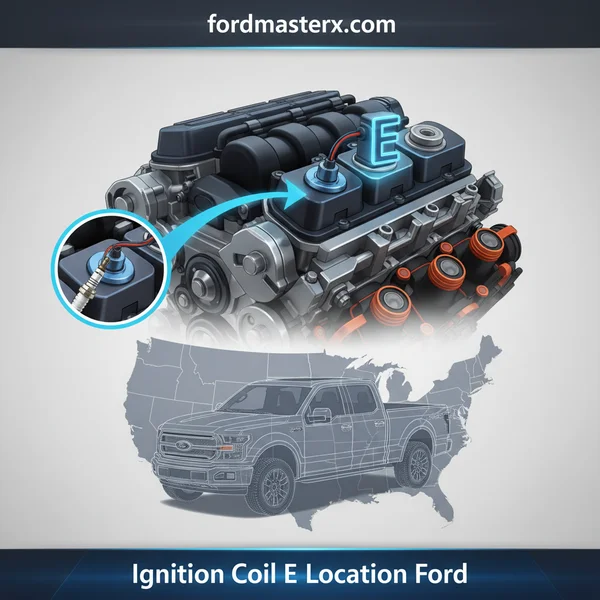
Identifying this location correctly is the most critical step in your repair process. If you misinterpret the code and replace the coil on the wrong cylinder, the fault code (likely a P0355 or P0305) will persist, and your engine will continue to run roughly. By mapping the letter “E” to Cylinder #5, you can skip the guesswork and go straight to the driver’s side or the front bank of your engine—depending on your specific Ford model—to swap out the failing component and restore smooth performance.
Decoding Ford’s Letter-Based Ignition Coil Identification
Ford vehicles utilize a standardized letter-to-number translation for their On-Board Diagnostics (OBD-II). When the Powertrain Control Module (PCM) detects an issue with the primary or secondary circuit of an ignition coil, it assigns a letter to help technicians identify the specific coil at fault. This system is universal across Ford’s lineup, whether you are driving a compact Focus, a heavy-duty F-250, or a modern EcoBoost SUV. The logic is simple: the fifth letter of the alphabet, “E,” always represents the fifth cylinder in the engine’s numbering scheme.

The Alphabetical Diagnostic Map
To understand why your scanner is saying “Coil E,” you just have to look at how Ford maps its cylinders to the alphabet. The sequence is as follows:
- Ignition Coil A: Cylinder #1
- Ignition Coil B: Cylinder #2
- Ignition Coil C: Cylinder #3
- Ignition Coil D: Cylinder #4
- Ignition Coil E: Cylinder #5
- Ignition Coil F: Cylinder #6
- Ignition Coil G: Cylinder #7
- Ignition Coil H: Cylinder #8
This mapping is most commonly associated with the P0355 diagnostic trouble code, which specifically denotes a “Malfunction in Ignition Coil E Primary/Secondary Circuit.” It can also be linked to the P0305 code, which indicates a detected misfire on Cylinder 5. Regardless of the specific code, if the letter “E” is present in the description, you must focus your diagnostic efforts entirely on Cylinder #5.
Why Ford Uses Letters Instead of Numbers
The use of letters like “Coil E” serves as a secondary confirmation for technicians. While a misfire code (P030x) tells you which cylinder is physically misfiring, the circuit code (P035x) tells you which electrical driver in the PCM is struggling. By using letters, Ford ensures there is no confusion between the cylinder’s position and the electronic circuit’s designation. For a DIYer, this means you can be 100% confident that Coil E is always Cylinder #5, regardless of the engine’s firing order or bank configuration.
Master Ford Ignition Coil E Location in 7 Simple Steps
Recommended Best Deal Products


If your Ford vehicle is stuttering, idling roughly, or throwing a P0305 or P0355 diagnostic trouble code, you are likely dealing with a faulty “Ignition Coil E.” For many DIY mechanics, the biggest hurdle isn’t the repair itself, but identifying exactly which coil the computer is complaining about. In Ford’s diagnostic language, coils are often assigned letters rather than numbers. This guide will walk you through the process of decoding Ford’s cylinder layout, locating the elusive Coil E (Cylinder 5) on various engine types, and performing a professional-grade replacement to get your engine purring again. Following these steps is vital to ensure you don’t replace a perfectly good part while leaving the faulty one behind.
Step 1: Decoding the Alphanumeric Coil System
What you need: An OBD-II scanner and your vehicle’s owner’s manual (optional).
Instructions: Before you touch a wrench, you must understand Ford’s naming convention. Ford labels its ignition coils alphabetically based on the firing order or cylinder number, where A equals 1, B equals 2, C equals 3, D equals 4, and E equals 5. Therefore, “Ignition Coil E” is always synonymous with the ignition coil for Cylinder 5. If your scanner shows code P0355, the “5” at the end is a dead giveaway, but P0350-series codes often use the “E” designation. Understanding this 1-to-1 correlation is the foundation of the repair. On most Ford V8 and V6 engines, the cylinders are numbered starting from the front of the engine (closest to the radiator) on the passenger side, then moving to the driver’s side.
Pro Tip: Never assume the “E” refers to the fifth coil in a physical row. Always verify the cylinder numbering for your specific engine displacement (e.g., 5.0L Coyote vs. 3.5L EcoBoost) before proceeding.

Audible — Listen Free for 30 Days
One free credit a month and thousands of titles included.
Listen Free for 30 Days As an Amazon Associate I earn from qualifying purchases.Step 2: Identifying Your Engine Layout
What you need: A flashlight and basic knowledge of your engine model (found on the emissions sticker under the hood).
Instructions: The location of Cylinder 5 varies significantly depending on whether you have a V6 or a V8 engine. On a standard Ford V8 (like the 4.6L, 5.4L, or 5.0L), cylinders 1-4 are on the passenger side (Bank 1), and cylinders 5-8 are on the driver’s side (Bank 2). This means Coil E is the very first coil at the front of the engine on the driver’s side. On a transverse-mounted V6 (commonly found in the Ford Explorer or Edge), the engine is turned sideways. In this configuration, Bank 2 (cylinders 4, 5, 6) is typically the “front” bank closest to the radiator, making Cylinder 5 the middle coil in that front row. Locating this accurately prevents hours of wasted labor.
Pro Tip: Look for the “Bank 1” marking on the cylinder head casting if you are confused; Bank 2 will always be the opposite side, where Coil E resides.
Step 3: Preparing the Work Area and Safety Measures
What you need: Protective gloves, safety glasses, and a cool engine.
Instructions: Ignition systems carry high voltage, and engine bays retain heat long after the vehicle has been turned off. Park your Ford on a level surface and allow the engine to cool for at least 45 minutes. Disconnect the negative battery terminal using a 10mm wrench to prevent any accidental electrical shorts or ECU errors while handling the coil connectors. Clear away any debris, such as leaves or road grit, from the top of the engine using compressed air. This is a critical preventive step; if dirt falls into the spark plug well while the coil is removed, it can enter the combustion chamber and cause catastrophic internal engine damage.
Pro Tip: Take a photo of the engine bay before you start removing any plastic covers or clips so you have a reference for reassembly.
Step 4: Gaining Access to Coil E
What you need: A socket set (8mm and 10mm), a flathead screwdriver, and perhaps a trim removal tool.
Instructions: Depending on your Ford model, Coil E may be hidden under a plastic “V8” or “EcoBoost” decorative cover. Use your socket set or screwdriver to remove the fasteners holding this shroud in place. On V8 trucks (like the F-150), Coil E is generally easy to reach once the cover is off. However, on some Ford SUVs with the 3.5L V6, you might need to loosen the air intake snorkel to get a clear line of sight to the middle coil on the radiator-side bank. Carefully move any vacuum lines or wiring harnesses that are draped over the driver’s side front of the engine, ensuring you don’t strain the connectors.
Pro Tip: Ford plastic connectors become extremely brittle over time due to engine heat. Use a gentle “push-then-pull” motion when releasing the tab to avoid snapping the locking mechanism.
Step 5: Removing the Faulty Ignition Coil
What you need: 7mm or 8mm socket (standard for Ford coil bolts) and a small extension bar.
Audible Premium Plus — Annual Membership
12 audiobook credits up front, plus the full Audible catalogue.
See Annual Plans As an Amazon Associate I earn from qualifying purchases.Instructions: Locate the electrical connector on the top of Coil E. Press the release tab and gently pull the plug away. Inspect the plug for any signs of corrosion or “greening.” Next, use your socket to remove the single small bolt securing the coil to the valve cover. These bolts don’t require much torque, so they should break loose easily. Once the bolt is out, grab the head of the ignition coil and pull it straight up with a firm, twisting motion. You may hear a slight “pop” as the rubber boot releases its suction from the spark plug. Inspect the removed coil boot for white tracks (carbon tracking) or oil, which indicates a leaking valve cover gasket.
Pro Tip: If the coil feels stuck, do not pry it with a screwdriver. Twist it back and forth to break the seal of the rubber boot against the porcelain of the spark plug.
Step 6: Installing the New Coil and Applying Dielectric Grease
What you need: New Motorcraft or equivalent ignition coil and dielectric grease.
Instructions: Before sliding the new coil into place, apply a small, pea-sized amount of dielectric grease to the inside of the new rubber boot. Use a cotton swab to spread it around the inner rim. This grease does not conduct electricity; rather, it prevents the boot from bonding to the spark plug porcelain and seals out moisture. Lower the new coil into the Cylinder 5 well, pressing down firmly until you feel it seat onto the spark plug. Reinstall the mounting bolt and tighten it until it is snug—Ford specifications usually call for only 5-6 foot-pounds of torque. Over-tightening can easily crack the plastic coil housing or strip the threads in the valve cover.
Pro Tip: Always compare the length of the new coil boot with the old one. Ford used several different coil lengths across different year models of the same engine.
Step 7: Final Reassembly and Code Clearing
What you need: OBD-II scanner and reassembled engine components.
Instructions: Snap the electrical connector back onto the coil until you hear a distinct “click.” Replace any intake tubes, vacuum lines, or engine covers you removed in Step 4. Reconnect the negative battery terminal and tighten it securely. Start the engine and let it idle. If the misfire was caused by Coil E, the engine should immediately feel smoother. Using your OBD-II scanner, navigate to the “Clear Codes” function to erase the P0355 or P0305 error from the computer’s memory. Take the vehicle for a 10-minute test drive, ensuring you reach highway speeds, to confirm the “Check Engine” light does not return and that the power delivery is consistent.
Pro Tip: If the light returns immediately, double-check that the electrical connector is fully seated; it is the most common cause of “failed” repairs.
✅ Final Checklist
- Confirmed that “Coil E” corresponds to Cylinder 5 based on Ford’s A-E/1-5 mapping.
- Verified the physical location of Cylinder 5 (Front-Driver side for V8s, Front-Middle for transverse V6s).
- Applied dielectric grease to the boot to prevent future moisture intrusion and sticking.
- Ensured the electrical connector clicked into place and the mounting bolt is snug but not over-torqued.
- Cleared all diagnostic trouble codes using an OBD-II scanner and performed a successful test drive.
Important Notes:
- Safety Warning: Never attempt to remove an ignition coil while the engine is running, as the high-voltage snap can cause a severe electrical shock.
- When to Seek Help: If you find oil pooled in the spark plug well when you remove the coil, your valve cover gasket is leaking and needs professional replacement to prevent the new coil from failing prematurely.
- Estimated Time: 30 to 60 minutes.
- Estimated Cost: $40 – $120 depending on whether you use OEM Motorcraft parts or aftermarket alternatives.
Physical Layout of Cylinder #5 (Coil E) Across Ford Engine Families
Once you know that Coil E is Cylinder #5, the next challenge is finding that cylinder under the hood. Ford organizes its cylinders differently depending on whether you have a V6 or a V8 engine, and whether that engine is mounted longitudinally (front-to-back) or transversely (side-to-side). Because Cylinder #5 is often tucked away or located on a specific “bank,” knowing the exact layout for your engine family is essential.

Locating Cylinder #5 on Ford V8 Engines (4.6L, 5.0L, 5.4L)
On Ford V8 engines, including the classic Modular V8 and the modern 5.0L Coyote found in the F-150 and Mustang, the cylinders are numbered 1 through 4 on the passenger side and 5 through 8 on the driver side. This makes finding Coil E relatively simple if you know which side is which.
- Bank 1 (Passenger Side): Cylinders 1, 2, 3, 4 (Front to Back)
- Bank 2 (Driver Side): Cylinders 5, 6, 7, 8 (Front to Back)
On these V8 engines, Cylinder #5 (Coil E) is the front-most cylinder on the driver’s side bank. It is typically the easiest coil to reach on the driver’s side because it is closest to the radiator and is not buried as deeply under the cowl as cylinders 7 or 8. If you stand at the front bumper and look at the engine, Coil E will be on your right-hand side, right at the front of the valve cover.
Locating Cylinder #5 on Ford V6 Engines (3.5L and 3.7L Duratec/EcoBoost)
For Ford V6 engines, the location of Cylinder #5 depends on the vehicle’s drive configuration. In trucks like the F-150 where the engine is mounted longitudinally, the numbering follows a similar pattern to the V8s, but with fewer cylinders per bank.
- Longitudinal Layout (F-150/Expedition): Bank 1 (Passenger) holds cylinders 1-2-3. Bank 2 (Driver) holds cylinders 4-5-6. In this setup, Cylinder #5 is the middle cylinder on the driver’s side.
- Transverse Layout (Explorer/Edge/Flex): In front-wheel-drive based platforms, the engine is turned sideways. Bank 1 (Cylinders 1-2-3) is near the firewall, and Bank 2 (Cylinders 4-5-6) is near the radiator. In this setup, Cylinder #5 is the middle cylinder in the front bank, located directly behind the radiator fans.
Identifying the “front” of the engine is key; the front is always the side with the accessory belts and pulleys. On a transverse V6, Cylinder #5 is usually very accessible since it sits right in the front-center of the engine bay, making Coil E one of the simplest coils to inspect or replace.
Interpreting P0355 and Circuit Malfunctions for Coil E
Recommended Best Deal Products


When your Ford’s check engine light flickers on and a scanner reveals code P0355, it is specifically calling out the primary or secondary circuit of Ignition Coil E. Unlike a general misfire code (like P0305), a P0355 suggests that the Powertrain Control Module (PCM) has detected a digital hiccup in the electrical signal sent to the coil at cylinder #5. This distinction is vital because it shifts your focus from a “spark” problem to a “connection” problem.
What Does Diagnostic Code P0355 Actually Mean?
Think of the PCM as the conductor of an orchestra. It sends a precise electrical pulse to Coil E to trigger the spark at exactly the right microsecond. If the conductor sends the signal but doesn’t “feel” the expected feedback from the circuit, it triggers P0355. This code indicates that the electrical loop is broken, shorted, or high in resistance. It is the truck’s way of saying, “I’m trying to talk to Cylinder 5, but nobody is answering the phone.”
Common Culprits Beyond the Coil
While the coil itself is often the victim, the issue frequently lies in the supporting hardware. Before you assume the coil is dead, consider these common electrical Gremlins found in Ford engine bays:
- Frayed Wiring Harnesses: On older F-150s or Mustangs, heat and vibration can cause the insulation on the wires leading to Coil E to crack, leading to a short.
- Corroded Connectors: Moisture can creep into the plastic clip that snaps onto the coil. If the metal pins inside are green or white, the signal won’t get through.
- Broken Locking Tabs: If the plastic clip that holds the wire to the coil is broken, the connector can vibrate loose just enough to break the circuit while driving.
- PCM Driver Failure: In rare cases, the transistor inside the computer that manages Coil E can burn out, though this is usually a last resort diagnosis.
Differentiating Bank 1 and Bank 2 in Ford V-Style Engines
To find Coil E, you must first understand how Ford organizes its engine real estate. In V6, V8, and V10 engines, cylinders are split into two “banks.” If you are standing in front of your Ford looking at the engine, knowing which side is which is the difference between fixing the problem and replacing a perfectly good part on the wrong side of the truck.
The Ford Rule: Finding Bank 1 vs. Bank 2
For almost every Ford V-style engine, the numbering starts at the front of the engine (the side with the belts). Bank 1 is the side that contains Cylinder #1. On the vast majority of Ford longitudinal engines (where the engine points toward the radiator), Bank 1 is on the passenger side. Consequently, Bank 2 is located on the driver’s side.
Here is a quick breakdown of how this usually looks on a standard Ford V8:
- Bank 1 (Passenger Side): Cylinders 1, 2, 3, 4.
- Bank 2 (Driver Side): Cylinders 5, 6, 7, 8.
Why It Matters for Cylinder #5
Because Coil E corresponds to Cylinder #5, it marks the start of the second bank. On a Ford V8, Cylinder #5 is typically the front-most cylinder on the driver’s side. It is often the easiest coil to reach because it isn’t tucked back against the firewall. However, on some Ford V6 models, the numbering can wrap differently. Always remember: Bank 1 is the side with the most forward-reaching cylinder. By identifying the lead cylinder, you can count your way back to find exactly where Coil E is hiding without any guesswork.
Conclusion
Locating Ford Ignition Coil E doesn’t have to be a guessing game once you understand that “E” is simply the fifth letter in the sequence, pointing you directly to Cylinder #5. By recognizing that Cylinder #5 is usually the first spark plug on the driver’s side (Bank 2) for most Ford V8s, you can save yourself time and frustration. Remember, a P0355 code is often more than just a bad coil; it’s a signal to check your wiring and connectors for wear and tear.
Your next step should be a quick visual inspection of the connector at Cylinder #5 to ensure it is seated tightly. If the wiring looks good, swapping the coil with its neighbor is a great way to confirm if the fault follows the part. Don’t let a simple location mix-up keep your Ford off the road—identify your banks, find Cylinder 5, and get back to a smooth-running engine!
❓ Frequently Asked Questions
Why does my scanner say ‘Ignition Coil E’ instead of ‘Cylinder 5’?
Ford utilizes the standard OBD-II alphabetical naming convention where letters A through L correspond to cylinders 1 through 12. Coil E is the fifth letter, denoting the fifth cylinder in the firing/numbering order.
Where exactly is the ‘Bank 2’ location for Coil E on a Ford V8?
On Ford V8 engines (like the 4.6L, 5.0L, and 5.4L), Bank 1 is the passenger side and Bank 2 is the driver side. Cylinder 5 is the cylinder closest to the front of the vehicle on the driver’s side.
What are the symptoms of a failing Ignition Coil E?
Common symptoms include a noticeable engine hesitation or ‘miss,’ reduced fuel economy, a flashing Check Engine Light, and a rough idle specifically caused by a dead spot in the 5th cylinder’s combustion cycle.
Can a P0355 code be caused by something other than the coil?
Yes, while a faulty coil is the most likely culprit, P0355 indicates a circuit malfunction, which could also be caused by damaged wiring, a corroded connector at Cylinder 5, or a failing Powertrain Control Module (PCM).
How do I identify Cylinder 5 on a transverse Ford V6?
For V6 engines like the 3.5L Duratec or EcoBoost mounted sideways, the rear bank (near the firewall) contains cylinders 1-2-3, and the front bank (near the radiator) contains 4-5-6. Cylinder 5 is the middle coil in the front bank.
Is the ignition coil for E the same part as other coils?
In most Ford engines, all ignition coils are interchangeable parts. If you suspect Coil E is bad, you can swap it with Coil A (Cylinder 1) to see if the diagnostic code moves from P0355 to P0351.