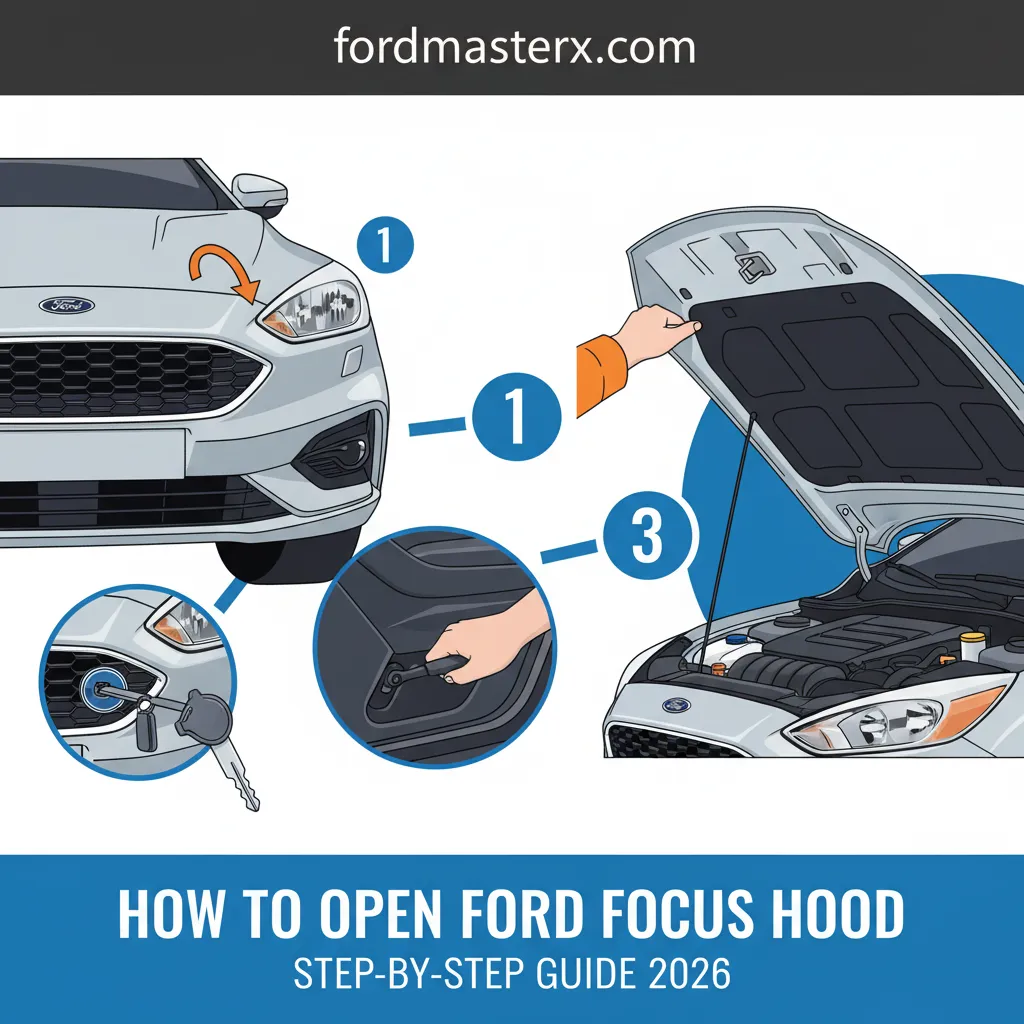
How To Open Ford Focus Hood: Step-By-Step Guide 2026

Encountering a stubborn hood on your Ford Focus can be a frustrating and inconvenient experience, especially when you need to access critical components under the bonnet. Whether you’re performing routine maintenance, checking fluid levels, or diagnosing an issue, a non-responsive hood latch can halt your progress and leave you wondering how to proceed. This expert guide will systematically walk you through the precise steps required to open your Ford Focus hood, including locating both primary and secondary release mechanisms. We will also explore common issues that prevent the hood from opening, provide effective troubleshooting solutions, and offer preventative maintenance tips to ensure reliable operation for years to come. Master this essential skill.

Understanding the Ford Focus Hood Latch System Components
Recommended Best Deal Products


Before you can effectively open your Ford Focus hood, it’s essential to learn and understand its fundamental mechanics. The system is designed with safety and security in mind, employing multiple components that work in tandem. Familiarity with these parts will empower you to diagnose issues and master the opening process with confidence.
📤 Share Image
Primary Release Mechanism (Interior Lever)
The journey to opening your Ford Focus hood begins inside the cabin. The Primary Release Mechanism is an interior lever, typically situated on the driver’s side of the vehicle, often on the lower dashboard or within the kick panel area. This lever, commonly colored black or red and usually bearing an intuitive hood icon, serves as the initial actuator. When pulled, it applies tension to the hood release cable, initiating the first stage of the hood’s release. You’ll often hear a distinct ‘click’ or ‘thunk’ as the primary latch disengages, causing the hood to slightly pop up, signifying it’s ready for the next step.
Hood Release Cable
The Hood Release Cable acts as the crucial intermediary, a steel wire encased in a protective sheath that runs from the interior release lever to the main hood latch assembly. Its primary role is to transmit the mechanical force from your pull on the lever to the latch, effectively pulling a release lever within the latch mechanism. Understanding its path and function is key to troubleshooting when the hood doesn’t respond as expected.
Main Hood Latch Assembly
Located prominently under the hood, typically near the front edge above the grille, is the Main Hood Latch Assembly. This robust component is responsible for securely holding the hood closed, preventing it from opening unexpectedly during vehicle operation. When the hood release cable pulls its internal lever, the main latch releases its grip on the hood’s strike plate, allowing the hood to lift slightly. This initial release is audible and visually noticeable as the hood rises a few millimeters.
Secondary Safety Latch
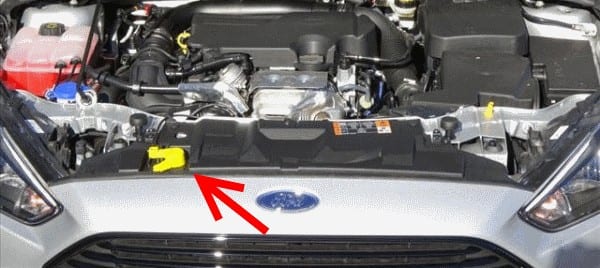
A critical safety feature that beginners must discover and understand is the Secondary Safety Latch. Positioned directly under the hood’s leading edge, typically in the center, this small lever or hook acts as a failsafe. Its purpose is to prevent the hood from fully opening if the primary latch is accidentally released while the vehicle is in motion. To completely open the hood after using the interior release, you must manually manipulate this secondary latch, usually by pushing a small lever to the side or pulling up on a hook. Research indicates that this two-stage latch system is a standard safety protocol across virtually all modern vehicles, including the Ford Focus up to and beyond 2026, designed to mitigate the significant risk of accidental hood openings at speed and enhance occupant safety.

What Causes Issues with Opening Your Ford Focus Hood Latch?
Even with a well-designed system, various factors can impede the smooth operation of your Ford Focus hood latch. Understanding these common culprits is crucial for effective troubleshooting and preventative maintenance. From mechanical wear to environmental degradation, several issues can leave your hood stubbornly shut.
Stretched or Snapped Release Cable
One of the most frequent reasons for a non-responsive hood is a compromised release cable. Over years of use, the steel wire within the cable can stretch, leading to insufficient tension to fully actuate the main latch when the interior lever is pulled. This often manifests as a ‘spongy’ or less resistant feel when you pull the lever. In more severe cases, the cable can snap entirely due to metal fatigue, rust, or extreme temperatures, particularly common in colder climates. When the cable snaps, the interior lever will offer no resistance whatsoever, rendering it inoperative. Industry data consistently shows that cable stretch is a common issue on vehicles over 10 years old, making this a prevalent concern for many Ford Focus owners.
Corroded or Seized Latch Mechanism
The hood latch assembly is exposed to the elements, making it susceptible to corrosion and seizing. Exposure to moisture, road salt, dirt, and debris can cause the intricate metal components within the latch to rust or gum up. This buildup of grime and corrosion prevents the moving parts from articulating freely, making it difficult or impossible for the cable to release the latch. This issue is particularly prevalent in regions with high humidity, heavy rainfall, or significant snow and ice, where road salt is commonly used. A lack of regular lubrication exacerbates this problem, leading to a seized mechanism that refuses to budge, especially after a harsh winter storm.
Misaligned Hood or Latch Components
Physical impacts or even natural wear can lead to misalignment. Minor front-end collisions, even those not severe enough to cause visible exterior damage, can slightly shift the hood or the latch’s strike plate. Similarly, worn hood hinges or improper reinstallation of components after maintenance can cause the hood and latch to misalign. This misalignment creates excessive friction or binding when the latch attempts to release, effectively holding the hood captive. The latch may be mechanically sound, but its engagement with a misaligned strike plate prevents it from disengaging cleanly. This requires precision to discover and correct.

Audible — Listen Free for 30 Days
One free credit a month and thousands of titles included.
Listen Free for 30 Days As an Amazon Associate I earn from qualifying purchases.Faulty Interior Release Lever
While less common than cable or latch issues, the interior release lever itself can sometimes be the point of failure. The plastic housing or internal components of the lever can break, or the cable attachment point can become disconnected. In such rare instances, pulling the lever may feel normal, but it fails to transmit any pull to the cable, rendering the entire interior release system inoperative. This often necessitates inspecting the lever assembly directly under the dashboard.
By The Numbers
Hood latch failures due to cable issues (stretch/break)
Lifespan increase with regular latch maintenance

How to Open Your Ford Focus Hood: A Step-By-Step Procedure
Mastering the process of opening your Ford Focus hood is an essential skill for any owner, enabling you to confidently perform checks and maintenance. This comprehensive, step-by-step guide will ensure you can open your hood reliably and safely.
📋
Step-by-Step Guide
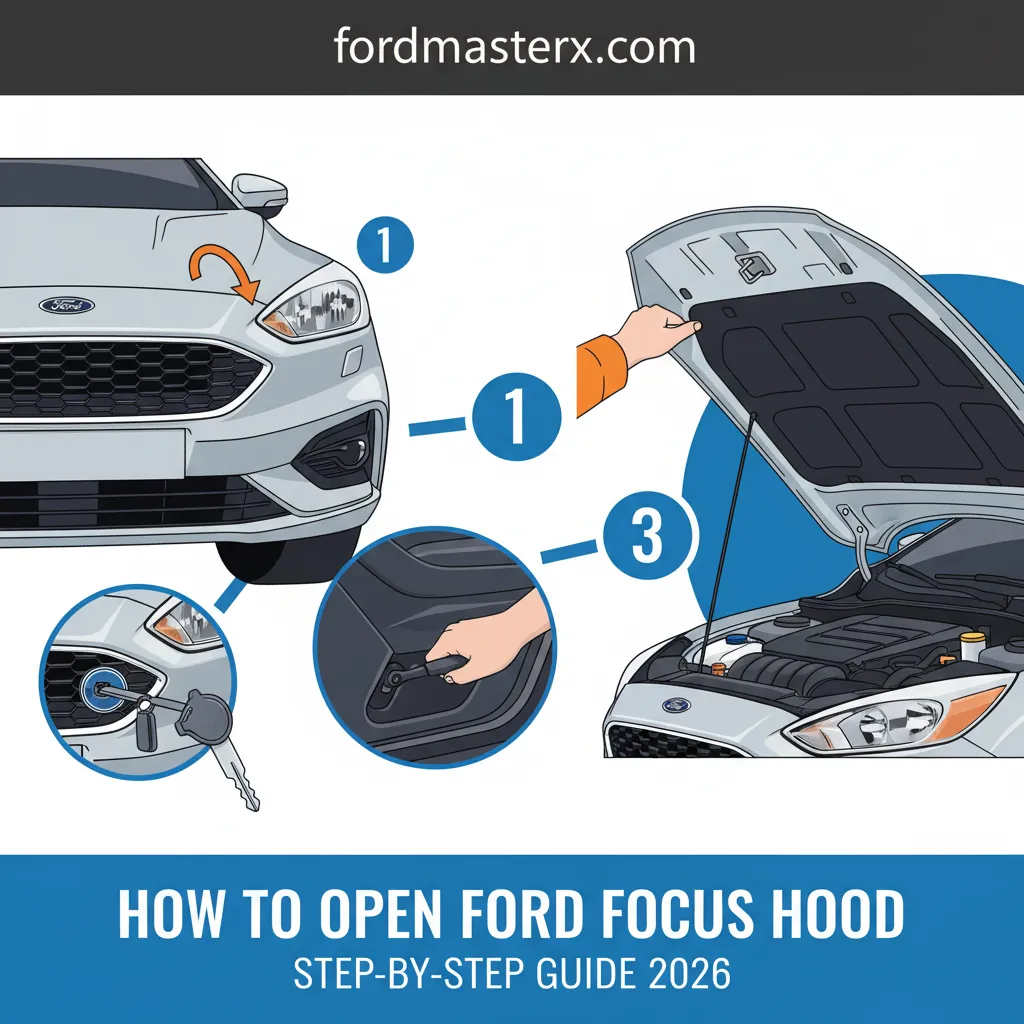
Begin by entering the driver’s side of your Ford Focus. Look for the hood release lever, which is typically situated on the lower-left side of the dashboard, near the kick panel, or sometimes on the lower portion of the door sill. It’s usually a small plastic lever, often black or red, with a distinct hood icon. Pull this lever firmly and smoothly towards you. You should hear a ‘pop’ or ‘thunk’ sound from the front of the vehicle, indicating that the primary hood latch has disengaged, causing the hood to lift slightly.
Once the hood has ‘popped’, proceed to the front of your Focus. Gently lift the hood a few inches to create a small gap. Peer underneath the leading edge of the hood, directly above the grille, usually in the center. You will discover a small secondary safety latch mechanism. On many Ford Focus generations (e.g., 2008-2011 models), this might be a small yellow lever. On others, it could be a black plastic hook or tab. Depending on the model year, you’ll either push this lever to the side (left or right) or pull up on it. This action will release the secondary safety catch, allowing the hood to open fully.
With both latches disengaged, you can now lift the hood. It will pivot upwards from the rear hinges. Locate the prop rod, which is usually found clipped to the underside of the hood itself or within the engine bay. Unclip it and securely insert its end into the designated slot on the vehicle’s body, typically identified by an arrow or a specific indentation. Ensure the prop rod is firmly seated to prevent the hood from accidentally falling, providing a stable and safe environment to explore your engine bay.
To close the hood, first remove the prop rod from its slot and re-clip it securely back into its storage position on the hood or in the engine bay. Gently lower the hood until it is about 6 to 12 inches above the closed position. From this height, simply let go and allow its weight to drop and engage both latches simultaneously. Avoid slamming the hood down, as this can cause unnecessary stress and potential damage to the latch mechanism or hood hinges over time. Listen for two distinct ‘clicks’ as the primary and secondary latches re-engage, confirming the hood is securely closed. The dropping height for closing is engineered to provide sufficient force for latch engagement without causing damage to the hood or surrounding components, reflecting precise automotive design.
Audible Premium Plus — Annual Membership
12 audiobook credits up front, plus the full Audible catalogue.
See Annual Plans As an Amazon Associate I earn from qualifying purchases.Troubleshooting: What If Your Ford Focus Hood Still Won’t Open?
When the standard procedure fails, it’s time to delve into more advanced troubleshooting. A stubborn hood can be frustrating, but with a methodical approach, you can often discover and resolve the issue. These practical insights stem from years of hands-on experience in the field.
External Inspection and Manual Latch Manipulation
If the interior lever has been pulled but the hood remains stubbornly shut, begin with an external visual inspection. Using a flashlight, look through the grille opening or, if safe and accessible, from underneath the front of the vehicle. Inspect the latch area for any visible obstructions, debris, or signs of damage. If the hood is slightly ajar, you might be able to use a long, flat-bladed screwdriver or a thin pry bar to gently manipulate the latch components. The goal is to identify the release lever on the main latch assembly and attempt to push or pull it manually. This often requires patience and careful probing to avoid causing further damage. For example, if the primary latch only partially released, a gentle upward pressure on the hood while simultaneously wiggling the lever might help it disengage fully.
Lubrication Application
A seized or corroded latch often responds well to proper lubrication. If you can access any part of the latch mechanism – even partially through the grille – liberally apply a suitable lubricant. White lithium grease is excellent for metal-on-metal moving parts due to its tenacious properties, while a silicone spray is ideal for the cable itself and for penetrating tight areas. Apply directly to the latch jaws, pivot points, and the visible portion of the cable. Allow the lubricant a few minutes to penetrate, then attempt the interior release again, perhaps with a gentle bounce or pressure on the hood to help free the components. Understand that proper lubrication is key not just for immediate relief but also for long-term preventative care.
Accessing and Repairing a Broken Cable
If the interior lever feels completely loose with no resistance, you likely have a broken or disconnected cable. This requires a more involved approach. First, try to access the cable from the interior: often, the cable housing can be pulled further out from under the dashboard to reveal the internal wire. If accessible, grip the internal wire with pliers and pull firmly. If the cable snapped closer to the latch, you may need to try to reach it from the front of the car. A common workaround involves fashioning a hook from a wire coat hanger or stiff wire and attempting to fish for the cable or the latch release mechanism itself through the grille opening. This can be challenging and may require some trial and error, but many owners have successfully employed this method to temporarily release the hood.
Seeking Professional Assistance
There are times when even the most experienced DIYer needs to call in a professional. If, after repeated attempts, troubleshooting, and applying the methods above, your Ford Focus hood still refuses to open, it’s time to consult a certified mechanic. This is especially true if there’s evidence of structural damage from an impact, if the issue clearly lies within internal components of the latch assembly that are not externally accessible, or if specialized tools like vehicle lifts are required for safe access. Some persistent latch issues, particularly those involving complex cable routing or internal component failure, often demand expertise and equipment beyond what a typical owner possesses. Don’t risk further damage or injury by forcing the issue; a professional can safely discover the root cause and execute a durable repair.
Never attempt to force open a stuck hood with excessive leverage or impact, as this can severely damage the hood, grille, or underlying components, leading to far more expensive repairs than the initial latch issue. Always prioritize safety and methodical troubleshooting.
Preventative Maintenance for Your Ford Focus Hood Latch System
Proactive maintenance is the cornerstone of reliability for any mechanical system, and your Ford Focus hood latch is no exception. Implementing a routine preventative maintenance schedule can significantly extend the lifespan of your latch components and prevent inconvenient failures, allowing you to easily access your engine bay when needed. Discover these essential practices.
Regular Lubrication Schedule
The most impactful preventative measure is regular lubrication. At least once a year, or ideally during routine service intervals like oil changes, apply appropriate lubricants to the hood latch mechanism and hinges. Use white lithium grease for the metal-on-metal moving parts of the latch and hinges, ensuring smooth operation and corrosion protection. For the hood release cable, a silicone spray lubricant is best, as it penetrates the cable housing and reduces friction without attracting excessive dirt. Consistent lubrication ensures that all components move freely, significantly reducing the chances of seizing. Proper maintenance can double the lifespan of mechanical components like hood latches, making this a highly recommended practice.
Cable Inspection and Adjustment
Periodically inspect the hood release cable for any signs of wear. Look for fraying, kinks, or excessive slack. A visual inspection of the accessible portions of the cable, both under the dashboard and near the latch assembly, can reveal potential issues before they become critical failures. If you notice a spongy feel when pulling the interior lever, this could indicate cable stretch. While more complex adjustments typically require a technician, a minor adjustment at the latch end can sometimes restore proper tension and responsiveness, preventing a full cable replacement down the line.
Keeping the Latch Area Clean
The hood latch is positioned at the front of the vehicle, making it a prime collection point for dirt, dust, and road grime. During your routine engine bay cleaning, take a moment to remove debris, dirt, and especially road salt from around the latch assembly and its strike plate. A stiff brush and a can of compressed air can be highly effective for this task. Accumulated debris can impede the latch’s operation, causing it to stick, and accelerate corrosion, especially in harsh weather conditions. A clean latch area ensures unimpeded mechanical function.
Proper Hood Closing Technique
As discussed in the opening procedure, how you close your hood has a direct impact on the longevity of its latch system. Reiterate the correct method: lower the hood gently until it’s a short distance above the closed position (6-12 inches), then allow its weight to drop and engage the latches. Avoid slamming the hood with excessive force. Repeated slamming subjects the latch components, hinges, and hood structure to unnecessary stress, leading to premature wear, potential misalignment, and eventual failure. Adopting this simple, proper technique is a crucial, yet often overlooked, aspect of preventative maintenance.
Successfully opening your Ford Focus hood requires understanding both the interior release and the exterior secondary safety latch. Common issues like stretched cables, corrosion, or misalignment can hinder operation, requiring specific troubleshooting. Regular lubrication and cleaning of the latch system are crucial for preventative maintenance, ensuring long-term reliability. With this knowledge, you are now equipped to confidently open your Ford Focus hood. Remember to implement the preventative maintenance steps discussed to avoid future frustrations. If you encounter persistent issues, always consult a qualified automotive technician.
Frequently Asked Questions
Why won’t my Ford Focus hood open after pulling the interior lever?
If your hood doesn’t pop after pulling the interior lever, the most common causes are a stretched or broken release cable, or a seized primary latch mechanism due to corrosion or debris. The cable might not be pulling with enough force, or the latch itself is stuck. Lubrication or manual manipulation of the latch may be required.
Where is the secondary hood latch located on a Ford Focus?
The secondary safety latch on a Ford Focus is typically located directly under the front lip of the hood, centered above the grille. After pulling the interior release, you will need to reach your hand into this gap, usually feeling for a small lever or tab that you push to the side or lift upwards to fully disengage the hood.
Can I open the hood if the release cable is broken?
Yes, it is often possible to open the hood with a broken release cable, though it requires more effort. You may need to access the cable directly from under the dashboard to pull it manually, or by reaching through the grille with a long tool to directly manipulate the primary latch mechanism. Professional assistance might be necessary for certain models.
What kind of lubricant should I use on my Ford Focus hood latch?
For optimal performance and longevity, use a high-quality white lithium grease for the moving mechanical parts of the latch mechanism. For the cable itself, a silicone-based spray lubricant can be effective for smooth operation. Avoid thick, sticky greases that can attract dirt and debris over time, exacerbating the problem.
How often should I inspect and maintain my Ford Focus hood latch system?
It is recommended to inspect and lubricate your Ford Focus hood latch system at least once a year, or during routine service intervals like oil changes. This preventative maintenance helps identify early signs of wear, prevents corrosion, and ensures smooth operation, reducing the likelihood of the hood getting stuck when you need access.