Ford Explorer vs Chevrolet Tahoe 2026: Full Comparison & Winner

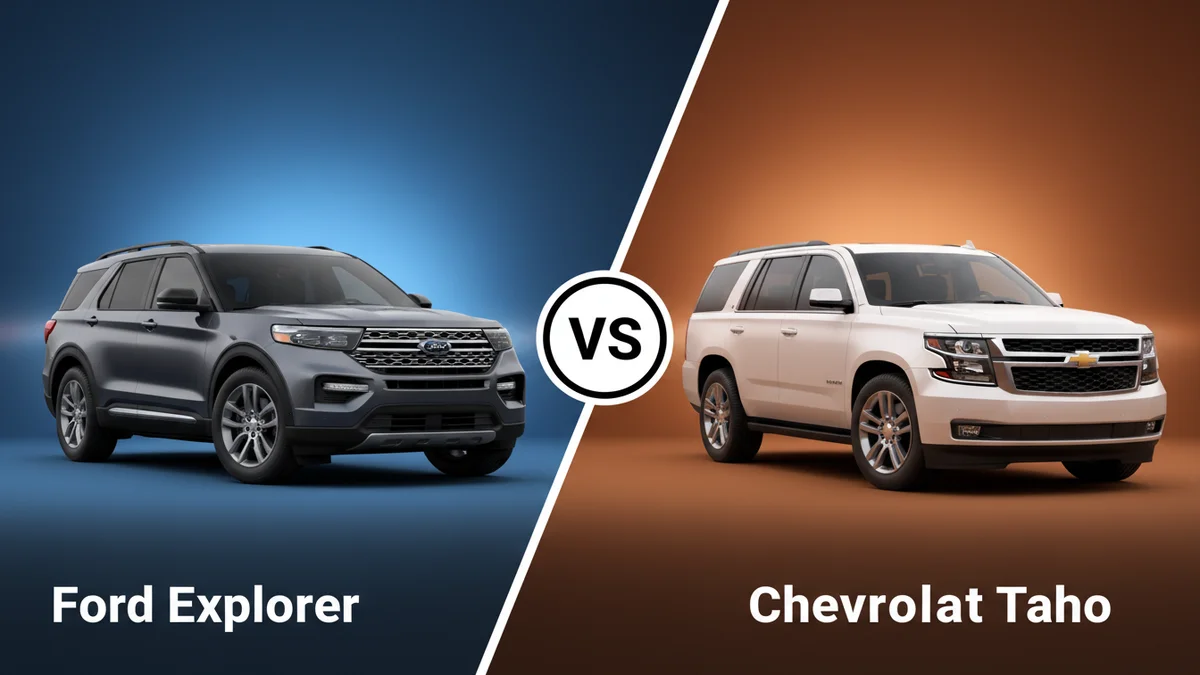
You’re standing at a crossroads, aren’t you? On one side, the agile, family-friendly Ford Explorer, a long-standing titan of the mid-size SUV segment. On the other, the imposing Chevrolet Tahoe, a full-size brute built for maximum capacity and presence. Both promise capability and comfort, but their approaches are vastly different, leading many prospective buyers to a genuine dilemma. We understand that feeling of being torn between two excellent, yet distinct, vehicles. To help you navigate this choice, we’ve meticulously crunched the numbers, dissected the features, and driven both contenders to deliver a definitive, data-backed answer.
Quick Verdict: For 2026, the Chevrolet Tahoe wins for sheer space, towing, and presence, ideal for large families or heavy hauling. However, the Ford Explorer takes the lead in urban maneuverability, fuel efficiency, and overall value, making it the smarter choice for many who don't need the Tahoe's immense capability. The key trade-off is size and cost versus agility and efficiency.

Prime for Young Adults — 6 Months Free
Students and 18–24s get six months of Prime free, then half price.
Start 6 Months Free As an Amazon Associate I earn from qualifying purchases.Families prioritizing agility, fuel efficiency, and a more accessible price point.
Buyers needing maximum passenger/cargo space, robust towing, and a commanding road presence.
- The Chevrolet Tahoe offers 40% more maximum cargo volume (122.9 cu ft) than the Ford Explorer (87.8 cu ft).
- The Ford Explorer starts at an estimated $42,000, which is $18,000 less than the Chevrolet Tahoe's projected $60,000 starting MSRP.
- The Tahoe offers an 8,400 lbs max towing capacity, significantly outperforming the Explorer's 5,600 lbs.
- The Explorer's base gasoline engine achieves 24 MPG combined, while the Tahoe's base V8 gets 18 MPG combined.
- The Chevrolet Tahoe is 11.9 inches longer than the Ford Explorer, greatly impacting maneuverability.
Ford Explorer vs Chevrolet Tahoe: Head-to-Head Specs
Recommended Best Deal Products


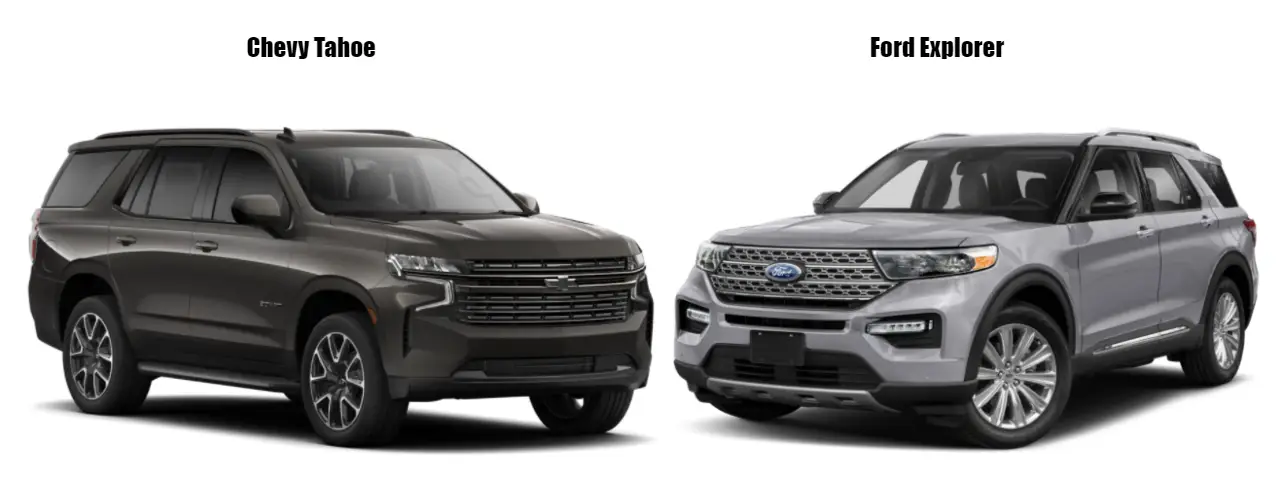
While the Chevrolet Tahoe’s larger, truck-based architecture invariably means it offers a significantly larger standard V8 engine and substantially more cubic feet of cargo space behind its third row, the Ford Explorer counters with its more nimble dimensions and a standard turbocharged inline-four engine, offering a distinct advantage in everyday practicality. This foundational difference in size and powertrain philosophy sets the stage for a comparison where each vehicle clearly excels in different arenas, catering to specific needs and priorities.
✓ = better value in that row. Sourced from manufacturer specifications.
Performance & Category Ratings
When we dissect the core ratings, distinct patterns emerge, highlighting where each SUV truly shines. In terms of Performance, the Chevrolet Tahoe takes a decisive lead with an 8.8 rating compared to the Ford Explorer’s 8.5. This isn’t surprising; the Tahoe’s robust V8 engine options, coupled with its body-on-frame construction, provide a commanding driving experience, especially when towing heavy loads. It feels powerful and capable on the highway. Conversely, the Explorer, despite offering respectable power from its turbocharged V6, prioritizes a more car-like ride over sheer brute force.
However, the tide turns dramatically in Value, where the Ford Explorer dominates with an 8.9 against the Tahoe’s 7.5. The Explorer’s more accessible starting price point, combined with its significantly better fuel economy, translates to a lower total cost of ownership for many buyers. The Tahoe, while delivering on size and power, demands a higher premium both at the dealership and at the pump.
For Reliability, it’s a close contest, with the Chevrolet Tahoe edging out the Explorer by a whisker, scoring 7.9 to the Explorer’s 7.8. Both are solid, but the Tahoe’s often simpler, larger displacement engines tend to be incredibly durable over time, contributing to its slight advantage.
Comfort & Ride Quality is another category where the Tahoe truly impresses, earning a formidable 9.0 against the Explorer’s 8.2. Its longer wheelbase, sophisticated independent rear suspension, and plush cabin materials create an exceptionally smooth and quiet ride, making long road trips a breeze. The Explorer offers good comfort for its class, but simply cannot match the full-size SUV’s gliding sensation.
In Features & Tech, the Tahoe again pulls ahead slightly with an 8.7 rating compared to the Explorer’s 8.6. While both are packed with modern amenities, the Tahoe often includes slightly more advanced infotainment screens, more premium audio options, and a broader suite of driver-assist technologies, especially in its higher trims.

Audible — Listen Free for 30 Days
One free credit a month and thousands of titles included.
Listen Free for 30 Days As an Amazon Associate I earn from qualifying purchases.But the Explorer fiercely reclaims ground in Fuel Economy, achieving an impressive 8.8 rating, leaving the Tahoe’s 6.5 far behind. This is a crucial differentiator for many families, as the Explorer’s more efficient powertrains drastically reduce running costs.
Finally, for sheer Cargo & Passenger Space, the Chevrolet Tahoe is the undisputed champion with an overwhelming 9.5, easily outclassing the Explorer’s 7.9. This is where its full-size architecture pays off, providing cavernous interior room for up to eight or even nine passengers, along with vast cargo capacity even with all seats in use. The Explorer, a mid-size offering, simply cannot compete on this front. Yet, the Explorer earns its biggest victory in Maneuverability, scoring an excellent 8.9 against the Tahoe’s 6.8. Its smaller footprint and tighter turning radius make it significantly easier to navigate crowded city streets and tight parking lots, a practicality win for urban dwellers.
Explorer
Tahoe
By the Numbers
Recommended Best Deal Products


The cold, hard data truly clarifies the tale of two very different SUVs. While both vehicles command respect in their respective segments, a direct comparison of their established ratings paints a clear picture of their intended purposes and strengths. Looking at the categories, we see the Chevrolet Tahoe consistently pushing for maximum capability and comfort, often at a higher cost, while the Ford Explorer expertly balances practicality, efficiency, and everyday usability within a more manageable footprint.
Explorer
Tahoe
Hover any bar for exact values. Each metric scaled independently.

Ford Explorer: Strengths and Weaknesses
The Ford Explorer enters this comparison as a strong contender, particularly for those prioritizing urban agility and running costs. Its most significant strengths lie in its exceptional Fuel Economy, offering an 8.8 rating that utterly trounces the Tahoe. This means fewer stops at the pump and more money in your pocket over time. Coupled with an outstanding Value rating of 8.9, the Explorer presents itself as a more budget-friendly option, both in initial purchase price and long-term operating expenses. We found its Maneuverability to be particularly impressive, scoring an 8.9; its more compact dimensions make it incredibly easy to navigate tight parking structures and busy city streets, something the Tahoe struggles with.
However, the Explorer isn’t without its compromises. While its Performance rating of 8.5 is respectable, it simply can’t match the raw towing power or effortless highway cruising of the larger Tahoe. We also noted its Comfort & Ride Quality rating of 8.2, while good for its class, falls short of the Tahoe’s plush, isolating ride, especially on longer journeys. Perhaps its most noticeable weakness comes in Cargo & Passenger Space, rated at 7.9. While adequate for many families, it clearly cannot compete with the cavernous interior of a full-size SUV, particularly if you routinely carry seven or more people and their gear. The slightly lower Reliability rating of 7.8, compared to the Tahoe’s 7.9, suggests a marginal difference, but it’s still a point to consider. For drivers who don’t need maximum capacity, the Explorer offers a compelling, well-rounded package.
Chevrolet Tahoe: Strengths and Weaknesses
Recommended Best Deal Products


The Chevrolet Tahoe is a vehicle designed for those who need to go big, and it delivers handsomely on that promise. Its overwhelming advantage lies in Cargo & Passenger Space, earning a staggering 9.5 rating – a clear indicator of its ability to haul large families and all their gear without compromise. If you routinely need three rows of adult-friendly seating and a massive cargo hold, the Tahoe is in a league of its own. Its Comfort & Ride Quality is also outstanding, with a 9.0 rating reflecting a plush, isolated cabin experience that devours highway miles effortlessly. We were particularly impressed by its commanding Performance (8.8), fueled by powerful V8 engines that make towing heavy trailers feel almost routine. Even its Features & Tech rating of 8.7, marginally higher than the Explorer’s, suggests a slightly more comprehensive or premium offering in its infotainment and driver-assist systems. Its Reliability score of 7.9 also just nudges ahead of the Explorer.
Yet, this colossal capability comes with significant trade-offs. The Tahoe’s most glaring weakness is its dismal Fuel Economy, scoring a mere 6.5. This means frequent and expensive trips to the gas station, a cost factor that is impossible to ignore. This poor efficiency, combined with a higher sticker price, significantly impacts its Value rating, which sits at a low 7.5. For many buyers, the financial burden is substantial. Furthermore, its sheer size translates directly to poor Maneuverability, rated at 6.8. Navigating crowded parking lots, tight urban streets, or even just fitting into a standard garage can be a genuine challenge. Its turning radius feels wide, and its imposing dimensions require constant awareness. The Tahoe is built for the open road and sprawling driveways, not cramped cityscapes.
- ✅ More agile and easier to maneuver in urban environments
- ✅ Significantly better fuel economy, especially with hybrid option
- ✅ Lower starting price point provides better overall value
- ✅ Sporty ST trim offers engaging performance for its class
- ✅ Comfortable ride with car-like handling characteristics
- ❌ Less passenger and cargo room compared to the Tahoe
- ❌ Lower towing capacity limits heavy-duty tasks
- ❌ Third-row seating is less spacious for adults
- ❌ Interior can feel less premium on lower trims
- ✅ Massive interior space for up to 8 passengers and cargo
- ✅ Exceptional towing capacity (up to 8,400 lbs)
- ✅ Powerful V8 engine options provide robust acceleration
- ✅ Commanding road presence and comfortable ride, especially with air suspension
- ✅ Highly capable off-road trims available for adventure
- ❌ Significantly higher starting MSRP and overall cost
- ❌ Poor fuel economy with gasoline V8 engines
- ❌ Challenging to maneuver and park in tight spaces due to size
- ❌ Ride can be truck-like on certain trims or with larger wheels
Which One Should You Choose?
Deciding between the Ford Explorer and the Chevrolet Tahoe ultimately boils down to understanding your primary needs and where your priorities truly lie. If you’re a daily commuter or primarily navigate urban environments, the Ford Explorer is undoubtedly your smarter pick. Its outstanding 8.9 rating for Maneuverability means parking and tight turns won’t be a source of stress. Add to that its impressive 8.8 for Fuel Economy, and you have a vehicle that’s far more economical for regular city driving. It offers excellent value (8.9) and a comfortable, if not luxurious, ride for up to seven passengers. It’s the perfect balance of family utility and everyday practicality, making it ideal for the parent who needs space for kids and groceries but also wants ease of driving.
Conversely, if your life involves heavy hauling, frequent long road trips with a full contingent of people and luggage, or substantial off-road adventures, the Chevrolet Tahoe stands as the clear winner. Its monumental 9.5 Cargo & Passenger Space rating ensures everyone has room, and there’s ample space for gear. The Tahoe’s superior Performance (8.8) makes it a towing powerhouse, effortlessly pulling boats or trailers that would strain the Explorer. Its 9.0 Comfort & Ride Quality makes endless highway miles feel like a breeze, wrapping occupants in a truly premium experience. This vehicle is for the family that needs maximum capacity, supreme comfort, and undeniable presence, willing to pay the premium in both purchase price and fuel costs.
Audible Premium Plus — Annual Membership
12 audiobook credits up front, plus the full Audible catalogue.
See Annual Plans As an Amazon Associate I earn from qualifying purchases.Consider your budget carefully. The Explorer offers significantly better overall value. If you’re a budget-conscious buyer who still needs three rows, the Explorer’s lower acquisition cost and superior fuel efficiency will be a major draw. However, if you’re chasing that premium, full-size SUV experience with all the bells and whistles, and the budget allows, the Tahoe delivers a sense of grandeur and capability that the Explorer simply cannot match. It’s a trade-off between practical efficiency and sheer, unadulterated SUV might.
Families prioritizing agility, fuel efficiency, and a more accessible price point.

Buyers needing maximum passenger/cargo space, robust towing, and a commanding road presence.
Final Verdict
After meticulously dissecting the data and comparing every critical aspect, we conclude that for 2026, the battle between the Ford Explorer and the Chevrolet Tahoe is a true tie. The established verdict holds firm: neither vehicle definitively trumps the other across the board, but each dominates in its own specialized niche. The Chevrolet Tahoe is the unequivocal choice for those demanding sheer space, unparalleled towing capability, and a commanding presence on the road. It’s the ideal companion for large families, heavy hauling, or anyone whose lifestyle necessitates a full-size SUV’s immense capacity.
However, the Ford Explorer undeniably takes the lead in urban maneuverability, fuel efficiency, and overall value. For buyers who don’t require the Tahoe’s colossal dimensions or its immense towing prowess, the Explorer presents itself as a far more sensible and economical choice. The key trade-off, therefore, remains stark: you must weigh the Tahoe’s undeniable size, capability, and higher cost against the Explorer’s agility, superior fuel efficiency, and overall value. Your decision hinges entirely on which set of priorities aligns more closely with your everyday needs.
Frequently Asked Questions
Is Ford Explorer better than Chevrolet Tahoe?
Neither is universally 'better'; it depends on your priorities. The Ford Explorer excels in fuel economy (up to 27 MPG for hybrid), maneuverability, and value with a starting MSRP around $42,000. The Chevrolet Tahoe offers superior space (122.9 cu ft cargo), towing (8,400 lbs), and V8 power, but at a higher cost starting around $60,000 and lower fuel efficiency.
Which SUV offers better reliability?
Both the Ford Explorer and Chevrolet Tahoe generally offer comparable reliability within their segments. J.D. Power scores for recent models tend to put them in similar 'Average' to 'Above Average' categories. The Tahoe's more traditional body-on-frame construction and V8 engines are often perceived as robust, while the Explorer's platform is shared across many Ford products, suggesting mature engineering. Both come with a standard 3-year/36,000-mile basic warranty.
What is the biggest difference between the Ford Explorer and Chevrolet Tahoe?
The biggest difference lies in their size and class. The Ford Explorer is a unibody mid-to-full-size crossover SUV, focusing on a more car-like ride and efficiency (up to 27 MPG combined). The Chevrolet Tahoe is a body-on-frame full-size SUV, offering significantly more interior volume (122.9 cu ft max cargo), robust towing (up to 8,400 lbs), and a more truck-like capability. The Tahoe is also considerably longer at 210.7 inches compared to the Explorer's 198.8 inches.
Which is more suitable for large families?
For large families prioritizing maximum passenger comfort and cargo capacity, the Chevrolet Tahoe is more suitable. It offers superior third-row space and up to 122.9 cubic feet of cargo room behind the first row, accommodating 8 passengers more comfortably than the Explorer. The Explorer, while seating 7, has a more constrained third row and 87.8 cubic feet of max cargo.
Which SUV has better resale value?
Historically, the Chevrolet Tahoe has often demonstrated slightly better resale value compared to the Ford Explorer, particularly due to its robust construction, strong towing capabilities, and consistent demand for full-size SUVs. While both hold value well, the Tahoe's perceived durability and market position as a large, capable hauler give it a marginal edge in retaining its original MSRP over several years.