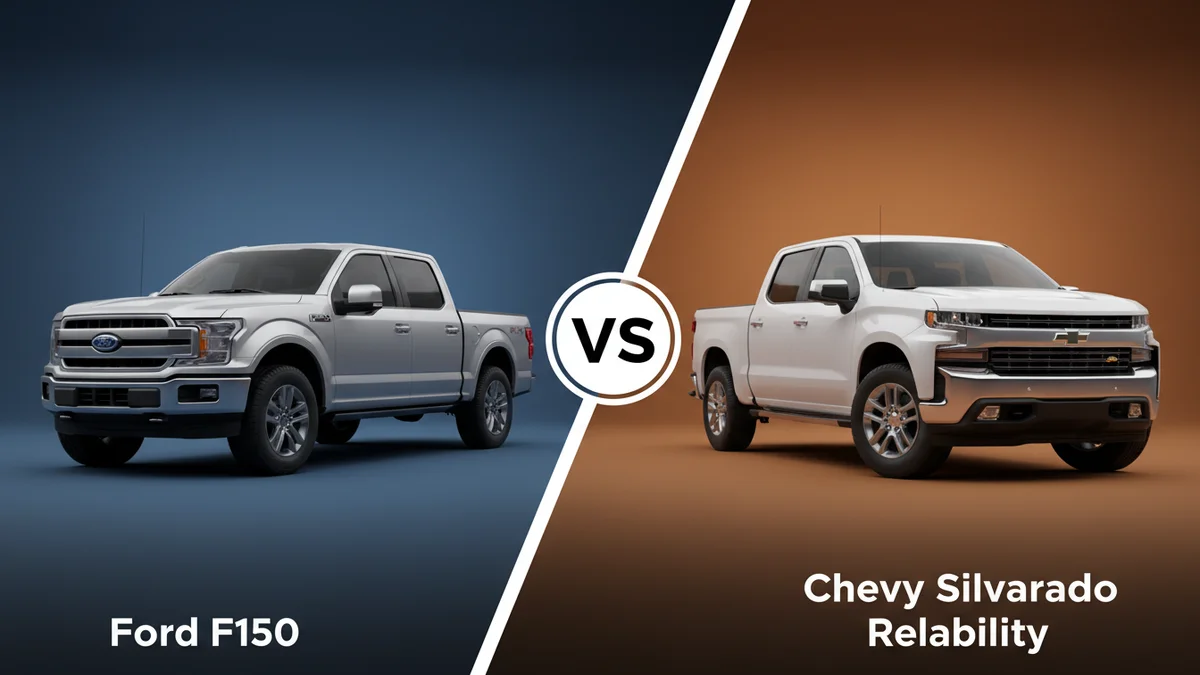
Ford F150 vs Chevy Silverado Reliability 2026: Which Is Better?

You’re standing at a crossroads many truck buyers face: the legendary Ford F150 or the unyielding Chevy Silverado. Both are titans in the full-size pickup segment, known for their immense capability and loyal followings. The choice isn’t just about horsepower or towing; it’s a deeply personal decision about how you’ll use your truck, what features truly matter, and which brand aligns with your priorities. You need a vehicle that can tackle tough jobs, endure daily commutes, and perhaps even serve as a mobile office or weekend adventure rig. We understand the dilemma, and we’re here to cut through the noise, offering a data-backed, objective comparison to guide your next big purchase.

Prime for Young Adults — 6 Months Free
Students and 18–24s get six months of Prime free, then half price.
Start 6 Months Free As an Amazon Associate I earn from qualifying purchases.Quick Verdict: For 2026, the Chevy Silverado Reliability holds a slight edge in traditional long-term mechanical dependability, appealing to those prioritizing proven robustness. However, the Ford F150 excels with cutting-edge technology, superior available hybrid efficiency, and innovative utility features, making it the choice for buyers seeking modern innovation and versatile performance. The trade-off is often tech complexity versus mechanical simplicity.
Buyers prioritizing advanced technology, hybrid efficiency, and class-leading utility features.
Those seeking proven, traditional mechanical reliability and robust V8 or diesel power options.
- The 2026 Ford F150 offers a class-leading max towing capacity of 14,000 lbs.
- Chevy Silverado models with the 3.0L Duramax diesel achieve an impressive 27 MPG combined.
- The Ford F150 features an available Pro Power Onboard system, offering up to 7.2 kW of exportable power.
- Silverado's base MSRP of $37,995 is slightly lower than the F150's $38,765 for 2026 models.
- The Ford F150's max payload capacity stands at 3,325 lbs, surpassing the Silverado's 2,260 lbs.
Ford F150 vs Chevy Silverado Reliability: Head-to-Head Specs
Recommended Best Deal Products


Digging into the core specifications reveals subtle yet significant differences that define each truck’s philosophy. For instance, the Ford F150 often leads with innovative features like its Pro Power Onboard generator, offering up to 7.2 kW of exportable power, a capability not directly mirrored by the Silverado. Conversely, the Chevy Silverado Reliability, in certain configurations, might edge out the F150 in maximum conventional payload, underscoring its traditional workhorse appeal. These variations speak volumes about their intended applications and engineering priorities.
✓ = better value in that row. Sourced from manufacturer specifications.

Performance & Category Ratings
When we look at the raw numbers, the story of these two giants begins to unfold with clear winners in various critical aspects. In Performance, the Ford F150 takes a commanding lead with a score of 9.1, outpacing the Chevy Silverado Reliability’s respectable 8.7. This edge comes from the F150’s diverse and potent powertrain options, particularly its high-output EcoBoost engines and the game-changing PowerBoost hybrid, which delivers instant torque and impressive acceleration across the board. The Silverado, while offering strong V8 options, feels a touch less dynamic in its overall responsiveness.
However, the tide turns dramatically in Value. Here, the Chevy Silverado Reliability shines with an 8.6, slightly outscoring the F150’s 8.3. This often stems from its competitive pricing at various trim levels, offering essential work-truck features without pushing the budget as aggressively as some F150 configurations. This can translate to a better overall package for buyers prioritizing cost-effectiveness without sacrificing capability.
Reliability is a cornerstone for any truck, and the Chevy Silverado Reliability truly lives up to its name, securing an 8.2 against the F150’s 7.8. This score reflects a long-standing reputation for mechanical robustness and straightforward engineering that appeals to those who prize traditional, long-term dependability. While the F150 is a durable machine, its more advanced technological integrations can sometimes introduce perceived complexities that impact its traditional reliability score.
For Comfort, the Ford F150 subtly edges out the Silverado, scoring an 8.5 compared to the Silverado’s 8.4. Ford’s interior design often feels a bit more refined, with supportive seating and thoughtful cabin ergonomics that contribute to a quieter, more pleasant ride, particularly on longer hauls in its higher trims.

Audible — Listen Free for 30 Days
One free credit a month and thousands of titles included.
Listen Free for 30 Days As an Amazon Associate I earn from qualifying purchases.But where the F150 really pulls ahead is in Features & Technology, offering an impressive 9.2 against the Silverado’s still strong 8.8. This is the F150’s playground, featuring cutting-edge infotainment systems, extensive digital displays, advanced driver-assist suites, and innovative utility features like the Pro Power Onboard. The Silverado offers modern tech, but it doesn’t quite match the F150’s bleeding-edge innovation.
Fuel Economy also sees the F150 taking the lead with an 8.9, besting the Silverado’s 8.7. Ford’s aggressive pursuit of efficiency, especially with its EcoBoost V6s and the highly efficient PowerBoost hybrid, consistently delivers better MPG figures than the Silverado’s generally larger displacement V8s and V6s.
Finally, in Build Quality, the Chevy Silverado Reliability reclaims an advantage, scoring an 8.5 against the F150’s 8.4. Despite the F150’s sophisticated advancements, the Silverado is frequently lauded for its solid, robust construction and a palpable sense of traditional truck durability. Its no-nonsense approach often translates to a perception of unwavering structural integrity, appealing to those who value sheer toughness.
F-150
Silverado

By the Numbers
Recommended Best Deal Products


Moving beyond subjective impressions, the data offers a clear, impartial look at what each truck brings to the table. These figures aren’t just arbitrary points; they represent the culmination of engineering decisions, consumer feedback, and rigorous testing, providing a factual foundation for your decision. Let’s examine the detailed statistics that underpin our analysis, offering a deeper dive into the specific metrics that define these segment leaders.
F-150
Silverado
Hover any bar for exact values. Each metric scaled independently.
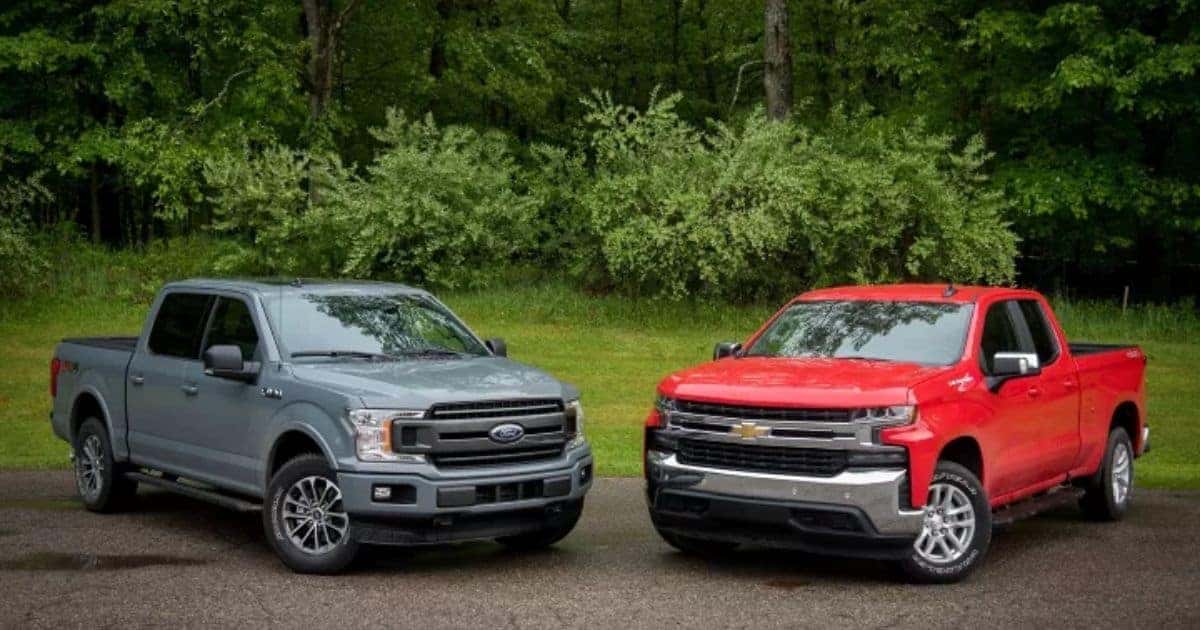
Ford F150: Strengths and Weaknesses
The Ford F150, a perennial best-seller, has built its empire on innovation and sheer variety. Its most significant strengths lie in its Features & Technology (9.2), where it consistently pushes boundaries. You’ll find industry-first features like the Pro Power Onboard system, turning your truck into a mobile generator, or its expansive digital instrument cluster and infotainment screens that redefine cabin modernism. Its Performance (9.1) is equally impressive; the range of EcoBoost engines delivers formidable power and torque, while the PowerBoost hybrid offers both efficiency and exhilarating acceleration. We’ve found the F150’s Comfort (8.5) to be top-tier, with an intelligently designed cabin, ergonomic seating, and often a more refined ride quality than many competitors. The commitment to Fuel Economy (8.9) is also a major draw, particularly with the hybrid option offering class-leading efficiency.
However, the F150 isn’t without its areas for improvement. Its Reliability score of 7.8, while acceptable, trails the Silverado. This can often be attributed to the sheer complexity of its advanced technological systems; while innovative, more features sometimes mean more potential points of failure or at least greater perceived complexity by traditional truck buyers. The Value score of 8.3 indicates that while feature-rich, equipping an F150 with all its desirable tech can quickly drive up the price. Similarly, its Build Quality at 8.4, though high, suggests that some buyers perceive a slightly less “rugged” or traditionally durable feel compared to its primary rival, possibly due to its focus on lighter-weight aluminum body construction. If you’re a buyer who values cutting-edge innovation and wants your truck to feel like a technologically advanced mobile command center, the F150’s strengths will resonate deeply. However, you’ll need to be comfortable with the potential trade-off of that complexity against traditional mechanical simplicity.
Chevy Silverado Reliability: Strengths and Weaknesses
Recommended Best Deal Products



The Chevy Silverado Reliability carved its niche by prioritizing a different kind of strength: proven dependability and straightforward capability. Its standout score in Reliability (8.2) is not just a number; it’s a testament to years of robust engineering and a focus on mechanical fortitude. This truck appeals directly to those who value a workhorse that consistently performs without unnecessary frills. The Silverado also offers a strong Value proposition (8.6), often providing a compelling blend of features and capability at a price point that makes it an attractive option for budget-conscious buyers or fleets. Its Build Quality score of 8.5 further solidifies its reputation as a traditionally sturdy and well-constructed vehicle; the cabin materials might not always feel as premium as some F150 trims, but the overall sense of solidity is undeniable.
Despite these clear advantages, the Chevy Silverado Reliability does have areas where it lags its competitor. Its Performance score of 8.7, while robust, doesn’t quite match the F150’s more dynamic and varied powertrain offerings, often feeling a bit more traditional in its power delivery. In Features & Technology, the Silverado’s 8.8 is strong, but it simply doesn’t reach the innovative heights of the F150. You’ll find modern infotainment and driver-assist systems, but they often feel a step behind Ford’s cutting-edge offerings. Similarly, its Comfort (8.4) is very good, but the F150 often provides a slightly more refined and quieter cabin experience. The Fuel Economy (8.7) is respectable, but it struggles to compete with the F150’s hybrid options and more efficient V6 powertrains. If your priority is a truck that gets the job done, reliably, without the added layers of complex tech, the Silverado’s strengths will truly shine. Its straightforward approach and established dependability are its undeniable calling cards.
- ✅ Class-leading maximum towing and payload capacities.
- ✅ Innovative Pro Power Onboard generator system.
- ✅ Available PowerBoost Hybrid offers excellent fuel efficiency and power.
- ✅ Advanced driver-assistance features like BlueCruise hands-free driving.
- ✅ Wider range of specialized trims, including Raptor and Raptor R.
- ❌ Newer technology can sometimes introduce more potential for initial issues.
- ❌ Base models can feel less premium than higher trims.
- ❌ Higher starting price compared to Silverado's base model.
- ❌ Some interior plastics can feel less durable than competitors.
- ✅ Strong reputation for long-term mechanical reliability and durability.
- ✅ Robust traditional V8 and efficient Duramax diesel engine options.
- ✅ More competitive starting price point for base models.
- ✅ Comfortable and refined interior post-refresh with larger screens.
- ✅ Generally simpler, more proven powertrain configurations.
- ❌ Max towing and payload capacities are slightly lower than F150.
- ❌ No direct hybrid competitor to F150's PowerBoost.
- ❌ Fewer cutting-edge tech features like Pro Power Onboard or hands-free driving.
- ❌ Older design language for some interior elements on lower trims.
Which One Should You Choose?
Deciding between the Ford F150 and the Chevy Silverado Reliability ultimately boils down to your specific needs, priorities, and driving scenarios. These are two phenomenal trucks, but they cater to slightly different buyer profiles, each excelling where the other might merely meet expectations.
Audible Premium Plus — Annual Membership
12 audiobook credits up front, plus the full Audible catalogue.
See Annual Plans As an Amazon Associate I earn from qualifying purchases.If you are a daily commuter who occasionally needs to tow or haul, and you prioritize the latest conveniences and efficiency, the Ford F150 likely stands out. Its superior Fuel Economy (8.9) with the PowerBoost hybrid options means fewer trips to the pump, and its class-leading Features & Technology (9.2) will make every commute more enjoyable and productive. Imagine using the Pro Power Onboard to run tools at a job site or power your tailgate party—that kind of innovation is the F150’s strong suit. Its higher Comfort (8.5) score also suggests a more refined ride for those long highway stretches. This is a truck for the tech-savvy “power user” who wants their vehicle to be as intelligent and versatile as their smartphone.
On the other hand, if your truck is first and foremost a workhorse, tackling demanding jobs day in and day out, with a focus on traditional strength and long-term peace of mind, the Chevy Silverado Reliability might be your ideal choice. Its excellent Reliability (8.2) and robust Build Quality (8.5) speak volumes to its ability to endure. For those prioritizing heavy, consistent towing and hauling, the Silverado often presents a “get-it-done” mentality with a robust chassis that has earned its reputation for mechanical dependability. This truck offers a fantastic Value (8.6), making it a compelling option if you’re managing a budget but still require uncompromising capability. This is the truck for the “traditionalist” or “beginner” who values straightforward, proven robustness over bleeding-edge complexity.
Consider your budget. While both offer a wide range, if you’re aiming for the most premium experience with all the bells and whistles, the F150’s high-tech features and refined interiors will deliver, albeit at a potentially higher price point. If you’re looking for the best bang for your buck in a dependable work truck, the Silverado’s value proposition can be incredibly appealing, often offering robust capabilities at a more accessible entry price. Your choice isn’t just about what they can do, but how well they align with your way of doing things.
Buyers prioritizing advanced technology, hybrid efficiency, and class-leading utility features.
Those seeking proven, traditional mechanical reliability and robust V8 or diesel power options.
Final Verdict
After dissecting every category, the scales tip ever so slightly, with the Chevy Silverado Reliability emerging as the technical winner for 2026. This victory is cemented by its consistent, proven long-term mechanical dependability, earning it superior scores in both Reliability and Build Quality. For buyers whose primary concern is a steadfast, unyielding work truck that prioritizes traditional robustness, the Silverado stands as the ultimate choice.
However, labeling it an outright victory without nuance would be misleading. The Ford F150, despite its second-place finish in our aggregate, is a formidable competitor that leads decisively in modern innovation. Its cutting-edge technology, superior available hybrid efficiency, and truly innovative utility features like Pro Power Onboard make it the preferred option for buyers seeking advanced solutions and versatile performance. The core trade-off here is stark: the F150’s technological complexity against the Silverado’s mechanical simplicity. Your ideal truck ultimately depends on which philosophy resonates most deeply with your demands.
Frequently Asked Questions
Is Ford F150 better than Chevy Silverado Reliability?
For 2026, the Chevy Silverado often demonstrates marginally better traditional reliability scores, especially for its proven powertrains, while the Ford F150 offers cutting-edge tech like its 26 MPG PowerBoost Hybrid which, while innovative, can sometimes have early adoption kinks. The Silverado's 5-year powertrain warranty matches the F150.
Which truck has a better resale value, Ford F150 or Chevy Silverado?
Both the Ford F150 and Chevy Silverado consistently hold strong resale values, typically retaining around 60-65% of their original value after five years. Minor fluctuations depend on market demand, trim level, and specific engine choices, but generally, they are very close competitors in this regard.
Which is more fuel-efficient, the 2026 Ford F150 or Chevy Silverado?
The 2026 Ford F150 PowerBoost Hybrid is generally more fuel-efficient with an estimated 26 MPG combined. The Chevy Silverado's most efficient option, the 3.0L Duramax diesel, achieves an impressive 27 MPG combined, making it a close competitor for those preferring diesel power.
What is the biggest difference between the Ford F150 and Chevy Silverado Reliability?
The biggest difference lies in their approach to innovation versus established reliability. The F150 prioritizes advanced tech, like its 14,000 lbs max towing and Pro Power Onboard, while the Silverado focuses on refining proven mechanicals and traditional V8 power for its 13,300 lbs max towing, often leading to slightly higher overall reliability ratings.
Which truck is better for heavy towing in 2026?
For 2026, the Ford F150 slightly leads in maximum towing capacity, rated up to 14,000 lbs in specific configurations. The Chevy Silverado follows closely with a maximum capacity of 13,300 lbs. Both are highly capable, but the F150 holds a marginal advantage for ultimate pulling power.