How To Disable Ford Pats System: Step-By-Step Guide 2026

Is your Ford vehicle refusing to start due to an immobilizer issue, or are you undertaking an engine swap that necessitates bypassing its security system? The Ford Passive Anti-Theft System (PATS) is a robust security feature, but it can present significant challenges when malfunctioning or when performing advanced modifications, leading many to consider disablement. This comprehensive guide will meticulously explain the Ford PATS system, detail the complex process of its disablement, explore critical legal and security implications, and provide a step-by-step methodology for advanced users, alongside viable alternatives, ensuring you learn, understand, and master this intricate topic.

Understanding Ford’s Passive Anti-Theft System (PATS) Functionality
Recommended Best Deal Products

📤 Share Image
The Ford Passive Anti-Theft System, or PATS, is a sophisticated immobilizer technology designed to prevent unauthorized vehicle operation. Introduced in the mid-1990s, PATS has evolved through several generations, including Securilock, PATS II, and PATS III, becoming an essential security feature across nearly all Ford models. For instance, it began appearing in models like the Ford Mustang in the early ’90s and became standard on popular trucks such as the F-150 by the late ’90s.
How PATS Works: Key Components and Authentication
At its core, the PATS system relies on a few key components to function:
- Transponder Chip in the Key: Every authorized Ford key contains a unique, miniature electronic chip that emits a radio frequency (RF) signal.
- Transceiver Ring (Antenna): Mounted around the ignition cylinder, this ring reads the signal from the key’s transponder chip when the key is turned.
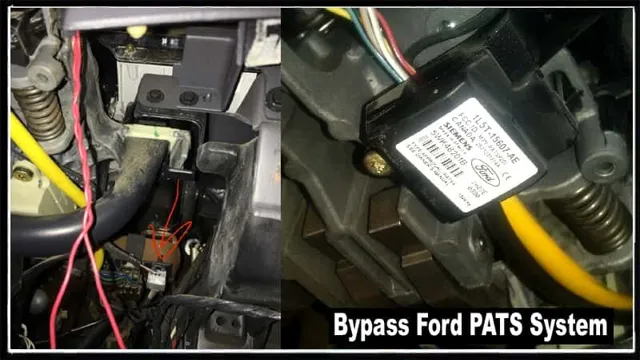
- PATS Module: In earlier systems, this was a dedicated module. In modern Fords, the PATS functionality is often integrated directly into the Powertrain Control Module (PCM) or the Body Control Module (BCM).
- Powertrain Control Module (PCM): The vehicle’s central computer, responsible for engine management, fuel injection, and ignition.
The authentication process is swift and seamless. When an authorized key is inserted and turned, the transceiver ring energizes the key’s transponder chip. The chip then transmits its unique code to the PATS module. The module verifies this code against its stored memory of authorized keys. If the code matches, the PATS module sends an authorization signal to the PCM. Only upon receiving this signal will the PCM enable critical engine functions like fuel injection and ignition, allowing the engine to start. If the code is incorrect or absent, the PCM inhibits these functions, resulting in a crank-no-start condition.
Recognizing PATS Malfunctions
A malfunctioning PATS system is typically indicated by a flashing ‘THEFT’ light or a rapid blinking security icon on the dashboard. This often points to a key transponder issue, a faulty transceiver, or a problem within the PATS module itself. These symptoms can be frustrating and lead vehicle owners to understand why disabling the system might seem appealing, especially for diagnostic purposes or in specific modification scenarios.
The Effectiveness of Immobilizer Systems
PATS systems are incredibly effective. According to the National Insurance Crime Bureau (NICB), vehicles equipped with immobilizer systems like PATS are significantly less likely to be stolen. Research indicates a 50-60% reduction in vehicle theft rates compared to non-equipped vehicles. This stark statistic underscores the critical role PATS plays in modern vehicle security, a fact that should be weighed heavily when considering any form of disablement.
Legal, Security, and Warranty Implications of Disabling Ford PATS
Before you explore methods to disable your Ford’s PATS system, it is paramount to discover and fully grasp the severe consequences. Disabling an OEM security feature is not a decision to be taken lightly, as it carries significant legal, security, and financial ramifications.
Legal Repercussions
Tampering with or disabling a vehicle’s factory-installed anti-theft system can have legal consequences. While specific laws vary by jurisdiction, some local and national regulations consider such modifications as facilitating vehicle crime or tampering with safety equipment. For example, some states, like California (referencing California Vehicle Code sections related to vehicle modifications), may impose fines or other penalties, particularly if the vehicle is later involved in criminal activity or if the modification is deemed unsafe. It’s crucial to consult local laws before proceeding.
Heightened Security Vulnerabilities
The most immediate and obvious risk is the drastic increase in your vehicle’s vulnerability to theft. By disabling PATS, you remove a critical barrier that prevents hot-wiring and other common theft methods. Without this immobilizer, your Ford becomes an easy target. Consider a scenario where a vehicle is stolen after its PATS system has been intentionally disabled – the owner discovers their insurance claim is denied. Most insurance companies explicitly state in their policies that unauthorized modifications or the intentional disablement of factory security features will void theft coverage. The loss of personal property, combined with potential legal liability, makes this a serious concern.
Warranty and Insurance Impact
Manufacturers’ warranties are typically voided for components directly affected by unauthorized modifications. If you reprogram your PCM to disable PATS, any subsequent issues with the PCM, engine, or related electrical systems could lead to a dealership voiding the warranty. This can result in costly out-of-pocket repairs. As mentioned, insurance companies are highly unlikely to cover theft claims if security features were intentionally bypassed. Industry data consistently shows that unprotected vehicles have significantly higher theft rates, making them a higher risk for insurers.

Audible — Listen Free for 30 Days
One free credit a month and thousands of titles included.
Listen Free for 30 Days As an Amazon Associate I earn from qualifying purchases.Ethical and Practical Considerations
Beyond the personal risks, there are broader ethical considerations. Contributing to vehicle crime, even inadvertently, impacts community safety. Furthermore, disabling PATS can significantly decrease your vehicle’s resale value, as a buyer will likely be wary of a vehicle with compromised security.
Limited Scenarios for Consideration (Strict Caveats)
There are highly specific, niche scenarios where PATS disablement might be considered, always with strict caveats:
- Dedicated Off-Road or Race Vehicles: Vehicles used exclusively on private property, for competition, or where security is managed through other means (e.g., locked trailers).
- Engine Swaps into Non-PATS Chassis: For example, transplanting a modern Ford Coyote engine into a classic car that never had an immobilizer. In these cases, PATS must be addressed to allow the donor engine’s PCM to function.
Even in these scenarios, the owner assumes all responsibility and risks. For any road-going vehicle, full disablement is strongly discouraged.
Disabling your vehicle’s PATS system makes it dramatically easier to steal, potentially voids your warranty, and will likely result in the denial of any theft-related insurance claims. This procedure should only be considered for non-street-legal vehicles in controlled environments, or specific engine swap projects where the implications are fully understood and accepted.
Methods to Bypass or Disable Ford PATS: An Overview of Approaches
For those who have thoroughly weighed the risks and determined that PATS disablement is necessary for their specific application, several technical approaches exist. It’s crucial to learn and understand these methods, as they often require specialized knowledge and equipment. This overview provides a comprehensive look at the primary ways PATS can be addressed.
1. PCM (Powertrain Control Module) Reprogramming
This is the most common and robust method for permanently disabling PATS. It involves using specialized software to rewrite the PCM’s firmware, effectively removing or ignoring the PATS authentication routine. Tools like Forscan (a diagnostic software for Ford, Mazda, Lincoln, Mercury vehicles) or professional tuning software like HP Tuners allow users to access the PCM’s parameters and disable the PATS function. Many tuners offer a “PATS delete” option as part of their custom tuning services. This method is particularly prevalent in engine swap scenarios, such as putting a modern Coyote engine into a classic vehicle, where the donor engine’s PATS must be addressed to function independently.
2. PATS Module Bypass/Elimination
For older Ford systems where PATS was a standalone module, it was sometimes possible to physically remove or bypass the dedicated PATS module. However, in most modern Fords, PATS functionality is integrated into the PCM or BCM, making physical removal impractical or impossible without affecting other critical vehicle systems. Aftermarket bypass modules exist for specific applications (like remote start systems), but these typically emulate a valid key rather than completely disabling the core system.
3. Key/Transponder Emulation
This technique involves creating a constant “valid key” signal to trick the PATS system. This is often achieved by taking an authorized key, extracting its transponder chip, and permanently mounting it near the transceiver ring. While this can fool the system into always thinking a valid key is present, it does not truly disable PATS, and merely leaves the vehicle susceptible to any common ignition turn. It’s often used in conjunction with remote start systems or in situations where full PCM reprogramming is not an immediate option.
4. Dedicated PATS Delete Services
Many professional tuning shops and specialized automotive electronics services offer dedicated PATS delete services. These services involve sending your PCM to them for reprogramming, or they may perform it on-site. These services are often sought by individuals performing engine swaps, upgrading performance, or dealing with persistent PATS issues where component replacement is not viable. The cost for such a service can range anywhere from $150 to $500 for the service alone, excluding shipping or on-site labor.
Required Tools and Software
To perform PCM reprogramming yourself, you will need more than a basic OBD-II scanner. You’ll need:
Audible Premium Plus — Annual Membership
12 audiobook credits up front, plus the full Audible catalogue.
See Annual Plans As an Amazon Associate I earn from qualifying purchases.- Specialized Diagnostic Scanners: Tools like Ford IDS (Integrated Diagnostic System), which is dealer-level software, or professional-grade J2534 passthrough devices compatible with Forscan or other tuning software.
- Programming Software: Forscan (with extended license for programming functions), HP Tuners, or similar software that allows access to PCM configuration parameters.
- Stable Power Supply: A battery maintainer or charger capable of providing a stable voltage (e.g., 13.5V) during programming is absolutely critical.
It’s important to differentiate between a simple “clear codes” OBD-II scanner and a sophisticated programming tool. Attempting to modify PCM parameters with inadequate tools or knowledge can result in a “bricked” PCM, leading to a costly replacement typically ranging from $800-$2000, plus reprogramming costs.
Before attempting any PCM reprogramming, always create a full backup of your original calibration file. This serves as a critical failsafe, allowing you to restore your PCM to its factory state if anything goes wrong during the disablement process.
Step-By-Step Guide to Disabling Ford PATS via PCM Reprogramming (Advanced Users)
This detailed procedure is intended for experienced individuals with a strong understanding of automotive electronics, vehicle diagnostics, and the inherent risks. If you do not master these concepts, seek professional assistance.
📋
Step-by-Step Guide
Before starting, ensure your vehicle’s battery is fully charged. Connect a stable power supply or battery maintainer (aim for 13.5V output) to the battery terminals. This is essential, as voltage drops below 12V during programming can permanently damage (brick) the PCM. Disconnect any aftermarket accessories that might draw power. Verify your OBD-II port is functional and free of debris. Always back up your original PCM calibration file before making any changes. This is your safety net.
Obtain the appropriate J2534 passthrough device (e.g., VXDIAG VCX Nano for Ford) and install the necessary drivers. Download and install compatible software such as Forscan (with an extended license for programming functions) or specialized tuning software like HP Tuners for your specific vehicle year and model. Ensure your laptop has sufficient battery life or is connected to power.
Connect your J2534 device to the vehicle’s OBD-II port and your laptop. Launch the software (e.g., Forscan). Follow the software prompts to connect to the vehicle. Once connected, perform a full module scan to identify all vehicle modules and any existing Diagnostic Trouble Codes (DTCs). This step helps you discover any pre-existing issues and confirms successful communication with the PCM.
Navigate within the software to the PCM’s configuration parameters. In Forscan, this is typically under “Module Configuration” or “Configuration and Programming”. Look for settings related to “PATS Function,” “Immobilizer,” or “Theft Deterrent.” For a 2005 Ford F-150 undergoing an engine swap, you would typically select the PCM and then find an option to change the PATS state from “Enabled” to “Disabled.” Confirm the change carefully, as incorrect settings can cause new problems.
Once the PATS parameter is modified, initiate the PCM flashing procedure. A typical PCM reflash can take 15-45 minutes. During this time, DO NOT disconnect anything, turn off the ignition, or let your laptop or battery maintainer lose power. After the flash is complete, the software may prompt you to cycle the ignition. Perform a system reset if prompted and then re-scan all modules to confirm that PATS is no longer active or that the relevant DTCs have cleared. Attempt to start the vehicle to verify successful disablement.
Always perform PCM flashing in a well-ventilated area, and ensure no distractions. A stable voltage supply is paramount; neglecting this can lead to permanent PCM damage, which can cost anywhere from $500-$2000 for replacement and reprogramming.
Troubleshooting Common Issues After Attempting PATS Disablement
Even for experienced users, issues can arise during or after attempting to disable PATS. Knowing how to diagnose and resolve these problems is crucial to prevent further vehicle damage. It is important to understand these potential pitfalls.
Vehicle No-Start Condition
If your vehicle still won’t start after the disablement attempt, the first step is to determine if it’s still PATS-related or a new issue. Check for specific PATS-related DTCs (see below). Verify you have proper battery voltage, check all fuses, and ensure there’s good ground to the PCM. A communication error during programming could leave the PCM in an unconfigured state, preventing it from functioning at all.
Persistent Security Light or DTCs
Even if the engine starts, a flashing security light or persistent DTCs indicate that PATS may not be fully disabled. Common PATS-related trouble codes include:
- B1600: Non-PATS Key Received (incorrect or no transponder signal).
- B1601: Unprogrammed Key.
- B1602: Partial PATS Communication (often transceiver issue).
- P1260: Theft Detected, Vehicle Immobilized (a generic PCM code indicating PATS intervention).
Use your scan tool’s live data function to monitor PATS status. If it still shows “enabled” or “active,” the reprogramming was unsuccessful or incomplete. You may need to retry the process, ensuring all steps are followed precisely.
Engine Cranks But Doesn’t Fire
This is a classic symptom of an active immobilizer. If the engine cranks but refuses to ignite, PATS is likely still inhibiting fuel delivery or spark. Verify fuel pressure at the rail, check for spark at the plugs, and confirm injector pulse using a noid light. If all three are absent, it points directly to PATS intervention. For example, after reprogramming, if the engine still won’t start, you must diagnose whether it’s a failed flash, an incorrect setting, or an entirely unrelated issue.
Communication Errors During Reprogramming
“Error writing to module” or “communication lost” messages are critical. These can be caused by:
- Loose OBD-II cable or faulty J2534 device.
- Outdated or incorrect drivers for your interface.
- Incompatible software version for your vehicle.
- Most commonly, unstable or insufficient vehicle battery voltage.
Stop immediately, recheck all connections, ensure the battery maintainer is working correctly, and restart the process. A study showed that up to 10% of DIY PCM flashes result in ‘bricked’ modules due to improper procedure or power supply issues. Professional diagnostic time for such issues typically costs $100-$200 per hour.
What If It Still Doesn’t Work?
If you’ve exhausted all troubleshooting steps, it’s time for professional intervention. Consider:
- Rollback: Attempt to flash your original backup calibration to the PCM. If successful, this can restore your vehicle to its pre-disablement state.
- Specialist: Contact a reputable automotive performance tuner or a Ford dealership. They have advanced tools and expertise to diagnose and potentially recover a compromised PCM.
Alternatives to Full PATS Disablement: Practical and Secure Solutions
Given the significant risks associated with completely disabling your Ford’s PATS system, it’s prudent to explore more secure and practical alternatives. Many common PATS-related issues can be resolved without compromising your vehicle’s anti-theft capabilities.
1. Professional PATS Key Programming
Often, a “no-start” condition is simply due to a lost, damaged, or improperly programmed key. Dealerships and certified automotive locksmiths have the tools to program new keys or re-program existing ones to your vehicle’s PATS system. This is a cost-effective and secure solution, typically ranging from $100-$250 per key, far less than the potential costs and risks of disablement. This ensures your vehicle’s security remains intact.
2. Replacing Faulty PATS Components
If diagnostic scans point to a specific component failure (e.g., transceiver ring, PATS module, or even the PCM itself), replacing the faulty part is the correct repair. For instance, a 2008 Ford Focus experiencing PATS issues might only need a new transceiver ring around the ignition cylinder. Replacing a faulty PATS module or PCM can range from $300-$1000 depending on the vehicle model and part cost, but it restores full factory functionality and security.
3. Using PATS Bypass Modules (Specific Applications)
For installing aftermarket remote start systems, specialized PATS bypass modules are available. These modules often require an existing programmed key to be placed inside them (a “key-in-a-box” solution) or learn the key code, then transmit a valid signal only when the remote start is activated. This temporarily satisfies PATS for the remote start function but maintains the immobilizer’s security when the vehicle is operated normally with a physical key.
4. Engine Swaps and Standalone ECUs
In high-performance or racing applications involving engine swaps, a common solution is to replace the factory PCM entirely with a standalone engine management system (e.g., Haltech, AEM, Holley EFI). These aftermarket ECUs are designed from the ground up for custom engine configurations and typically do not incorporate PATS functionality, thereby bypassing the system by virtue of using a completely different control module. This is a more comprehensive and often costly solution but offers maximum control over engine parameters for highly modified vehicles.
5. Consulting a Ford Specialist or Certified Automotive Locksmith
When faced with complex PATS issues, the most reliable course of action is to consult a certified Ford technician or a reputable automotive locksmith. These professionals possess proprietary diagnostic tools, extensive training, and access to genuine Ford parts and software. They can accurately diagnose the root cause of the PATS problem and provide the most secure and appropriate repair, saving you time, money, and avoiding the risks of DIY disablement.
By The Numbers
Theft Reduction with Immobilizers
Typical Cost for PATS Delete Service
Cost to Replace a Bricked PCM
Approximate DIY PCM Flash Failure Rate
Ford PATS is an essential anti-theft system, but disablement can be pursued for specific, often off-road, applications. Disabling PATS carries severe legal, security, and warranty risks that must be thoroughly understood. PCM reprogramming is the primary method for disablement, requiring specialized tools and expertise. Troubleshooting is critical, as improper procedures can lead to further vehicle issues. Secure alternatives exist for addressing PATS issues without compromising vehicle security.
Before proceeding with any PATS disablement, we strongly recommend consulting with a certified Ford technician or automotive locksmith to fully explore all options and understand the profound implications. Prioritizing vehicle security and adhering to legal guidelines is paramount.
Frequently Asked Questions
Is it illegal to disable Ford PATS?
Generally, disabling a vehicle’s anti-theft system for a street-legal vehicle is highly discouraged and can be illegal in many jurisdictions, potentially violating vehicle modification laws. It also renders your vehicle significantly more susceptible to theft, often voiding insurance coverage in such events. It’s only typically considered for dedicated off-road, racing, or specific project vehicles not intended for public road use.
What tools are needed to disable Ford PATS?
Disabling Ford PATS primarily requires advanced diagnostic and programming tools. This typically includes a J2534 compliant pass-through device or a professional-grade OBD-II scanner capable of module programming, specialized software like Ford IDS (Integrated Diagnostic Software) or Forscan, and a stable power supply for the vehicle’s battery during programming. Basic OBD-II scanners are insufficient for this task.
Can I disable PATS without professional software?
Disabling PATS without professional or specialized software (e.g., Ford IDS, Forscan with extended license, or dedicated tuning suites) is generally not feasible or recommended. These systems require precise communication with the vehicle’s Powertrain Control Module (PCM) to alter or remove the immobilizer parameters, which generic OBD-II tools cannot achieve. Attempting to bypass it manually can cause irreparable damage to the PCM.
Will disabling PATS affect other vehicle functions?
Yes, disabling PATS can significantly affect other vehicle functions. Since PATS is often integrated into the PCM or BCM (Body Control Module), tampering with it can lead to various issues, including engine runability problems, illuminated check engine lights, communication errors between modules, and even unintended battery drain. It’s a complex system, and its disablement can have cascading effects on interdependent electronic systems.
What are the common symptoms of a faulty PATS system?
Common symptoms of a faulty PATS system include the engine cranking but not starting, a rapid flashing ‘THEFT’ or security light on the dashboard, or specific Diagnostic Trouble Codes (DTCs) related to immobilizer communication. The vehicle may occasionally start and then immediately die, indicating a transient PATS error. These symptoms suggest the PATS is preventing fuel and ignition, often due to an unread key or module malfunction.