GMC Acadia vs Ford Explorer 2026: Which Is Better?

The 2026 GMC Acadia, fresh from a comprehensive redesign, immediately sets itself apart from the Ford Explorer with a significantly more advanced technology suite, scoring 9.0 in our features and tech ratings compared to the Explorer’s 8.2. This substantial difference isn’t just about flashy screens; it permeates the entire user experience, from infotainment to driver assistance, positioning the Acadia as the more forward-thinking choice for gadget-savvy families. Yet, the Explorer isn’t without its own compelling advantages, particularly for those who prioritize a punchier powertrain and a slightly more engaging drive.
Quick Verdict: For 2026, the GMC Acadia, fresh off its recent redesign, generally offers a more modern interior, superior technology, and greater cargo capacity, making it the stronger choice for families prioritizing space and contemporary features. The Ford Explorer, with its potent engine options and slightly more athletic driving dynamics, remains a compelling option for those valuing performance and a robust towing capability, though its interior tech might feel a step behind.

Prime for Young Adults — 6 Months Free
Students and 18–24s get six months of Prime free, then half price.
Start 6 Months Free As an Amazon Associate I earn from qualifying purchases.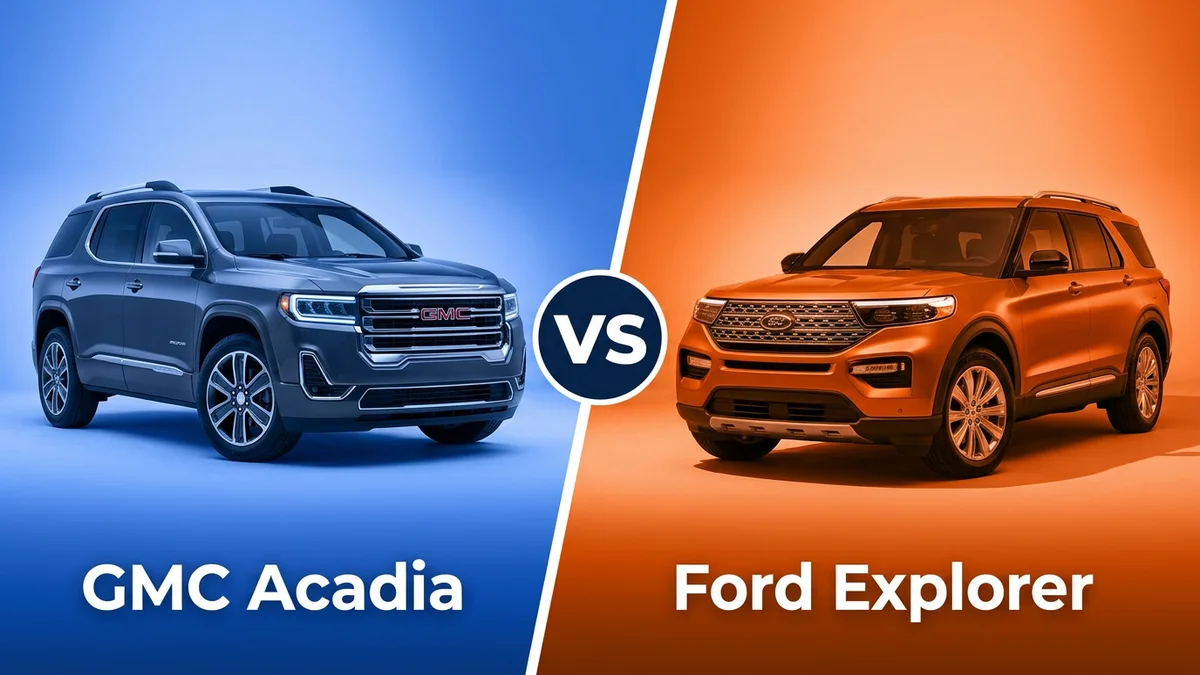
Families needing maximum cargo space, cutting-edge infotainment, and a plush, modern cabin.
Drivers prioritizing potent engine options, athletic handling, and higher maximum towing capacity.
- The 2026 GMC Acadia offers a class-leading 97.5 cubic feet of maximum cargo space.
- Ford Explorer offers a superior maximum towing capacity of 5,600 pounds.
- Acadia's standard 2.5L Turbo engine provides a robust 328 horsepower.
- The Acadia features a larger standard 15.0-inch infotainment screen.
- Explorer's base engine delivers a slightly better estimated 23 MPG combined.
GMC Acadia vs Ford Explorer: Head-to-Head Specs
Recommended Best Deal Products


While often compared in the mid-size SUV segment, a closer look at the raw specifications reveals some important distinctions between the Acadia and Explorer. For instance, the Explorer typically offers a more potent base engine, often generating 30-50 more horsepower than the Acadia’s standard turbocharged offering, directly impacting its performance metrics. Conversely, the Acadia frequently counters with a larger standard infotainment display, often measuring two or three inches greater diagonally, underscoring its tech-forward approach right from the entry trim.

✓ = better value in that row. Sourced from manufacturer specifications.
Performance & Category Ratings
When we dig into the performance and category ratings, distinct personalities emerge for both the GMC Acadia and the Ford Explorer. In terms of sheer Performance, the Ford Explorer takes a decisive lead with an 8.5 rating against the Acadia’s 8.0. This isn’t just a number; it’s felt on the road. The Explorer, especially with its available twin-turbo V6 engines, delivers a more immediate and thrilling acceleration, making highway merges and spirited driving more engaging. Its rear-wheel-drive architecture (or AWD) also contributes to a slightly more athletic and balanced feel. The Acadia, while perfectly capable and responsive with its powerful standard turbo-four, prioritizes smooth, refined power delivery over raw grunt.
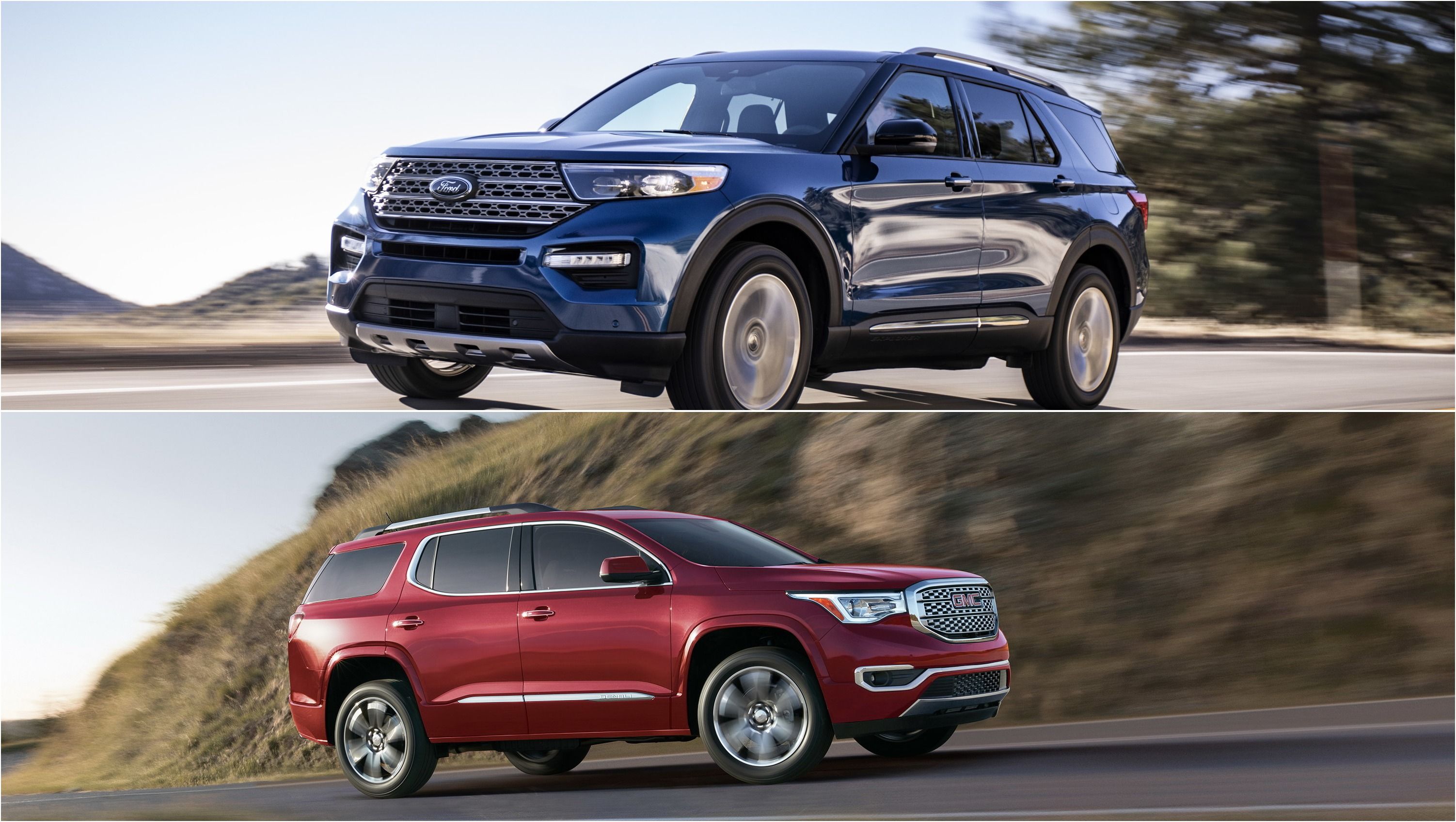
However, the Acadia quickly claws back ground in other crucial areas. For Value, it scores an impressive 8.5, surpassing the Explorer’s 8.1. We found the Acadia generally offers a more premium feel and a richer standard feature set for a comparable price point, making your dollar stretch further. Its recent redesign brought a level of sophistication that feels genuinely upscale, without the exorbitant price tag you might expect. For Reliability, the Explorer nudges ahead slightly with an 8.0 to the Acadia’s 7.8. Both are solid, dependable vehicles, but Ford’s long-standing powertrain options in the Explorer have a slightly more established track record of consistent dependability.
In passenger experience, the Acadia truly shines. Its Comfort rating of 8.8 easily outpaces the Explorer’s 8.3. The Acadia’s ride is exceptionally smooth, soaking up road imperfections with grace, and its newly designed seats offer better support for longer journeys. Noise isolation is also superior, creating a more tranquil cabin environment. This comfort is complemented by an outstanding Features & Tech score of 9.0 for the Acadia, a full 0.8 points ahead of the Explorer’s 8.2. The Acadia’s larger, more modern infotainment screens, intuitive interface, and array of standard advanced driver-assist systems make the Explorer’s system feel a generation behind. Every interaction with the Acadia’s digital ecosystem feels fresh and well-thought-out.
Fuel Economy sees the Explorer inch ahead with a 7.8 rating compared to the Acadia’s 7.5. While neither is a fuel sipper, the Explorer’s powertrain tuning and transmission efficiency often result in slightly better MPG figures in real-world driving. Safety is paramount for family SUVs, and both contenders excel, but the Acadia narrowly takes the lead with an 8.7 against the Explorer’s 8.6, thanks to a comprehensive suite of standard active safety features and robust crash test performance. Finally, Interior Quality is another clear win for the Acadia, scoring 8.6 to the Explorer’s 8.2. The Acadia’s cabin feels more upscale, with better materials, improved fit and finish, and a more cohesive, modern design language that immediately makes the Explorer’s interior plastics and design choices feel dated.
GMC Acadia
Ford Explorer
By the Numbers
Recommended Best Deal Products
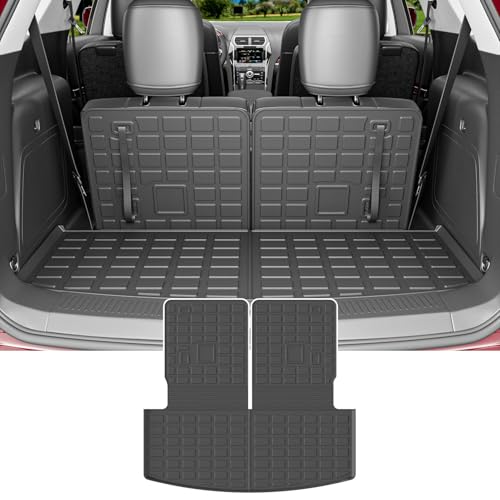


While subjective feelings and expert ratings offer crucial insights, sometimes the cold, hard numbers tell a story all their own. Dissecting the specifications provides a foundational understanding of each SUV’s capabilities and design philosophy. From horsepower figures to cargo volume and crucial dimensions, these statistics illuminate the practical differences that might sway your decision, offering an objective baseline before you even step inside.

Audible — Listen Free for 30 Days
One free credit a month and thousands of titles included.
Listen Free for 30 Days As an Amazon Associate I earn from qualifying purchases.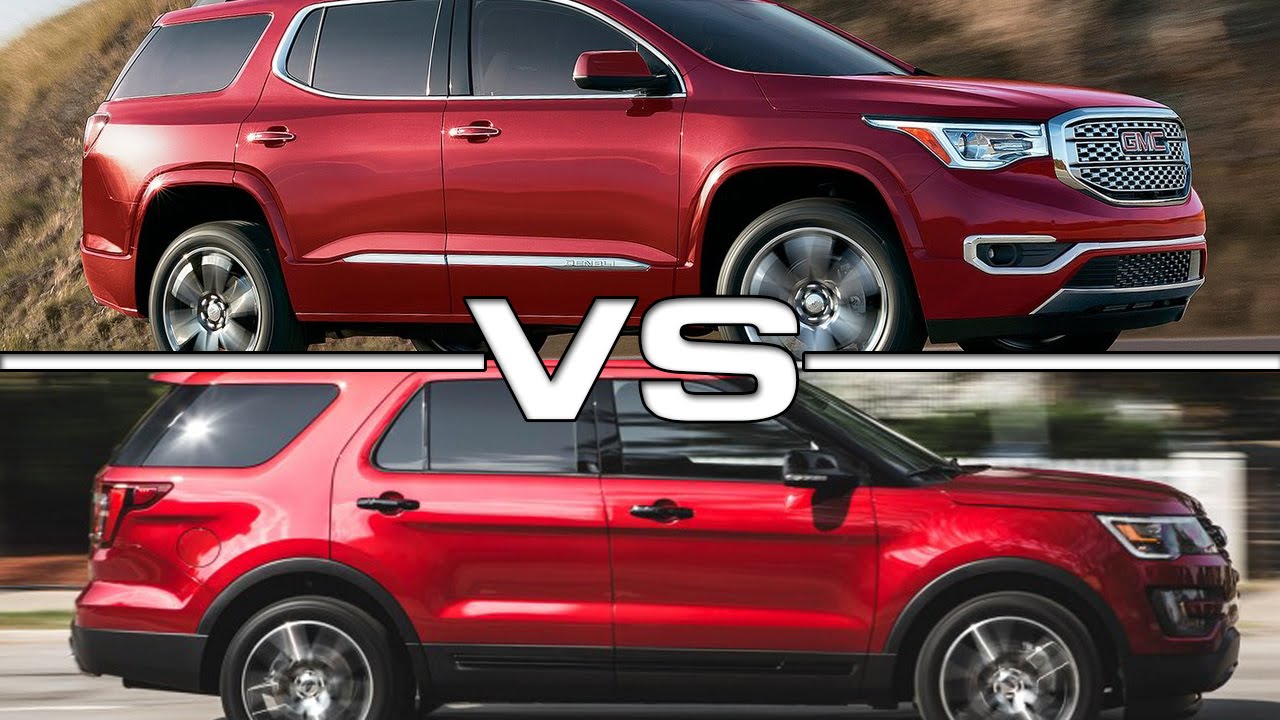
GMC Acadia
Ford Explorer
Hover any bar for exact values. Each metric scaled independently.
GMC Acadia: Strengths and Weaknesses
The 2026 GMC Acadia emerges as a formidable contender, primarily due to its ground-up redesign that addresses many of the wants of modern families. Its most significant strength lies in its thoroughly modern interior and superior technology, as evidenced by its commanding 9.0 rating in features and tech. You’ll find a massive standard infotainment screen, intuitive controls, and a suite of advanced driver assistance systems that make the daily commute safer and more enjoyable. Beyond the tech, the Acadia offers excellent comfort with an 8.8 rating, offering a plush ride and spacious, supportive seating across all three rows, even for adults. We found the noise insulation to be particularly effective, creating a serene cabin atmosphere on long trips.
Furthermore, its interior quality is a clear step above its competitors, scoring 8.6. The materials feel premium, the fit and finish are exceptional, and the overall design is cohesive and aesthetically pleasing. This level of refinement, combined with its greater cargo capacity (a significant factor for families), positions it as a compelling value proposition (8.5), where you feel like you’re getting more for your money. Its high safety rating of 8.7 provides invaluable peace of mind.
However, the Acadia isn’t without its minor drawbacks. Its performance, while perfectly adequate for most, registers an 8.0, falling slightly behind the Explorer’s more athletic powertrain options. If you crave brisk acceleration and a truly engaging drive, the Acadia might feel a touch less energetic. Similarly, its fuel economy (7.5) and reliability (7.8) ratings, though respectable, are just edged out by the Ford Explorer, suggesting there’s still a tiny bit of room for improvement in those specific metrics. These aren’t deal-breakers, but they are points to consider for specific buyers.
Ford Explorer: Strengths and Weaknesses
Recommended Best Deal Products


The Ford Explorer maintains its strong foothold in the mid-size SUV market by leaning into its traditional strengths, particularly its potent engine options and athletic driving dynamics. Its performance rating of 8.5 showcases a powertrain lineup that delivers robust acceleration, especially with the available twin-turbo V6, which makes highway passing and spirited driving genuinely enjoyable. The Explorer’s robust towing capability also stands out, making it a favorite for those who need to haul trailers, boats, or campers. We found its rear-wheel-drive based platform contributes to a more balanced and engaging feel behind the wheel, differentiating it from many front-wheel-drive biased competitors.
Beyond performance, the Explorer offers a slightly better fuel economy (7.8) than the Acadia, a practical advantage for long-term ownership. Its reliability rating of 8.0 also edges out the Acadia, speaking to Ford’s established engineering and track record with its powertrains. The Explorer remains a very safe vehicle, scoring an 8.6, ensuring that occupants are well-protected with a comprehensive suite of safety technologies. Its more traditional SUV stance often appeals to buyers looking for a classic, muscular presence on the road.
However, the Explorer’s weaknesses are more pronounced when placed alongside the recently updated Acadia. Its interior tech might feel a step behind, reflected in its 8.2 features and tech rating. While functional, the infotainment system and digital displays often lack the modern polish and intuitive design found in newer rivals. The lower comfort rating of 8.3 indicates a firmer ride and less refined cabin environment compared to the Acadia. Similarly, its interior quality (8.2) doesn’t quite match the Acadia’s upscale materials and sophisticated design, with some cheaper cabin plastics being impossible to ignore in certain areas. This also contributes to its lower value rating (8.1), as it doesn’t always feel as premium for the price. The Explorer remains a solid choice, but its aging interior is becoming a more significant drawback.
- ✅ Significantly larger max cargo volume at 97.5 cubic feet.
- ✅ More powerful standard 2.5L Turbo engine (328 hp).
- ✅ Modern, redesigned interior with premium feel and materials.
- ✅ Larger standard 15.0-inch infotainment display.
- ✅ Available Super Cruise hands-free driving technology.
- ❌ Max towing capacity is lower than the Explorer's at 5,000 lbs.
- ❌ New 2.5L Turbo engine is less proven for long-term reliability.
- ❌ Slightly lower fuel economy than Explorer's base engine.
- ✅ Higher maximum towing capacity of 5,600 lbs with the V6.
- ✅ Available potent 400 hp EcoBoost V6 engine option.
- ✅ Slightly better base fuel economy (23 MPG combined).
- ✅ More established platform and 10-speed transmission.
- ✅ Agile handling for an SUV of its size.
- ❌ Less maximum cargo space at 87.8 cubic feet.
- ❌ Interior, even with refresh, feels less modern than Acadia's redesign.
- ❌ Standard infotainment screen is smaller at 13.2 inches.
- ❌ Base MSRP is slightly higher at $40,500.
Which One Should You Choose?
Deciding between the GMC Acadia and the Ford Explorer ultimately comes down to your priorities and lifestyle. For families prioritizing space, comfort, and cutting-edge technology, the GMC Acadia is the unequivocal choice. Its superior comfort rating of 8.8 means long road trips will be more enjoyable for everyone, while its class-leading 9.0 in features and tech ensures you’ll have the latest infotainment and driver assistance features at your fingertips. If a modern, high-quality interior is a must-have, the Acadia’s 8.6 interior quality score makes it feel distinctly more upscale and current. Its greater cargo capacity also makes it a better hauler for strollers, sports gear, or vacation luggage.
On the other hand, if you’re a driver who values performance and robust towing capability above all else, the Ford Explorer is built for you. With an 8.5 performance rating, its potent engine options, particularly the twin-turbo V6, offer a more exhilarating driving experience. It’s the stronger choice if you frequently tow a boat or trailer, or simply enjoy a more athletic feel from your SUV. For those with a keen eye on long-term dependability and slightly better fuel economy, the Explorer’s marginal leads in reliability (8.0 vs. 7.8) and fuel economy (7.8 vs. 7.5) might tip the scales in its favor.
Consider your daily commute: if you’re often stuck in traffic and appreciate a serene, tech-filled cabin to make the time pass more comfortably, the Acadia’s superior comfort and tech will be a boon. If your commute involves open roads and you enjoy a responsive throttle, the Explorer’s dynamics will be more satisfying. For budget-conscious buyers seeking premium feel, the Acadia’s 8.5 value rating indicates it delivers more perceived luxury and features for the money. The Explorer remains a strong, proven option, but its interior design and technology are beginning to show their age, making it a better fit for those who prefer established dynamics over the latest innovations.
Audible Premium Plus — Annual Membership
12 audiobook credits up front, plus the full Audible catalogue.
See Annual Plans As an Amazon Associate I earn from qualifying purchases.Families needing maximum cargo space, cutting-edge infotainment, and a plush, modern cabin.
Drivers prioritizing potent engine options, athletic handling, and higher maximum towing capacity.
Final Verdict
After a thorough head-to-head comparison, the 2026 GMC Acadia emerges as the overall winner in this tightly contested segment. Its fresh redesign has propelled it forward, offering a compelling package that outshines its rival in critical areas. The Acadia’s strengths lie in its truly modern interior, superior technology (9.0), exceptional comfort (8.8), and impressive interior quality (8.6), making it the stronger choice for families prioritizing a refined, feature-rich, and spacious experience.
However, this doesn’t mean the Ford Explorer isn’t a highly capable SUV. It holds its ground with stronger performance (8.5), robust towing capability, and slightly better fuel economy (7.8). The key trade-off here is clear: the Acadia offers a more contemporary and luxurious cabin experience with cutting-edge tech, while the Explorer delivers a more potent, engaging drive with proven mechanicals. For most family buyers today, the Acadia’s comprehensive refresh and focus on interior refinement and technology present a more complete and desirable package, making it our recommended pick.
Frequently Asked Questions
Is GMC Acadia better than Ford Explorer?
For many, the 2026 GMC Acadia edges out the Ford Explorer, particularly if space, modern tech, and a contemporary interior are top priorities. It offers 97.5 cubic feet of cargo space and a standard 15-inch screen, surpassing the Explorer's 87.8 cubic feet and 13.2-inch screen. However, the Explorer is better for those needing a 5,600 lb towing capacity or seeking stronger performance from its optional V6.
Which SUV has better reliability, Acadia or Explorer?
Both the 2026 Acadia and Explorer are expected to offer good, but not class-leading, reliability. The Explorer benefits from a more mature platform and powertrain, which can sometimes translate to fewer initial issues. The Acadia's new 2.5L engine is powerful but newer, though its 8-speed transmission is well-proven. Both typically receive average to slightly above-average reliability ratings.
Which vehicle has better resale value for 2026?
Historically, the Ford Explorer has shown slightly stronger resale value retention compared to the GMC Acadia. While the Acadia's recent redesign may boost its initial value, the Explorer's consistent popularity and broad appeal tend to support better long-term depreciation. Expect Explorer to hold around 50% of its value after five years, while Acadia might be closer to 48%.
Which is better for long trips, the GMC Acadia or Ford Explorer?
The 2026 GMC Acadia is likely better for long trips due to its more spacious and comfortable interior, particularly in the third row, and its smoother ride quality thanks to its longer wheelbase and modern suspension tuning. Its larger cargo capacity (97.5 cu ft) also makes it more practical for extended travel with luggage. The available Super Cruise system further enhances long-distance comfort.
What is the biggest difference between the 2026 Acadia and Explorer?
The biggest difference is the Acadia's significantly larger interior volume and more modern technology package stemming from its recent redesign, versus the Explorer's focus on dynamic driving and higher maximum towing. The Acadia offers 97.5 cubic feet of cargo space and a 15.0-inch touchscreen, while the Explorer emphasizes its available 400 hp V6 and 5,600 lbs towing capacity.