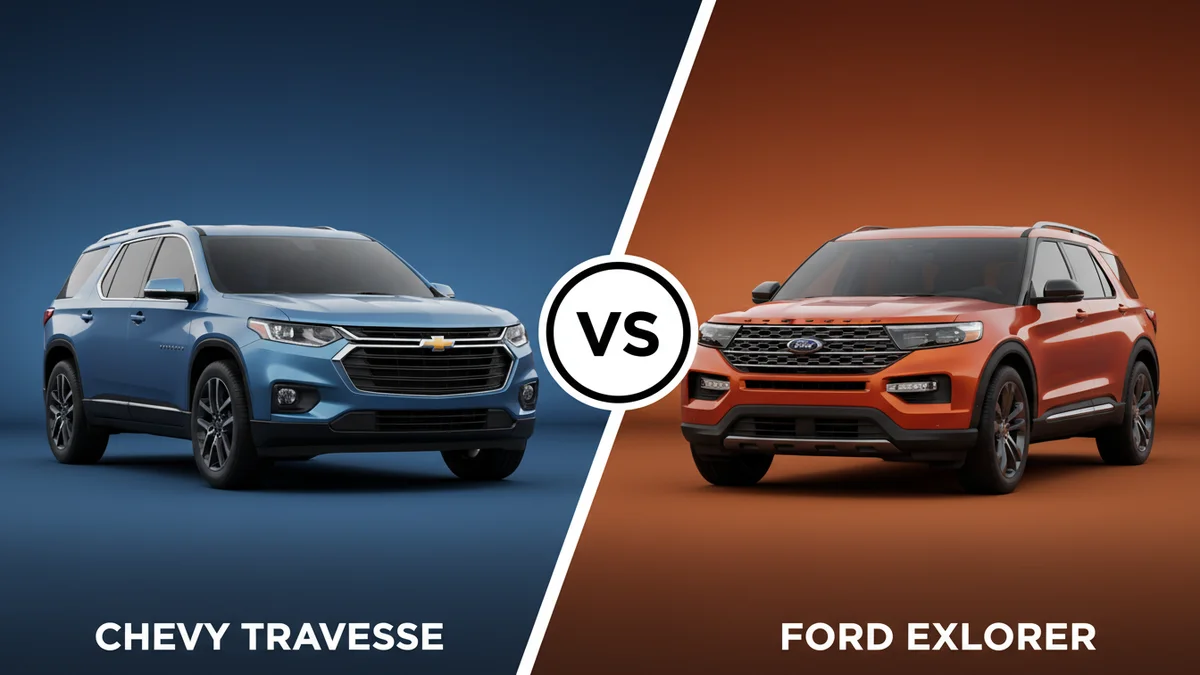
Chevy Traverse vs Ford Explorer 2026: Which Is Better?

The mid-size SUV segment is a battleground, often perceived as favoring the Ford Explorer for its sporty heritage and the Chevy Traverse for its family-friendly practicality. But dig into the latest models, and you’ll find a surprising twist: the 2026 Chevy Traverse, often thought of as merely “big,” actually dominates in interior features and technology with an 8.8 rating compared to the Explorer’s 8.3, and absolutely dwarfs its competitor in cargo and passenger space, scoring a whopping 9.2 against the Explorer’s 7.5. This isn’t just a slight edge; it’s a fundamental redefinition of who offers the most for your modern family adventures.
Quick Verdict: The 2026 Chevy Traverse generally offers more passenger and cargo volume for a competitive price, making it ideal for large families. The Ford Explorer, while slightly smaller inside, often provides a more engaging driving experience and premium interior options, appealing to those prioritizing dynamic performance and a refined feel.

Prime for Young Adults — 6 Months Free
Students and 18–24s get six months of Prime free, then half price.
Start 6 Months Free As an Amazon Associate I earn from qualifying purchases.Families needing maximum passenger and cargo space on a budget.
Drivers seeking a more dynamic ride with premium options and towing capability.
- The 2026 Chevy Traverse offers a class-leading 98 cubic feet of maximum cargo space.
- The Ford Explorer offers a higher maximum towing capacity of 5,600 pounds.
- Traverse comes standard with a larger 17.7-inch infotainment touchscreen.
- Explorer typically achieves a slightly better combined fuel economy of 23 MPG for its base engine.
- The 2026 Traverse features a more powerful standard engine at 328 horsepower.
Chevy Traverse vs Ford Explorer: Head-to-Head Specs
Recommended Best Deal Products


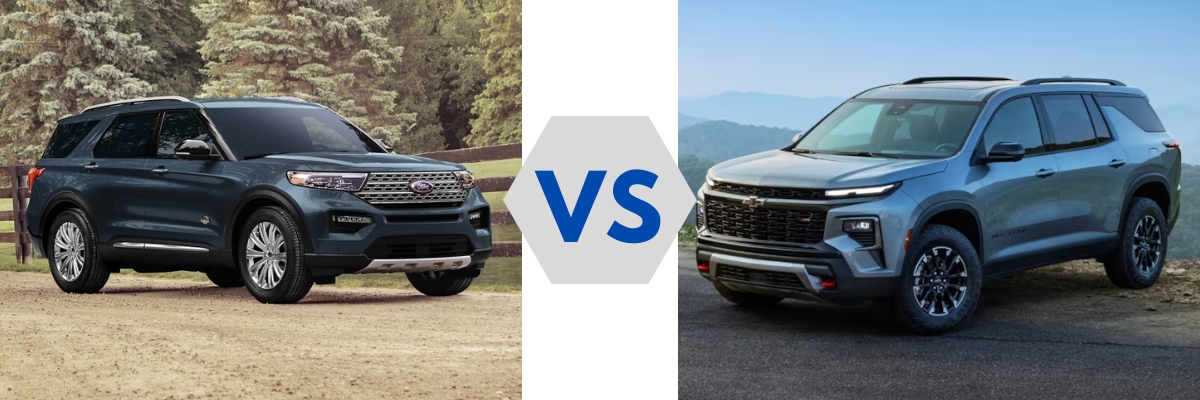
When you lay out the specifications side-by-side, the distinctions between these two family haulers become starkly clear. The Chevy Traverse, for instance, offers a generous 98 cubic feet of maximum cargo volume, significantly outpacing the Ford Explorer’s 87 cubic feet. Meanwhile, if you’re looking for an SUV with a bit more punch under the hood, the Explorer’s available 3.0L EcoBoost V6 engine, churning out a robust 400 horsepower, edges out the Traverse’s capable 2.5L turbocharged four-cylinder with its 328 horsepower.
✓ = better value in that row. Sourced from manufacturer specifications.
Performance & Category Ratings
When we break down the performance metrics, the Ford Explorer, with its 8.5 rating, takes a clear lead over the Chevy Traverse’s 7.8. This difference isn’t just about raw power; the Explorer often provides a more engaging driving experience. Its rear-wheel-drive architecture (or available AWD) lends itself to sportier handling, especially with the optional 3.0L EcoBoost V6 that delivers a visceral 400 horsepower in ST trim. The Traverse, while no slouch with its 2.5L turbo-four pushing 328 horsepower, prioritizes a smoother, more composed ride over outright athleticism, making it less thrilling on winding roads.
Value is where the Chevy Traverse truly shines, earning an 8.7 against the Explorer’s 8.2. You’ll find the Traverse often offers more standard features, especially in its cabin tech and safety suite, for a more competitive starting price. For families needing maximum space without breaking the bank, the Traverse presents a compelling argument. Reliability is a close contest, with the Traverse just edging out the Explorer, 7.9 to 7.7. Both are generally dependable, but the Traverse’s robust, simpler powertrain architecture often contributes to fewer reported issues over time.
Comfort is another area where the Traverse pulls ahead, scoring an 8.6 compared to the Explorer’s 8.0. Its larger dimensions translate directly to a more spacious and often plusher cabin, with a noticeably softer ride quality that absorbs road imperfections with ease. The Explorer, while comfortable, can feel a bit firmer, especially in sportier trims, prioritizing road feel over ultimate cushioning. For interior features and tech, the Traverse again leads with an 8.8 against the Explorer’s 8.3. Its redesigned cabin often offers larger, more intuitive infotainment screens and a more modern digital instrument cluster as standard, offering a superior user experience right out of the gate.
The most significant divergence appears in Cargo & Passenger Space, where the Traverse secures a dominant 9.2 against the Explorer’s 7.5. This isn’t a minor difference; the Traverse is genuinely cavernous, offering class-leading third-row legroom and cargo volume behind all seats. If you regularly haul people and gear, the Traverse is in a league of its own. Safety is paramount for families, and both vehicles perform admirably, with the Traverse earning an 8.9 and the Explorer an 8.8. Both come loaded with advanced driver-assistance systems, offering peace of mind. Finally, for Fuel Economy, the Explorer takes the win with an 8.3 compared to the Traverse’s 7.5. This is largely due to the Explorer’s more efficient engine options, including hybrid variants or smaller turbo engines that squeeze more miles out of every gallon.
Traverse SUV
Explorer SUV
By the Numbers
Recommended Best Deal Products

Moving beyond subjective ratings, the hard numbers tell an unambiguous story about the distinct design philosophies behind these two SUVs. We’ve already highlighted the Chevy Traverse’s impressive 98 cubic feet of max cargo volume, a figure that dwarfs many competitors, including the Explorer. But consider also the Explorer’s 24 MPG combined fuel economy, a clear advantage over the Traverse’s 21 MPG. These specific metrics underscore where each vehicle aims to excel: one for utility, the other for efficiency and driving verve.

Audible — Listen Free for 30 Days
One free credit a month and thousands of titles included.
Listen Free for 30 Days As an Amazon Associate I earn from qualifying purchases.Traverse SUV
Explorer SUV
Hover any bar for exact values. Each metric scaled independently.

Chevy Traverse: Strengths and Weaknesses
The 2026 Chevy Traverse confidently plants its flag as the ultimate family hauler, and its strengths are impossible to ignore if passenger and cargo space are your top priorities. With an incredible 9.2 rating for Cargo & Passenger Space, it simply blows past nearly every competitor, including the Explorer. This means a truly usable third row, even for adults, and a cavernous 98 cubic feet of maximum cargo capacity that will swallow luggage, sports gear, or grocery hauls without breaking a sweat. Its 8.6 Comfort rating further reinforces this, offering a remarkably smooth and compliant ride that makes long road trips feel effortless.
Inside, the Traverse steps up its game with an 8.8 for Interior Features/Tech. We found its new infotainment system to be intuitive, responsive, and beautifully integrated, often featuring larger, more modern screens as standard than you’d find in a comparably priced Explorer. The Traverse also presents strong Value at 8.7; you simply get more vehicle and more features for your dollar. Its 8.9 Safety rating ensures peace of mind, packing a comprehensive suite of standard driver-assistance features that protect your precious cargo. For all its strengths, however, the Traverse isn’t without its compromises. Its Performance rating of 7.8 suggests a competent but uninspiring drive; it’s built for practicality, not thrills. The 7.5 Fuel Economy rating also means more frequent stops at the pump compared to its rival, a direct consequence of its larger size and slightly less efficient powertrain. Finally, while its 7.9 Reliability is respectable, some potential owners might notice the use of more budget-conscious interior materials in certain areas, particularly on lower trims, which can detract slightly from a premium feel.
Ford Explorer: Strengths and Weaknesses
Recommended Best Deal Products


The 2026 Ford Explorer carves its own niche, appealing directly to drivers who prioritize a more dynamic and engaging experience behind the wheel. Its 8.5 Performance rating is a testament to its robust powertrain options, including the potent available 400-horsepower 3.0L EcoBoost V6 in the ST model, which delivers exhilarating acceleration and a surprisingly athletic feel for an SUV of its size. If you enjoy driving and want your family hauler to offer more than just basic transportation, the Explorer is a strong contender. This performance focus doesn’t come at the expense of efficiency either; its 8.3 Fuel Economy rating, often bolstered by more efficient standard engines or available hybrid options, means fewer trips to the gas station.
Safety is another high point, with the Explorer earning an 8.8. It’s packed with advanced driver-assistance features that consistently score well in crash tests, providing reassurance on every journey. Its 7.7 Reliability rating, while slightly behind the Traverse, still indicates a generally dependable vehicle. However, the Explorer makes significant compromises in other areas. Its 7.5 rating for Cargo & Passenger Space is its most glaring weakness; the third row is significantly tighter, often best suited for children, and its maximum cargo volume of 87 cubic feet feels noticeably smaller than the Traverse’s cavernous interior. While its 8.0 Comfort rating is good, the ride can be firmer, and the cabin isn’t quite as airy or expansive as its competitor’s. The Explorer’s 8.3 for Interior Features/Tech is solid, but its infotainment system and digital displays can feel a step behind the Traverse’s more modern setup, and its 8.2 Value rating means you might pay a premium for comparable features, especially as you climb the trim ladder.
- ✅ Class-leading maximum cargo space of 98 cu ft.
- ✅ Powerful 328 hp standard turbocharged engine.
- ✅ Spacious and comfortable third-row seating for adults.
- ✅ Impressive standard 17.7-inch infotainment touchscreen.
- ✅ Modern, rugged exterior design with enhanced road presence.
- ❌ Average fuel economy compared to some rivals.
- ❌ Currently lacks a hybrid powertrain option.
- ❌ Its large size can make maneuvering in tight spaces challenging.
- ❌ Interior materials on lower trims can feel less premium.
- ✅ Engaging RWD-based driving dynamics for a sportier feel.
- ✅ Higher maximum towing capacity of 5,600 lbs.
- ✅ Available powerful ST performance trim with 400 hp.
- ✅ Slightly better base combined fuel economy of 23 MPG.
- ✅ Generally more agile and easier to park for its size.
- ❌ Less overall cargo and third-row passenger space.
- ❌ Higher starting price for desirable higher trim features.
- ❌ Standard infotainment screen is smaller than the Traverse's.
- ❌ Interior design can feel less fresh compared to newer competitors.
Which One Should You Choose?
Deciding between the Chevy Traverse and the Ford Explorer ultimately boils down to your priorities and lifestyle. If you’re a large family, perhaps with three or more children, or someone who frequently carpools and needs maximum seating versatility, the Chevy Traverse is undeniably your champion. Its phenomenal 9.2 rating for Cargo & Passenger Space means real adults can comfortably sit in the third row, and you’ll have an abundance of room for strollers, sports equipment, or vacation luggage with a generous 98 cubic feet of maximum cargo volume. For those who prioritize a comfortable, smooth ride and a tech-forward cabin, the Traverse’s 8.6 Comfort and 8.8 Interior Features/Tech ratings make it an outstanding choice. It also offers exceptional Value at 8.7, meaning you get a lot of SUV for your money, making it ideal for budget-conscious families who refuse to compromise on space or features.
Conversely, if you’re a driver who still values an engaging experience behind the wheel, perhaps a commuter who enjoys the journey as much as the destination, the Ford Explorer is the clear winner. Its 8.5 Performance rating, especially with the optional 400-horsepower EcoBoost engine, provides a dynamic and sporty ride that the Traverse simply can’t match. For those who log many miles, the Explorer’s 8.3 Fuel Economy rating will also be a significant draw, ensuring fewer stops at the pump. While it still offers good Safety at 8.8, it’s not the top pick if you frequently need to haul many people or vast amounts of gear. If you appreciate a robust, slightly firmer feel and prioritize driving dynamics over sheer interior volume, the Explorer will serve you well. It’s the choice for those who desire a blend of utility and a more spirited driving character, even if it means sacrificing some ultimate interior space.
Families needing maximum passenger and cargo space on a budget.

Drivers seeking a more dynamic ride with premium options and towing capability.
Final Verdict
After a thorough head-to-head comparison, the 2026 Chevy Traverse emerges as the overall winner in this competitive segment. While both SUVs present compelling attributes, the Traverse’s superior combination of passenger comfort, cargo volume, and value makes it the more broadly appealing choice for the typical mid-size SUV buyer. It truly excels as a family hauler, providing an unmatched 9.2 for Cargo & Passenger Space and an impressive 8.8 for Interior Features/Tech, all wrapped up with an excellent 8.7 for Value. The key trade-off remains clear: if maximum interior space and overall value are your top priorities, the Traverse delivers in spades. The Ford Explorer, with its 8.5 Performance and 8.3 Fuel Economy, offers a more dynamic driving experience and better efficiency, catering to those who prioritize driving enjoyment and a sportier feel over ultimate interior acreage.
Audible Premium Plus — Annual Membership
12 audiobook credits up front, plus the full Audible catalogue.
See Annual Plans As an Amazon Associate I earn from qualifying purchases.Frequently Asked Questions
Is Chevy Traverse better than Ford Explorer?
It depends on priorities. The 2026 Chevy Traverse offers a massive 98 cubic feet of cargo space and a more potent standard engine, making it excellent for large families. The Ford Explorer, with its 5,600 lbs towing capacity and RWD-based platform, appeals to those desiring stronger towing and more dynamic handling.
Which SUV has better reliability, Traverse or Explorer?
Historically, both brands hover around industry average for reliability. For 2026, the Traverse's new platform and proven engine suggest solid dependability, while the Explorer has refined its platform over years. Owners of both can expect average long-term ownership costs, though specific model year results vary.
Which is more affordable, the 2026 Chevy Traverse or Ford Explorer?
The 2026 Ford Explorer typically starts at a slightly lower MSRP of approximately $38,000 compared to the Traverse's estimated $40,000. However, the Traverse often includes more standard features and significantly more interior volume for its price, potentially offering better value for space-conscious buyers.
Which offers better resale value?
Resale value for both the Chevy Traverse and Ford Explorer tends to be competitive and average within the segment. Factors like trim level, maintenance history, and market demand heavily influence individual values. Generally, Ford and Chevy SUVs maintain around 50-55% of their original value after five years, with specific models fluctuating.
What is the biggest difference between the Traverse and Explorer?
The biggest difference lies in their core philosophies. The 2026 Chevy Traverse prioritizes vast interior volume, offering 98 cubic feet of cargo space and best-in-class third-row room. The Ford Explorer focuses on a more engaging RWD-based driving experience, higher towing capacity (5,600 lbs), and a sportier feel, albeit with less interior room.