
7.3 Powerstroke Icp Sensor Location And Diagnostics For Ford Super Duty Owners

For owners of the legendary 7.3 Powerstroke, few components are as critical to engine performance—yet as prone to invisible failure—as the Injection Control Pressure (ICP) sensor. When this sensor fails, it can cause your Ford Super Duty to stall at intersections, refuse to start in your driveway, or surge uncontrollably, leaving you searching for answers. This component acts as the “eyes” of the Powertrain Control Module (PCM), providing real-time data on high-pressure oil levels required to fire the injectors. In this guide, you will learn the exact 7.3 Powerstroke ICP sensor location, how to diagnose failure symptoms, and the best practices for replacement using resources available in your trusted local community.
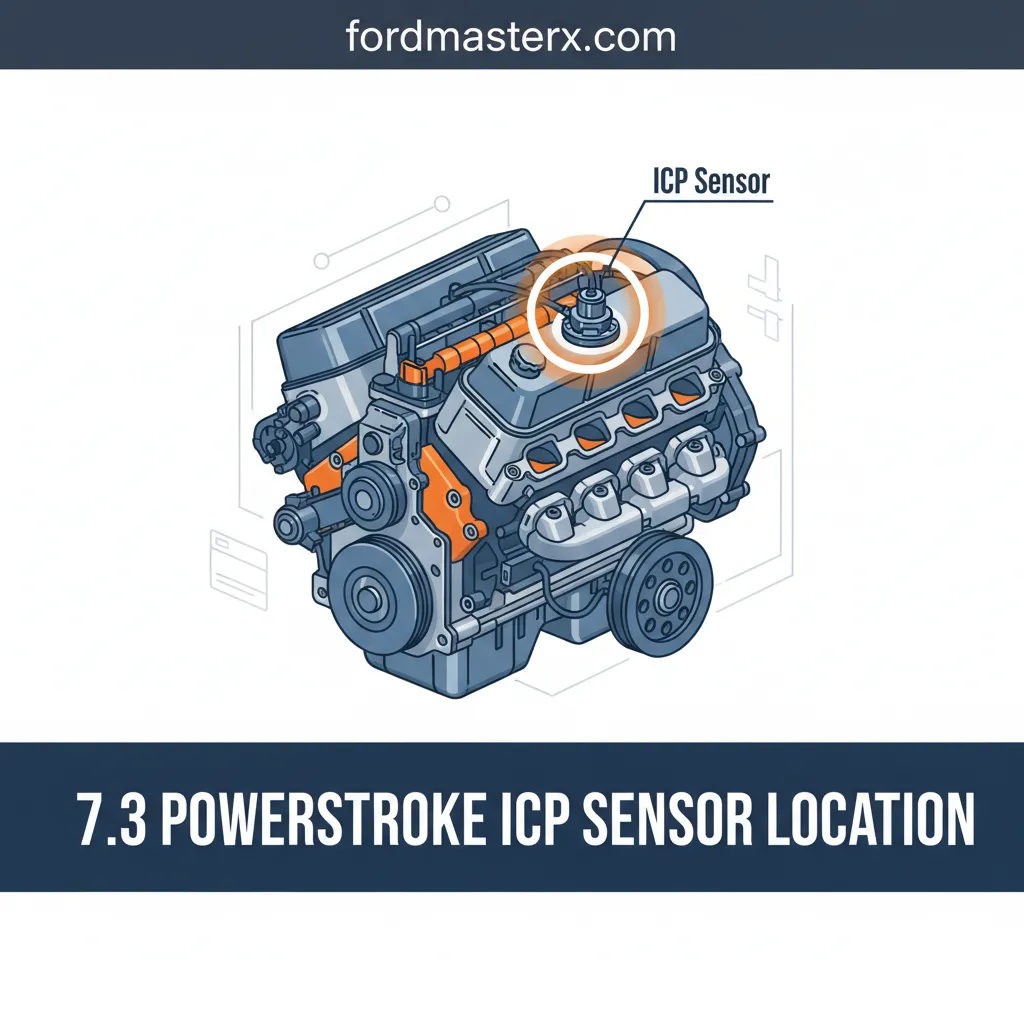
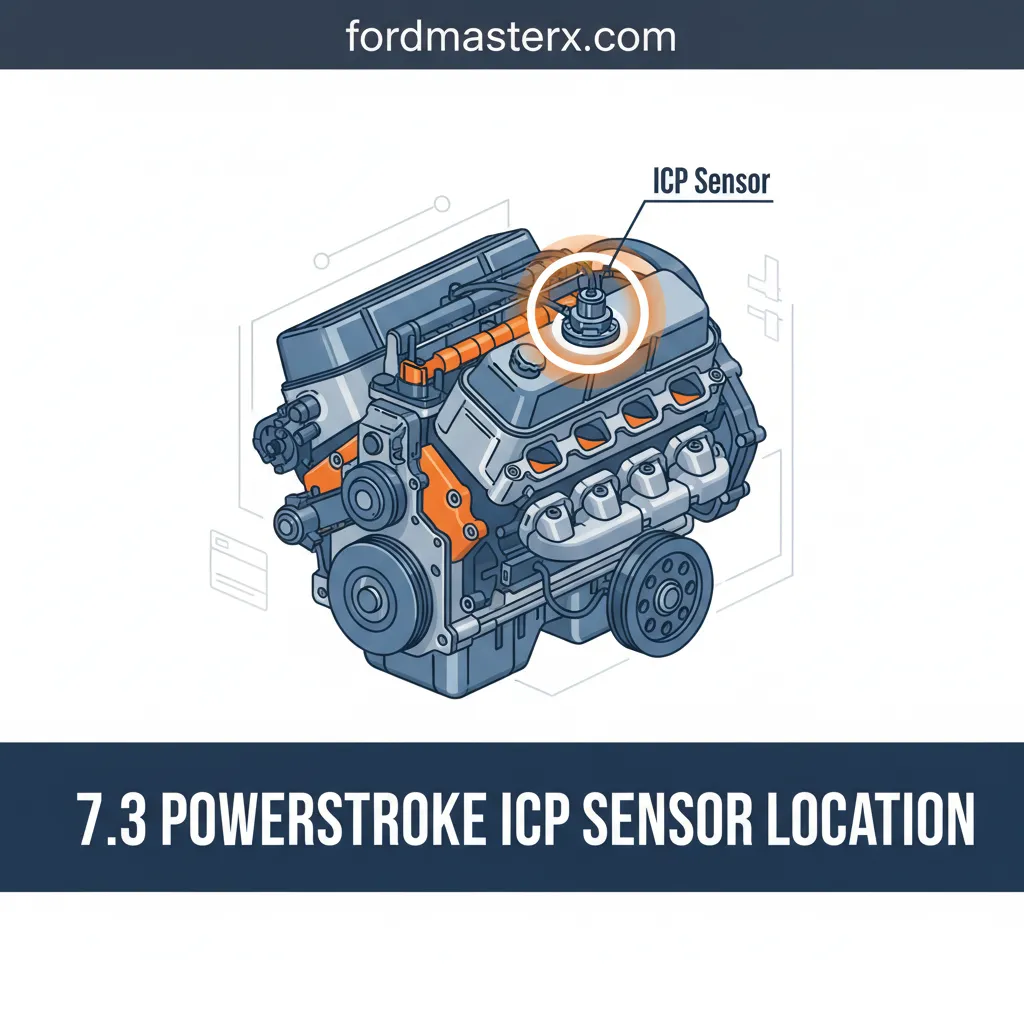
Pinpointing the 7.3 Powerstroke ICP Sensor Location on Ford Diesel Engines
📤 Share Image
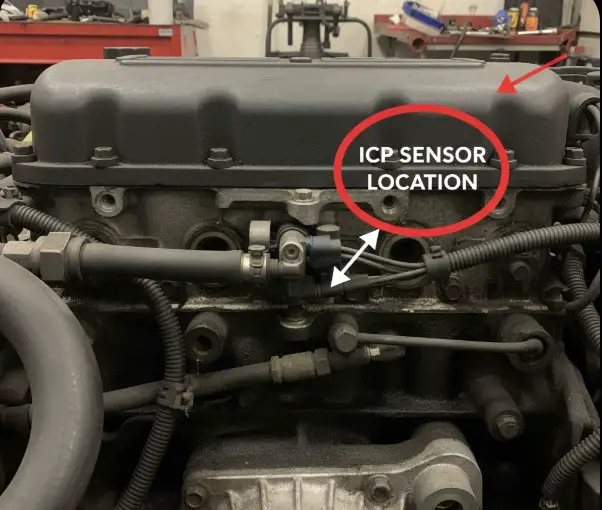
Locating the ICP sensor on a 7.3L Powerstroke is relatively straightforward once you know the visual landmarks of the HEUI (Hydraulic Electronic Unit Injection) system. The sensor is positioned on the inboard side of the driver-side cylinder head, situated toward the very front of the engine block. If you stand in front of the truck and look down at the engine, you will see it adjacent to the High-Pressure Oil Pump (HPOP) reservoir and the fuel filter bowl.
The sensor is easily identifiable by its three-pin weather-pack connector. On most 1997-2003 configurations, the wiring harness is accessible and routed clearly across the top of the valve cover. However, for those driving early 1994-1996 models, the harness routing may differ slightly, often tucked tighter against the engine lift bracket. Regardless of the year, the sensor threads directly into the high-pressure oil rail of the cylinder head.
If you find yourself stranded in a local community parking lot with a truck that cranks but won’t fire, try the “unplug test.” By disconnecting the three-pin connector from the ICP sensor, you force the PCM to ignore the sensor’s signal and use a fixed default value. If the truck starts immediately after unplugging it, you have found your failed component.
One of the greatest advantages of the 7.3 Powerstroke design is that the ICP sensor is convenient to reach without removing heavy components like the intake manifold. You simply need to clear the decorative plastic engine cover (if still present) to get a clear line of sight. When installing a new unit, remember that the torque specification is exactly 9 foot-pounds. Over-tightening can damage the threads in the cast-iron head or crack the sensor body, leading to high-pressure oil leaks.

Diagnostic Signs of ICP Sensor Failure in Your Local Community Fleet
Identifying a failing ICP sensor before it leaves you immobile is vital for any serving fleet or daily driver. The most common early warning sign is an erratic idle, often described as “hunting” for RPMs. You may notice the needle on your tachometer bouncing slightly while you are stopped at local intersections or traffic lights. This happens because the PCM is receiving biased or “noisy” data from the sensor and is constantly adjusting the IPR valve to compensate for phantom pressure fluctuations.
Stable Idle
A healthy sensor provides a smooth signal, resulting in a rock-steady idle even during cold starts.
Oil Intrusion
Oil found inside the electrical connector is a definitive sign of internal seal failure and imminent sensor death.
As the sensor degrades further, you may experience “bucking” or sudden engine surges during steady-state cruising. This is particularly dangerous when towing heavy loads. In many cases, the root cause is oil intrusion. The internal diaphragm of the sensor fails, allowing high-pressure oil to wick through the sensor body and into the electrical connector. This oil creates a bridge between the pins, shorting the 5V reference signal and causing the PCM to lose its place in the injection timing map.
ICP Voltage Benchmarks
KOEO Standard
Warm Idle Target
Minimum To Start
Consider a case study of a 7.3 Powerstroke fleet truck failing to start at a local job site during a cold snap. The owner assumed the glow plugs were at fault, but a diagnostic scan revealed a P1280 code (ICP out of range low). Because the sensor was sending a signal of 0.05V during cranking, the PCM believed there was no oil pressure and refused to fire the injectors. In reality, the high-pressure oil system was healthy, but the “blinded” PCM was preventing the start. A quick sensor swap restored the truck to service immediately.
Tools and Replacement Parts Available Nearby for ICP Maintenance
When it comes to the 7.3 Powerstroke, cutting corners on parts is a recipe for a return visit to the side of the road. While generic aftermarket sensors are available at most big-box retailers, they often suffer from a 20% variance in pressure readings. This inaccuracy causes poor fuel economy and rough engine operation. Always source OEM Motorcraft (F6TZ-9F838-A) or International parts from a trusted local diesel specialist to ensure the HEUI system receives the precise data it requires.
📋
Professional Replacement Procedure
Use compressed air and a degreaser to remove all dirt around the sensor base. Any debris entering the oil rail can damage injectors.
Use a 1-1/16 inch deep well socket. Avoid using an adjustable wrench, as the hex on the sensor is shallow and prone to rounding.
Check the pigtail for oil wicking or melted insulation. If oil is present in the wires, replace the pigtail along with the sensor.
Never attempt to remove the sensor while the engine is running or immediately after shutdown. The high-pressure oil system can retain significant pressure, and oil at 3,000 PSI can penetrate skin, causing serious injury.
Professional Diesel Repair Services Serving the Local 7.3 Powerstroke Community
While a sensor swap is a manageable DIY task, complex HEUI system diagnostics often require the touch of a local diesel specialist. These engines are over two decades old, and sometimes the symptoms of a bad ICP sensor are actually caused by deep-seated electrical ghosts or high-pressure oil leaks under the valve covers. Seeking a specialist nearby is preferable because they possess Ford-specific diagnostic software, such as IDS or AutoEnginuity, which allows them to monitor live data PIDs (Parameter IDs) in real-time.
Community-based repair shops often stock common 7.3 Powerstroke failure items like ICP sensors, IPR valves, and CPS (Camshaft Position Sensors) for immediate turnaround. This accessible inventory is crucial for fleet owners who cannot afford to have a truck down for days waiting on shipping. Furthermore, supporting local businesses that specialize in the 7.3 platform ensures that the tribal knowledge required to keep these vintage workhorses on the road remains in your area.
Many enthusiasts have saved thousands of dollars by visiting a trusted local shop for an accurate diagnosis rather than “parts-cannoning” the engine. I have seen countless owners replace their entire HPOP (High-Pressure Oil Pump) at a cost of $800+, only to find the issue was a $150 ICP sensor or a $20 pigtail harness. With over 2 million 7.3 Powerstroke units produced, local expertise is your most valuable tool for cost-effective maintenance.
Advanced Troubleshooting: The Relationship Between ICP and IPR Valves
To truly master 7.3 diagnostics, you must understand the feedback loop between the ICP sensor and the Injection Pressure Regulator (IPR) valve. Think of the ICP sensor as the “gauge” and the IPR valve as the “faucet.” The PCM looks at the ICP sensor to see how much pressure is in the rail and then adjusts the IPR duty cycle to reach the desired target. If the IPR valve is sticking due to dirty oil or a damaged screen, it can mimic the symptoms of a bad ICP sensor perfectly.
✅ System Health Indicators
- IPR Duty Cycle: 8% – 14% at idle
- ICP Pressure: ~580 PSI at idle
- Fast start-to-fire times
- Smooth acceleration under load
❌ Red Flags
- IPR Duty Cycle > 15% at warm idle
- Visible oil in the ICP connector
- Engine stalling when coming to a stop
- Long crank times (more than 3 seconds)
If you have replaced your ICP sensor and the truck still stalls or runs roughly, the next step is a “dead head” test. This involves using mechanical gauges to verify that the pump is actually producing the pressure the sensor claims to see. Often, we find that a trusted local mechanic discovers the IPR pigtail was the actual culprit—the wires become brittle from heat and short against the HPOP reservoir, causing intermittent signal loss that looks exactly like a sensor failure.
Long-term maintenance is the only way to protect these sensitive sensors. Because the ICP sensor is constantly bathed in engine oil at pressures up to 3,000 PSI, the quality of your oil is paramount. Dirty, aerated, or sheared oil will kill an ICP sensor’s internal diaphragm prematurely. Change your oil every 5,000 miles using a high-quality 15W-40 or 5W-40 synthetic and keep the high-pressure oil system free of contaminants. This simple habit will ensure your 7.3 Powerstroke remains available for work whenever you turn the key.
In summary, the ICP sensor is a vital component located on the front of the driver-side cylinder head. Oil in the connector is the primary indicator of internal seal failure, and you should always use OEM Motorcraft replacement parts to ensure HEUI system accuracy. If your truck is experiencing these symptoms, check your sensor today or contact a diesel specialist serving your area for a professional diagnostic scan to keep your Super Duty running strong for years to come.
Frequently Asked Questions
Can I drive my 7.3 Powerstroke with the ICP sensor unplugged?
Yes, you can temporarily drive with the ICP sensor unplugged. When the PCM detects no signal, it reverts to a ‘default’ injection pressure map. This is a common diagnostic trick to determine if a faulty sensor is causing a ‘no start’ or rough idle. However, fuel economy and power will be significantly reduced, so it is not a long-term solution.
How do I know if oil is leaking into my ICP sensor connector?
Disconnect the electrical pigtail from the ICP sensor and inspect the pins inside the sensor and the female side of the plug. If you see any traces of engine oil, the internal seal of the sensor has failed. This oil interferes with the electrical signal sent to the PCM, necessitating immediate replacement of both the sensor and often the pigtail harness.
What is the correct torque spec for the 7.3 ICP sensor?
The official torque specification for the 7.3 Powerstroke ICP sensor is 9 foot-pounds (108 inch-pounds). It is crucial not to over-tighten the sensor, as the cylinder head is cast iron but the sensor threads can be damaged, or the O-ring can be crushed, leading to high-pressure oil leaks in the engine valley.
Where can I find a replacement ICP sensor nearby?
Replacement sensors are readily available at Ford dealerships and specialized diesel parts distributors in your location. While many local auto parts chains stock them, it is highly recommended to specifically request a Motorcraft or International brand sensor. Aftermarket sensors are notorious for having incorrect voltage-to-pressure scaling, which causes poor engine performance shortly after installation.
Will a bad ICP sensor cause a Check Engine Light?
A failing ICP sensor will frequently trigger a Check Engine Light (CEL), often throwing codes P1280 (signal out of range low) or P1211 (pressure above/below desired). However, in cases of intermittent failure or oil wicking, the sensor may cause performance issues like surging or stalling without immediately setting a permanent diagnostic trouble code in the computer.