
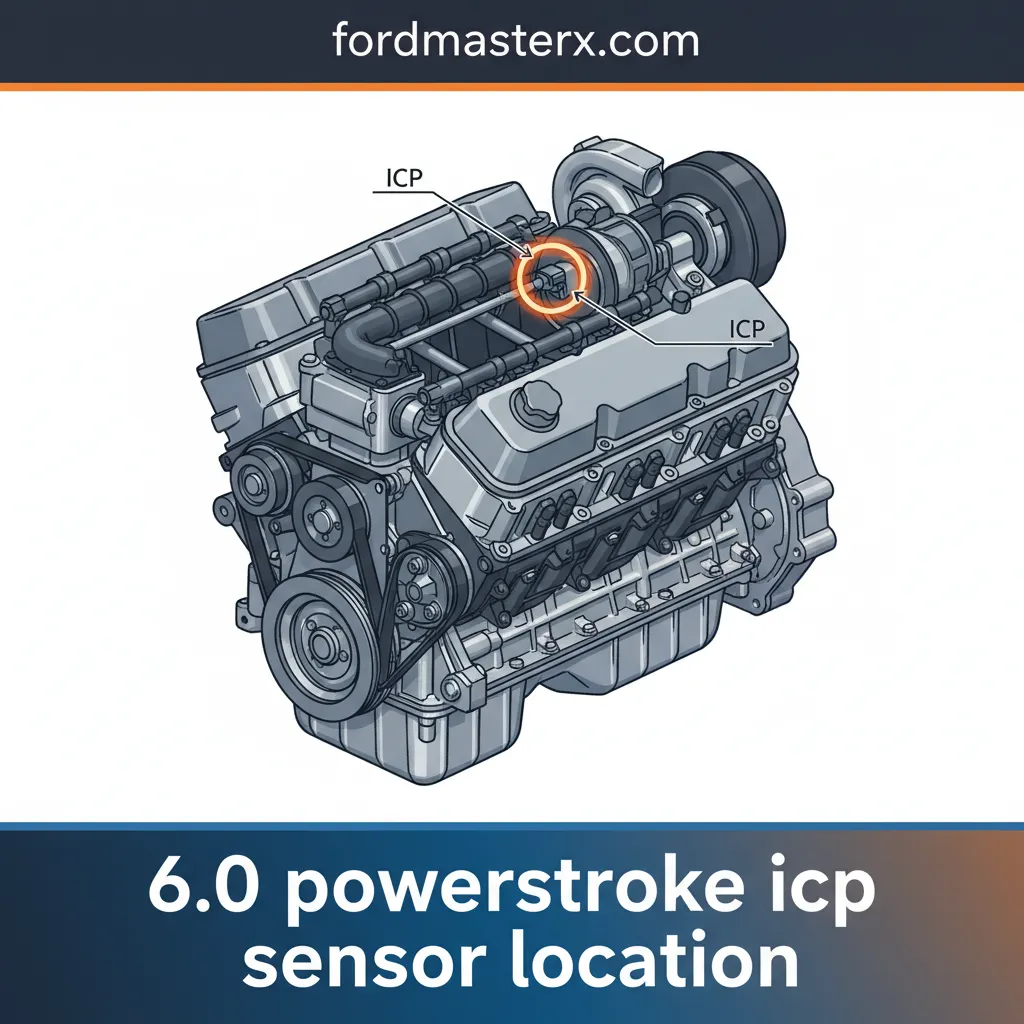
6.0 Powerstroke Icp Sensor Location: Year-Specific Placement And Service Guide

For a 6.0 Powerstroke owner, few things are as frustrating as a sudden engine stall or a ‘no-start’ condition that leaves your truck stranded. The Injection Control Pressure (ICP) sensor is a critical component of the HEUI (Hydraulic Electronic Unit Injection) system, acting as the “eyes” for the Powertrain Control Module (PCM). However, its location varies drastically between model years, making it difficult for many owners to diagnose and repair their vehicles effectively. This guide provides the exact 6.0 Powerstroke ICP sensor location for every build year, detailing how to access it, the symptoms of failure, and how to find expert diesel assistance in your local community.
Locating the ICP Sensor on 2003 and Early 2004 6.0 Powerstroke Engines
📤 Share Image
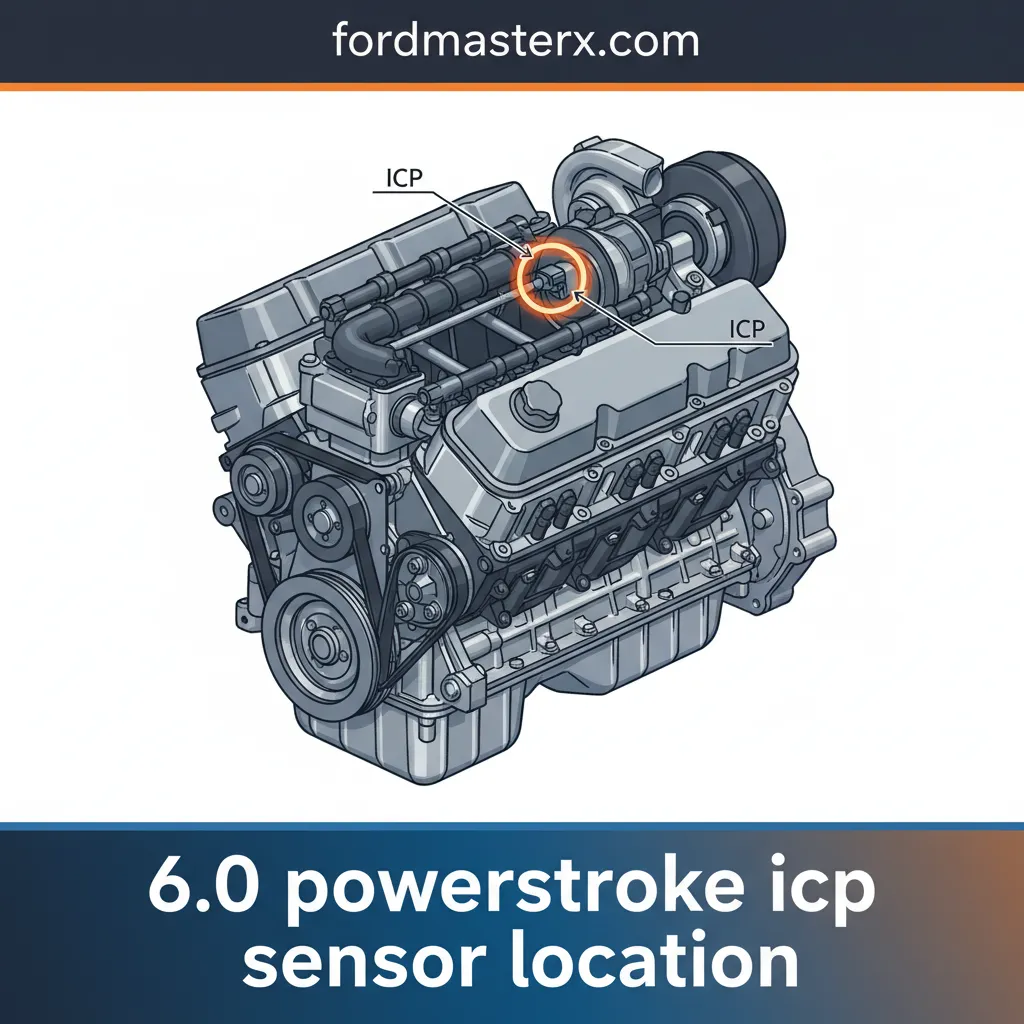
If you own an early model 6.0L Powerstroke—specifically those manufactured before September 29, 2003—the ICP sensor is located in one of the most notoriously difficult positions on the entire engine. Ford engineers originally placed the sensor at the rear of the engine block, tucked deeply behind the turbocharger and directly into the High Pressure Oil Pump (HPOP) cover. This location is situated beneath the intake manifold, making it nearly invisible to the naked eye from the engine bay’s top view.
Finding the sensor requires looking past the turbocharger housing toward the firewall. You will typically see a thick wiring harness routing that obscures the sensor’s three-wire connector. Because this area is congested with the turbo downpipe and heat shields, physical access is extremely restricted. Technicians often refer to this as a “blind” repair, as you must frequently rely on tactile feedback rather than line-of-sight to disconnect the harness and unthread the sensor.
The rear-mount location is subject to extreme heat exposure from the nearby turbocharger, where temperatures often exceed 200 degrees Fahrenheit. This chronic heat soak frequently causes the plastic pigtail connector to become brittle and crumble, or leads to the internal sensor seals failing, allowing oil to wick into the electrical system.
In a professional shop environment, replacing an ICP sensor on an early 6.0 engine usually involves using an inspection mirror and a series of long 3/8-inch drive extensions with a swivel joint. A seasoned technician will often reach behind the engine from the top, navigating around the heat shield to find the 1-1/16 inch hex head of the sensor. In some extreme cases, removing the turbocharger is the most efficient way to ensure the mounting surface is clean and the new sensor is torqued correctly without cross-threading the aluminum HPOP cover.
Identifying 2005 to 2007 6.0 Powerstroke ICP Sensor Location and Accessibility
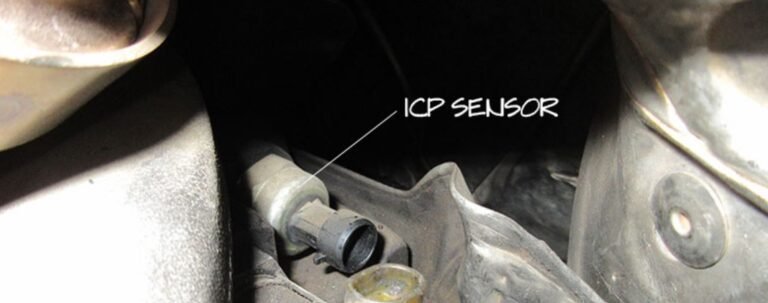
Recognizing the serviceability nightmare and high failure rates of the early design, Ford relocated the ICP sensor for the 2005 model year (and late-build 2004 engines). On these later trucks, the sensor is convenient and available for immediate inspection on the passenger side valve cover toward the front of the engine. This engineering shift was a direct response to excessive warranty claims and the need for improved electronic cooling.
To find it, simply look at the passenger side valve cover, just behind the alternator and near the oil fill neck. You will see a round, threaded sensor with a three-wire pigtail protruding vertically. This forward-mount location provides a direct-line-of-sight view, making it easy to spot common issues like oil wicking—where high-pressure oil forces its way past the sensor’s internal diaphragm and into the electrical connector.
Efficiency Comparison: Labor Time
Avg. Labor (2003 Models)
Avg. Labor (2005-07 Models)
The change in location drastically altered the tool requirements for the job. While the early models required specialized swivels and “blind-reach” skills, the 2005-2007 engines can be serviced with a standard deep-well socket and a ratchet. During routine maintenance, such as an oil change, a quick visual inspection of this sensor is recommended. If you notice any oil residue inside the connector, the sensor is failing and should be replaced before it leaves you stranded.

Diagnostic Symptoms and Fault Codes Requiring ICP Sensor Inspection
The ICP sensor’s primary role is to monitor the pressure of the oil that fires the fuel injectors. When this sensor fails, the PCM receives erratic or non-existent data, leading to a host of drivability problems. The most common Diagnostic Trouble Codes (DTCs) associated with this failure are P2285 (ICP Sensor Circuit Low) and P2284 (ICP Sensor Performance/Range). If you see these codes on a scan tool, your first step should be to navigate to the accessible sensor location and inspect the wiring.
Common symptoms of a failing ICP sensor include:
- • Engine Surging: An erratic voltage signal can cause the truck to “buck” or surge at idle as the PCM attempts to compensate for false pressure readings.
- • Stalling: If the sensor signal drops out completely, the PCM will shut down the injectors to prevent engine damage.
- • No-Start Condition: The 6.0 Powerstroke requires a minimum of 500 PSI of injection control pressure to fire the fuel injectors. If the sensor is stuck at 0 PSI, the truck will not start, even if the HPOP is physically building pressure.
If your truck won’t start and you suspect the ICP sensor, simply unplug it. When the sensor is disconnected, the PCM reverts to a default strategy based on the IPR (Injection Pressure Regulator) duty cycle. If the truck starts with the sensor unplugged, you have confirmed a failed sensor.
Consider a case study where a truck exhibits a “no-start” condition. On a high-end scan tool, the ICP pressure reads 0 PSI. However, the IPR duty cycle is climbing to 85%, indicating the pump is working hard to create pressure. By physically inspecting the sensor, the technician finds oil dripping from the pigtail connector. This confirms the sensor has failed internally, providing a false 0 PSI reading to the PCM, which in turn prevents the injectors from firing.
Tools and Professional Procedures for ICP Sensor Replacement
Replacing the ICP sensor is a straightforward task if you have the correct tools and follow a clean-room protocol. Because the sensor sits directly in the high-pressure oil circuit, any debris that falls into the mounting hole can travel to the fuel injectors, causing catastrophic failure. Always clean the area surrounding the sensor with brake cleaner and compressed air before removal.
📋
Step-by-Step Replacement Guide
Thoroughly clean the mounting base. Press the locking tab on the pigtail to disconnect the harness. If oil is present in the connector, you must replace the pigtail harness as well.
Use a 1-1/16 inch deep-well socket. For 2003 models, use a 12-inch extension and a swivel joint to navigate the firewall clearance. Unthread carefully to avoid dropping the sensor.
Hand-thread the new sensor to prevent cross-threading. Torque the sensor to exactly 9 foot-pounds (108 inch-pounds). Over-tightening will strip the aluminum threads in the cover.
Proper routing of the wiring harness is just as critical as the sensor itself. On early models, ensure the harness is secured away from the turbo downpipe. Use high-temp loom if necessary. Failure to properly route the harness leads to melted insulation and short circuits, which can mimic the symptoms of a failed sensor and lead to costly misdiagnoses.
Finding Specialized 6.0 Powerstroke Service and Parts Nearby
While the ICP sensor replacement is a manageable DIY task for later models, early-build engines often require the touch of a trusted local diesel specialist. Finding a shop serving your community that understands the nuances of the 6.0L HEUI system is vital. Look for mechanics who specialize in “Powerstroke Bulletproofing” and possess dealer-level diagnostic equipment like the Ford Integrated Diagnostic System (IDS).
OEM Motorcraft Parts
Always source genuine Motorcraft sensors from an accessible nearby dealer. Aftermarket sensors have a 40% higher failure rate in the first year.
Expert Diagnostics
A local specialist can perform a high-pressure oil system air test to ensure your issue is the sensor and not a failing HPOP or STC fitting.
When searching for repair services, prioritize those that offer mobile diesel repair if your truck is stuck in a no-start condition. Building a relationship with a local parts counter ensures you have quick access to common failure items like the ICP pigtail (Part # 3C3Z-9F838-EA). By choosing a shop with a deep footprint in your local community, you gain the peace of mind that comes with technicians who have seen hundreds of these specific failures and know exactly how to fix them the first time.
In summary, the ICP sensor location moved from behind the turbo (2003-early 2004) to the passenger valve cover (late 2004-2007). Symptoms of failure include surging, stalling, and specific DTC codes like P2285. Using high-quality Motorcraft parts and following proper diagnostic steps, such as the unplug test, is essential for a lasting repair. If your 6.0 Powerstroke is exhibiting symptoms of ICP failure, locate your sensor today to check for oil leaks, or contact a trusted local diesel specialist to perform a comprehensive high-pressure oil system scan.
Frequently Asked Questions
Can I drive my 6.0 Powerstroke with a failed ICP sensor?
While the truck may run in ‘limp mode’ if you unplug a failing ICP sensor, it is not recommended for long-term driving. The PCM will use a default strategy, but fuel economy and power will be significantly reduced. Continued operation with a failed sensor can also lead to poor starting and potential stalling in traffic.
How do I know if my 6.0 is an early 2004 or a late 2004 model?
Check the manufacture date on the door jamb sticker or the engine build date. Engines built before September 29, 2003, are considered ‘Early 2004’ and have the ICP sensor located behind the turbo. Engines built after this date have the sensor on the passenger side valve cover, similar to the 2005-2007 models.
Why is there oil in my ICP sensor electrical connector?
This is a common failure known as ‘wicking.’ The internal seal of the ICP sensor fails, allowing high-pressure oil to push through the sensor body and into the electrical pins. This contaminates the wiring harness, causes signal interference, and requires both the sensor and the pigtail connector to be replaced for a proper fix.
Do I need to remove the turbo to replace the ICP sensor on a 2003 model?
It is not strictly necessary to remove the turbo, but it is challenging without doing so. Technicians often reach from underneath the vehicle or use a combination of long extensions and swivels to access it from the top. However, if you are also servicing the IPR valve, removing the turbo provides significantly better access to both components.
What is the difference between the ICP and the IPR?
The ICP (Injection Control Pressure) sensor is the ‘eye’ that monitors the oil pressure, while the IPR (Injection Pressure Regulator) valve is the ‘muscle’ that controls it. The PCM uses the reading from the ICP sensor to tell the IPR valve how much pressure to maintain in the high-pressure oil system to fire the injectors.