2013 F150 Transmission Fluid Check: Dipstick Location & Tips

The 2013 Ford F-150 features a ‘hidden’ dipstick located in a 19mm cap on the passenger side of the transmission housing near the exhaust. For an accurate reading, the vehicle must be perfectly level with the engine idling at operating temperature.
🎯 Key Takeaways
Recommended Best Deal Products


- Locate the 19mm dipstick cap on the passenger side transmission case.
- Always use Mercon LV fluid to prevent internal transmission damage.
- Ensure the engine is running and vehicle is level during inspection.
- Wear heat-resistant gloves to avoid burns from the nearby catalytic converter.
- Verify fluid temperature is between 180°F and 200°F for accuracy.
If you are looking for the transmission dipstick under the hood of your 2013 Ford F-150, you can stop searching. Unlike older models, the 2013 F-150 equipped with the 6R80 six-speed transmission does not have a traditional long-tube dipstick accessible from the engine bay. Instead, you must go underneath the vehicle to locate a 19mm nut on the passenger side of the transmission case, which houses a “stubby” internal dipstick. This design is often referred to as a “sealed” system, though it still requires manual level checks to ensure your transmission remains healthy.

Prime for Young Adults — 6 Months Free
Students and 18–24s get six months of Prime free, then half price.
Start 6 Months Free As an Amazon Associate I earn from qualifying purchases.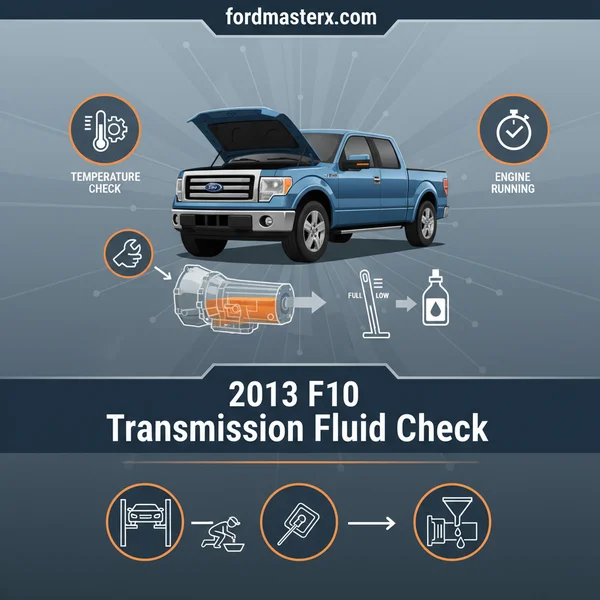
Checking your fluid correctly is vital because the 6R80 transmission is highly sensitive to fluid levels. Running even half a quart low can lead to erratic shifting, increased heat, and premature wear on internal clutches. Because the access point is located inches away from the extremely hot catalytic converter, knowing exactly where to reach and what tools to bring is the only way to perform this check safely and accurately. This guide focuses on the specific physical location and the precise steps needed to navigate this unconventional setup.
Understanding the 6R80 Transmission Fluid Monitoring System
The 2013 F-150 utilizes the 6R80 automatic transmission, a robust unit that Ford designed to be low-maintenance. To achieve this, engineers eliminated the dipstick tube that normally runs up to the firewall. By shortening the monitoring system into a compact assembly directly on the transmission housing, Ford reduced the risk of fluid contamination and eliminated potential leaks from long filler tubes. However, this means you cannot check your fluid from the comfort of your engine bay; you must be prepared to work underneath the truck while the engine is running and the components are hot.
The “Stubby” Dipstick Design
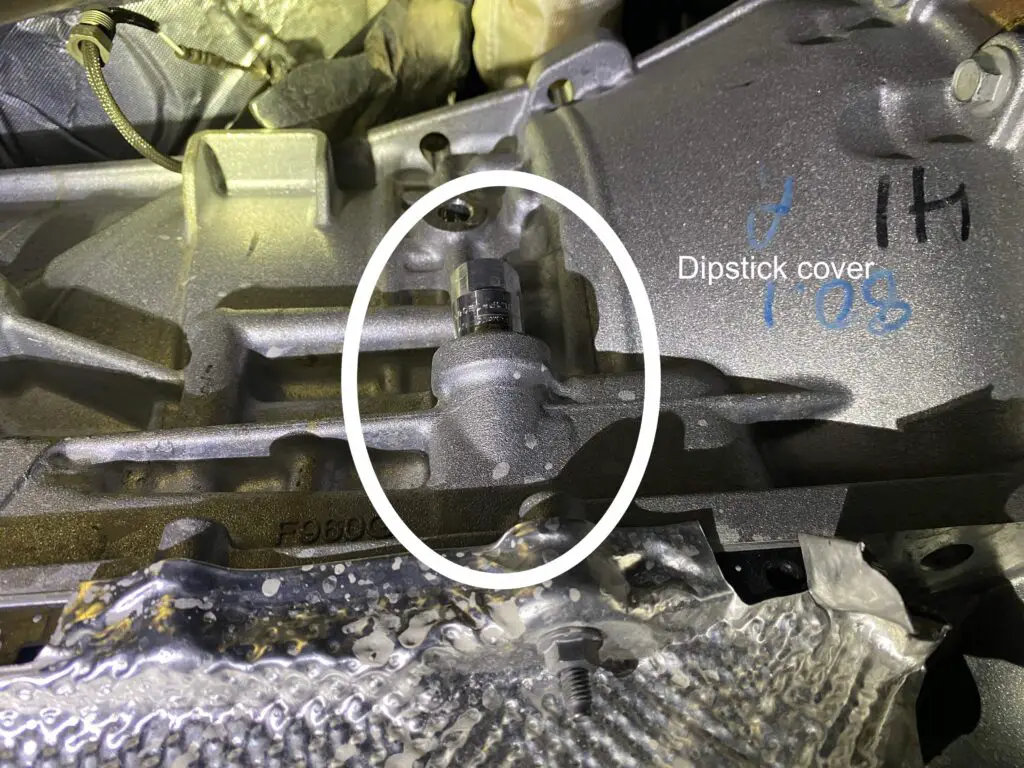
Inside the 19mm metal cap on the transmission housing, you will find a small, three-inch plastic dipstick. This dipstick is keyed to fit into a specific slot and sits within a standpipe that determines the correct fluid level. Because the dipstick is so short, it does not provide a large “range” of visibility. You are looking for very specific hash marks that indicate the fluid’s expansion at operating temperature. Understanding that this is a “miniature” version of a traditional dipstick helps you realize why precision is so important when reading the levels.
The Location of the 19mm Access Plug
To find the access point, crawl under the passenger side of the truck, roughly level with the back of the front wheel well. Look at the side of the transmission case, just above the corner of the transmission oil pan. You will see a silver or yellowish-zinc 19mm hex-head cap. This cap serves as both the seal and the handle for the dipstick assembly. It is positioned vertically or at a slight angle on the front-right quadrant of the transmission main body. It is often obscured by a small metal heat shield, which is there for a good reason: the exhaust downpipe and catalytic converter are positioned immediately next to this plug.
- Transmission Model: Ford 6R80 (Standard on 2013 F-150).
- Plug Size: 19mm (3/4 inch will also work in a pinch).
- Location: Passenger side, front-lower section of the transmission case.
- Proximity: Extremely close to the passenger-side catalytic converter.
How to Check Your 2013 F150 Transmission Fluid Like a Pro: A Practical Walkthrough
Recommended Best Deal Products


Checking the transmission fluid on a 2013 Ford F150 is significantly different from older truck models. Most 2013 F150s are equipped with the 6R80 six-speed automatic transmission, which features a “sealed” design. This means there is no convenient dipstick located under the hood near the firewall. Instead, the dipstick is a small, plastic indicator located directly on the transmission case, positioned perilously close to the hot exhaust system. This guide will walk you through the specialized process of accessing this dipstick, ensuring your fluid levels are correct to prevent slipping, overheating, or premature transmission failure. Following these steps carefully is essential because an overfilled or underfilled 6R80 transmission can lead to erratic shifting and costly internal damage.
Step 1: Preparation and Safety Gear
What you need: Heat-resistant mechanic gloves, safety glasses, a 19mm wrench or socket, and a level working surface.
Instructions: Because the transmission fluid check on a 2013 F150 requires you to be underneath the vehicle while the engine is running and the exhaust is hot, safety is your top priority. Park the truck on a perfectly level surface; if the truck is tilted, your fluid reading will be inaccurate. Put on your safety glasses to protect against road grime or dripping fluid. Most importantly, wear heavy-duty mechanic gloves that extend up your wrist. The access plug is located inches away from the catalytic converter, which can reach temperatures exceeding 400 degrees Fahrenheit. Ensure the parking brake is firmly engaged and the vehicle is in “Park” before you even consider crawling underneath.
Pro Tip: Do not attempt this in short sleeves. A long-sleeve work shirt provides an extra layer of protection against accidental contact with the scorching exhaust pipe or transmission casing.
Step 2: Bring the Transmission to Operating Temperature
What you need: The vehicle’s digital instrument cluster (Productivity Screen).

Audible — Listen Free for 30 Days
One free credit a month and thousands of titles included.
Listen Free for 30 Days As an Amazon Associate I earn from qualifying purchases.Instructions: Transmission fluid expands significantly when heated. If you check the fluid while the engine is cold, you will get a false low reading and potentially overfill the system. Start your F150 and drive it for about 15 to 20 minutes. Simply idling in the driveway is often not enough to get the 6R80 up to the required temperature. Use the steering wheel controls to navigate the instrument cluster menu: go to “Gauge Mode” and select “Trans Temp.” You are looking for a temperature between 190°F and 200°F (88°C–93°C). Once the truck reaches this range, park it back on your level surface and leave the engine running. The fluid MUST be checked while the engine is idling to ensure the torque converter and pump are fully primed.
Pro Tip: If the temperature exceeds 210°F during your drive, let the truck sit and idle for a few minutes to cool down slightly before checking, as the fluid level will be artificially high at extreme temperatures.
Step 3: Elevating the Vehicle (If Necessary)
What you need: A floor jack and four heavy-duty jack stands (optional depending on truck height).
Instructions: Depending on whether your F150 is 2WD or 4WD, or if it has been leveled, you may have enough ground clearance to slide under without lifting it. However, if you must lift the truck to reach the transmission, you must lift both the front and the rear. The transmission must remain perfectly horizontal to get an accurate reading on the stubby dipstick. Use the jack to lift the front and place stands under the frame rails, then repeat for the rear. Never rely on a jack alone while you are under the vehicle, especially with the engine running. If the truck is high enough to slide under without jacks, this is the preferred and safest method for a DIY check.
Pro Tip: Use a spirit level on the transmission pan or the truck’s running boards to verify the vehicle is truly level before proceeding to the next step.
Step 4: Locating and Removing the Dipstick Heat Shield
What you need: 19mm box-end wrench or a shallow socket with a ratchet.
Instructions: Slide under the passenger side of the truck, roughly beneath the area where the front door meets the front fender. Look up at the side of the transmission case, just above the pan. You will see a large, silver hexagonal nut (the cap) sticking out of the transmission. This is located very close to the passenger-side catalytic converter. In some configurations, there may be a small metal heat shield held by a 10mm bolt protecting this area; if present, remove it. Use your 19mm wrench to loosen the large cap. Be careful as the metal will be extremely hot. Unscrew the cap completely and set it aside on a clean rag. Note that some fluid may weep out if the system is slightly overfilled or if the engine was recently shut off.
Pro Tip: Use a box-end wrench rather than a socket if space is tight against the exhaust heat shield. This prevents you from getting your hand wedged between the hot pipe and the wrench.
Step 5: Extracting and Cleaning the “Mini-Stick”
What you need: A clean, lint-free microfiber cloth or shop towel.
Instructions: Once the 19mm cap is removed, look inside the hole. You will see a small, usually yellow or white plastic dipstick. This is the “mini-stick.” Reach in with your gloved fingers or a pair of needle-nose pliers and pull the dipstick straight out. Because it is so short (only a few inches long), it is easily dropped, so maintain a firm grip. Immediately wipe the dipstick clean with your lint-free cloth. It is vital that no dirt, dust, or lint enters the transmission through this port, as the 6R80 has very tight tolerances in its valve body. Inspect the dipstick for any signs of melted plastic or debris before reinserting it for the actual reading.
Audible Premium Plus — Annual Membership
12 audiobook credits up front, plus the full Audible catalogue.
See Annual Plans As an Amazon Associate I earn from qualifying purchases.Pro Tip: Avoid using standard paper towels, as they can leave behind fibers that might clog the internal transmission filter or solenoids over time.
Step 6: Taking the Fluid Level Reading
What you need: The cleaned mini-stick and a bright flashlight.
Instructions: With the engine still idling and the transmission at the 190°F-200°F range, push the clean dipstick all the way back into the transmission port until it seats fully. Do not screw the 19mm cap back on yet; just seat the plastic stick. Pull it back out and hold it horizontally. The 2013 F150 dipstick usually has two zones, often marked “A” and “B,” or featuring a crosshatch pattern. At operating temperature, the fluid should be within the upper crosshatch area (Zone B). If the fluid is only touching the bottom of the stick or is in Zone A, you are low. The fluid should be a clear, bright pinkish-red. If it is dark brown or smells burnt, a full fluid exchange is necessary regardless of the level.
Pro Tip: If you find you need to add fluid, you will need a fluid transfer pump, as there is no way to pour fluid into this side-mounted port using a standard funnel.
Step 7: Reinstalling the Plug and Final Inspection
What you need: 19mm wrench and a can of brake cleaner.
Instructions: Once you have verified the level is correct, slide the plastic mini-stick back into the port. Take the 19mm metal cap and thread it back on by hand to ensure you do not cross-thread the aluminum transmission housing. Tighten the cap with your wrench until it is snug. The torque specification is approximately 20-25 lb-ft, but “snug plus a quarter turn” is usually sufficient for this O-ring sealed plug. If you removed a heat shield earlier, reinstall it now. Finally, use a bit of brake cleaner to wipe away any transmission fluid that may have dripped onto the exhaust or the transmission pan. This prevents “burning oil” smells later and allows you to check for leaks easily in the future.
Pro Tip: Double-check that the rubber O-ring on the 19mm cap is still in good condition and hasn’t flattened out or cracked, as this is the primary seal for the port.
✅ Final Checklist
- Was the transmission temperature between 190°F and 200°F during the check?
- Was the engine running and the vehicle in “Park” while the dipstick was read?
- Is the fluid level within the designated “B” or upper crosshatch zone?
- Is the 19mm cap tightened securely to prevent leaks?
- Is the fluid a healthy transparent red color rather than dark brown or black?
Important Notes:
- Safety Warning: The catalytic converter is extremely close to the check port. Serious burns can occur in seconds. Always use protective gear.
- When to Seek Help: If the fluid is black, contains metal flakes, or if the truck is shuddering during shifts, a simple level check isn’t enough; take it to a certified transmission specialist.
- Fluid Type: Only use Motorcraft Mercon LV fluid. Using the wrong fluid type (like Mercon V) will damage the 6R80 transmission.
- Estimated Time: 30–45 minutes (including drive time to warm up).
- Estimated Cost: $0 for a check; $15–$30 if you need to buy a quart of Mercon LV and a hand pump.
Critical Safety and Tool Requirements for Under-Vehicle Access
Checking the transmission fluid on a 2013 F-150 is not a “cold engine” job. To get an accurate reading, the fluid must be at full operating temperature, and the engine must be running. This creates a significant safety challenge because you will be working in a confined space next to exhaust components that can reach temperatures exceeding 400 degrees Fahrenheit. Proper preparation is not just about having the right wrench; it is about protecting yourself from severe burns while the vehicle is idling above you.

Essential Tools for the Job
You do not need a full shop of tools, but specific items make this job much easier. A standard 19mm socket and ratchet might be too bulky to fit between the transmission case and the exhaust heat shields. Many F-150 owners find that a 19mm box-end wrench or a ratcheting wrench provides the best clearance. Additionally, because you must check the fluid while the truck is level, you should have the vehicle on a flat surface. If your truck is lifted, you may be able to crawl under it without jacks; if not, you must use four jack stands to ensure the vehicle remains perfectly level while the engine is running.
Thermal Safety and Protection
Since the 19mm cap is tucked behind the exhaust, you must wear heat-resistant gloves and long sleeves. Mechanics often refer to the “F-150 burn,” which happens when a forearm accidentally brushes against the catalytic converter while trying to unscrew the dipstick cap. Using a heavy leather glove or a dedicated mechanic’s heat sleeve is highly recommended. Always ensure the truck is in “Park” with the parking brake firmly engaged before crawling underneath, as you will be working near moving parts and hot fluids.
- Safety Gear: Heavy-duty heat-resistant gloves and eye protection.
- Vehicle State: Engine running, transmission in Park, vehicle perfectly level.
- Wrench Preference: 19mm box-end wrench (standard length).
- Lighting: A high-quality LED work light or headlamp to see the faint hash marks on the plastic dipstick.
Once you have identified the 19mm plug and gathered your safety gear, the next step is the actual extraction and reading of the dipstick. This requires a specific sequence of shifting through gears to ensure the fluid is distributed throughout the valve body and torque converter before you pull the plug. Accuracy here is the difference between a smooth-shifting truck and a transmission that hesitates under load.
Mercon LV Specifications and Fluid Compatibility Factors
When you are checking the fluid in your 2013 F150, the type of fluid you see is just as important as the level. This model year utilizes the 6R80 six-speed automatic transmission, which is specifically engineered to run on Mercon LV (Low Viscosity) fluid. Using the wrong fluid isn’t just a minor mistake; it can lead to immediate performance issues and long-term internal damage.
The Role of Low Viscosity Fluid
Mercon LV is a high-performance, fully synthetic fluid designed to provide better fuel economy and smoother shifts in modern Ford trucks. Unlike older fluids, “LV” is designed to maintain its consistency even under extreme heat. If you use a standard Mercon V or a generic “multi-vehicle” fluid that doesn’t strictly meet the LV specification, the transmission may experience “shuddering” or delayed engagement because the viscosity doesn’t match the internal pressure requirements of the 6R80.
Critical Compatibility Reminders
- Never Mix Fluids: Adding a non-LV fluid to your existing Mercon LV can cause chemical reactions that degrade the lubricating properties of the oil.
- Color Indicators: New Mercon LV is bright red. If your fluid appears dark brown or black, it has likely oxidized and lost its protective qualities, regardless of the level.
- Look for the License: Always ensure the bottle explicitly states “Mercon LV Licensed.” Generic brands may claim compatibility, but Ford’s specific licensing ensures the additive package is correct for your 2013 model.
Interpretation of Dipstick Markings and Temperature Variables
Reading the 2013 F150 dipstick can be confusing because the fluid level changes drastically based on how hot the transmission is. Because the dipstick is so short and tucked away, even a small amount of thermal expansion can move the reading from “dangerously low” to “perfectly full.” Understanding how to read the crosshatch marks in relation to temperature is the only way to get an accurate assessment.
The Expansion Factor
Transmission fluid is highly susceptible to thermal expansion. When the fluid is cold, it sits at the bottom of the pan and will barely touch the tip of the dipstick. As the truck reaches its normal operating temperature (typically between 180°F and 200°F), the fluid expands and rises into the designated “Hot” or upper crosshatch area. Checking the fluid while the engine is cold often leads to overfilling, which can cause the fluid to foam and lead to gear slippage.
Reading the Crosshatch Zones
Most 2013 F150 dipsticks feature two distinct zones, often labeled with letters or simple crosshatch patterns. Here is how to interpret what you see:
- The Lower Zone (A): This is the “Cold” range. If your fluid is in this area when the truck has only been idling for a few minutes, it is likely at an acceptable baseline, but you must re-verify once warm.
- The Upper Zone (B): This is the “Hot” range. After a 15-20 minute drive, the fluid should fall squarely within this crosshatch section.
- Bubbles on the Stick: If you see tiny air bubbles in the fluid on the dipstick, it may indicate an overfilled condition where the moving parts are “churning” the fluid into foam.
Conclusion
Monitoring the transmission fluid in your 2013 F150 is one of the most effective ways to ensure your truck hits that 200,000-mile milestone. By understanding that the dipstick is located behind a 19mm cap near the exhaust and knowing that Mercon LV is the only acceptable fluid, you are already ahead of most owners. Remember that temperature is your biggest variable; always aim to check the level when the transmission is warm to get the most accurate reading from the crosshatch marks.
Your next step should be a quick visual inspection. Grab a pair of heavy-duty gloves to protect yourself from the heat and take a look at the color and smell of your fluid this weekend. If it’s dark or smells burnt, don’t wait—schedule a fluid exchange to keep your 6R80 shifting smoothly for years to come!
❓ Frequently Asked Questions
Why is there no transmission dipstick under the hood of my 2013 F-150?
Ford transitioned to a ‘filled-for-life’ design philosophy with the 6R80 transmission, moving the dipstick to the transmission case to ensure fluid is only checked under specific temperature conditions by those with the proper tools.
What are the ‘A’ and ‘B’ marks on the 2013 F-150 dipstick?
The ‘A’ area is intended for cold fluid checks (room temperature), while the ‘B’ crosshatch area is the correct level for fluid at operating temperature (180°F–200°F). Always prioritize the ‘B’ reading after a drive for the most accurate level check.
Can I use Mercon V instead of Mercon LV?
No, Mercon V and Mercon LV have different chemical properties and viscosities. Using Mercon V in a 2013 F-150 can lead to improper shift timing, internal slippage, and eventually complete transmission failure.
Why must the vehicle be level when checking the fluid?
Because the dipstick is short and located directly in the transmission pan area, even a slight tilt of the vehicle can cause the fluid to shift, resulting in a significantly higher or lower reading than what is actually present.
How do I safely check the fluid near the hot exhaust?
The check plug is located inches away from the catalytic converter. To stay safe, wear heavy-duty mechanic gloves and long sleeves, and try to loosen the 19mm cap while the exhaust is still relatively cool before fully reaching operating temp.
How often should I check the transmission fluid on a 2013 F-150?
While Ford suggests long intervals, most experts recommend checking the level every 30,000 miles, especially if you use the truck for towing or heavy hauling, to ensure there are no slow leaks or fluid degradation.