P0401 Code Ford F150: Complete Guide 2026

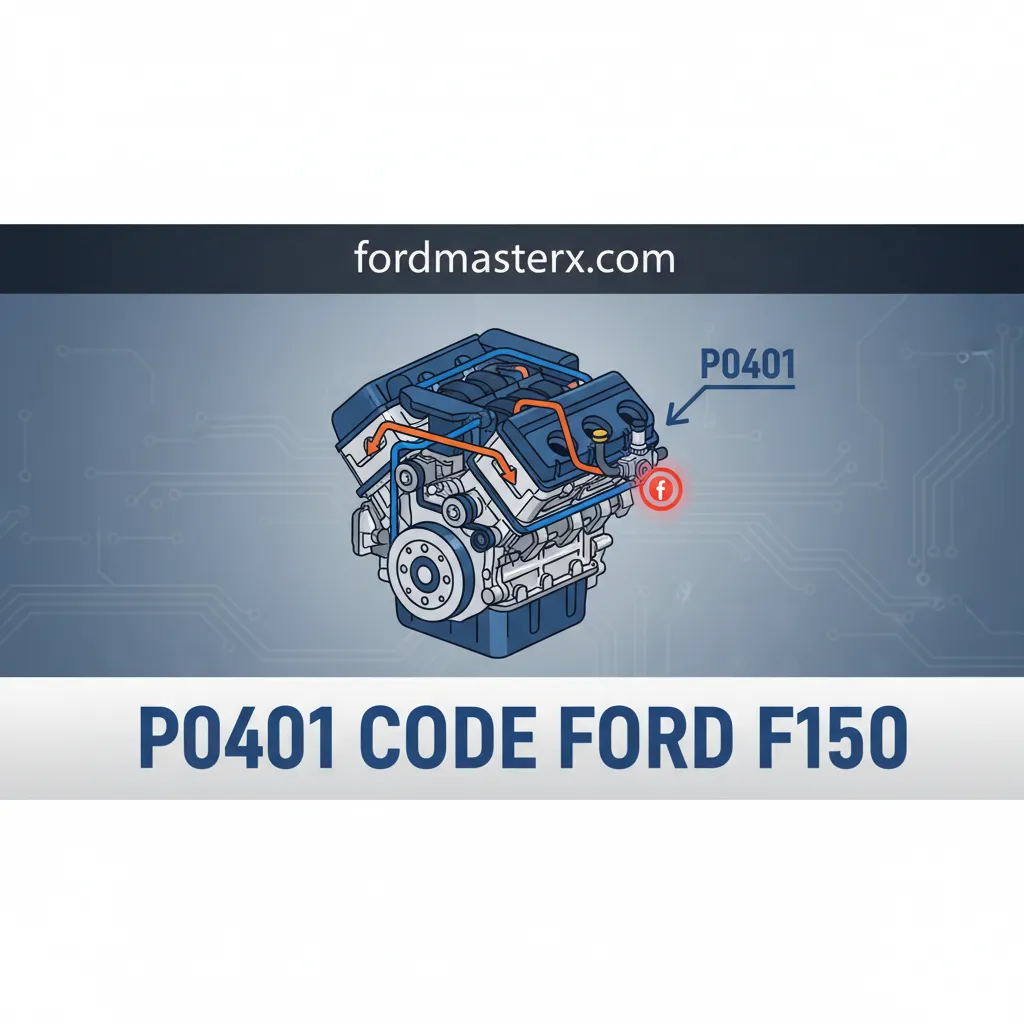
The illumination of your Ford F-150’s ‘Check Engine’ light can be unsettling, particularly when accompanied by a P0401 diagnostic trouble code. This specific code, indicating ‘Insufficient Exhaust Gas Recirculation (EGR) Flow,’ points to a critical issue within your truck’s emissions system that can impact performance, fuel economy, and environmental compliance. As an expert in automotive diagnostics and repair with over 15 years in the field, I understand the frustration and complexity this code can present. This comprehensive guide will meticulously break down the P0401 code, clarify its causes, provide professional, step-by-step diagnostic and repair procedures, and offer proactive maintenance advice to ensure your F-150 operates reliably and efficiently for years to come. Our goal is to provide trusted, quality information that empowers F-150 owners to confidently address this common issue.

Understanding the P0401 Code on Your Ford F-150: EGR System Fundamentals
Recommended Best Deal Products


📤 Share Image
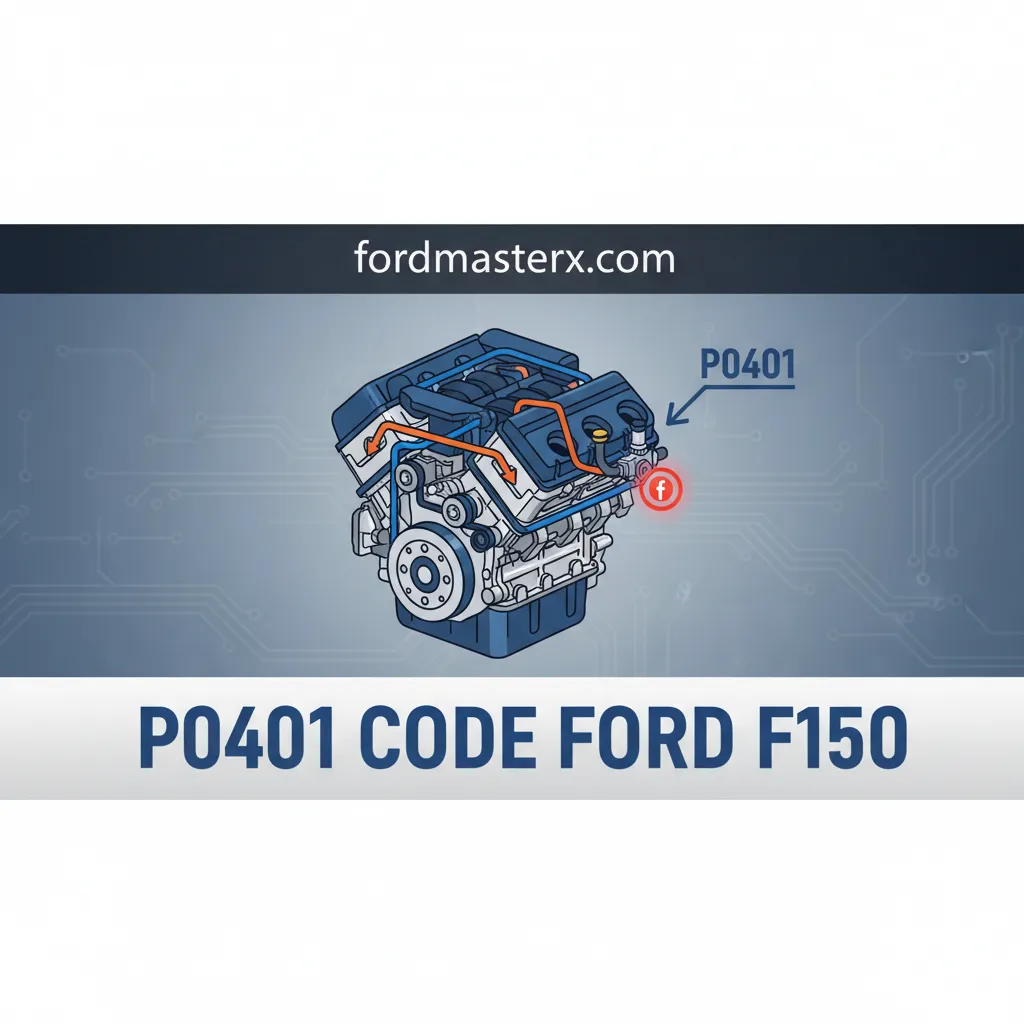
The P0401 is a ‘Generic’ powertrain diagnostic trouble code (DTC) defined by the Society of Automotive Engineers (SAE), meaning its fundamental meaning—Insufficient Exhaust Gas Recirculation (EGR) Flow—is consistent across all OBD-II compliant vehicles. However, its interpretation and common underlying causes are often model-specific, particularly for the robust Ford F-150 platform. For F-150 vehicles, this code indicates that the Powertrain Control Module (PCM) has detected that the expected volume of exhaust gases is not flowing through the EGR system when commanded.
The Exhaust Gas Recirculation (EGR) system is a fundamental component of your F-150’s emissions control strategy. Its primary function is to reduce nitrogen oxide (NOx) emissions, a harmful pollutant that contributes to smog and acid rain. It achieves this by recirculating a small, controlled portion of exhaust gases back into the engine’s intake manifold. These inert gases displace some of the fresh air/fuel mixture during combustion, effectively lowering peak combustion temperatures. Research indicates that a properly functioning EGR system can reduce combustion temperatures by typically 150-200°F (approx. 80-110°C), which is critical because NOx forms at high temperatures.
Key EGR System Components and PCM Monitoring
- EGR Valve: This is the most visible and often problematic component. It precisely controls the flow of exhaust gases into the intake manifold, opening and closing based on PCM commands.
- EGR Tube/Passages: These are the conduits through which exhaust gases travel from the exhaust manifold to the EGR valve and then into the intake.
- Differential Pressure Feedback EGR (DPFE) Sensor: Predominantly used in many F-150 generations, this sensor measures the pressure difference across a restriction (often a small orifice) in the EGR tube, effectively quantifying the flow rate. Newer F-150 models may use other pressure sensors or directly monitor electronic EGR valve position.
- Vacuum Lines/Solenoids: For vacuum-operated EGR valves, these components supply and control the vacuum signal that opens and closes the valve.
- Powertrain Control Module (PCM): The “brain” of the engine, the PCM monitors engine load, RPM, and temperature. It commands the EGR valve to open, typically during cruising speeds and when the engine is warm, and then verifies the flow via the DPFE or equivalent sensor.
The PCM detects insufficient EGR flow primarily by comparing the commanded EGR flow to the actual flow measured by the DPFE sensor. If the sensor feedback indicates significantly less flow than what the PCM expects, the P0401 code is stored, and the ‘Check Engine’ light is illuminated. This precise monitoring is essential for maintaining both emission compliance and engine quality.

What Causes Insufficient EGR Flow? Diagnosing Your F-150’s P0401
Pinpointing the root cause of a P0401 code in your Ford F-150 requires a systematic diagnostic approach. While the code consistently means insufficient flow, the reasons behind it vary. Our extensive experience shows that certain components are far more prone to failure than others across various F-150 engine configurations, from the venerable 4.6L and 5.4L Triton engines to the more modern 3.5L EcoBoost and 5.0L Coyote powertrains.
Common Culprits for P0401 in F-150s:
- Clogged EGR Valve: This is arguably the most prevalent cause. Over time, exhaust gases deposit carbon and soot onto the EGR valve’s pintle and seat, causing it to stick partially open or, more commonly for P0401, to stick closed or operate sluggishly. This direct restriction prevents the proper volume of exhaust gas from recirculating. Older F-150 models, especially those with higher mileage, are particularly susceptible to this.
- Faulty DPFE Sensor (or Pressure Sensor): A notoriously common failure point in many F-150 generations, particularly those equipped with the 4.6L and 5.4L Triton engines from the late 90s through the mid-2000s. The DPFE sensor, often exposed to heat and exhaust condensates, can degrade internally, sending an inaccurate or static signal to the PCM. This incorrect feedback makes the PCM believe there’s insufficient flow, even if the EGR valve and passages are clear. We’ve seen many instances where the DPFE sensor fails within its typical lifespan of 50,000 to 100,000 miles.
- Restricted EGR Passages/Tube: While less common than a faulty valve or sensor, significant carbon accumulation within the dedicated EGR tube or the intricate passages inside the intake manifold can physically block the path for exhaust gases. This is often observed in vehicles with a history of deferred maintenance or excessive short-trip driving.
- Vacuum Leaks or Faulty EGR Vacuum Solenoid: For F-150s utilizing vacuum-operated EGR valves, any compromise to the vacuum supply—a cracked vacuum line, a loose connection, or a malfunctioning vacuum solenoid—will prevent the EGR valve from opening as commanded. Without the proper vacuum signal, the valve cannot perform its function, leading to insufficient flow.
- Damaged Wiring or PCM Issues: These are less frequent but should not be overlooked in complex diagnostics. Electrical circuit problems, such as corrosion, frayed wires, or poor connections to the EGR valve or DPFE sensor, can disrupt signals. In rare instances, a malfunctioning PCM might incorrectly interpret sensor data or fail to command the EGR system properly.
When diagnosing, always start with a scan tool to observe live data. For example, a healthy DPFE sensor reading might show fluctuating voltage (e.g., 0.5V at idle, rising to 2.5V or more when EGR is commanded open), whereas a faulty sensor might show a flatline or incorrect static voltage, mimicking a flow issue. This professional, data-driven approach is key to accurate diagnosis.
By The Numbers: P0401 Commonality
P0401 Due to Carbon Build-up or EGR Valve Failure (Older F-150s)
Average DPFE Sensor Lifespan (Miles)
Step-by-Step Fixes for Ford F-150 P0401 Code Resolution
Recommended Best Deal Products


Resolving a P0401 code on your Ford F-150 often involves a methodical approach, starting with the most common and accessible fixes. As a seasoned technician, I always recommend prioritizing logical diagnosis over simply replacing parts. This guide provides actionable steps for F-150 owners or technicians.
📋
Step-by-Step Guide
Begin by using an OBD-II scanner to confirm the P0401 code. Clear the code and drive the truck to see if it immediately recurs. While the code is cleared, perform a thorough visual inspection of the EGR valve, all associated vacuum lines (for cracks or disconnections), and electrical connectors (for corrosion or damage). Ensure the EGR tube is securely attached. A loose vacuum line or corroded connector can often be a simple fix.

Audible — Listen Free for 30 Days
One free credit a month and thousands of titles included.
Listen Free for 30 Days As an Amazon Associate I earn from qualifying purchases.For vacuum-actuated EGR valves, use a hand-held vacuum pump to apply vacuum to the valve’s port. The engine RPM should noticeably drop or stall if the valve is functioning and the passages are clear. For electronic EGR valves, a bidirectional scan tool can command the valve open and closed while monitoring live data. If a visual inspection reveals heavy carbon, carefully remove the EGR valve (typically secured by two bolts on a Ford F-150, requiring a socket set) and attempt to clean it with specialized EGR system carbon cleaner. While cleaning can sometimes restore function, our professional recommendation for long-term reliability is often replacement if the valve shows significant sticking or wear, as thorough cleaning can be difficult and short-lived. Expect 1-2 hours of labor for this step.
The DPFE sensor is a frequent point of failure. Test it by back-probing its electrical connector with a multimeter while monitoring voltage at idle and during commanded EGR flow (if possible). A healthy sensor should show a low voltage at idle and an increase when exhaust gases flow. A faulty sensor might show a constant voltage or erratic readings. Replacement typically involves disconnecting two vacuum hoses and an electrical connector, then unbolting the sensor. Handle the delicate vacuum hoses carefully to prevent damage. A new DPFE sensor is relatively inexpensive, and replacement usually takes less than an hour. The average cost for a new Ford F-150 EGR valve is $80-$200, and a DPFE sensor ranges from $40-$100. Professional labor costs for these repairs generally fall between $150-$400.
After removing the EGR valve, visually inspect the passages in the intake manifold and the EGR tube for heavy carbon buildup. You can use a small brush, scraper, or carbon-dissolving cleaner to clear any obstructions. Be extremely cautious to prevent dislodged carbon from entering the intake manifold and potentially damaging engine components. Always wear appropriate personal protective equipment (PPE) as carbon dust can be an irritant. For persistent blockages, a complete removal of the EGR tube might be necessary for thorough cleaning, which can be more labor-intensive.
For F-150 models with vacuum-controlled EGR, meticulously check all vacuum lines connected to the EGR system for cracks, hardening, or loose fittings. Use a vacuum gauge to verify consistent vacuum supply. The EGR vacuum solenoid (if present) can be tested by applying 12V and ground directly to its terminals; you should hear an audible click as it opens. A multimeter can also check its resistance against specifications. Ensure all vacuum connections are tight and reliable. Always use OEM or quality aftermarket parts for trusted performance and longevity.
Advanced Troubleshooting & What If P0401 Persists on Your F-150
Recommended Best Deal Products


While the previous steps resolve the vast majority of P0401 codes on Ford F-150s, there are instances where the issue persists, indicating a more complex underlying problem. This is where advanced diagnostic techniques and expert knowledge become indispensable.
Deeper Dive Diagnostics:
- Comprehensive Wiring Harness Inspection: Beyond visual checks, a professional technician will perform continuity, resistance, and voltage drop tests on the wiring circuits connecting the EGR valve, DPFE sensor, and the PCM. This requires access to F-150-specific wiring diagrams and pin-out charts. A scenario where live data shows a commanded EGR percentage but no corresponding DPFE sensor change, despite a new sensor, often points to a wiring issue.
- PCM (Powertrain Control Module) Analysis: Though rare (the probability of a PCM fault being the cause for P0401 is less than 5%), a faulty PCM can lead to incorrect EGR commands or misinterpretation of sensor data. Diagnosing this requires specialized Ford diagnostic equipment (e.g., Ford IDS) to check for PCM software updates, perform self-tests, and monitor internal parameters.
- Intake Manifold Gasket Leaks: A vacuum leak in or around the intake manifold can indirectly affect the EGR system. While not a direct EGR component failure, a significant vacuum leak can reduce engine vacuum, hindering the EGR system’s ability to pull exhaust gases or affecting sensor readings. A common method to find these hidden leaks is using a smoke machine, which introduces harmless smoke into the intake system, revealing leaks as visible plumes.
- Testing EGR System Actuators/Solenoids Beyond Basic Function: For electronic EGR valves, bidirectional scan tools allow not only commanding the valve but also monitoring its actual position feedback (if equipped). This helps differentiate between a command issue from the PCM, a mechanical problem in the valve itself, or an electrical issue preventing its operation. An oscilloscope can be used to analyze sensor signals for noise or erratic behavior, providing a high-resolution view of electrical integrity.
When dealing with persistent P0401 codes, always consult Ford’s official diagnostic flowcharts. These technical documents, accessible to certified technicians, provide a structured, step-by-step troubleshooting process tailored to specific F-150 models and engines, significantly improving diagnostic accuracy and efficiency. Complex electrical diagnostics can add 2-4 hours of labor to repair costs, highlighting the value of a qualified technician.
If you’ve exhausted the common remedies and the P0401 code on your F-150 remains, it’s a clear indicator that the issue requires specialized attention. Stress the importance of involving a certified Ford technician who possesses the advanced diagnostic tools, proprietary software, and in-depth understanding of the F-150’s complex systems to accurately identify and rectify the problem.
Audible Premium Plus — Annual Membership
12 audiobook credits up front, plus the full Audible catalogue.
See Annual Plans As an Amazon Associate I earn from qualifying purchases.Preventing P0401 Code Recurrence and Maintaining Your F-150’s EGR System
Preventive maintenance is the cornerstone of keeping your Ford F-150 running reliably and avoiding the reappearance of the P0401 code. A proactive approach to your EGR system not only extends component life but also contributes to overall engine health and efficiency.
Regular EGR System Cleaning
For F-150s, especially those with higher mileage or frequently used for heavy loads/towing, consider periodic cleaning of the EGR valve and passages every 50,000-75,000 miles. This proactive measure can prevent significant carbon buildup.
Quality Fuel and Oil Usage
Using reputable, top-tier fuel brands and adhering to a consistent oil change schedule with the manufacturer-recommended oil type significantly minimizes carbon buildup throughout the engine, including the EGR system. This is a simple yet effective strategy.
Routine PCV System Inspection
A healthy Positive Crankcase Ventilation (PCV) system is crucial for controlling internal engine pressure and reducing sludge and carbon deposits. Inspect and replace the PCV valve as part of your F-150’s scheduled maintenance, typically every 30,000-60,000 miles, as a clogged PCV can contribute to excessive carbon accumulation.
Adherence to Manufacturer Service Intervals
Following Ford’s prescribed maintenance schedule is paramount. This schedule often includes inspections of emissions components, ensuring that potential issues are identified before they escalate. Studies show that vehicles with consistent preventive maintenance have significantly lower rates of emissions-related failures.
Monitoring subtle changes in your F-150’s engine performance, such as a rough idle, reduced fuel economy, or increased exhaust odor, can provide early warnings of impending EGR system issues, often before a P0401 code is even triggered. A clean and properly functioning EGR system not only keeps the ‘Check Engine’ light off but also contributes to an average 1-3% improvement in fuel efficiency and optimal engine operation. Proper maintenance can extend EGR component life by 25-50%.
The P0401 code on your Ford F-150 primarily indicates insufficient EGR flow, often due to carbon buildup or component failure. Our comprehensive guide has detailed that diagnosis involves systematically checking the EGR valve, DPFE sensor, vacuum lines, and passages for blockages or malfunctions. We’ve shown that effective repairs range from cleaning or replacing specific EGR components to addressing more complex electrical or PCM issues, emphasizing the importance of quality parts and professional methods. Finally, we’ve highlighted that proactive maintenance, including regular cleaning, using quality fluids, and adhering to service schedules, is crucial for preventing recurrence and maintaining emission system integrity. For optimal performance and emission compliance, address the P0401 code promptly. Utilize the diagnostic and repair strategies outlined here, and consider consulting a qualified Ford technician for complex or persistent issues to ensure your F-150 remains a reliable, trusted workhorse.
Frequently Asked Questions
What are the common symptoms of a P0401 code on a Ford F-150?
While the ‘Check Engine’ light is the primary indicator, F-150 owners might experience rough idling, engine hesitation during acceleration, reduced fuel efficiency, and possibly a slight decrease in overall engine power. In some cases, there might be no noticeable drivability issues other than the illuminated warning light, underscoring the importance of addressing the code promptly.
Is it safe to drive my Ford F-150 with a P0401 code?
Driving your F-150 with a P0401 code is generally not immediately catastrophic, but it’s not recommended for extended periods. Continued operation can lead to increased NOx emissions, potential carbon buildup elsewhere, and in rare cases, engine knocking or pre-ignition due to higher combustion temperatures. Addressing it swiftly prevents further damage and ensures compliance.
How much does it typically cost to fix a P0401 code on an F-150?
The cost to fix a P0401 code on an F-150 varies widely based on the root cause. A simple EGR valve cleaning might cost $50-$150. Replacing an EGR valve or DPFE sensor typically ranges from $200-$500 (parts and labor). More complex issues involving extensive carbon removal or advanced diagnostics can push costs higher, potentially $500-$1000+.
Can I clear the P0401 code myself, and will it stay gone?
You can clear the P0401 code using an OBD-II scanner, but it will only stay gone if the underlying issue has been resolved. If the fault persists, the powertrain control module (PCM) will detect the insufficient EGR flow again, and the ‘Check Engine’ light will reappear. Clearing it without repair is merely a temporary reset, not a solution.
Does a P0401 code affect my Ford F-150’s emissions test?
Yes, a P0401 code will almost certainly cause your Ford F-150 to fail an emissions test. The EGR system is a critical component for controlling nitrogen oxide (NOx) emissions. If the system is not functioning correctly, your vehicle will be out of compliance with emissions standards, necessitating repair before it can pass inspection.