P0022 Code Ford F150: Complete Guide 2026

Your Ford F-150’s engine light has illuminated, and a P0022 code indicates a critical issue within its sophisticated Variable Cam Timing (VCT) system. This specific diagnostic trouble code (DTC) often leaves F-150 owners concerned about engine performance, fuel efficiency, and potential repair costs. Understanding its precise meaning and executing an effective resolution strategy are paramount to maintaining your vehicle’s reliability and operational integrity. This authoritative guide will demystify the P0022 code for your Ford F-150, providing a professional breakdown of its underlying causes, offering a reliable, step-by-step diagnostic and repair process, and outlining expert strategies for addressing persistent issues, ultimately ensuring your truck performs optimally.

What Causes P0022 Code in Your Ford F-150’s Engine?
Recommended Best Deal Products


Understanding the P0022 code is the first step toward effective resolution for your Ford F-150. As a seasoned expert with over 15 years in automotive diagnostics, I can attest that this code consistently points to a precise malfunction within the engine’s critical Variable Cam Timing (VCT) system.
📤 Share Image
Understanding the P0022 Code
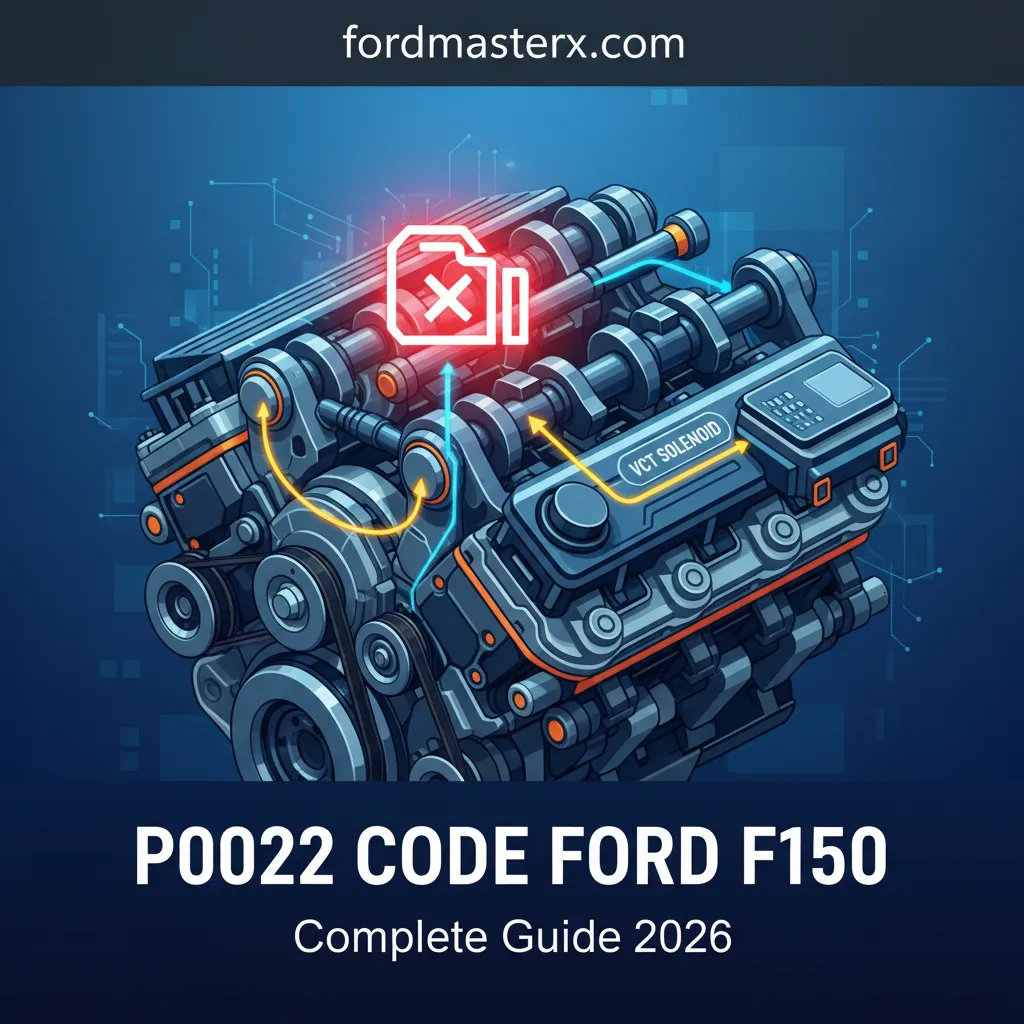
The P0022 Diagnostic Trouble Code (DTC) specifically means: “Camshaft Position ‘A’ – Intake/Left/Front Bank 2 – Timing Over-Retarded.” Let’s break this down for your F-150:
- Camshaft Position ‘A’: This refers to the intake camshaft.
- Bank 2: In Ford V6 and V8 engines found in F-150s (e.g., 3.5L EcoBoost, 5.0L Coyote, 5.4L Triton), Bank 2 typically denotes the cylinder bank that does NOT contain cylinder #1. For most Ford F-150s, this is the driver’s side cylinder head.
- Timing Over-Retarded: This is the critical part. It means the Powertrain Control Module (PCM) has commanded the intake camshaft on Bank 2 to advance (rotate forward for optimal valve timing), but the actual camshaft position is lagging behind, remaining ‘retarded’ or too far behind the commanded position. Essentially, the camshaft isn’t advancing as it should.
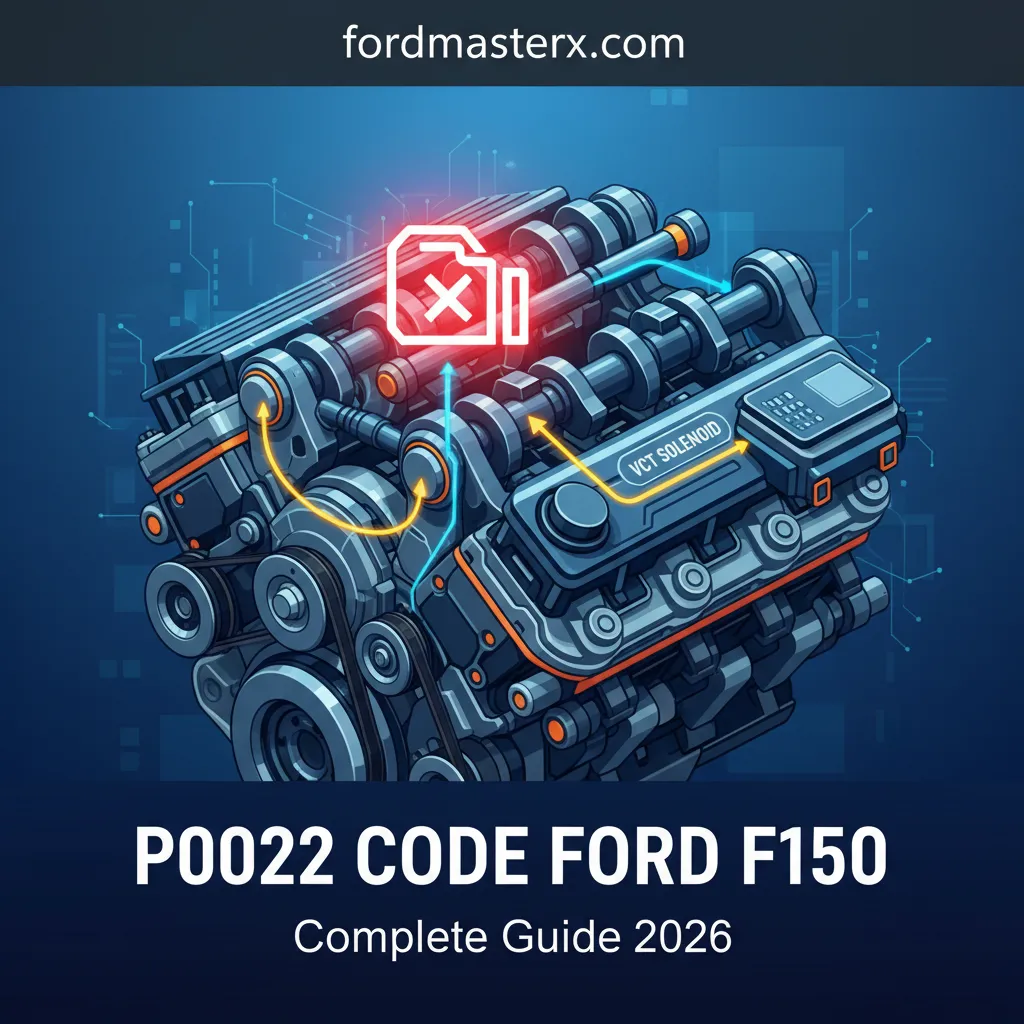
The Role of the Variable Cam Timing (VCT) System
The VCT system is a sophisticated engineering marvel designed to optimize valve timing across various engine speeds and loads. This optimization significantly contributes to both engine performance and fuel efficiency. Key components of this system include:
- VCT Solenoids (Oil Control Valves): These electrically controlled hydraulic valves regulate engine oil flow to the cam phasers. They are the primary interface between the PCM’s command and the mechanical cam phaser action.
- Cam Phasers: These are hydraulic actuators mounted on the end of the camshafts. They use engine oil pressure, directed by the VCT solenoids, to rotate the camshaft relative to the timing chain, thereby altering valve timing.
- Engine Oil Pressure and Quality: This is paramount. The VCT system is entirely dependent on clean, properly pressurized engine oil to function correctly. Without adequate oil pressure or if the oil is sludgy, the cam phasers cannot physically respond to the solenoid’s commands. For F-150s, research indicates that VCT system issues are a widely reported concern for certain engine generations, with many occurrences directly linked to extended oil change intervals or using incorrect oil viscosity. Proper oil pressure, typically 20-25 psi at idle and 40-75 psi at 2000 rpm, is critical for VCT function.
Common Root Causes of P0022 in F-150s
Based on extensive professional experience, the most frequent culprits for a P0022 code in Ford F-150s are:
- Insufficient or Dirty Engine Oil: This is arguably the most common and often overlooked cause. Low oil levels, incorrect oil viscosity (e.g., not using OEM-specified 5W-20 or 5W-30), or heavily sludged oil can starve the VCT system of the necessary hydraulic pressure or block the VCT solenoid’s passages. I’ve seen countless cases where a simple, quality oil and filter change resolves the code, especially for vehicles where maintenance has been neglected.
- Faulty VCT Solenoid (Oil Control Valve) for Bank 2 Intake: Over time, these solenoids can fail electrically or become mechanically stuck due to internal wear or debris from dirty oil. A faulty solenoid cannot properly regulate oil flow to the cam phaser, leading to the ‘over-retarded’ condition.
- Worn or Failing Cam Phasers: These mechanical units can wear out internally, losing their ability to hold the commanded position or respond quickly. This is often associated with distinct ‘diesel’ knocking or rattling noises, particularly on cold starts or at idle, a common issue in certain F-150 engines like the 5.4L 3V Triton or even some early 3.5L EcoBoost engines.
- Timing Chain Stretch or Tensioner Issues: While less common as a direct trigger solely for P0022, significant timing chain stretch, worn chain guides, or failing hydraulic tensioners can alter the base timing of the camshafts enough to cause an ‘over-retarded’ condition, often accompanied by other VCT-related codes.
Symptoms of P0022 Code
Beyond the illuminated Check Engine Light, a P0022 code can manifest with several observable symptoms:
- Reduced fuel economy (due to inefficient combustion).
- Decreased engine performance, including lack of power during acceleration and poor throttle response.
- Rough idling or engine stalling, especially when cold or at low RPMs.
- Audible engine noises, such as ticking, rattling, or a “diesel knock” that is often indicative of failing cam phasers or low oil pressure.
Potential Engine Damage from Ignoring P0022
Ignoring a P0022 code in your F-150 is a grave mistake that can lead to significant, costly, and even catastrophic engine damage. Prolonged operation with incorrect valve timing can result in:
- Accelerated wear on VCT components (phasers, solenoids) due to constant struggle against improper conditions.
- Timing chain and tensioner damage, potentially leading to chain jump or breakage.
- Catalytic converter damage from excessive unburnt fuel entering the exhaust.
- Severe engine damage or failure if valve timing becomes sufficiently misaligned, leading to piston-to-valve contact.
These professional implications underscore the importance of prompt, reliable diagnosis and repair, ensuring the longevity and continued high-quality performance of your Ford F-150.
By The Numbers
Minimum Oil Pressure (Idle)
Typical VCT Solenoid Resistance
Common F-150 Oil Viscosities
Average VCT Solenoid Cost
Diagnosing and Fixing P0022 Code in Your F-150: A Step-by-Step Approach
When confronted with a P0022 code in your Ford F-150, a systematic and thorough diagnostic approach is crucial. As a trusted expert, I advocate for starting with the simplest solutions and progressing to more complex diagnostics, ensuring both efficiency and accuracy in your repair strategy.

📋
Step-by-Step Guide
Recommended Best Deal Products



Audible — Listen Free for 30 Days
One free credit a month and thousands of titles included.
Listen Free for 30 Days As an Amazon Associate I earn from qualifying purchases.Immediately check your F-150’s engine oil level and condition. Insufficient oil, incorrect viscosity, or heavily sludged oil are often the root cause. Ensure you’re using the OEM-specified oil viscosity (e.g., 5W-20 for many older V8s or 5W-30 for EcoBoost engines) and adhere to strict, quality oil change intervals. Perform an oil and filter change, as this can often resolve P0022 caused by oil-related issues, making it a crucial first diagnostic step. Remember, the VCT system is entirely hydraulic, so oil is its lifeblood.
Use an OBD-II scanner to confirm P0022 and check for any accompanying codes. Codes like P0012 (Bank 1 Intake over-retarded), P0020 (Bank 2 VCT solenoid circuit), P0021 (Bank 2 Intake over-advanced), P002C, or P002D can indicate a broader VCT system issue or an electrical fault. Crucially, monitor live data: compare VCTADV (actual Bank 2 Intake cam angle) against VCTADC (desired Bank 2 Intake cam angle). A consistent discrepancy on Bank 2, especially if Bank 1 is tracking correctly, points directly to the problem area. Also, observe the VCT oil control solenoid duty cycle for irregular operation.
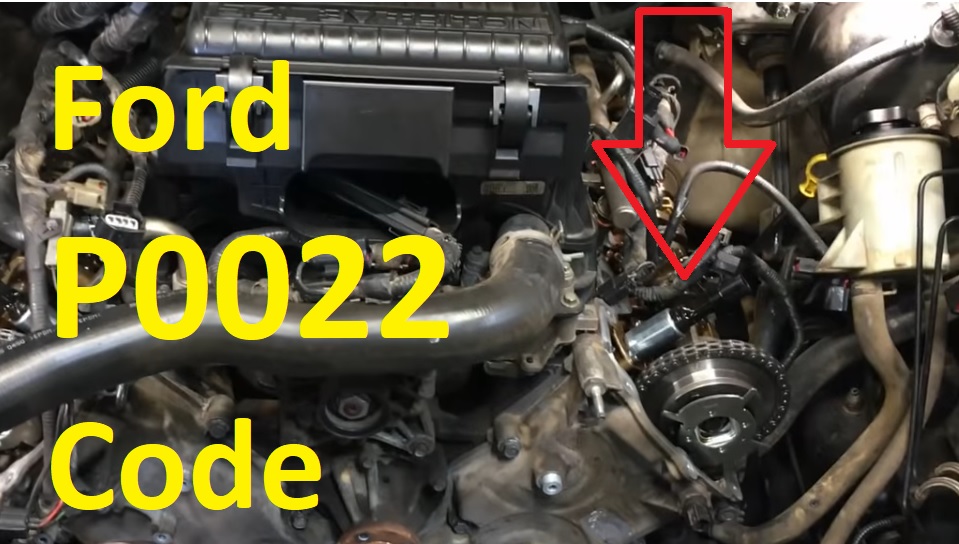
If oil condition is good and the code persists, focus on the Bank 2 Intake VCT solenoid. It is typically found on the driver’s side valve cover. Test its resistance with a multimeter; Ford units usually read between 6-15 ohms. You can also apply direct battery power momentarily to the solenoid connector (off the engine) to listen for a distinct click, indicating mechanical function. If resistance is out of spec or no click, replace it. For many F-150s, this is an accessible component, typically costing $50-$150 for the part, with professional labor ranging from $200-$500. Always use quality OEM or trusted aftermarket parts for reliable performance.
If P0022 persists after solenoid replacement and ensuring proper oil service, more advanced diagnostics are required. Directly test engine oil pressure using a mechanical gauge at the oil pressure sensor port to rule out underlying low oil pressure issues impacting VCT function. Listen intently for “phaser rattle” or a “diesel knock” during cold starts, idle, or light acceleration. This sound, particularly common in 5.4L 3V Triton and some 3.5L EcoBoost engines, is a strong indicator of failing cam phasers. Professional tools like an oscilloscope can analyze camshaft and crankshaft sensor signals for accurate timing assessment, revealing subtle mechanical faults.
For stubborn or severe cases, especially if accompanied by persistent rattling noises and other VCT codes, suspect timing chain stretch, worn tensioners, or guides. These components directly impact cam timing synchronization. This is a professional-level repair requiring specialized Ford timing tools and significant engine disassembly. Ignoring these issues can lead to catastrophic engine failure. While a VCT solenoid replacement can be relatively affordable, cam phaser replacement can range from $1,500 to over $3,000 due to extensive labor, and a full timing chain job can be even higher.
Ford Technical Service Bulletins (TSBs) have frequently addressed VCT issues related to oil maintenance and component design. Always check for relevant TSBs for your specific F-150 year and engine, as they can provide valuable insights into known issues and recommended professional repair procedures.
Audible Premium Plus — Annual Membership
12 audiobook credits up front, plus the full Audible catalogue.
See Annual Plans As an Amazon Associate I earn from qualifying purchases.
Persistent P0022: Advanced Troubleshooting and Professional Intervention
When the P0022 code refuses to clear despite initial diagnostics and component replacement, it’s time for advanced troubleshooting. This phase often requires specialized tools and expertise, underscoring the critical role of professional automotive technicians in achieving a reliable, long-term solution for your Ford F-150.
Deeper Dive into Oil System Integrity
Beyond simple oil level checks, expert diagnostics delve into the very integrity of the F-150’s oil system. This involves:
- Oil Sludge Inspection: A professional might remove valve covers or oil pan to inspect for heavy oil sludge buildup that can restrict delicate oil passages leading to VCT solenoids and phasers. This is particularly prevalent in engines with extended oil change intervals or those using non-synthetic oils under severe conditions.
- Oil Pump Performance: Checking the oil pump’s output for adequate pressure, especially at operating temperature, is crucial. A weak oil pump may struggle to provide the necessary hydraulic pressure for VCT operation, triggering the P0022 code.
- Internal Oil Passages: The VCT system relies on intricate oil passages within the cylinder heads and engine block. Blockages or leaks within these passages can cause localized oil pressure drops, directly affecting Bank 2’s intake cam phaser. Diagnosing these often requires extensive disassembly.
Verifying Electrical System Integrity
Even with a new VCT solenoid, a P0022 can persist if the electrical supply to it is compromised. Professional troubleshooting here involves:
- Wiring Harness Inspection: Thoroughly checking the wiring harness connected to the Bank 2 Intake VCT solenoid for continuity, chafing, shorts to ground, or open circuits.
- Connector Integrity: Inspecting the electrical connectors for corrosion, bent pins, or damage that could impede proper signal transmission.
- Voltage and Ground Signals: Using a multimeter or oscilloscope to verify proper voltage supply and ground signals from the Powertrain Control Module (PCM) at the solenoid connector. A damaged wire or faulty connection can perfectly mimic a solenoid failure, demanding professional electrical diagnostic tools.
When Cam Phasers are the Definitive Culprit
If all other avenues have been exhausted, cam phasers are highly suspected. A professional diagnosis for failing cam phasers often includes:
- Erratic Cam Angle Readings: Observing highly erratic or unresponsive cam angle readings (VCTADV vs. VCTADC) via a factory-level scan tool like Ford’s IDS (Integrated Diagnostic System) or FORScan with an extended license. These tools offer unparalleled diagnostic depth compared to generic OBD-II scanners.
- Acoustic Analysis: Precisely identifying the characteristic “phaser rattle” or “diesel knock” during startup, hot idle, or under specific load conditions. This noise signifies internal wear or lack of oil pressure holding the phaser.
- Visual Inspection: In extreme cases, removing the valve cover allows for a visual inspection of the phaser for excessive play or damage, though this is typically a last resort for confirmation. Phaser replacement is a labor-intensive, specialized repair, often necessitating the removal of several front-end engine components.
Considerations for Timing Chain System Overhaul
For persistent P0022, especially when accompanied by other VCT codes, overall engine noise (like chain slap), or high mileage, the timing chain system becomes a primary suspect. Worn timing chains, stretched components, or failing tensioners directly impact camshaft synchronization, leading to the ‘over-retarded’ condition. This is a major repair requiring extensive engine disassembly, often including removing the front cover and oil pan, and the use of specialized Ford timing tools to lock the camshafts and crankshaft. The average cost for a professional F-150 timing chain replacement can range from $2,500 to $4,000+, depending on the engine and shop labor rates. It is imperative to use professional-grade replacement kits that include new chains, tensioners, guides, and often new phasers for a complete, reliable, and long-lasting repair.
Attempting timing chain replacement without the correct specialized tools and experience can lead to irreversible engine damage. This complex procedure demands precision and an in-depth understanding of engine mechanics. For such critical repairs, seeking a professional, Ford-certified technician is not just recommended, but essential for the longevity and reliable operation of your F-150.
The Role of the Powertrain Control Module (PCM)
While rare, a faulty PCM can be the ultimate cause of a P0022 code. The PCM is the brain of the engine, controlling VCT solenoid operation. A defective internal driver within the PCM or a software glitch could erroneously trigger the code or prevent proper VCT function. Diagnosing a faulty PCM involves ruling out all other mechanical and electrical causes first. Then, a professional might attempt a PCM reflash with the latest software updates. If the problem persists, PCM replacement and reprogramming become necessary, a highly specialized and trusted service typically performed by Ford dealerships or independent shops with equivalent diagnostic capabilities.
The P0022 code in a Ford F-150 consistently points to an ‘over-retarded’ camshaft timing condition on Bank 2 Intake, fundamentally impacting engine efficiency and performance. Root causes primarily revolve around the Variable Cam Timing (VCT) system, including insufficient oil pressure/quality, faulty VCT solenoids, or mechanical cam phaser issues, requiring systematic and expert diagnosis. Prompt and accurate resolution, from simple oil changes to complex timing component replacement, is critical to prevent cascading engine damage and restore optimal engine health and fuel economy. For professional and reliable resolution, ensure thorough diagnostics and consider consulting a Ford-certified technician, especially when issues persist or require specialized tools. Consistent, high-quality engine oil maintenance remains a trusted preventative measure against VCT system malfunctions.
Frequently Asked Questions
Recommended Best Deal Products


Is the P0022 code serious for my Ford F-150?
Yes, the P0022 code is serious as it indicates a significant issue with camshaft timing, directly impacting engine performance and potentially leading to long-term damage. While not always an immediate breakdown risk, prolonged operation with this code can cause reduced fuel efficiency, increased emissions, and premature wear on critical engine components, necessitating prompt, expert attention for reliable operation.
Can I drive my Ford F-150 with a P0022 code?
Driving with a P0022 code is generally not recommended for extended periods. While the vehicle may seem operational, the engine is not running optimally. Continuing to drive can worsen the underlying issue, potentially leading to more severe and costly repairs, such as timing chain damage or engine failure. It’s best to diagnose and address the issue promptly for professional, reliable vehicle health.
What does ‘Bank 2’ mean in the context of an F-150 P0022 code?
In a Ford F-150 engine, ‘Bank 2’ refers to the cylinder bank that does not contain cylinder #1. For most Ford V8 and V6 engines, this typically designates the driver’s side cylinder bank. The P0022 code specifically points to an issue with the intake camshaft on this particular bank, aiding in precise diagnosis for expert repair.
How much does it cost to fix a P0022 code on a Ford F-150?
The cost to fix a P0022 code on an F-150 varies widely based on the root cause. A simple oil change might cost $50-$100. Replacing a VCT solenoid typically ranges from $250-$500. However, if cam phasers or the timing chain assembly are at fault, professional repairs can escalate to $1,500-$4,000+, reflecting the extensive labor involved and the need for quality parts.
What preventative maintenance can help avoid the P0022 code?
The most crucial preventative maintenance for avoiding the P0022 code in your F-150 is rigorous adherence to a quality engine oil maintenance schedule. Use the OEM-specified oil viscosity and a high-quality oil filter, changing them at recommended intervals. Regular, professional engine oil flushes can also prevent sludge buildup, ensuring the VCT system’s delicate hydraulic components operate correctly and reliably.