
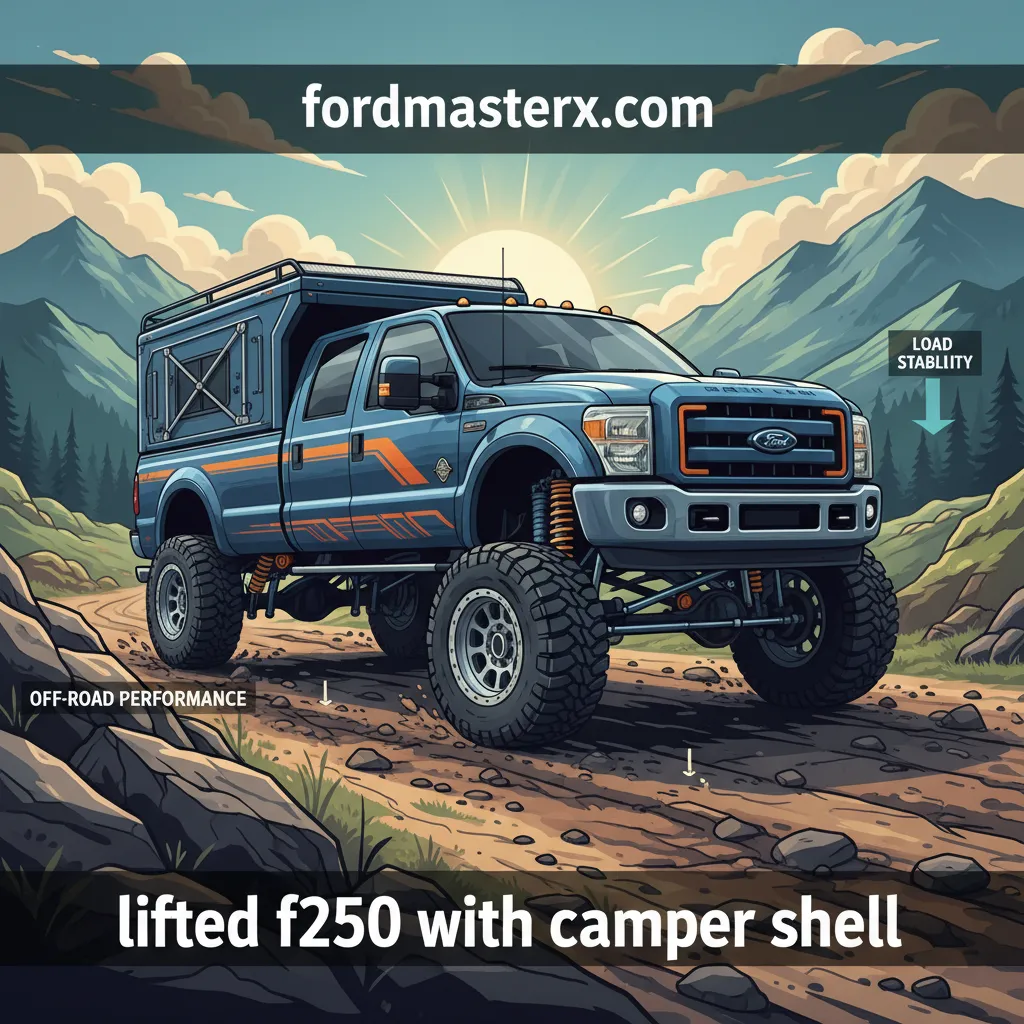
Lifted F250 With Camper Shell: Engineering For Off-Road Performance And Load Stability

For the professional or dedicated enthusiast, a lifted F250 with a camper shell represents the pinnacle of heavy-duty utility and off-road capability. While lifting a Super Duty provides the necessary ground clearance for technical terrain, the addition of a camper shell introduces complex variables in weight distribution, aerodynamic drag, and suspension harmonics. These factors must be addressed with precision to ensure vehicle longevity and safety. This comprehensive guide provides an expert analysis of the engineering requirements, material choices, and performance optimizations necessary to create a reliable and high-performing configuration that excels in both work and overlanding environments.
Section 1: Suspension Calibration for a Lifted F250 With Camper Shell
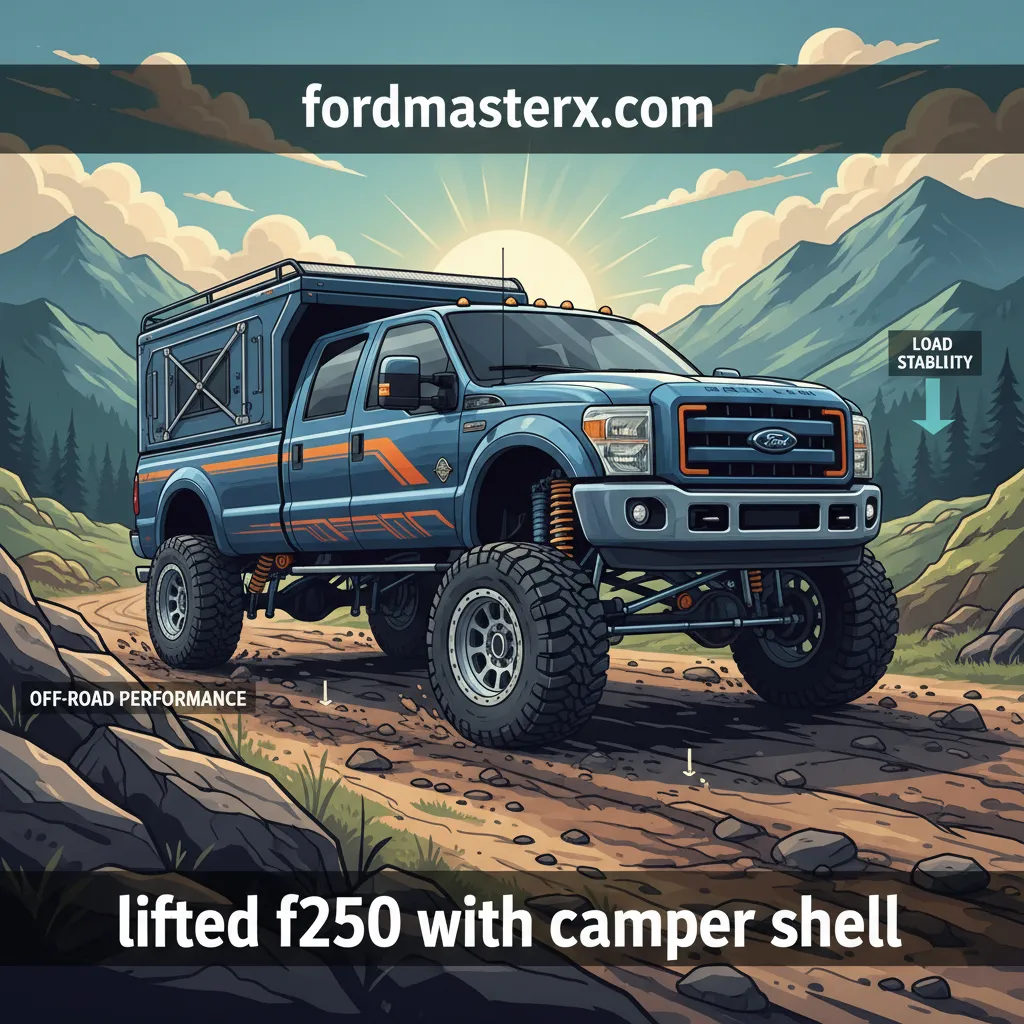
📤 Share Image
Calibrating the suspension of a lifted F250 carrying a camper shell is an exercise in managing static weight. Unlike a standard payload that is removed after a job, a camper shell represents a constant load. The Ford F250 Super Duty features a gross vehicle weight rating (GVWR) of up to 10,000 lbs; adding a camper shell consumes approximately 5-10% of the remaining payload capacity. This constant weight demands a move away from generic “spacer” lifts, which often lead to premature sagging and degraded ride quality.
To prevent rear-end sag, a complete suspension overhaul is recommended. Progressive leaf pack systems from trusted manufacturers like Carli Suspension or Icon Vehicle Dynamics are engineered to handle the 200-500 lb weight of a shell while maintaining a supple ride. Unlike the stiff factory “overload” springs, progressive packs utilize multiple thinner leaves that engage incrementally, providing a reliable solution for both empty and loaded scenarios. For a lifted application, typically between 2.5 to 4 inches, these springs ensure the truck maintains a functional breakover angle without sacrificing the stability needed for highway speeds.
Always opt for high-quality adjustable reservoir shocks. The added weight of the shell increases unsprung mass; remote reservoirs provide the oil volume necessary to dissipate heat and manage body roll during high-speed off-road maneuvers.
Furthermore, heavy-duty sway bars are non-negotiable. The elevated height of a lifted F250, combined with the shell’s mass, increases the leverage force acting on the chassis. Upgrading to an expert-level sway bar kit reduces “head toss” on uneven trails. If your payload varies significantly due to interior builds, integrating air helper springs (Airbags) with a digital controller allows you to level the vehicle on the fly, ensuring your headlights remain aimed correctly and your steering geometry stays within professional tolerances.

Section 2: Selecting Quality Camper Shell Materials for Heavy-Duty Applications
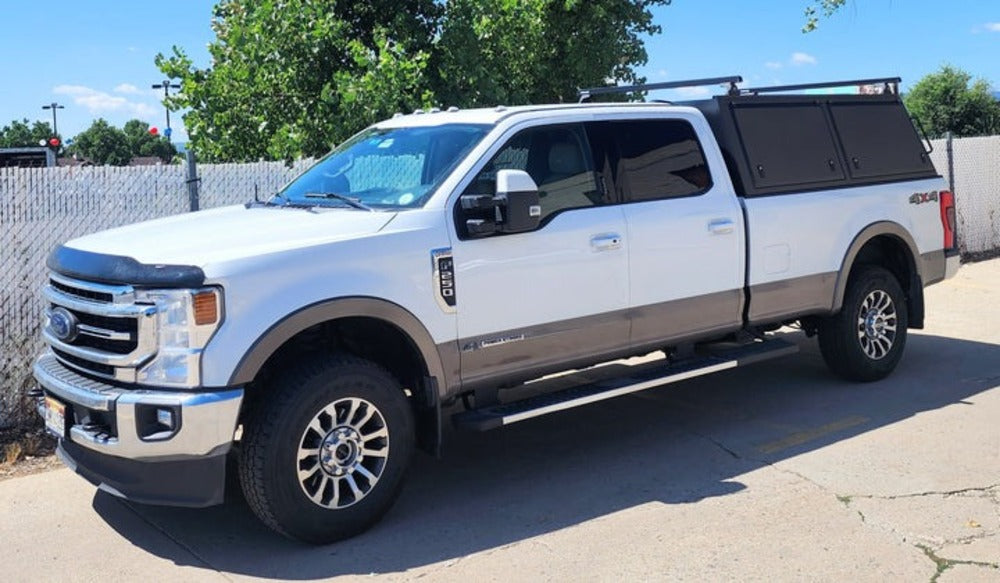
When selecting a shell for a lifted F250, the material choice dictates the vehicle’s ultimate durability in harsh environments. Fiberglass shells, such as the ARE CX Classic series, average 175-225 lbs and offer excellent aesthetics and aerodynamic integration. However, for heavy-duty applications where the truck will encounter frequent chassis flex and vibrations, reinforced stainless steel or TIG-welded aluminum shells, like the SmartCap EVO, provide superior structural integrity.
Structural skeletal reinforcements are critical for carrying external loads such as roof-top tents or recovery gear. A quality shell should feature heavy-duty roof tracks with high dynamic load ratings. For those navigating remote environments, professional-grade window seals and double-T handle locks are essential to prevent dust ingress—a common pitfall in lower-tier shells. Choosing a cab-high profile maintains the best possible aerodynamics, while a high-rise profile maximizes internal volume for workspace or living quarters at the expense of increased drag.
Section 3: Optimizing Aerodynamics and Fuel Efficiency on Elevated Platforms
It is a reality of physics: a lifted F250 is an aerodynamic challenge. A 4-inch lift combined with 35-inch tires typically increases drag by 15-20%. Adding a high-rise camper shell can add another 5-8% to that figure, as it increases the frontal area and creates a larger vacuum pocket behind the vehicle. To mitigate this, expert builders focus on mechanical efficiency and streamlining.
The most effective way to recover lost performance is by re-gearing the differential. If you are running 35 or 37-inch tires, the factory 3.31 or 3.55 ratios are insufficient. Moving to 4.30 or 4.56 ratios allows the engine to operate in its optimal power band, reducing strain on the transmission. In a notable case study, a 6.7L PowerStroke F250 saw a 2-3 MPG recovery after switching from 3.55 to 4.10 gears when equipped with 37-inch tires and a shell. This adjustment is reliable for maintaining towing capacity and reducing Exhaust Gas Temperatures (EGTs) during long mountain climbs.
Aerodynamic Impact Data
Avg. Drag Increase (Lift/Tires)
Recommended Gear Ratio
Additionally, utilize synthetic lubricants throughout the drivetrain to minimize mechanical friction. Monitoring transmission temperatures via the truck’s digital display or an aftermarket OBD-II monitor is critical when moving a high-profile setup through technical terrain. The goal is to reduce the engine’s workload, which in turn preserves the longevity of the turbocharger and emissions systems.
Section 4: Center of Gravity and Handling Dynamics in Off-Road Scenarios
Safety in a lifted F250 is dictated by its vertical center of gravity (VCG). For every inch of lift, the rollover risk increases by approximately 1-2%. When you add a 300 lb shell and perhaps 200 lbs of gear on a roof rack, that VCG shifts upward significantly. This shift makes the vehicle more susceptible to the “pendulum effect” during rapid lane changes or off-road side-slope navigation.
A lifted F250 with a camper shell has a lower static rollover threshold than a stock truck. Extreme caution should be exercised on side-hills exceeding 15-20 degrees of incline, as the top-heavy nature of the shell can lead to an unrecoverable tip-over.
To counteract these handling changes, professional alignment settings are vital. Specifically, increasing positive caster (typically to 3.5 or 4.5 degrees) helps the truck track straight and improves the steering’s self-centering characteristic, which is often lost after a lift. Braking system upgrades are also a trusted necessity. The increased kinetic energy of a lifted, weighted vehicle requires more stopping power. High-performance slotted rotors and EBC pads provide the friction needed to haul the vehicle down from speed without the fade common in factory components. Modern Super Duties feature Electronic Stability Control (ESC); ensure your lift kit includes the necessary brackets to keep these sensors properly calibrated.
Section 5: Professional Interior Build-Outs for the F250 Bed Environment
The space inside a camper shell on an F250—roughly 65-78 cubic feet—is a valuable resource that requires expert organization. To maintain a low center of gravity, the heaviest items should be stored as low as possible. DECKED drawer systems are a professional-grade choice, providing secure storage while creating a flat load floor for sleeping or additional gear. Utilizing CNC-cut birch or aluminum for custom cabinetry ensures strength without adding the excessive weight of standard plywood.
📋
Step-by-Step Interior Integration
Apply closed-cell foam insulation to the shell’s interior ceiling and walls to mitigate condensation and manage temperature transfers.
Install a secondary LiFePO4 battery system with a DC-to-DC charger to power LED lighting and climate control without draining the starter batteries.
Weight distribution within the bed is a science. Heavy recovery tools and water storage should be placed forward of the rear axle. This maintains steering authority and prevents the “light front end” feeling common in poorly loaded lifted trucks. Integrating lighting that taps into the F250’s factory upfitter switches creates a trusted, seamless experience, allowing the driver to control the shell’s environment from the comfort of the cab. By combining these storage strategies with high-quality shell materials, you transform an F250 into a complete mobile workstation or overland basecamp.
Conclusion
Engineering a lifted F250 with a camper shell requires more than just bolt-on parts; it requires a nuanced understanding of vehicle dynamics and load management. Correct suspension valving and spring rates are critical for managing the static load, while aerodynamic and gearing adjustments are essential to maintain the professional-grade performance expected of a Super Duty. Safety must remain the absolute priority by accounting for the shifted center of gravity during off-road maneuvers. To ensure your build meets these standards, consult with a trusted suspension specialist to calibrate your F250’s spring rates specifically for your shell’s total loaded weight. A well-executed build provides a reliable, comprehensive platform capable of conquering the most demanding terrains without compromise.
Frequently Asked Questions
How does a camper shell affect the towing capacity of a lifted F250?
A camper shell directly reduces your available payload, which in turn can limit your tongue weight capacity. While the F250’s raw towing capacity remains high, you must subtract the weight of the shell and the lift components from the GVWR. Experts recommend staying at least 15% below maximum payload to ensure stability when towing with a lifted setup.
What is the best lift height for an F250 that will primarily use a camper shell?
A 2.5-inch to 3.5-inch leveling or suspension system is generally considered the professional standard. This height allows for 35-inch tires—improving ground clearance significantly—without excessively raising the center of gravity, which can become problematic once the additional height and weight of a camper shell are factored in for high-speed highway travel.
Will a camper shell improve the ride quality of a lifted F250?
Yes, typically. The F250 is designed with a stiff leaf spring pack intended for heavy loads. A 200-400 lb camper shell provides a constant ‘settling’ force on the rear suspension, which can reduce the ‘chatter’ or harshness often felt when driving a heavy-duty truck empty. This results in a more planted and reliable feel on both pavement and gravel.
Which camper shell material is most reliable for off-road use on a lifted truck?
Reinforced aluminum or forged stainless steel (like the SmartCap) are often preferred for rugged off-road use. While fiberglass is aesthetically superior, the torsional stress placed on a lifted F250 frame during articulation can lead to stress cracks in fiberglass over time. Metal shells offer higher structural integrity and integrated mounting points for professional gear.
Do I need to re-gear my F250 after adding a lift and a camper shell?
If you have increased tire size to 35 inches or larger alongside the shell, re-gearing is highly recommended. Moving to a 4.10 or 4.30 gear set helps the engine stay in its optimal power band, reducing strain on the transmission and helping to recover some of the fuel economy lost to the increased aerodynamic profile of the shell.