2018 Ford F150 Transmission Problems

2018 ford f150 transmission problems is an essential topic with practical applications and significant benefits. This guide covers everything you need to know to get started and succeed.
🎯 Key Takeaways
Recommended Best Deal Products


- Understanding 2018 ford f150 transmission problems:Essential knowledge for success in this area
- Practical applications:Real-world scenarios and proven use cases
- Key benefits:Significant advantages when implemented correctly
- Best practices:Important guidelines and expert recommendations
- Future trends:Evolving landscape and emerging opportunities
The 2018 Ford F-150 was supposed to be the year the 10R80 10-speed transmission matured, but instead, it became the epicenter for some of the most frustrating mechanical failures in modern trucking history. If you are feeling a violent jerk when your truck shifts into 4th gear or experiencing a terrifying delay when merging onto the highway, you aren’t dealing with a “break-in” period. Most 2018 transmission failures are rooted in a specific internal defect involving the CDF clutch drum and the valve body, issues that hardware updates have only recently begun to fully resolve.

Prime for Young Adults — 6 Months Free
Students and 18–24s get six months of Prime free, then half price.
Start 6 Months Free As an Amazon Associate I earn from qualifying purchases.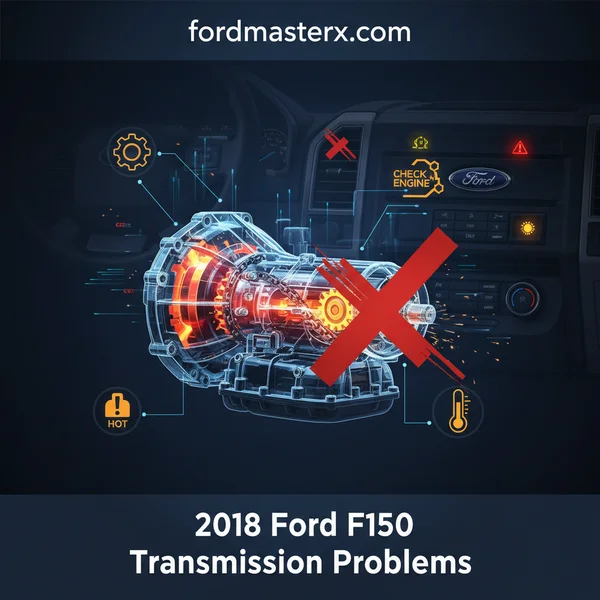
Understanding these specific failure points is critical because the 10R80 is a sophisticated, sealed unit. You cannot simply pull a dipstick to check fluid health or top it off in your driveway. Because these systems rely on precise hydraulic pressure to manage ten different gears, even a minor internal seal failure can lead to a total transmission meltdown. Identifying the symptoms of a failing CDF drum early is the only way to avoid a $7,000 out-of-pocket replacement bill, especially as many of these trucks move past their powertrain warranty limits.
Understanding 2018 ford f150 transmission problems
The CDF Clutch Drum and Sleeve Migration
The single most significant failure point in the 2018 F-150 10-speed transmission is the CDF clutch drum. Inside this drum sits a cylindrical sleeve that is intended to stay fixed in place. However, due to a manufacturing flaw, this sleeve frequently slips or “migrates” out of its original position. When the sleeve moves, it physically blocks the oil passage holes that allow transmission fluid to apply pressure to the clutch packs. This leads to a loss of hydraulic control, meaning the transmission can no longer accurately timing the engagement of specific gears.
When this sleeve moves, the transmission’s computer (the TCM) tries to compensate by increasing line pressure, which results in the “bang” or “clunk” many owners report. This isn’t just an annoyance; it is the sound of internal components being forced into gear without proper synchronization. Over time, this migration causes localized overheating and can eventually send metal shavings throughout the entire sealed system.
Harsh Shifting in Gears 3, 4, and 5
While the 10R80 is designed to skip gears for efficiency, the 2018 model struggles most significantly in the mid-range transitions. The shift from 3rd to 4th gear and 4th to 5th gear are the primary “trouble zones” for most owners. You might notice that the truck “hangs” in 3rd gear, the RPMs climb higher than usual, and then the truck slams into 4th gear with enough force to make the tires chirp. Common symptoms of this mechanical failure include:
- Erratic Gear Hunting: The truck constantly shifts between 7th and 10th gear on flat ground, unable to find a steady rhythm.
- Delayed Engagement: Shifting from Park to Drive or Reverse takes 2-3 seconds, often followed by a violent lurch.
- Power Loss During Downshifts: When you step on the gas to pass, the transmission “neutralizes” for a second before slamming into a lower gear.
- Deceleration Clunks: A heavy mechanical “thud” felt through the floorboard as the truck downshifts while coming to a stop.
From Start to Finish: 2018 Ford F150 Transmission Troubleshooting Explained
Recommended Best Deal Products


The 2018 Ford F150 features the 10R80 ten-speed automatic transmission, a marvel of engineering that can unfortunately suffer from erratic shifting, “gear hunting,” and harsh engagement. Whether you are experiencing a “clunk” when shifting into drive or a shuddering sensation while accelerating between 3rd and 5th gear, this guide provides a systematic approach to diagnosing and resolving these common issues. Following these steps in order is critical because many transmission problems in this model year are software-related rather than mechanical failures. By ruling out the easiest fixes first, you can potentially save thousands of dollars in unnecessary hardware replacements while ensuring your truck returns to its smooth, factory-intended performance.
Step 1: Diagnostic Scanning and Error Code Retrieval
What you need: An OBD-II scan tool (ideally one compatible with FORScan software) and a laptop or smartphone.
Instructions: Before touching a wrench, you must see what the Transmission Control Module (TCM) is reporting. Connect your scanner to the OBD-II port located under the driver-side dashboard. Look specifically for “P” codes (Powertrain). Common codes for the 2018 10R80 include P0731 through P0735 (Gear ratio errors) or P0711 (Transmission fluid temperature sensor). Even if your “Check Engine” light isn’t on, there may be “pending” or “historic” codes stored. Document every code found. If you see codes related to solenoid performance, it points toward a hydraulic or electrical issue within the valve body. If no codes are present but the truck drives poorly, the issue is likely related to the adaptive learning tables or fluid quality.
Pro Tip: Use FORScan software for Ford vehicles; it allows you to access the “Module Self-Test” which can trigger a diagnostic routine that generic scanners often miss.
Step 2: Verifying Fluid Level and Condition
What you need: 19mm wrench, heat-resistant gloves, a clean white rag, and Mercon ULV (Ultra Low Viscosity) fluid.

Audible — Listen Free for 30 Days
One free credit a month and thousands of titles included.
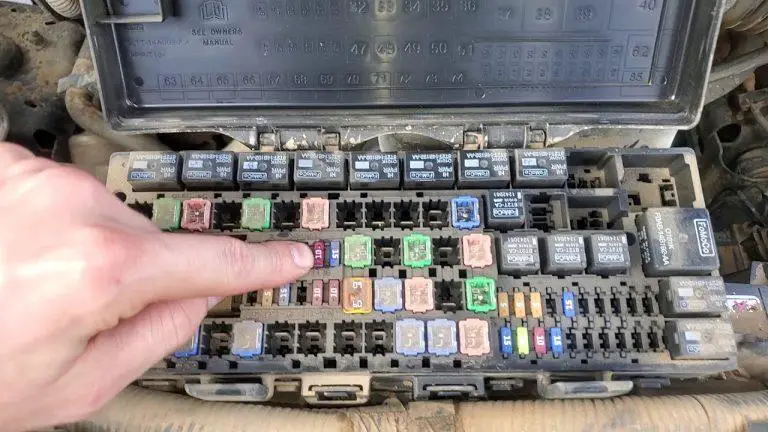
Listen Free for 30 Days As an Amazon Associate I earn from qualifying purchases.Instructions: The 2018 F150 does not have a traditional dipstick under the hood. To check the fluid, the transmission must be at operating temperature (195°F to 215°F), which you can monitor via the digital dash display. Park on a level surface, keep the engine running, and locate the small dipstick cap on the passenger side of the transmission case, near the exhaust. Wearing gloves to avoid burns, unscrew the cap and pull the “stubby” dipstick. The fluid should be within the crosshatched area (Zone B). Check the color; it should be pink/red. If it is dark brown or smells burnt, it indicates internal clutch wear. If it is low, add only Mercon ULV fluid in small increments.
Pro Tip: Never check the fluid cold; the 10R80 fluid expands significantly when hot, and an accurate reading is impossible at ambient temperatures.
Step 3: Checking for Technical Service Bulletins (TSBs)
What you need: Your vehicle’s VIN and access to an online TSB database or a Ford service portal.
Instructions: Ford has issued several critical TSBs for the 2018 10-speed transmission, most notably TSB 18-2274 and later updates regarding “harsh shifts.” These bulletins often dictate a specific software flash for the PCM (Powertrain Control Module) and TCM. Contact a local dealership or use a subscription service like Alldata to see if your VIN is eligible for a calibration update. Many owners find that a simple software “re-flash” by the dealer resolves 90% of shift-timing issues. This update changes the shift logic to prevent the transmission from “skipping” gears (like 1st to 3rd) in a way that causes a harsh jolt under light throttle.
Pro Tip: Even if your truck is out of powertrain warranty, some software updates are covered under emissions warranties or “customer satisfaction programs,” so always ask for a “Policy Adjustment.”
Step 4: Resetting the Transmission Adaptive Learning Tables
What you need: FORScan software and an OBDLink EX adapter.
Instructions: The 10R80 is an “adaptive” transmission, meaning it learns your driving style and adjusts solenoid pressures to compensate for wear. Over time, these tables can become corrupted or “learn” bad habits from stop-and-go traffic. Using your diagnostic tool, navigate to the “Configuration and Programming” section and select “Transmission Adaptive Tables Reset.” Confirm the reset. Note: Immediately after this reset, the truck may shift oddly or feel slightly firm. This is normal, as the computer is now in a “clean slate” mode and needs to re-learn the optimal pressure for every gear change based on current hardware tolerances.
Pro Tip: Do not perform a reset right before a long towing trip; the transmission needs empty-bed driving time to calibrate its baseline pressures correctly.
Step 5: Performing the Adaptive Learning Drive Cycle
What you need: A flat, quiet stretch of road with at least a 2-mile straightaway.
Instructions: After resetting the tables in Step 4, you must “teach” the transmission. Start the truck and allow it to reach operating temperature. Accelerate from a dead stop with very light, steady throttle (about 15-20%) so that the transmission shifts through all gears up to 8th or 10th. Once you reach 50-60 mph, coast down gradually until you are back to a stop without using heavy braking. Repeat this “up-and-down” cycle at least five times. Then, perform five more cycles at a medium throttle (about 40%). This process forces the TCM to record the exact pressure required for smooth clutch engagement across all ten speeds.
Audible Premium Plus — Annual Membership
12 audiobook credits up front, plus the full Audible catalogue.
See Annual Plans As an Amazon Associate I earn from qualifying purchases.Pro Tip: If the transmission “clunks” during this process, do not panic. It is often the computer testing the upper and lower limits of the solenoid engagement.
Step 6: Inspecting for CDF Clutch Drum Failure
What you need: A professional mechanic or advanced DIY skills, a drain pan, and a new transmission filter.
Instructions: If software updates and resets do not fix the issue, the 2018 model is known for a mechanical defect in the “CDF Clutch Drum.” A bushing inside the drum can slip out of place, blocking oil passages and preventing correct gear engagement (common on the 3-4 and 4-5 shifts). To diagnose this, you must drop the transmission pan. Inspect the bottom of the pan for “glitter” or large metal shavings. If the pan is full of debris, the CDF drum has likely failed. At this stage, the transmission requires a partial teardown to replace the drum with the updated “sleeved” version (part number revision) that Ford released to fix this specific design flaw.
Pro Tip: If you find heavy debris, consider a full remanufactured unit rather than a patch-job repair, as metal shavings can migrate into the torque converter and cooler.
✅ Final Checklist
- Verified that fluid is Mercon ULV and at the correct level while hot (195°F+).
- Confirmed that no P0700-series trouble codes are currently active in the TCM.
- Ensured the latest PCM/TCM calibration from Ford has been flashed to the vehicle.
- Completed the Adaptive Learning Reset followed by a 10-mile controlled drive cycle.
- Verified that the “shifting clunk” into Drive or Reverse has dissipated after the re-learning process.
Important Notes:
- Safety Warning: When checking fluid levels, the exhaust downpipe is extremely close to the dipstick plug. Use a long-sleeved shirt and mechanics’ gloves to prevent severe burns.
- When to Seek Help: If you see a “Transmission Service Required” message accompanied by “limp mode” (stuck in one gear), do not continue driving, as this can cause permanent internal damage to the planetary gear sets.
- Estimated Cost: A software update/reset typically costs $150-$250 at a dealer. A fluid service costs $300-$500. A full CDF drum replacement or transmission rebuild can range from $4,500 to $7,000 depending on your region.
Key Benefits of 2018 ford f150 transmission problems identification
Leveraging TSB 22-2428 for Repairs
One of the main benefits of correctly identifying these symptoms is the ability to point your technician toward TSB 22-2428. This is the official Technical Service Bulletin issued by Ford to address the 10R80’s erratic shifting. Prior to this TSB, many dealers would simply reset the “adaptive learning tables” in the computer. While this might smooth out the shifting for 500 miles, it never fixed the underlying mechanical defect. By referencing TSB 22-2428, you ensure the dealership looks at the updated CDF clutch drum (Part No. HL3Z-7H351-B), which features a new integrated lip designed to prevent the internal sleeve from ever sliding out of place again.
Protecting Your Valve Body and Torque Converter
Identifying transmission problems early prevents “cascading failures.” When the 10R80 operates with a migrated CDF sleeve, the erratic pressure puts immense stress on the main control valve body. The valve body is the “brain” of the transmission, using small solenoids to route fluid. If the CDF drum is failing, the solenoids have to work overtime, leading to electrical burnout or physical scarring of the valve bores. By catching the harsh 4th-gear shift early, you can often save the valve body and torque converter, reducing the complexity of the repair and ensuring the longevity of the rebuilt unit.
- Direct Diagnostic Advantage: Knowing the TSB numbers helps you skip “diagnostic loops” where dealers claim they cannot replicate the issue.
- Updated Part Longevity: The replacement parts (post-2022) have been redesigned to solve the 2018 model’s inherent flaws.
- Safety in Traffic: Resolving “neutralizing” issues ensures your truck doesn’t lose power while you are merging into high-speed traffic.
Legal and Warranty Standing
Because the 2018 Ford F-150 has been the subject of multiple class-action lawsuits regarding the 10R80 transmission, documenting your specific symptoms is vital. Owners who can prove they reported harsh shifting or “lunging” while still under the 5-year/60,000-mile powertrain warranty may have better luck receiving “goodwill” assistance from Ford even if the truck is now technically out of warranty. Identifying the problem as a known manufacturing defect rather than “normal operation” is the key to getting Ford to cover the high cost of the CDF drum replacement procedure, which typically requires 10 to 13 hours of labor.
How to Get Started with 2018 ford f150 transmission problems
Recommended Best Deal Products


If you have noticed your truck hesitating between gears or making a loud “clunk” when shifting into drive, you are likely dealing with the common 2018 ford f150 transmission problems associated with the 10R80 10-speed automatic. Getting started requires a proactive approach to prevent a minor hiccup from turning into a total transmission failure. The first step is always identifying the frequency and intensity of the symptoms.
Building a Symptom Profile
Before you visit a mechanic, you need to be your own detective. The 10-speed transmission in the 2018 F150 often exhibits intermittent issues that can be hard for a technician to replicate on a short test drive. Documenting specific details will save you time and money. Consider the following when tracking your truck’s behavior:
- Engine Temperature: Does the harsh shifting happen only when the engine is cold, or does it persist after an hour of highway driving?
- Drive Modes: Note if the “clunking” happens specifically in Sport or Tow/Haul mode versus the standard driving mode.
- Gear Gaps: Pay attention to which gears are being skipped. The 10R80 is designed to skip gears (like 1st to 3rd), but “hunting” for gears is a sign of a calibration issue.
- External Conditions: Record if the problem worsens when towing a heavy trailer or while driving on steep inclines.
Researching Technical Service Bulletins (TSBs)
Ford has released several Technical Service Bulletins regarding 2018 ford f150 transmission problems. These are not full recalls, but they provide dealerships with specific repair instructions for known issues. Getting started involves checking your VIN (Vehicle Identification Number) on the Ford owner portal or the NHTSA website. Knowing which TSBs apply to your specific build date allows you to speak the same language as the service advisor, ensuring they look for the right software updates or mechanical failures from the start.
Best Practices for 2018 ford f150 transmission problems
Managing a vehicle known for specific mechanical quirks requires a different maintenance philosophy. You cannot simply follow the “standard” schedule found in the back of the owner’s manual if you want to maximize the lifespan of your 2018 F150. Implementing a few high-level strategies can significantly mitigate the risk of a catastrophic breakdown.
Prioritize Software Over Hardware Initially
Many owners assume a rough shift means the transmission is physically broken. However, a major portion of 2018 ford f150 transmission problems are actually related to the Transmission Control Module (TCM). The 10-speed transmission uses “adaptive learning” to adjust to your driving style. Over time, this data can become “corrupted” or inefficient.
- PCM/TCM Re-flashing: Always ask for the latest software calibration updates before agreeing to a physical teardown.
- Adaptive Learning Reset: Sometimes, simply clearing the transmission’s “memory” can resolve erratic shifting patterns that have developed over thousands of miles.
- Dealer Diagnostics: Use a dealer for software issues, as they have access to proprietary Ford IDS software that independent shops might not carry.
Fluid Health and Temperature Management
Heat is the number one enemy of the 10R80 transmission. While Ford suggests long intervals for fluid changes, real-world experience from F150 enthusiasts suggests a more aggressive approach. Keeping the fluid clean and the system cool is a best practice that pays dividends.
- Shorten Change Intervals: Instead of waiting for 100,000 miles, many experts recommend inspecting and changing transmission fluid every 30,000 to 45,000 miles, especially if you tow.
- Monitor the Dash: Use the digital productivity screen on your dash to keep an eye on transmission temperatures during heavy use.
- Check for Leaks: The plastic transmission pans on some 2018 models can be prone to warping; a small leak can lead to low fluid levels, which causes the very shifting issues you are trying to avoid.
Conclusion
Dealing with 2018 ford f150 transmission problems can be frustrating, but being informed is your best defense. By documenting your symptoms accurately and staying ahead of software updates and fluid maintenance, you can keep your truck on the road and out of the shop. Remember that the 10R80 is a sophisticated piece of machinery that often just needs a bit of digital recalibration or fresh fluid to return to peak performance. Actionable next steps: Check your VIN for any open TSBs today and schedule a professional fluid inspection if you are over the 50,000-mile mark. Don’t wait for a total failure—address those minor “clunks” now!
❓ Frequently Asked Questions
What exactly is 2018 ford f150 transmission problems?
2018 ford f150 transmission problems encompasses proven concepts and methodologies that help you achieve better results. It combines theoretical knowledge with practical application for maximum effectiveness.
How can 2018 ford f150 transmission problems benefit me?
Understanding and applying 2018 ford f150 transmission problems principles improves your skills, opens new opportunities, and helps you achieve your goals more efficiently.
What resources do I need to get started?
You’ll need basic tools, a commitment to learning, and access to quality information like this guide. Start with fundamentals before advancing to complex topics.
Is this suitable for complete beginners?
Absolutely! This guide is designed to take you from beginner to proficient. Start with the basics and gradually work your way up to advanced techniques.
How do I measure my progress?
Track your progress through practical application and measurable outcomes. Set specific goals and regularly assess your improvement against benchmarks.
Where can I learn more after this guide?
Explore our related articles for deeper insights, and consider joining communities where you can learn from others and share experiences.