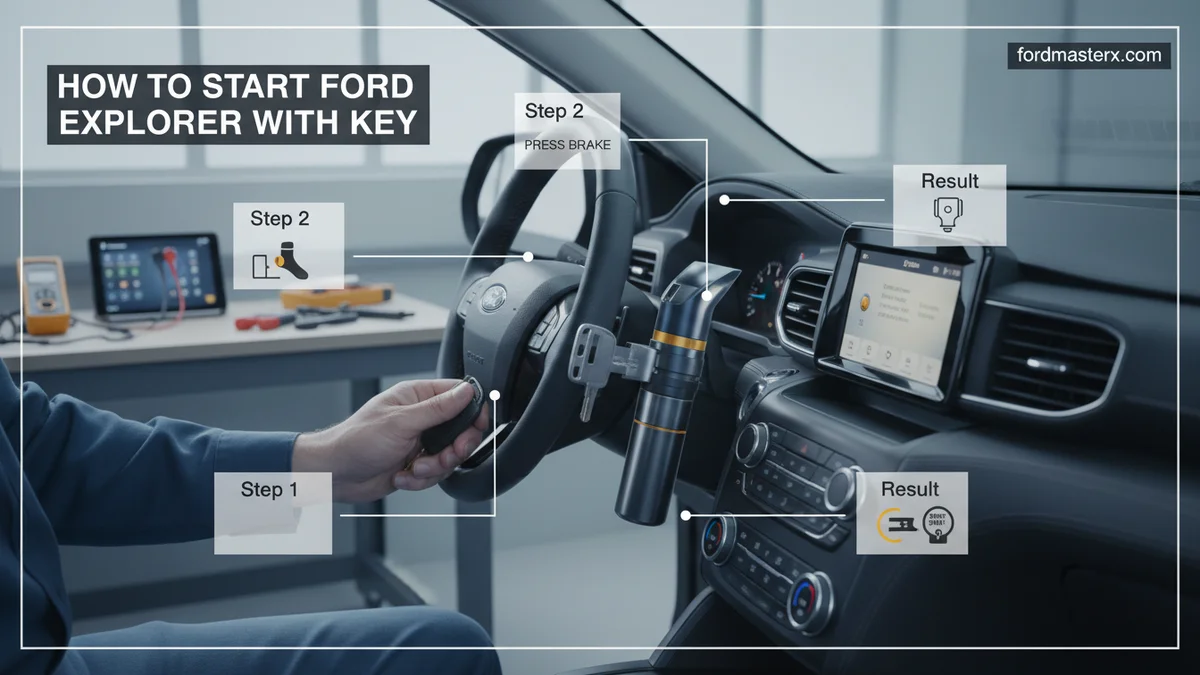
How to Start Ford Explorer With Key Proven 2026

Ever found yourself in a tricky situation with your Ford Explorer, perhaps with a dead key fob or an older model that still relies on a physical key? Understanding how to start your Ford Explorer with a key is a fundamental skill for any owner. This comprehensive guide will walk you through the various methods, from traditional key ignition to emergency procedures for modern keyless systems, ensuring you’re prepared for any scenario.

Prime for Young Adults — 6 Months Free
Students and 18–24s get six months of Prime free, then half price.
Start 6 Months Free As an Amazon Associate I earn from qualifying purchases.
How To Start A Ford Explorer With A Key: Step-By-Step Guide
Recommended Best Deal Products


For Ford Explorer models equipped with a traditional ignition cylinder, starting the vehicle with a physical key is straightforward. This method is common in older models and serves as a backup for newer models with keyless entry that still feature a physical key slot.
1. Preparing Your Explorer For Key Start
Before inserting the key, ensure your Ford Explorer is in park (P) or neutral (N) and the parking brake is engaged. This prevents accidental movement when the engine starts.
2. Inserting And Turning The Key
- Insert the Key: Gently insert the physical key into the ignition cylinder located on the steering column. It should slide in smoothly without resistance.
- Turn to ACC (Accessory): Turn the key clockwise to the “ACC” (Accessory) position. This powers up certain electrical components like the radio, but not the engine.
- Turn to ON: Continue turning the key clockwise to the “ON” position. At this point, you’ll see various dashboard warning lights illuminate as the vehicle’s systems perform a self-check.
- Turn to START: Finally, turn the key fully clockwise to the “START” position and hold it there. The engine will crank and, once it starts, release the key. It will automatically spring back to the “ON” position.
3. Emergency Key Override For Ford Explorer (If Applicable)
Modern Ford Explorers with keyless entry systems typically have a push-button start. However, if your key fob battery dies, you’ll need to use an emergency override.
Using The Physical Key From Your Fob
Most Ford key fobs contain a hidden physical key. You can usually release it by pressing a small button or sliding a tab on the fob. This key can be used to unlock the driver’s door manually if the fob battery is dead.
Emergency Start Procedure For Push-Button Models
Even with a dead key fob, your Explorer might still start if you place the fob in a specific location. Consult your owner’s manual, but common locations include:
- A slot in the center console.
- A designated area on the steering column.
- Touching the fob directly to the push-button start itself.
Once the fob is in the correct position, press the brake pedal and then the push-button start as usual. The vehicle’s system will detect the fob’s signal even with a weak battery due to its close proximity.
Common Issues When Starting A Ford Explorer With A Key
Even with a physical key, you might encounter issues. Here are some common problems and their solutions:
1. Dead Battery
A dead car battery is a frequent culprit. If your Explorer doesn’t crank or only makes a clicking sound, the battery is likely discharged. Jump-starting the vehicle with jumper cables and another car, or using a portable jump starter, can resolve this.
2. Dead Key Fob Battery (For Push-Button Models)
As mentioned, a dead key fob battery will prevent keyless start. Use the emergency override procedure outlined above.

Audible — Listen Free for 30 Days
One free credit a month and thousands of titles included.
Listen Free for 30 Days As an Amazon Associate I earn from qualifying purchases.3. Steering Wheel Lock
If the steering wheel is locked, you won’t be able to turn the key. Gently wiggle the steering wheel left and right while turning the key to release the lock.
4. Faulty Ignition Switch
If the key turns but nothing happens, or the dashboard lights don’t illuminate, you might have a faulty ignition switch. This requires professional diagnosis and repair.
5. Starter Motor Issues
If you hear a click but the engine doesn’t crank, or it cranks very slowly, the starter motor might be failing. This also requires professional attention.
Troubleshooting Your Ford Explorer When It Won’t Start
Recommended Best Deal Products


When your Ford Explorer refuses to start, a systematic approach to troubleshooting can help pinpoint the problem.
1. Check The Battery Terminals
Ensure the battery terminals are clean and tightly connected. Loose or corroded terminals can prevent the battery from delivering sufficient power.
2. Listen For Sounds
Pay attention to the sounds your Explorer makes when you try to start it. A rapid clicking often points to a dead battery, while a single click could indicate a faulty starter solenoid or motor.
3. Inspect Fuses
Check the fuses related to the ignition and starter system. A blown fuse can interrupt the electrical circuit preventing the car from starting. Consult your owner’s manual for the fuse box location and fuse diagrams.
Ford Explorer Key System Overview
Ford Explorers have evolved significantly, and so have their key systems. Knowing your specific model’s system is key to understanding how to start it.
Traditional Key Ignition
Older models typically use a physical key inserted into an ignition cylinder. This system is straightforward and less prone to electronic interference.
Keyless Entry And Push-Button Start
Most newer Ford Explorers feature a keyless entry system with a push-button start. The key fob communicates wirelessly with the vehicle, allowing you to unlock doors and start the engine without physically inserting a key. However, it still has backup options using a physical key.
Audible Premium Plus — Annual Membership
12 audiobook credits up front, plus the full Audible catalogue.
See Annual Plans As an Amazon Associate I earn from qualifying purchases.Ford Explorer Key System Maintenance Tips
Recommended Best Deal Products


To prevent starting issues, regular maintenance of your Ford Explorer’s key system and related components is crucial.
1. Replace Key Fob Battery Regularly
Don’t wait for the “low key fob battery” warning. Replace your key fob battery every 2-3 years, or as recommended in your owner’s manual, to avoid being stranded.
2. Keep A Spare Key
Always have a spare physical key and a functional key fob. This can be a lifesaver if your primary key is lost, damaged, or its battery dies.
3. Protect Your Key Fob
Avoid exposing your key fob to extreme temperatures, water, or physical impact, as these can damage its internal components.
FAQs: How To Start Ford Explorer With Key
What Do I Do If My Ford Explorer Key Fob Is Dead And I Can’t Start The Car?
If your Ford Explorer key fob is dead, locate the hidden physical key within the fob. Use this key to manually unlock the driver’s door. For starting, place the dead key fob in the designated backup slot (often in the center console, steering column, or directly against the push-button start) and then press the brake pedal and the push-button start.
How Do I Start My Ford Explorer If The Battery Is Completely Dead?
If your Ford Explorer’s main car battery is completely dead, you will need to jump-start it. Connect jumper cables from a working battery (another car or a portable jump starter) to your Explorer’s battery terminals. Once jump-started, let the engine run for at least 15-20 minutes to allow the alternator to recharge your battery, or consider replacing the battery if it’s old.
Can I Get A Replacement Physical Key For My Ford Explorer Without The Original?
Yes, you can get a replacement physical key for your Ford Explorer even without the original, but it usually requires proof of ownership (title, registration, ID) and going through a Ford dealership or a specialized automotive locksmith. They can cut and program a new key using your vehicle’s VIN.
What Is The Difference Between Starting An Older Ford Explorer And A Newer One With A Key?
The main difference lies in the primary starting method. Older Ford Explorers (typically pre-2011) primarily use a physical key inserted into an ignition cylinder to directly engage the starter. Newer models (2011-present) predominantly use a keyless entry system with a push-button start, where the key fob is detected wirelessly. However, newer models still incorporate a physical key (often hidden in the fob) for emergency door unlocking and sometimes for an emergency engine start procedure.
Is There A Special Trick To Starting A Ford Explorer If The Key Gets Stuck In The Ignition?
If your key gets stuck in the ignition of your Ford Explorer, first ensure the vehicle is in Park (P) and the parking brake is engaged. Try gently wiggling the steering wheel left and right while simultaneously attempting to turn and pull the key. This often releases the steering wheel lock, which can sometimes bind the key. If it still won’t come out, there might be an issue with the ignition cylinder itself, requiring professional assistance.
Conclusion
Knowing how to start your Ford Explorer with a key, whether it’s a traditional ignition or an emergency override for a dead key fob, is a vital piece of knowledge for any owner. By understanding these methods and common troubleshooting steps, you can ensure you’re never left stranded. Regular maintenance of your key system and car battery will also help prevent most starting issues. Always consult your Ford Explorer’s owner’s manual for specific instructions tailored to your model year.
Key Takeaways for Starting Your Ford Explorer with a Key
- Traditional Key Ignition: For older models or backups, insert the key and turn through ACC, ON, and START positions.
- Emergency Key Fob Override: For push-button start models with a dead fob, use the hidden physical key to unlock, then place the fob in a designated spot (e.g., console slot, steering column, or against the start button) before pressing the start button.
- Check Car Battery: If the car doesn’t crank, suspect a dead car battery. Jump-starting might be necessary.
- Steering Wheel Lock: If the key won’t turn, gently wiggle the steering wheel while turning the key to release the lock.
- Maintenance Matters: Regularly replace key fob batteries (every 2-3 years) and keep a spare key to avoid unexpected issues.
By following these guidelines, you can confidently start your Ford Explorer, no matter the situation.
Related Articles You May Enjoy: