How Much Diesel Kleen Per Gallon? Mixing Ratio & Chart

For standard maintenance, use a ratio of 1 ounce of Diesel Kleen per 3 gallons of fuel. To achieve a maximum cetane boost and peak performance, increase the dosage to 1 ounce per 1.5 gallons. Always add the additive prior to pumping fuel to ensure the most thorough mixing throughout the tank.
🎯 Key Takeaways
Recommended Best Deal Products


- Standard dosage is 1 ounce per 3 gallons of diesel fuel.
- Performance dosage is 1 ounce per 1.5 gallons for maximum boost.
- A 32-ounce bottle typically treats 100 gallons for standard maintenance.
- Add the supplement before refueling to ensure proper mixing action.
- Double dosing is safe and effective for cleaning heavily fouled injectors.
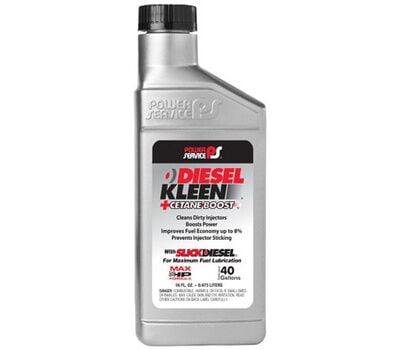
To get the best results from Power Service Diesel Kleen (the silver bottle), you need to follow two primary mixing ratios. For standard year-round maintenance, use 1 ounce of Diesel Kleen for every 3 gallons of diesel fuel. If you are looking for a maximum performance boost, increased cetane, or faster injector cleaning, use the “Boost” ratio of 1 ounce for every 1.5 gallons of fuel. These ratios translate to a 1:400 concentration for maintenance and a 1:200 concentration for heavy-duty cleaning.

Prime for Young Adults — 6 Months Free
Students and 18–24s get six months of Prime free, then half price.
Start 6 Months Free As an Amazon Associate I earn from qualifying purchases.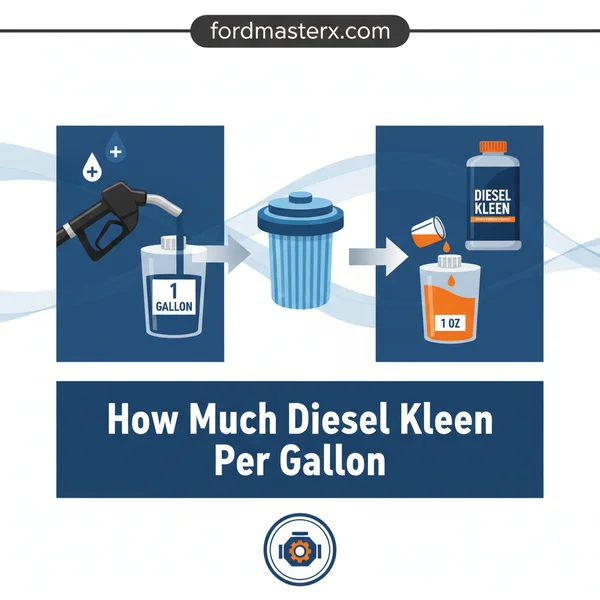
Getting these measurements right is about more than just following instructions; it directly impacts your engine’s efficiency. Using too little won’t provide enough lubrication or cetane boost to be noticeable. Conversely, over-treating your tank isn’t harmful to your engine, but it is a waste of money. By sticking to the 1:400 or 1:200 ratios, you ensure your fuel system stays clean and your combustion is as efficient as possible without overspending on additives.
Standard vs. Performance Mixing Ratios Explained
Choosing between the standard and performance ratios depends on your current engine needs and driving conditions. Power Service designs their formulas to be flexible, but most drivers will stick to the 1:400 ratio for daily driving. This “Maintenance Ratio” is sufficient to keep injectors from clogging and provides enough lubrication to protect the high-pressure fuel pump from the friction caused by Ultra-Low Sulfur Diesel (ULSD).

The Maintenance Ratio (1:400)
This is your go-to setting for every fill-up. It is designed to maintain your engine’s current performance level and prevent the buildup of power-robbing deposits. When you mix at 1 ounce per 3 gallons, you are primarily focused on keeping the system lubricated and maintaining a steady cetane rating. Use this ratio if your truck is running well and you want to keep it that way.
- Dosage: 1 oz per 3 gallons of fuel.
- Best for: Daily commuting, light towing, and routine maintenance.
- Benefit: Improves fuel economy and prevents future carbon buildup.
The Performance Boost Ratio (1:200)
The “Max Boost” ratio effectively doubles the concentration of detergents and cetane improvers in your tank. You should use 1 ounce for every 1.5 gallons of fuel when you notice a drop in power, rough idling, or if you are preparing for heavy towing. This higher concentration helps break down existing “internal diesel injector deposits” (IDID) that the standard ratio might take longer to clear. It is also the preferred mix if you are dealing with low-quality fuel from a high-volume station.
- Dosage: 1 oz per 1.5 gallons of fuel.
- Best for: Heavy towing, cleaning dirty injectors, and maximizing horsepower.
- Benefit: Adds up to 6 points of cetane and provides maximum lubrication.
Diesel Kleen Dosage Made Easy: Your Essential Action Plan
Recommended Best Deal Products


Whether you are a seasoned trucker or a first-time diesel pickup owner, understanding the precise ratio for fuel additives is the difference between a smooth-running engine and a clogged fuel system. Power Service Diesel Kleen +Cetane Boost is a powerful detergent and lubricant designed to improve fuel economy, boost cetane levels by up to 6 points, and prevent injector fouling. However, “eyeballing” the amount you pour into your tank can lead to wasted money or insufficient cleaning. This guide covers everything from calculating the perfect ounces-to-gallon ratio to the physical process of treating your fuel system safely and effectively.
Step 1: Identify Your Bottle Size and Concentration Level
What you need: Your bottle of Diesel Kleen (Silver bottle) and a clear view of the label instructions.
Instructions: Before you pour a single drop, you must identify which concentration you have purchased. Diesel Kleen typically comes in several sizes: 16-ounce, 32-ounce, 80-ounce, and 1-gallon containers. The labels change periodically, but the standard formula usually treats a specific amount of fuel. For example, a standard 32-ounce bottle is designed to treat up to 100 gallons of diesel fuel. However, if you are using the “Max HP” or “Winter” versions, these ratios can shift. Carefully read the back of the bottle to see if your specific batch is “concentrated” (1:1,500) or “standard” (1:400). Knowing your starting point prevents the most common mistake: over-treating a small tank with a high-concentration formula.
Pro Tip: Always keep the bottle in an upright position in your truck bed or garage; once the seal is broken, these bottles are notorious for leaking and the smell of diesel additive is extremely difficult to remove from upholstery.
Step 2: Determine Your Exact Fuel Tank Capacity
What you need: Vehicle owner’s manual or a smartphone for a VIN lookup.

Audible — Listen Free for 30 Days
One free credit a month and thousands of titles included.
Listen Free for 30 Days As an Amazon Associate I earn from qualifying purchases.Instructions: You cannot calculate the correct dosage if you only have a vague idea of how much fuel your tank holds. While many standard pickup trucks have 26-gallon or 34-gallon tanks, heavy-duty trucks or those with aftermarket auxiliary tanks might hold 50 to 100 gallons. Check your owner’s manual under the “Capacities” section. If you are at a gas station and aren’t sure, look at your fuel gauge. If you are “on empty” and have a 30-gallon tank, you are likely about to pump 27-28 gallons. Having this number ready is essential for the math in the next step. Never assume your tank size based on “how much it felt like” last time you filled up.
Pro Tip: Write your fuel tank capacity on a piece of masking tape and stick it inside your fuel door. This saves you from having to look it up every time you reach for the additive.
Step 3: Calculate the Maintenance vs. Performance Ratio
What you need: A calculator (or your phone) and the “1 ounce per 3 gallons” rule.
Instructions: For standard maintenance and to keep your injectors clean, the general rule for Diesel Kleen is 1 ounce of additive for every 3 gallons of diesel fuel. If you have a 30-gallon tank, you need 10 ounces. However, if you are dealing with a “stuttering” engine, cold start issues, or particularly dirty fuel, you can use the “Maximum Boost” ratio, which is 1 ounce per 1.5 gallons (or 20 ounces for a 30-gallon tank). Do not exceed the maximum boost ratio, as diesel engines are designed to run on fuel, not pure chemicals. Calculate your number before you open the bottle to ensure you don’t over-pour in the heat of the moment.
Pro Tip: If you use a 32-ounce bottle and have a 100-gallon tank, the math is easy (the whole bottle). For smaller tanks, marking the side of the bottle with a Sharpie in 5-ounce increments makes field-measuring much faster.
Step 4: Prepare the Measuring Container
What you need: A dedicated, chemical-resistant measuring cup or the graduated lines on the bottle.
Instructions: Most Diesel Kleen bottles feature a transparent “viewing strip” on the side with ounce markings. If your bottle does not have this, or if you are pouring from a large 1-gallon jug, do not pour directly into the tank. Use a dedicated plastic measuring cup that is used ONLY for automotive chemicals. Ensure the cup is clean and dry; introducing water or dirt from a dirty measuring cup into your fuel system can cause catastrophic injector failure. If you are using the viewing strip on the bottle, hold the bottle perfectly level at eye level to ensure the meniscus of the liquid aligns with your calculated dosage mark.
Pro Tip: Avoid using kitchen measuring cups or anything made of thin “disposable” plastic, as the solvents in Diesel Kleen can melt certain types of non-industrial plastics over time.
Step 5: Address Capless Fuel Systems and Funnel Use
What you need: An additive-specific funnel (especially for Ford or GM capless systems).
Instructions: Modern diesel trucks (specifically those made after 2011) often feature “capless” fuel fillers. These systems have a spring-loaded flap that only opens when a nozzle of the correct diameter is inserted. If you try to pour Diesel Kleen directly into these fillers, the liquid will simply run down the internal drain and end up on the pavement under your truck. You must use the specialized funnel that came with your vehicle (usually located under the rear seat or near the jack). Insert the funnel fully until you feel the click of the flap opening. If you have a traditional screw-cap tank, you can skip the special funnel, but a standard long-neck funnel is still recommended to prevent splashing the additive onto your vehicle’s paint.
Audible Premium Plus — Annual Membership
12 audiobook credits up front, plus the full Audible catalogue.
See Annual Plans As an Amazon Associate I earn from qualifying purchases.Pro Tip: Diesel Kleen can damage or stain automotive clear coats. If you spill any on your fender, wipe it off immediately with a wet paper towel or a quick-detailer spray.
Step 6: Add the Treatment BEFORE Pumping Fuel
What you need: Your measured Diesel Kleen and the fuel pump nozzle.
Instructions: Timing is everything when it comes to fuel additives. You should always pour the Diesel Kleen into the tank before you start the pump. Why? Because the high-pressure flow of diesel entering the tank from the nozzle creates significant turbulence. This turbulence is necessary to thoroughly mix the additive with the fuel. If you add the treatment after the tank is full, the additive (which has a different density than diesel) may sit at the bottom or top of the tank in a concentrated “slug,” rather than dispersing evenly. Insert your funnel, pour in your calculated amount, remove the funnel, and then immediately begin the fueling process.
Pro Tip: If you forgot and already filled the tank, you can still add it, but try to drive on a road with some turns or stop-and-go traffic to help the fuel slosh around and mix the additive manually.
Step 7: Finalize the Fill and Record the Data
What you need: Fuel pump and a notebook or fuel tracking app.
Instructions: Complete the fueling process until the pump clicks off. Do not “top off” the tank, as this can interfere with the vapor recovery systems in some modern diesel vehicles. Once finished, secure your fuel cap and stow your funnel in a sealed Ziploc bag to prevent the smell from permeating your cabin. It is highly recommended to record the date, the amount of Diesel Kleen added, and your current mileage. This allows you to track whether the additive is actually improving your MPG (Miles Per Gallon) over time. Most users see a 5-8% increase in efficiency, but you won’t know for sure unless you keep a log.
Pro Tip: Keep a pair of disposable nitrile gloves in your fueling kit. Diesel Kleen has a very distinct, pungent chemical odor that will stay on your skin for hours even after washing with soap.
✅ Final Checklist
- Verified the concentration ratio on the specific bottle of Diesel Kleen being used.
- Calculated the dosage based on the actual gallons being added, not just a guess.
- Used a funnel to bypass the internal flap (for capless systems) or prevent spills.
- Poured the additive into the tank prior to inserting the fuel nozzle.
- Wiped away any drips from the vehicle’s paint or the fuel door area.
Important Notes:
- Safety Warning: Diesel Kleen is highly flammable and contains petroleum distillates. Keep away from open flames and do not smoke while treating your fuel.
- Professional Advice: If your engine is throwing a “Fuel Rail Pressure” code or experiencing severe “limp mode,” an additive may not be enough; consult a diesel mechanic to check for pump or injector failure.
- Estimated Time: Adding the treatment adds approximately 2-3 minutes to your standard fueling stop.
- Estimated Cost: Depending on the bottle size, treating your fuel costs between $0.08 and $0.15 per treated gallon.
Diesel Kleen Dosage Chart for Common Truck Tank Sizes
Doing math at the gas pump is a hassle. To make things easier, you should memorize the dosage for your specific tank size or keep a small cheat sheet in your glove box. Most modern diesel pickups have tanks ranging from 26 to 50 gallons. Knowing exactly how many ounces to pour before you start the pump ensures a perfect mix every time.
Quick Reference Table for Common Tanks
The following measurements are rounded to the nearest ounce for practical use. For the most accurate mix, always pour the additive into the tank before you pump the fuel. This allows the incoming stream of diesel to thoroughly mix the Diesel Kleen throughout the tank.
- 26-Gallon Tank (Standard Light Duty): Use 9 oz for maintenance or 17 oz for a performance boost.
- 34-Gallon Tank (Typical 3/4 Ton Truck): Use 11 oz for maintenance or 23 oz for a performance boost.
- 38-Gallon Tank (Extended Range Pickup): Use 13 oz for maintenance or 25 oz for a performance boost.
- 50-Gallon Tank (Auxiliary or Transfer Tank): Use 17 oz for maintenance or 33 oz for a performance boost.
- 100-Gallon Tank (Semi-Truck or Heavy Equipment): Use 33 oz for maintenance or 67 oz for a performance boost.
If you are using the 32-ounce or 80-ounce bottles, use the clear sight-gauge on the side of the bottle to track your pour. A standard 32-ounce bottle is designed to treat up to 100 gallons at the maintenance ratio, making it the most common choice for light-duty truck owners who want to get three or four full tanks out of a single bottle.
Understanding Cetane Boost and Concentration Levels
Recommended Best Deal Products


How Cetane Affects Your Engine’s Performance
One of the primary reasons drivers reach for the silver bottle of Diesel Kleen is the Cetane boost. While the standard mixing ratio provides a significant improvement, understanding how this works can help you optimize your engine’s output. Cetane is essentially a measure of the fuel’s ignition quality. High-cetane fuel ignites faster and burns more completely than lower-rated alternatives.
When you follow the recommended dosage of Diesel Kleen, you typically see a boost of up to 6 numbers in the cetane rating. This isn’t just a vanity metric; it directly impacts how your truck feels on the road. Practical benefits of this boost include:
- Reduced Ignition Delay: The fuel burns almost instantly upon injection, leading to smoother power delivery.
- Quieter Operation: That distinctive “diesel clatter” often softens because the combustion process is more controlled.
- Faster Cold Starts: Even in mild weather, higher cetane helps the engine fire up with less strain on the battery and starter.
Finding the Sweet Spot for Power and Economy
You might be tempted to think that if a little is good, a lot is better. However, diesel engines hit a point of diminishing returns. While Power Service (the manufacturer) states that Diesel Kleen is safe to use at up to three times the recommended concentration, you won’t necessarily see triple the performance. Most experts agree that the standard 1:400 ratio is the “sweet spot” where you get the most cleaning power and lubricity for your dollar.
If you are hauling a heavy trailer through mountainous terrain, you might lean toward a slightly “richer” mix to ensure maximum combustion efficiency. On the other hand, for highway cruising in a light-duty commuter, sticking strictly to the bottle’s chart is the most cost-effective way to keep your injectors clean without wasting product.
Benefits of Consistent vs. Intermittent Additive Application
The Case for Maintenance Dosing
Modern High-Pressure Common Rail (HPCR) systems are incredibly sophisticated and run at extreme pressures. Because of this, consistency is your best friend. Using Diesel Kleen at every single fill-up creates a preventative maintenance shield. Instead of trying to “blast away” carbon deposits that have already hardened, a consistent maintenance dose keeps the injectors in a “like-new” state indefinitely.
Consistent use also ensures that your fuel system always has adequate lubricity. With today’s Ultra-Low Sulfur Diesel (ULSD), the natural lubricating properties of the fuel are often stripped away during the refining process. By adding a small amount of Diesel Kleen every time you pump, you provide constant protection for the fuel pump and injectors, which are some of the most expensive components to replace.
When to Consider a “Double Dose”
There are specific scenarios where increasing your concentration—often referred to as a “shock treatment”—makes sense. If you’ve recently purchased a used diesel vehicle with an unknown service history, or if you notice your fuel economy has taken a sudden dip, a double dose for one or two tanks can help aggressively purge deposits.
Key indicators that you might need a stronger-than-average application include:
- Excessive Smoke: Black smoke during acceleration often indicates “dirty” combustion or clogged tips.
- Rough Idling: If the truck shakes at stoplights, inconsistent fuel delivery might be the culprit.
- Poor Fuel Quality: If you are forced to fill up at a high-volume truck stop known for lower-tier fuel, adding a little extra “insurance” to the tank is a smart move.
Conclusion
Getting the Diesel Kleen mixing ratio right is the simplest way to ensure your engine runs cleaner, quieter, and longer. While the 1:400 ratio is the standard rule of thumb, remembering that one ounce treats about three gallons of fuel makes the math easy at the pump. Whether you are looking for a performance boost through increased cetane or simply want to protect your expensive injectors from the dry nature of modern ULSD, consistency is the key to success.
Your next steps are simple: grab a dedicated measuring bottle to keep in your door pocket and check your owner’s manual for your exact fuel tank capacity. By taking these small steps now, you’ll save yourself from costly repairs and sluggish performance down the road. Keep your fuel clean, and your diesel will keep working for you!
❓ Frequently Asked Questions
What is the standard mixing ratio for Power Service Diesel Kleen?
The standard maintenance ratio is 1:400. This translates to roughly 1 ounce of Diesel Kleen for every 3.125 gallons of diesel fuel, which is the baseline for cleaning injectors and adding lubricity.
When should I use the ‘Performance’ or double-dose ratio?
You should use the 1:200 ratio (1 ounce per 1.5 gallons) when you need a maximum cetane boost of up to 6 points or when cleaning severely clogged fuel injectors. This higher concentration provides better throttle response and power.
How much Diesel Kleen do I need for a 34-gallon fuel tank?
For a standard 34-gallon tank, you should add approximately 11 ounces of Diesel Kleen. If you are looking for the maximum performance boost, you should increase that amount to roughly 22 ounces.
Is it safe to use Diesel Kleen in every tank of fuel?
Yes, Diesel Kleen +Cetane Boost is designed for year-round use in every tank. It is fully compliant with Ultra Low Sulfur Diesel (ULSD) requirements and safe for all diesel engines and exhaust aftertreatment systems (DPF).
How many gallons does a 32-ounce bottle of Diesel Kleen treat?
A standard 32-ounce ‘Silver’ bottle is formulated to treat up to 100 gallons of fuel for standard maintenance. If you are aiming for the maximum cetane boost, the same bottle will treat 50 gallons.
Does the mixing ratio change depending on the season?
The mixing ratio for the Silver bottle (Diesel Kleen) remains the same year-round for cleaning and cetane. However, in winter, you should switch to the White bottle (Diesel Fuel Supplement +Cetane Boost) to prevent gelling, though ratios are often similar.