Ford 351 Windsor (5.8L) Firing Order & Cylinder Diagram

The firing order for the Ford 351 Windsor (5.8L) V8 engine is 1-3-7-2-6-5-4-8. It is essential to remember that the distributor rotates in a counter-clockwise direction and the cylinders are numbered 1-4 on the passenger side and 5-8 on the driver side.
🎯 Key Takeaways
Recommended Best Deal Products


- The standard 351 Windsor firing order is 1-3-7-2-6-5-4-8.
- The distributor rotates in a counter-clockwise direction.
- Cylinder 1 is located at the front of the passenger side.
- The 351W order differs from the standard non-HO 302/289.
- Proper wire routing prevents cross-firing between adjacent cylinders.
The firing order for a Ford 351 Windsor (5.8L) engine is 1-3-7-2-6-5-4-8. If you are working on a classic truck, a Bronco, or a vintage Mustang, getting this sequence correct is the difference between a smooth-running V8 and a non-starting engine that backfires through the intake. It is important to note that the 351 Windsor uses a specific firing order that differs from the standard early Ford 302. Mixing these up is a common mistake that leads to poor performance and potential engine damage.

Prime for Young Adults — 6 Months Free
Students and 18–24s get six months of Prime free, then half price.
Start 6 Months Free As an Amazon Associate I earn from qualifying purchases.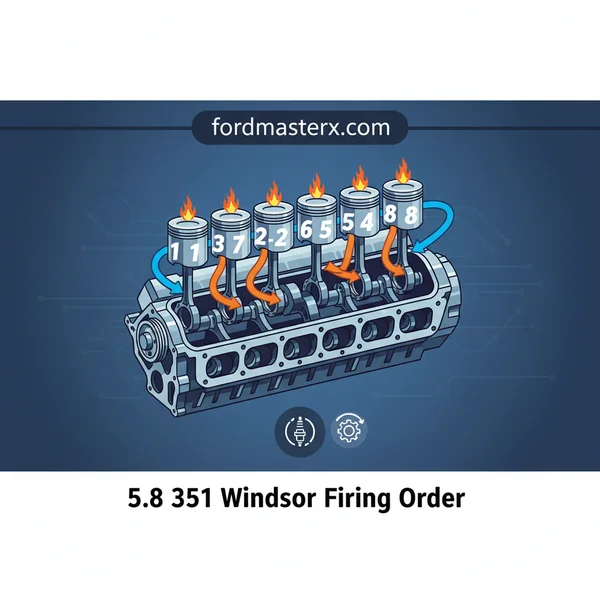
Understanding this sequence matters practically because it dictates the timing of the spark and the balance of the internal rotating assembly. When you replace your spark plug wires or pull the distributor during a rebuild, you must ensure the wires follow the 1-3-7-2-6-5-4-8 path in a counter-clockwise direction. This guide will help you map out your cylinders and distributor cap so you can get your 5.8L back on the road with confidence.
Understanding the 351 Windsor Cylinder Numbering System
Before you can route your spark plug wires, you must correctly identify the cylinders on the engine block. Ford uses a straightforward numbering system, but it differs from Chevrolet or Chrysler. On a Ford 351 Windsor, the cylinders are numbered sequentially from front to back, starting on the passenger side of the vehicle. If you are standing at the front of the vehicle looking at the engine, your front-left (the engine’s front-right) is where you begin.
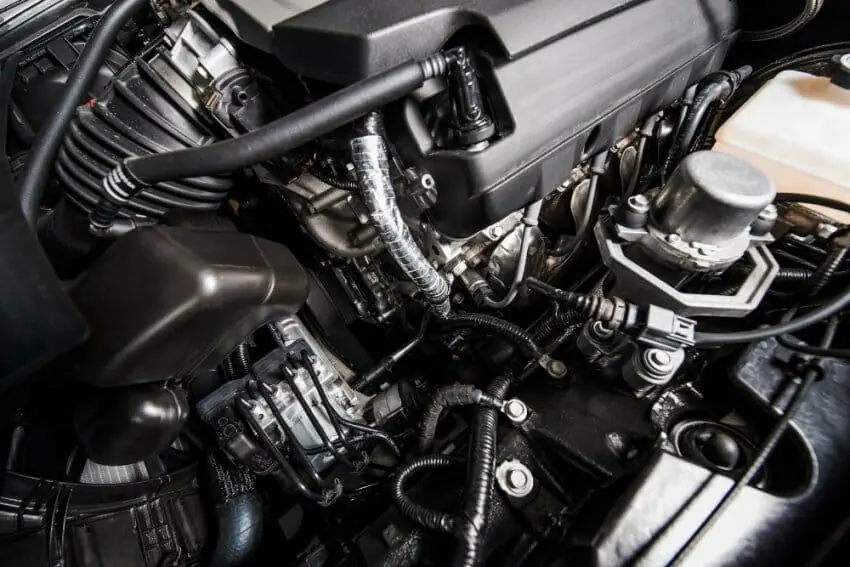
The cylinder banks are organized as follows:
- Passenger Side (Bank 1): Cylinders 1, 2, 3, and 4. Cylinder 1 is at the very front near the radiator, and cylinder 4 is at the back near the firewall.
- Driver Side (Bank 2): Cylinders 5, 6, 7, and 8. Cylinder 5 is at the very front near the radiator, and cylinder 8 is at the back near the firewall.
Identifying the Front-to-Back Layout
To ensure you have the right starting point, look at the engine from the radiator. The cylinder furthest forward on the engine block is always Cylinder 1. Because of the way the crankshaft is designed, the passenger side bank sits slightly further forward than the driver side bank. This offset is a physical giveaway. Always double-check your wire lengths, as the wires for cylinders 4 and 8 will naturally be the longest since they reach the back of the engine block near the transmission bellhousing.
Common Pitfalls in Numbering
Do not assume the cylinders “criss-cross” or alternate from side to side. Many hobbyists coming from a Chevy background expect the cylinders to be numbered 1-3-5-7 on one side and 2-4-6-8 on the other. This is not how the 351 Windsor works. If you number them incorrectly, your firing order will be physically impossible to plug in, and the engine will fail to run. Stick to the 1-4 (Passenger) and 5-8 (Driver) rule for every 5.8L Windsor build.
Distributor Rotation and Spark Plug Wire Orientation
Once you have identified the cylinders on the block, you need to focus on the distributor cap. The distributor is the “brain” that sends electricity to each spark plug at the exact right micro-second. On a 351 Windsor, the distributor is located at the front of the engine block, just behind the water pump and thermostat housing. This makes it easy to access, but it also makes it easy to accidentally reverse the wiring.
The most critical piece of information for the distributor is the direction of rotation. On a 351 Windsor (and the 302/5.0L), the distributor rotor spins counter-clockwise. If you attempt to wire the cap in a clockwise direction, the engine will not start. The spark will be sent to the wrong cylinder at the wrong time during the combustion cycle.
Locating the Number One Terminal
To begin the wiring process, you must find the Number 1 terminal on the distributor cap. While there is no universal “factory” position because the distributor can be dropped in at different angles, there is usually a small “1” or a mark molded into the plastic of the cap. If there is no mark, you must find Top Dead Center (TDC) for cylinder 1 on the compression stroke. Wherever the rotor points at that moment is your Number 1 terminal.
Use these steps to orient your wires correctly:

Audible — Listen Free for 30 Days
One free credit a month and thousands of titles included.
Listen Free for 30 Days As an Amazon Associate I earn from qualifying purchases.- Step 1: Identify the Number 1 terminal on the cap and run a wire to Cylinder 1 (front passenger side).
- Step 2: Move counter-clockwise to the next terminal on the cap. This is the wire for Cylinder 3.
- Step 3: Continue counter-clockwise to the next terminal for Cylinder 7.
- Step 4: Follow the sequence: next is 2, then 6, then 5, then 4, and finally 8.
Spacing and Wire Management
When routing these wires, pay close attention to cylinders 7 and 8. In the 1-3-7-2-6-5-4-8 firing order, cylinders 7 and 8 are at the end of the sequence but sit right next to each other on the driver side bank. If these two wires are run too close together for a long distance, they can suffer from “cross-fire” or inductive interference. This causes a misfire that is difficult to diagnose. Use wire looms or separators to keep the wires for 7 and 8 from touching each other. Ensuring a clean path not only looks professional but prevents phantom engine stumbles under heavy load.
Comparing 351 Windsor vs. 302 and Cleveland Firing Orders
One of the most frequent points of confusion for Ford owners is the difference between the 351 Windsor and its smaller sibling, the 302 (5.0L). While these engines share many external features, their internal architecture dictates a different rhythm. Using the wrong sequence is a common mistake that can lead to hours of unnecessary troubleshooting.

The 351W vs. Standard 302 Confusion
A standard Ford 302 engine typically uses a 1-5-4-2-6-3-7-8 firing order. However, the 351 Windsor uses the 1-3-7-2-6-5-4-8 sequence. If you accidentally wire a 351W with a standard 302 order, the engine will likely struggle to stay running, if it starts at all. It is worth noting that the later 5.0L HO (High Output) engines, like those found in the Mustang Fox Body, actually adopted the 351W firing order to reduce stress on the main bearings. Always check your specific camshaft specifications if you are running an aftermarket setup, as the cam ultimately determines which order you must follow.
Comparing the 351 Windsor and 351 Cleveland
While the Windsor and Cleveland are entirely different engine families, they do share one major trait: they use the exact same firing order. This is a rare moment of consistency in the Ford small-block world. Despite this similarity, the physical layout of the engines differs, particularly the cooling passages and cylinder head bolts, so never assume other parts are cross-compatible.
- 351 Windsor: Follows 1-3-7-2-6-5-4-8. Known for its 9.5-inch deck height.
- 351 Cleveland: Follows 1-3-7-2-6-5-4-8. Part of the 335 engine series with distinct canted-valve heads.
- Standard 302: Follows 1-5-4-2-6-3-7-8. The most common source of “wrong wire” errors.
Common Symptoms of Incorrect Firing Order and Cross-Firing
If the firing order is off by even two wires, your 5.8L engine will let you know immediately. The symptoms are rarely subtle and usually involve significant noise and vibration. Recognizing these signs early can prevent damage to your valvetrain or exhaust system.
Engine Backfiring and Performance Issues
When a spark plug fires while an intake valve is open, or when fuel hasn’t been properly compressed, you will experience backfiring. This often manifests as a loud “pop” through the carburetor or EFI throttle body. Other common symptoms include:
- Violent Shaking: The engine will feel unbalanced because the power strokes are not occurring at the correct intervals.
- Lack of Power: Even if the engine stays running, it will feel incredibly sluggish and may die under load.
- Excessive Unburnt Fuel: You might smell raw gasoline coming from the exhaust, as certain cylinders are getting spark when the exhaust valve is already open.
The Danger of Spark Plug Wire Cross-Firing
Even if you have the wires in the correct order, you might suffer from “cross-firing.” This happens when the high-voltage current from one wire jumps to an adjacent wire via electromagnetic induction. On the 351 Windsor, cylinders 7 and 8 are notorious for this. Because they fire consecutively (7 then 8) and their wires often run parallel to each other on the driver’s side of the engine, the spark for cylinder 7 can “induce” a premature spark in cylinder 8.
Practical Tip: To prevent this, always use high-quality wire looms or separators. Avoid bundling the wires for cylinders 7 and 8 tightly together with zip ties. Crossing them at a 90-degree angle rather than running them parallel can also eliminate this “ghost” misfire.
Conclusion
Getting the firing order right on your Ford 351 Windsor is essential for engine longevity and performance. By sticking to the 1-3-7-2-6-5-4-8 sequence and ensuring your wires are routed neatly to avoid cross-firing, you can keep your 5.8L running smoothly for years. Remember that while the 351W shares its timing with the Cleveland and 5.0L HO, it is distinct from the standard 302.
Your next step should be a quick visual inspection of your distributor cap to ensure every wire matches our diagram. If you’re still noticing a rough idle, check your wire separators to make sure cylinders 7 and 8 aren’t interfering with each other. A little bit of organization in your engine bay goes a long way in maintaining that classic Ford power!
Audible Premium Plus — Annual Membership
12 audiobook credits up front, plus the full Audible catalogue.
See Annual Plans As an Amazon Associate I earn from qualifying purchases.❓ Frequently Asked Questions
Why is it important to distinguish between Windsor and early 302 firing orders?
Using the 1-5-4-2-6-3-7-8 order on a 351W will cause severe backfiring and potential engine damage because the camshaft is ground specifically for the 1-3-7 sequence.
How are the cylinder banks numbered on a Ford 5.8L V8?
Ford numbers cylinders 1-2-3-4 down the passenger side (front to back) and 5-6-7-8 down the driver side (front to back).
What happens if I route the spark plug wires too close together?
Parallel routing of wires for cylinders 7 and 8 can lead to ‘cross-firing’ or induction firing, causing a noticeable misfire or engine knock.
Does the 351 Windsor firing order ever change with aftermarket cams?
While some custom racing cams might use a ‘4/7 swap,’ 99% of 351W builds and street performance cams stick to the factory 1-3-7-2-6-5-4-8 sequence.
How can I verify the distributor rotation without starting the engine?
Remove the distributor cap and have an assistant briefly crank the engine; you will observe the rotor turning counter-clockwise.
Which wire on the distributor cap corresponds to cylinder #1?
Usually, the cap is marked with a ‘1’ or an arrow; if not, you must find Top Dead Center (TDC) on the compression stroke for cylinder 1 to identify the correct terminal.