How to Test a MAP Sensor with a Multimeter: Professional Guide

To accurately test a MAP sensor, you must verify the 5V reference signal, a clean ground, and a variable signal voltage that responds to vacuum changes. A healthy sensor will show a smooth voltage drop as vacuum increases, confirming it can accurately report engine load to the PCM.
🎯 Key Takeaways


- Takeaway 1:Confirm the PCM is sending a steady 5-volt reference signal.
- Takeaway 2:Ensure the ground wire has minimal resistance to the battery negative.
- Takeaway 3:Monitor signal voltage for smooth transitions during vacuum changes.
- Takeaway 4:Identify if your sensor is voltage-based or frequency-based (common in Fords).
- Takeaway 5:Use back-probes to maintain the integrity of weather-proof connectors.
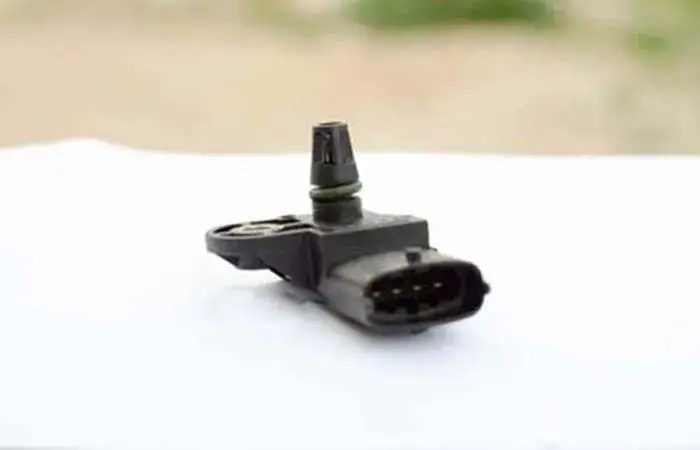
Testing your MAP (Manifold Absolute Pressure) sensor requires checking three specific circuits: the 5V reference, the ground, and the signal wire. If your engine is stumbling, hesitating, or throwing a P0107 or P0108 code, a digital multimeter (DMM) is the most effective tool to pinpoint whether the sensor itself is faulty or if you have a wiring issue. By measuring the signal response against engine vacuum, you can confirm if the sensor is accurately reporting load to the ECU.

Practically, this test saves you from “parts cannon” diagnostics where you replace expensive sensors unnecessarily. A MAP sensor tells the computer how much air is entering the engine by measuring the pressure difference between the intake manifold and the outside atmosphere. If the sensor sends the wrong voltage, the ECU will deliver too much or too little fuel, leading to poor gas mileage, failed emissions, or a rough idle. Mastering these multimeter checks ensures you only replace components when they are truly broken.
Understanding Voltage vs. Frequency Based MAP Sensors


Identifying Your Sensor Type
Before you begin your measurements, you must determine if your sensor outputs an analog DC voltage or a digital frequency signal. Most modern vehicles—including those from GM, Chrysler, and many imports—use analog sensors. These sensors vary their output voltage based on the amount of vacuum present in the manifold. If you are working on an older Ford vehicle or certain European models, you likely have a frequency-based sensor. These do not change voltage; instead, they change the cycles per second (Hertz) of the signal.

Measuring Signal Output Differences
Using the wrong multimeter setting will lead to a false diagnosis. For an analog sensor, you will set your multimeter to DC Volts. For a frequency-based sensor, you must use a multimeter with a Hertz (Hz) function. If you try to read a frequency sensor in DC mode, you will likely see a steady 2.5V that never changes, which might lead you to believe the sensor is “stuck” when it is actually functioning perfectly. Here is how to distinguish them during a test:
- Analog (Voltage) Sensors: These usually have three wires. The signal wire will show a linear change in voltage (typically between 0.5V and 4.8V) as vacuum increases or decreases.
- Digital (Frequency) Sensors: These also typically use three wires, but the signal is a square wave. At atmospheric pressure (engine off), they usually output around 150 Hz. At idle (high vacuum), the frequency drops to approximately 100 Hz.
- MAP/IAT Combos: Some modern vehicles integrate the Intake Air Temperature (IAT) sensor into the MAP housing, resulting in four or five wires. You must identify the specific MAP signal wire using a wiring diagram to avoid testing the temperature circuit by mistake.
The Ultimate MAP Sensor Testing Walkthrough


The Manifold Absolute Pressure (MAP) sensor is a critical component of your vehicle’s electronic control system, providing the engine computer (ECU) with real-time data about air pressure in the intake manifold. This information allows the ECU to calculate air density and determine the perfect air-fuel ratio for efficient combustion. When this sensor fails, you might experience rough idling, poor fuel economy, or a “Check Engine” light. Following this detailed guide will help you determine if your sensor is truly faulty or if the issue lies elsewhere, potentially saving you hundreds of dollars in unnecessary part replacements.
Step 1: Preparation and Tool Gathering
What you need: A digital multimeter (DMM), a set of back-probing pins or thin paperclips, your vehicle’s service manual (or a wiring diagram), and basic hand tools to access the sensor.
Instructions: Before you begin, ensure your vehicle is parked on a flat surface with the engine off and the parking brake engaged. Locate your MAP sensor; it is usually mounted directly on the intake manifold or connected to it via a thick rubber vacuum hose. Consult your service manual to identify the three wires typically found on a MAP sensor: the 5-volt reference wire, the ground wire, and the signal wire. This identification is crucial because testing the wrong wire can yield misleading results or potentially damage the ECU. Clean the area around the sensor to ensure a good connection and clear visibility of the components.
Pro Tip: Always use back-probing pins rather than piercing the wire insulation. Piercing wires creates an entry point for moisture, which leads to internal corrosion and electrical gremlins months down the road.
Step 2: Visual and Vacuum Line Inspection
What you need: A flashlight and a pair of pliers (if hose clamps are present).
Instructions: Many “failed” MAP sensors are actually perfectly functional sensors reacting to a vacuum leak. Inspect the rubber hose connecting the sensor to the manifold for cracks, dry rot, or collapses. Ensure the connection is tight and that the port on the manifold is not clogged with carbon deposits. If the sensor is mounted directly to the manifold, check the O-ring or gasket for signs of leaks. Even a pinhole leak can cause the sensor to report incorrect pressure readings, triggering a trouble code. Gently tug on the wiring harness to ensure the pins are seated firmly in the connector and that there is no green corrosion visible on the metal terminals.
Pro Tip: If you find a cracked vacuum line, replace it immediately and re-test the car before proceeding with electrical tests. Often, a $2 piece of hose is the entire solution.
Step 3: Verifying the Reference Voltage
What you need: Digital multimeter set to “DC Voltage” (20V range).
Instructions: Turn the ignition key to the “On” or “Run” position, but do not start the engine. This powers up the ECU. Connect the black lead of your multimeter to a known good chassis ground or the negative battery terminal. Using a back-probing pin, touch the red lead to the terminal identified as the “Reference” wire in your wiring diagram. You should see a steady reading of approximately 5.0 volts (usually between 4.8V and 5.2V). This confirms that the ECU is sending the proper power supply to the sensor. If you see 0V or 12V, you likely have a wiring short or a blown fuse rather than a bad MAP sensor.
Pro Tip: If the reference voltage is low (e.g., 3.5V), unplug the sensor and check the voltage again. If it jumps back to 5V, the sensor is shorted internally and must be replaced.
Step 4: Testing the Sensor Ground
What you need: Digital multimeter set to “DC Voltage” or “Ohms” (Resistance).
Instructions: With the ignition still in the “On” position, move your red multimeter lead to the positive battery terminal and the black lead to the “Ground” wire terminal on the MAP sensor connector. You should see battery voltage (approximately 12.4V to 12.6V). Alternatively, you can use the resistance setting; with the ignition off, measure the resistance between the ground wire and the negative battery terminal. The reading should be very low, typically under 0.2 Ohms. A high resistance reading indicates a corroded ground connection or a frayed wire, which will cause the sensor to “float” and provide erratic signal data to the engine computer.
Pro Tip: When testing grounds, always perform a voltage drop test while the circuit is loaded if possible, as this is the most accurate way to find weak connections that look fine during a simple continuity test.
Step 5: Establishing the Baseline Signal (KOEO)
What you need: Digital multimeter set to “DC Voltage.”
Instructions: With the ignition key “On” and the engine “Off” (KOEO), the MAP sensor is measuring atmospheric pressure. Back-probe the signal wire with your red lead and keep the black lead on a good ground. In most vehicles at sea level, the signal should be between 4.0V and 5.0V. If you are at a high altitude (like in the mountains), this voltage will be lower, likely between 3.0V and 4.0V. Check your specific vehicle’s specifications to see what the voltage should be for your current elevation. If the signal voltage is stuck at 0V or 5V regardless of the environment, the internal diaphragm of the sensor is likely ruptured or the circuit is dead.
Pro Tip: Compare your reading to a BARO (Barometric Pressure) sensor if your scan tool allows it; the two readings should be nearly identical when the engine is not running.
Step 6: Monitoring Signal Response at Idle
What you need: A helper to start the engine and your multimeter.
Instructions: Keep the multimeter connected to the signal wire and start the engine. As the engine starts and begins to idle, the intake manifold develops vacuum. This drop in pressure should cause the signal voltage to drop significantly. On a healthy engine at idle, you should see the voltage fall from the baseline (4.5V range) down to somewhere between 1.0V and 2.0V. The reading should be relatively stable. If the voltage remains high (near 4V or 5V) while the engine is idling, the sensor is not “seeing” the vacuum, which usually indicates a total sensor failure or a completely blocked vacuum port.
Pro Tip: If the voltage fluctuates wildly at idle, it may not be a sensor issue, but rather a sign of a mechanical engine problem like a misfire or a vacuum leak at a specific cylinder.
Step 7: The Dynamic Sweep Test
What you need: Multimeter and a hand-held vacuum pump (optional but recommended).
Instructions: To truly verify the sensor’s health, you need to see if it responds linearly to changes in pressure. If you have a hand-held vacuum pump, disconnect the vacuum hose from the manifold and attach it to the pump. With the key on, apply vacuum slowly. You should see the voltage drop smoothly and consistently as you increase the vacuum. If you don’t have a pump, you can perform a “snap-throttle” test. While watching the multimeter, quickly snap the throttle open and closed. The voltage should instantly jump toward 4.5V (atmospheric pressure) when the throttle opens and then dip below the idle voltage (down to 0.5V-0.8V) as the throttle closes and the engine decels before returning to the idle baseline.
Pro Tip: Look for “dead spots” or glitches in the voltage sweep. If the voltage “jumps” or drops to zero momentarily during the transition, the sensor’s internal potentiometer is worn out.
Step 8: Final Interpretation and Reassembly
What you need: Electrical contact cleaner and your tools.
Instructions: Analyze your gathered data. If the reference voltage (5V) and ground are present, but the signal voltage does not change during the sweep test or stays at a fixed value, the sensor is defective. If the sensor passed all tests, the problem likely lies in the wiring harness between the sensor and the ECU, or perhaps the ECU itself. If you are replacing the sensor, clean the electrical connector with a quick-dry electrical contact cleaner before plugging it into the new unit. Clear any stored Diagnostic Trouble Codes (DTCs) with an OBD-II scanner and take the vehicle for a test drive to ensure the “Check Engine” light remains off.
Pro Tip: When installing a new sensor, ensure the vacuum hose is routed away from hot exhaust components or moving belts to prevent future failures.
✅ Final Checklist
- Verified 5V reference voltage is steady with the key in the “On” position.
- Confirmed ground circuit has minimal resistance (less than 0.2 Ohms).
- Observed signal voltage dropping significantly between engine off (high voltage) and engine idle (low voltage).
- Performed a sweep test to ensure voltage changes are smooth without erratic jumps.
- Inspected and confirmed all vacuum lines are airtight and free of debris.
Important Notes:
- Safety: Always stay clear of moving engine parts (fans, belts) when performing tests while the engine is running.
- Professional Help: If you find that the sensor is receiving no power (0V reference) but the fuses are good, seek a professional technician, as this may indicate a failed Engine Control Unit (ECU).
- Estimated Time: 30 to 45 minutes.
- Cost Range: $0 (testing only) to $50–$150 if sensor replacement is required.
Critical Voltage Specifications for Common MAP Sensors
The 5-Volt Reference and Ground Standard
The first step in any MAP test is verifying that the sensor is actually powered. The engine control module (ECM) sends a precise 5-volt reference signal to the sensor. If this voltage is low (e.g., 4.2V) or high (e.g., 5.5V), the MAP sensor’s output will be skewed, causing engine performance issues. You must also check the ground circuit; a “floating” ground with high resistance can cause the signal voltage to drift upward. Before checking the signal, ensure your multimeter reads exactly 5.0V (or very close) between the reference and ground pins with the Key On, Engine Off (KOEO).
Expected Voltage Chart for Analog Sensors
When testing an analog sensor, the voltage is inversely proportional to the vacuum level. This means when vacuum is high (like at idle), the voltage is low. When vacuum is low (like at Wide Open Throttle), the voltage is high. Use the following data points to interpret your multimeter readings during the test:
- Sea Level (Atmospheric Pressure): With the key on but the engine off, the sensor should read approximately 4.5V to 4.8V. This represents zero vacuum.
- Normal Idle (High Vacuum): Once the engine is started and idling smoothly, the vacuum increases significantly. Your multimeter should show a drop to 1.0V to 1.5V.
- Deceleration (Maximum Vacuum): If you “snap” the throttle and then let it close, the vacuum briefly spikes. The voltage should momentarily dip below 1.0V.
- Full Throttle (Minimum Vacuum): Under heavy load or a quick throttle snap, vacuum disappears. The voltage should rapidly jump back up toward 4.5V.
Frequency-Based Data Points (Ford/Specialty)
If your multimeter is set to Hertz for a digital sensor, the values will look different, but the logic remains the same. The frequency changes based on the pressure inside the manifold. For a standard Ford 3-pin MAP sensor, look for these specific readings:
- Engine Off (0″ Vacuum): Approximately 152 Hz to 160 Hz.
- Idle (20″ Vacuum): Approximately 102 Hz to 109 Hz.
- Linearity Check: The frequency should change smoothly as you apply vacuum with a hand pump. Any “jumps” or “dead spots” in the Hertz reading indicate a failing internal diaphragm or circuit board within the sensor.
Interpreting Multimeter Readings: Normal vs. Faulty Patterns
Once you have your multimeter probes in place, the numbers on the screen tell a story about your engine’s health. Interpreting these signals correctly is the difference between a successful repair and throwing money at unnecessary parts. A healthy MAP sensor provides a linear, predictable response to pressure changes.
Understanding the Voltage Sweep
In most standard analog MAP sensors, the relationship between vacuum and voltage is inverse. When the engine is at idle, the vacuum is high, which results in a low voltage signal (typically between 1.0 and 1.5 volts). As you open the throttle and the vacuum drops, the voltage should rise smoothly toward 4.5 to 5.0 volts.
- The “Linear” Test: If you increase RPM slowly, the voltage should climb without any sudden skips or “dead spots.” If the numbers jump erratically, the internal ceramic silicon chip is likely failing.
- The WOT (Wide Open Throttle) Spike: A quick snap of the throttle should result in an almost instantaneous voltage jump. A “lazy” sensor that takes a second to react will cause significant engine hesitation during acceleration.
- Frequency-Based Variations: Note that some vehicles (specifically older Ford models) use frequency-based sensors. Instead of a voltage change, you would set your multimeter to Hertz (Hz) and look for a range between 90Hz and 160Hz.
Identifying Red Flags and “Dead” Sensors
If your multimeter displays a constant 0.0V or a steady 5.0V regardless of engine load, you aren’t just looking at a bad sensor; you are likely looking at a wiring issue. A steady 5.0V reading often indicates an “open” in the ground circuit, while a 0.0V reading suggests the sensor isn’t receiving its 5V reference signal from the ECU.
Another common failure pattern is voltage “flatlining.” This happens when the sensor responds to low vacuum but gets stuck at a certain point (e.g., it never goes above 3.0V). This effectively “blinds” the ECU to high-load situations, leading to dangerous lean-run conditions and potential engine knock.
Tools and Safety Precautions for Automotive Electrical Testing
Automotive electrical systems are sensitive. While a MAP sensor test is relatively straightforward, using the wrong equipment or taking shortcuts can lead to expensive “fried” components, including the Power Control Module (PCM).
Essential Gear for Precision
Don’t reach for an old analog “needle” style multimeter for this job. Modern vehicles require a High-Impedance Digital Multimeter (DMM). High-impedance meters ensure that the tool itself doesn’t draw too much current from the circuit, which can provide false readings or damage sensitive electronics.
- Back-Probe Pins: Never pierce the insulation of a wire. Piercing creates a path for moisture and road salt, leading to “green crusties” (corrosion) inside the wire weeks later. Use thin back-probe pins to slide alongside the wire into the back of the connector.
- Handheld Vacuum Pump: While you can test with the engine running, a manual vacuum pump allows you to test the sensor in a controlled environment without engine noise or vibration interference.
- Alligator Clip Leads: These keep your hands free so you can focus on the vacuum pump or throttle linkage rather than trying to hold probes steady on tiny terminals.
Staying Safe Under the Hood
Safety is about protecting both yourself and the vehicle’s computer. When testing with the engine running, be hyper-aware of moving parts like the cooling fan and serpentine belt. Loose clothing or dangling multimeter leads can be pulled into the pulley system in a split second.
Pro Tip: Always identify your wires before probing. Touching your 5V reference wire directly to a ground source can cause a short circuit that may blow a hidden fuse or damage the PCM’s internal voltage regulator. Always double-check your color codes against a wiring diagram for your specific year, make, and model before applying power.
Conclusion
Testing a MAP sensor with a multimeter is one of the most effective ways to diagnose a rough-running engine without relying solely on expensive scan tools. By understanding how to interpret voltage sweeps and recognizing the signatures of a failing sensor, you can pinpoint the exact cause of your performance issues. Remember that accuracy depends on using the right high-impedance tools and prioritizing wire integrity through back-probing rather than piercing.
Next Steps: If your sensor failed the voltage sweep test, check your vacuum hoses for cracks before buying a replacement. A leaking hose often mimics a faulty sensor! If the hoses are clear, it’s time to swap in a high-quality OEM replacement. Grab your multimeter and get under the hood—you’ve got this!
❓ Frequently Asked Questions
What symptoms indicate a failing MAP sensor?
Typical symptoms include a rough idle, engine stalling, poor fuel economy, and a rich or lean exhaust smell. You may also see OBD-II codes such as P0107 or P0108 on your diagnostic scanner.
What is the difference between testing a 3-wire and 4-wire MAP sensor?
A 3-wire sensor features power, ground, and signal, whereas a 4-wire sensor typically incorporates an Intake Air Temperature (IAT) sensor. You must identify the correct signal wire using a wiring diagram to avoid testing the wrong circuit.
How do I know if my MAP sensor uses frequency instead of voltage?
Most GM and Chrysler vehicles use voltage-based sensors, while many older Ford vehicles use frequency-based sensors. If your DC voltage reading doesn’t change with vacuum but the engine runs, switch your meter to Hertz (Hz) to check for a signal.
What is a normal voltage reading at sea level with the engine off?
With the ignition on and engine off, a voltage-based sensor should read between 4.5V and 4.8V at sea level. This reading represents atmospheric pressure before any engine vacuum is applied.
Can a vacuum leak cause a false MAP sensor failure reading?
Yes, a vacuum leak or a clogged vacuum port on the sensor will cause the sensor to report incorrect data to the PCM. Always inspect the vacuum hoses for cracks or blockages before replacing the sensor itself.
Why is back-probing preferred over piercing wires?
Back-probing involves sliding a thin probe into the back of the connector, which preserves the wire’s insulation. Piercing wires can lead to internal corrosion and future electrical failures due to moisture entering the copper strands.