1993 Ford F150 Rear Bumpers | Styleside & Flareside Fits

Selecting the right 1993 Ford F-150 rear bumper depends primarily on identifying your bed style, as Styleside and Flareside models use different mounting widths. Most high-quality replacements feature heavy-duty steel construction and are rated for towing up to 5,000 lbs with integrated hitch ball holes. Ensure your chosen kit includes license plate light assemblies for a complete street-legal restoration.
🎯 Key Takeaways


- Confirm if you have a Styleside (straight) or Flareside (step-side) bed before purchasing.
- Ensure the bumper fits the 1992-1996 ‘OBS’ body style frame rail dimensions.
- Look for 14-gauge steel or thicker for maximum durability and impact protection.
- Verify if the bumper includes a Class III tow rating for utility needs.
- Check that license plate light cutouts match your existing wiring harness.
Finding a replacement rear bumper for your 1993 Ford F-150 is a straightforward process once you identify your specific bed style. You generally have two choices: a Styleside or a Flareside fitment. These are not interchangeable because the frame widths and bed contours differ significantly. Most owners seek a complete “Step Bumper” assembly, which includes the steel face bar, non-slip plastic treads, and integrated license plate light housings.
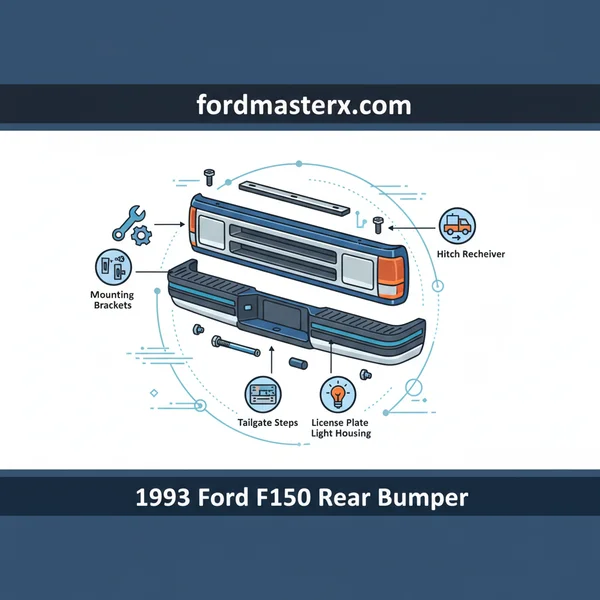
A fresh rear bumper is about more than just getting rid of an eyesore. It is a critical safety component, especially if you plan on using the integrated hitch hole for towing. A rusted or bent bumper loses its structural integrity, making it dangerous for hauling trailers or recovering stuck vehicles. Ensuring you have the correct OEM-spec replacement guarantees that the mounting brackets line up perfectly with your 1993 frame rails without the need for drilling or welding.
Styleside vs. Flareside: Identifying the Correct Fitment for Your 1993 F-150


Before you click “buy,” you must verify your truck’s bed type. This is the single most important factor for rear bumper fitment. The 1993 model year falls within the “Old Body Style” (OBS) era, and Ford utilized two distinct rear-end geometries. If you choose the wrong one, the bumper will either be too wide and hit your fenders or too narrow to bolt onto your frame brackets.

Distinguishing the Styleside from the Flareside Bed
The Styleside bed is the most common configuration for the 1993 F-150. On a Styleside, the exterior bed walls are flat and flush with the truck cab. The rear wheel wells are located inside the bed area. The bumper for this model is wider to match the full width of the truck body. In contrast, the Flareside bed features “steps” on the outside of the bed and protruding rear fenders. The Flareside bumper is noticeably narrower because it only spans the width of the tailgate area, not the outer fenders.
- Styleside Appearance: Flat exterior panels, wider bumper profile (approx. 70-74 inches).
- Flareside Appearance: Visible rear fenders, narrower bumper profile (approx. 49-54 inches).
- Interchangeability: None. Flareside bumpers will not fit Styleside trucks and vice-versa.
Mounting Bracket and Frame Considerations
The mounting brackets for a 1993 F-150 are specific to the “bricknose” and “aeronose” generations. For 1993, the frame rails typically have a 37.5-inch spacing. Most aftermarket bumpers are sold as “universal fit” for 1980-1996 F-Series trucks, but the brackets provided in the kit are what determine the final fit. When purchasing, ensure the kit includes the specific 1992-1996 mounting hardware to avoid alignment issues with the rear leaf spring hangers.
From Start to Finish: 1993 Ford F150 Rear Bumper Replacement Explained


Replacing the rear bumper on a 1993 Ford F150—part of the beloved “Old Body Style” (OBS) generation—is a common project for enthusiasts looking to restore their truck’s aesthetic or replace a rusted, sagging unit. Because these trucks are now several decades old, the hardware is often seized by rust, making a simple bolt-on job a bit more technical than it appears on paper. This guide covers everything from safely removing your oxidized factory bumper to aligning a fresh chrome or diamond-plate replacement, ensuring your truck remains functional and visually sharp for years to come.
Step 1: Inventory and Tool Preparation
What you need: A high-quality socket set (specifically 18mm, 19mm, and 3/4-inch sockets), a long breaker bar, a torque wrench, safety glasses, work gloves, and a floor jack or a sturdy set of jack stands.
Instructions: Before you turn a single bolt, park your F150 on a level concrete surface and engage the parking brake. Since the 1993 model year uses heavy-duty steel brackets, you need tools that can handle significant torque. Organize your new bumper and mounting hardware (if included) to ensure you have all the necessary carriage bolts, nuts, and washers. If your new bumper didn’t come with brackets, you will need to inspect your old ones for structural integrity; if they are thinned out by “crusty” rust, order replacement brackets before proceeding. Set up your workspace so you have ample room behind the tailgate to maneuver a 50-to-70-pound piece of steel.
Pro Tip: These bumpers are heavier than they look. If you are working solo, have a couple of Five-Gallon buckets or a floor jack ready to support the weight of the bumper while you remove the final bolts.
Step 2: Chemical Pre-treatment of Hardware
What you need: A high-grade penetrating oil (such as PB Blaster or Liquid Wrench) and a wire brush.
Instructions: On a 1993 truck, the four main mounting bolts located on the inside of the frame rails have likely been exposed to road salt, mud, and moisture for thirty years. Locate the nuts on the back of the bumper brackets where they meet the frame. Use a wire brush to scrub away loose flakes of rust from the exposed threads. Once the threads are relatively clean, liberally spray every bolt and nut with penetrating oil. For the best results, do this 24 hours in advance and apply a second coat an hour before you begin the physical labor. This simple step prevents the nightmare of a snapped bolt or a rounded-off nut, which would require a torch or a grinder to resolve.
Pro Tip: Don’t forget to spray the license plate light housings from behind; these plastic clips can become brittle and the metal screws holding them often seize up as well.
Step 3: Disconnecting the Electrical Harness
What you need: A small flathead screwdriver (optional) and a clean rag.
Instructions: Crawl under the rear of the truck and locate the wiring loom that leads to the license plate illumination lights. On the 1993 F150, these are typically simple “twist-lock” sockets. Turn the plastic sockets counter-clockwise to remove them from the bumper housing. Pull the bulbs out and inspect them; if the glass is blackened, now is the perfect time to replace them with fresh 194-style bulbs. Tuck the wiring harness up over the spare tire or the frame rail to ensure it doesn’t get pinched or stretched when the heavy bumper is lowered. If your truck has an aftermarket trailer wiring plug mounted to the bumper, unscrew it and let it hang safely out of the way.
Pro Tip: Use this opportunity to clean the electrical contacts with a bit of electronic cleaner. OBS Fords are notorious for “ghost” electrical issues caused by corroded grounds in the rear lighting harness.
Step 4: Loosening the Primary Mounting Bolts
What you need: 18mm or 19mm deep-well socket, a breaker bar, and a 2-foot pipe extension (if needed).
Instructions: The 1993 F150 rear bumper is held on by four main bolts (two per side) that go through the bumper brackets and the truck’s frame horns. Position yourself so you have good leverage and use the breaker bar to crack the nuts loose. Do not remove them entirely yet; just loosen them about three or four full turns. If the bolt head starts to spin, you may need a second wrench to hold the head on the outside of the bracket. Because the frame is C-channel, access is generally good, but you might find the spare tire gets in the way. If space is tight, lower the spare tire slightly to give your breaker bar more “swing” room.
Pro Tip: If the nut refuses to budge, apply heat with a propane torch for 60 seconds, then immediately attempt to turn it. The heat expansion often breaks the “rust weld.”
Step 5: Safe Removal of the Old Bumper
What you need: A floor jack or a helper.
Instructions: With the bolts loosened but still threaded, place a floor jack with a wooden block under the center of the bumper to take the tension off the bolts. Alternatively, have a friend hold one side while you hold the other. Carefully remove the nuts and slide the bolts out of the frame. If the bumper doesn’t move, it might be stuck to the frame due to years of dirt buildup; give it a firm upward whack with a rubber mallet. Slowly lower the jack or have your helper assist in carrying the bumper away from the vehicle. Inspect the frame horns for any significant rot or “scaling” that might prevent the new bumper from sitting flush.
Pro Tip: Check the “drop” of your bumper. Some F150s had “Step Bumpers” with different height profiles. Ensure your old brackets match the height of your new unit before you get rid of the old parts.
Step 6: Preparing the Frame and Brackets
What you need: A wire wheel or sandpaper, and some black rust-inhibiting spray paint.
Instructions: This is a step most people skip, but it is vital for the longevity of your 1993 Ford. With the bumper off, the ends of the frame rails are fully exposed. Use a wire wheel or sandpaper to grind away any surface rust on the frame. Wipe the area down with a degreaser and apply a quick coat of black rust-reformer or chassis paint. This prevents the “bleeding” of rust onto your new bumper and ensures a solid metal-to-metal connection for your mounting hardware. Allow the paint to dry for at least 20 minutes (or until it’s no longer tacky) before attempting to mount the new hardware.
Pro Tip: While the bumper is off, check the rear-most bed crossmember. These are prone to rotting out on OBS Fords, and it’s much easier to see and treat them with the bumper out of the way.
Step 7: Positioning and Hand-Tightening the New Bumper
What you need: New mounting hardware (bolts, washers, and nuts).
Instructions: Lift the new bumper into place. If you are using a jack, balance it carefully. Align the holes in the bumper brackets with the holes in the frame rails. Slide the carriage bolts through from the outside facing in (usually). Install the washers and nuts by hand. Only tighten them enough to hold the bumper’s weight; the bumper should still be able to slide up, down, left, and right with a bit of force. This “floating” state is necessary for the next step, as these trucks often have slight manufacturing variances or frame tweaks from years of hauling, and the bumper needs to be manually squared up.
Pro Tip: Look at the gap between the top of the bumper and the bottom of the tailgate. You want at least a 1/2-inch to 3/4-inch gap to ensure the tailgate doesn’t strike the bumper when opened.
Step 8: Alignment and Final Torque
What you need: A tape measure, a level, and a torque wrench.
Instructions: Close the tailgate. Measure the distance from the edge of the bumper to the edge of the truck bed on both the driver and passenger sides to ensure it is centered. Use a level to make sure the bumper isn’t “frowning” or tilted to one side. Once the alignment looks perfect, use your torque wrench to tighten the frame bolts to approximately 65–75 ft-lbs. Tighten them in a cross-pattern (top-left, bottom-right, etc.) to ensure the pressure is distributed evenly. Double-check the tailgate clearance one last time by opening it slowly to make sure it doesn’t contact the new chrome or paint.
Pro Tip: Stand back about 10 feet from the rear of the truck. Sometimes a bumper looks straight up close but appears crooked relative to the body lines of the truck from a distance.
Step 9: Electrical Reconnection and Testing
What you need: The original light sockets and bulbs.
Instructions: Take the light sockets you tucked away earlier and insert them into the new bumper’s light housings. Usually, you insert them and turn clockwise until they “click” into place. If the new bumper uses a different style of light housing, you may need to swap the plastic clips provided with the kit. Once installed, hop into the cab and turn on the parking lights. Walk to the back of the truck to verify that both license plate lights are illuminating. If they aren’t, jiggle the wires to check for a bad ground, which is common on older F-series trucks. Reattach any trailer wiring plugs using self-tapping screws or the provided mounting points on the bumper.
Pro Tip: Apply a small dab of dielectric grease to the bulb sockets. This prevents moisture from entering the housing and ensures your lights won’t flicker when driving over bumpy terrain.
✅ Final Checklist
- Verify that all four main mounting bolts are torqued to at least 65 ft-lbs.
- Check that the tailgate opens and closes fully without touching the bumper surface.
- Confirm that both license plate lights are functional and the wires are tucked away from the exhaust pipe.
- Ensure the bumper is level and centered relative to the truck bed sides.
- Test the trailer hitch/plug (if equipped) to ensure it wasn’t damaged during the swap.
Important Notes:
- Safety Warning: Always wear eye protection when working under an old truck; falling rust flakes are a significant eye hazard.
- Professional Help: If you discover that your frame horns are rusted through or bent from a previous accident, consult a body shop or welder before mounting a new bumper.
- Estimated Time: 1.5 to 3 hours, depending on the severity of the rust on the old bolts.
- Cost Range: $150–$400 for a standard replacement bumper; high-end heavy-duty winch bumpers can exceed $1,000.
Comparing Materials and Finishes: Chrome vs. Powder-Coated Black Steel
Once you know your bed size, your next decision is the finish. The finish dictates how the truck looks, but it also determines how well the bumper will resist the elements. For a 1993 model, most owners choose between a classic factory-style chrome or a modern utility-focused black powder coat.
The Classic Chrome Look for Restorations
Chrome was the standard for high-trim 1993 F-150s like the XLT and Lariat. Modern replacement chrome bumpers use an electroplating process that provides a mirror-like finish. This is the best choice if you want to maintain the “period-correct” look of your OBS Ford. However, quality matters; look for bumpers with a triple-nickel plating process to prevent the chrome from flaking or “pitting” after just one winter.
- Pros: Excellent resale value, matches factory trim, high-end aesthetic.
- Cons: Shows scratches easily, requires frequent polishing to prevent surface rust.
- Best For: Restoration projects and well-maintained street trucks.
Heavy-Duty Powder-Coated Black Options
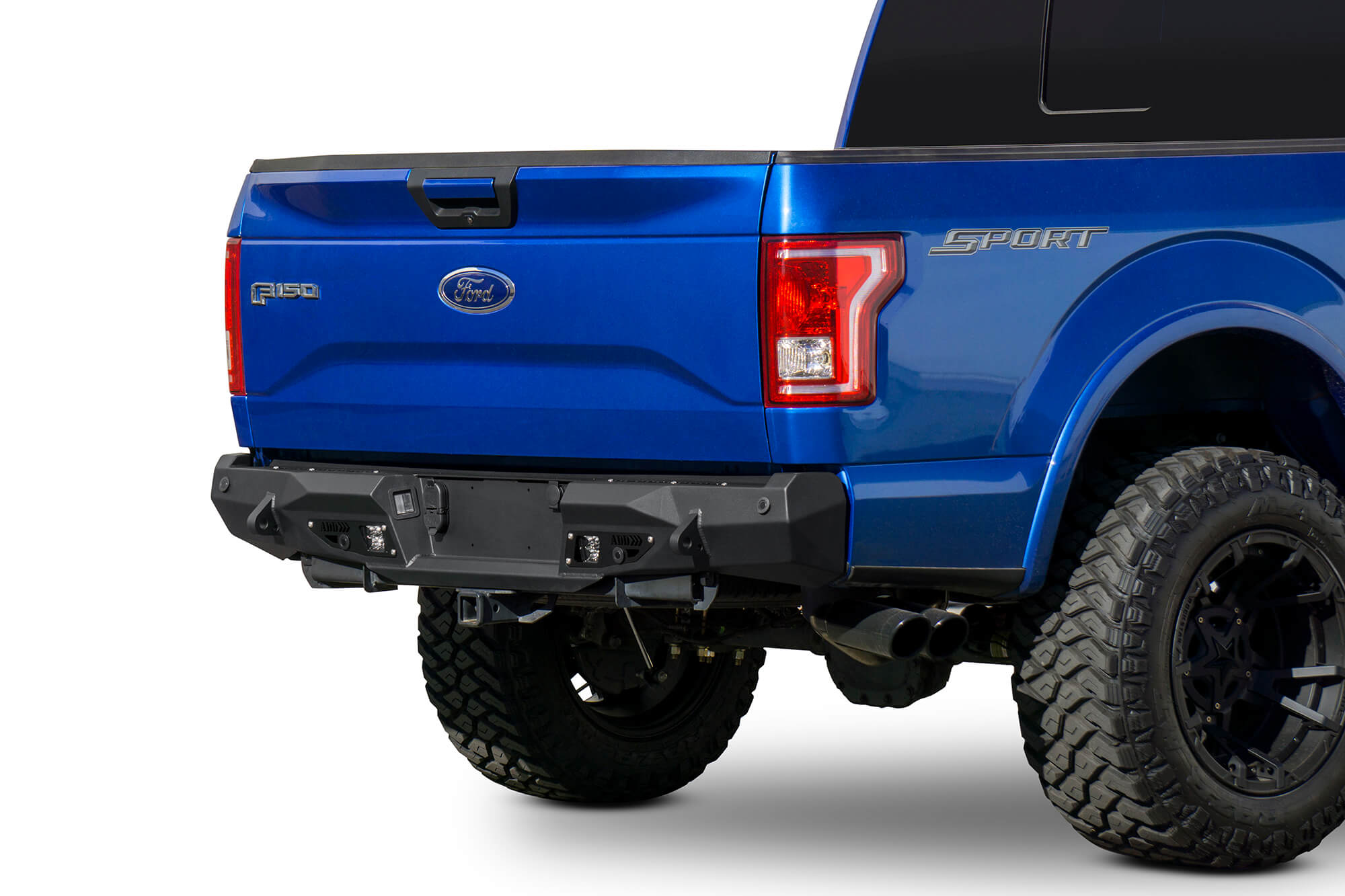
If your 1993 F-150 is a dedicated work truck or an off-road rig, a black powder-coated bumper is often the superior choice. Unlike paint, powder coating is baked onto the steel at high temperatures, creating a thick, durable barrier against rock chips and road salt. These bumpers are often made from slightly thicker 10-gauge or 12-gauge steel compared to the standard chrome face bars. They offer a rugged, “blacked-out” look that hides minor dings much better than reflective chrome.
Many owners prefer the black finish because it is easier to touch up. If you scratch a black bumper while loading the bed, you can use a high-quality automotive spray paint to seal the wound. With chrome, a deep scratch usually leads to permanent rust spots that can only be fixed by re-plating the entire unit. For a 30-year-old truck that still sees heavy use on the job site, the utility of powder-coated steel is hard to beat.
- Durability: Highly resistant to salt and chemical corrosion.
- Maintenance: Low maintenance; easy to clean and touch up with spray paint.
- Customization: Provides a base for those who want to color-match the bumper to their truck’s paint.
Technical Specs: Towing Capacity and Gauge Thickness for Replacement Bumpers
When you are looking for a replacement bumper for your 1993 Ford F150, it is not just about the shiny chrome finish. You need to look at the structural integrity of the unit. Most high-quality aftermarket bumpers for this generation use heavy-duty steel, typically ranging from 10 to 12-gauge thickness. A thicker gauge ensures the bumper won’t flex or dent easily when you are using the truck for actual work.
Understanding Steel Gauge and Durability
The gauge of the steel determines how much abuse your rear end can take. For an OBS (Old Body Style) Ford, a 10-gauge steel bumper provides that classic “built Ford tough” feel. This thickness is ideal for resisting the minor dings and scratches that occur in parking lots or on job sites. If you choose a bumper with a lower gauge (thinner steel), you might find that it vibrates more at highway speeds or feels flimsy when you step on the integrated tread.
V5 Towing Ratings and Safety
Most 1993 F150 rear bumpers are designed to be “step bumpers,” meaning they feature a built-in hitch point. It is vital to check the V5 rating of any replacement you buy. This rating ensures the bumper has been tested for specific towing capacities. While your frame-mounted hitch does the heavy lifting, the bumper itself is often rated for:
- Gross Trailer Weight (GTW): Typically up to 5,000 lbs for standard step bumpers.
- Tongue Weight (TW): Usually rated around 500 lbs.
- Reinforced Mounting: Quality replacements feature reinforced internal gussets to prevent twisting under load.
Hardware and Component Compatibility for 1992-1996 OBS Ford Trucks
One of the best things about the 1993 F150 is its membership in the 1992-1996 “OBS” family. This means that rear bumpers are largely interchangeable across these years, as well as with the F250 and F350 models of the same era. However, while the bumper face might look the same, the peripherals are where details matter most.
Interconnectivity of the OBS Generation
Because Ford maintained a consistent chassis design during these years, a bumper intended for a 1993 model will almost always fit a 1995 model without modification. This is great news if you are sourcing parts from a donor vehicle. Just remember that the Styleside and Flareside mounting widths remain the primary point of difference. If you have a Styleside truck, a bumper from an F250 of the same year will typically bolt right up to your F150 frame rails.
Essential Peripheral Components
A bumper is rarely a “plug and play” unit by itself. You need to ensure your hardware and trim pieces are compatible to avoid a trip back to the parts store. Key components to inspect include:
- License Plate Lamps: Most 1993 bumpers use a twist-in socket style. Ensure your new bumper includes the cutouts for these housings.
- Mounting Brackets: Many aftermarket bumpers are sold “face only.” You may need to reuse your factory brackets or purchase a specific 1992-1996 bracket kit if yours are rusted.
- Plastic Step Pads: These are often snap-in pieces. Check if your new bumper includes the impact-resistant plastic pads or if it is a bare steel design.
- Anti-Corrosion Hardware: Always use Grade 8 bolts when attaching the bumper to the frame to ensure safety during towing.
Conclusion
Replacing or upgrading the rear bumper on your 1993 Ford F150 is a fantastic way to restore the look and utility of your classic OBS truck. By understanding the critical differences between Styleside and Flareside beds and paying close attention to steel gauge and towing ratings, you can ensure your truck remains both safe and stylish. Whether you are aiming for a showroom-quality chrome restoration or a rugged work-ready setup, the right bumper makes all the difference.
Ready to get started? Your next steps are simple: measure your current bed width to confirm your fitment type and inspect your existing mounting brackets for heavy rust. Once you have your specs in hand, you can confidently choose a replacement that will last for another thirty years. Get that Ford back on the road and looking its best!
❓ Frequently Asked Questions
How do I tell if my 1993 Ford F-150 is a Styleside or a Flareside?
A Styleside bed has flat exterior sides with the wheels tucked inside the body lines. A Flareside, also known as a step-side, features fenders that flare out over the wheels with a small step located between the cab and the rear wheel arch.
Will a rear bumper from a 1996 Ford F-150 fit my 1993 model?
Yes, any rear bumper designed for the 1992-1996 ‘Old Body Style’ (OBS) generation will be a direct bolt-on fit for your 1993 truck. The frame widths and body mounts remained consistent throughout these production years.
What steel gauge should I look for in a replacement bumper?
For adequate protection and longevity, look for steel that is 14-gauge or thicker. Heavy-duty utility bumpers often use 12-gauge steel to better resist dents and handle the stresses of towing.
Is there a difference in towing capacity between chrome and black bumpers?
No, the finish (chrome vs. black powder coat) does not affect the towing capacity. The weight rating is determined by the internal structural reinforcement and the thickness of the steel used by the manufacturer.
Can I install an aftermarket ‘roll pan’ instead of a traditional bumper?
Yes, roll pans are a popular aesthetic alternative that provide a smooth, bumperless look. However, they offer significantly less impact protection and usually eliminate the truck’s towing capability unless a hidden hitch is installed.
What should I check regarding license plate light compatibility?
Verify that the bumper has the correct cutouts for the dual-light setup standard on 1993 models. Some aftermarket bumpers use a single center light, which may require you to splice your factory wiring harness.