Oil Pressure Switch vs. Sensor: Understanding the Difference

The fundamental difference is that an oil pressure switch acts as a simple binary (on/off) trigger for warning lights, whereas an oil pressure sensor provides a continuous stream of data for real-time gauges. Identifying which one your vehicle uses is critical for accurate engine diagnostics and preventing catastrophic failure.
🎯 Key Takeaways
Recommended Best Deal Products


- Switches provide binary ‘safe’ or ‘unsafe’ signals for dashboard warning lights.
- Sensors (transducers) output variable voltage to provide precise PSI readings on gauges.
- Switches typically use 1 or 2 pins, while sensors often require 3 pins.
- A failed switch often causes flickering lights; a failed sensor causes erratic gauge needles.
- These components are not interchangeable due to different electrical signal requirements.
- Modern ECUs use sensor data to adjust engine timing or trigger limp mode.
The primary difference between an oil pressure switch and an oil pressure sensor is how they communicate with your vehicle’s computer. A switch acts as a simple on/off trigger, designed only to alert you when pressure drops below a dangerous threshold. In contrast, a sensor is a sophisticated transducer that provides a constant stream of data, measuring exactly how much pressure is circulating through your engine at any given moment.

Prime for Young Adults — 6 Months Free
Students and 18–24s get six months of Prime free, then half price.
Start 6 Months Free As an Amazon Associate I earn from qualifying purchases.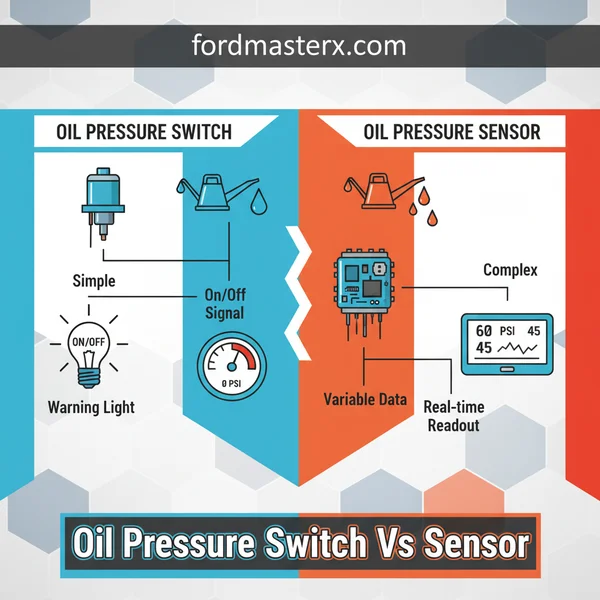
Understanding this distinction is critical for troubleshooting engine health. If you mistake one for the other, you might replace a functional part while ignoring a serious mechanical failure. Whether your dashboard features a simple red oil can icon or a needle that moves as you accelerate, knowing which component is under the hood dictates how you should react to the information on your screen.
Functional Logic: Binary Switching vs. Variable Resistance
At their core, these two components use different physics to monitor oil. A switch operates on binary logic—there are only two states: “safe” or “danger.” Internally, an oil pressure switch contains a spring-loaded diaphragm and a set of electrical contacts. When your engine is running and oil pressure is sufficient, the oil pushes against the diaphragm, compressing the spring and holding the electrical circuit open (or closed, depending on the design).
The Binary Nature of the Switch
- Trigger Point: Most switches are calibrated to a specific “set point,” often between 5 and 10 PSI.
- On/Off Action: If the pressure falls below that set point, the spring overcomes the oil pressure, the contacts touch, and the circuit completes.
- Simple Circuitry: It does not care if you have 40 PSI or 80 PSI; it only cares that you have “enough” to keep the engine from seizing.
A sensor, often called a pressure transducer, is far more complex. Instead of a simple contact point, it uses a variable resistor or a ceramic element that changes its electrical resistance based on the amount of physical force applied to it. As oil pressure increases, the sensor’s resistance changes proportionally. The Engine Control Module (ECM) sends a reference voltage to the sensor, and the sensor sends back a specific signal—usually between 0.5 and 4.5 volts—that corresponds to a precise PSI value.
How a Sensor Translates Pressure to Data
This variable resistance allows the vehicle’s computer to map a linear curve of engine health. While a switch is a “dumb” component that stays silent until a crisis occurs, the sensor provides “smart” data. For example, at idle, the sensor might report 25 PSI, and at highway speeds, it might report 60 PSI. This allows the computer to detect trends, such as pressure that is slowly degrading over several months, rather than just waiting for a catastrophic failure. This data is also used by the ECM to adjust variable valve timing and other engine parameters that rely on hydraulic pressure.
Everything You Need to Know About Oil Pressure Switch vs. Sensor
Recommended Best Deal Products


Monitoring your engine’s oil pressure is one of the most critical aspects of vehicle maintenance, but many car owners get confused between an oil pressure switch and an oil pressure sensor. While they both monitor the lubrication system, they function in entirely different ways. A switch is a simple “on/off” device that triggers a warning light, whereas a sensor provides a continuous stream of data to a gauge or the engine control unit (ECU). Understanding which one your vehicle uses and how to diagnose or replace them is vital for preventing catastrophic engine failure. This guide will walk you through the identification, testing, and replacement processes for both components to ensure your engine stays properly lubricated and healthy.
Step 1: Identifying Your Component Type
What you need: Your vehicle’s owner’s manual, a flashlight, and a look at your dashboard display.
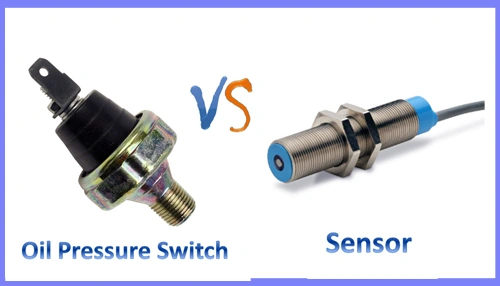
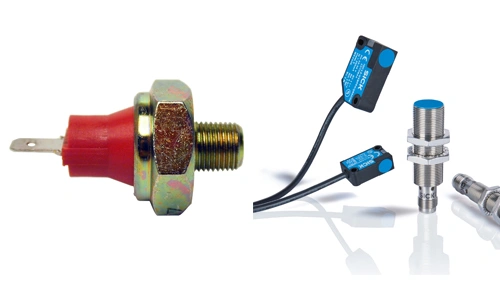
Instructions: Before you pick up a wrench, you must determine if your vehicle uses a switch or a sensor. Look at your dashboard while the engine is running. If you only have a red oil can icon that stays off unless there is a problem, you likely have an oil pressure switch. If your dashboard features a needle gauge that moves up and down as you accelerate, you have an oil pressure sensor (also called a sender). Physically, switches are usually smaller with one or two pins, while sensors are bulkier and may have three or more pins to handle the variable voltage signals. Check your service manual to confirm the exact part number and location to ensure you don’t mistake it for a knock sensor or a coolant temperature sensor.
Pro Tip: Some modern performance vehicles actually use both—a sensor for the driver’s gauge and a switch as a redundant “fail-safe” for the ECU to trigger an emergency limp mode.
Step 2: Locating the Part in the Engine Bay
What you need: A bright LED flashlight, a shop rag, and potentially a telescopic mirror.

Audible — Listen Free for 30 Days
One free credit a month and thousands of titles included.
Listen Free for 30 Days As an Amazon Associate I earn from qualifying purchases.Instructions: Most oil pressure components are located near the oil filter housing or threaded directly into the engine block or cylinder head. Open your hood and look for a component with a single electrical connector protruding from a threaded metal base. In many V6 or V8 engines, the sensor is located at the back of the engine block near the firewall, making it difficult to see without a mirror. In four-cylinder engines, it is frequently found on the front of the block near the alternator. Once located, use your rag to wipe away any grime or oil buildup around the base. This allows you to inspect the wiring harness for cracks or fraying, which are common causes of false “low pressure” readings.
Pro Tip: If the area is covered in heavy sludge, use a bit of brake cleaner on a cloth to reveal the part’s identification numbers, which can help you order the correct replacement.
Step 3: Preparing Your Workspace and Safety Gear
What you need: Nitrile gloves, safety glasses, a drain pan, and a fender cover to protect your paint.
Instructions: Working on the oil system can be messy and potentially dangerous. Ensure the engine is cool to the touch; oil pressure components can hold residual heat for hours, and the oil behind them may be hot enough to cause burns. Disconnect the negative battery terminal to prevent any electrical shorts while you are disconnecting sensors. Place a drain pan directly beneath the area where the switch or sensor is located. Even though you aren’t draining the oil pan, a small amount of oil (usually 1-2 ounces) will leak out of the oil gallery once the component is unscrewed. Lay a fender cover or an old towel over the side of the car to protect the paint from tool scratches or oil drips.
Pro Tip: Never attempt this immediately after a long drive. Wait at least 45 minutes for the oil to settle and the block to reach a safe handling temperature.
Step 4: Testing the Component with a Multimeter
What you need: A digital multimeter (DMM) and a helper to start the engine briefly.
Instructions: To test a switch, set your multimeter to the “Continuity” or “Ohms” setting. With the engine off, touch one probe to the terminal and the other to the metal body of the switch; you should see a complete circuit (zero ohms). When the engine starts, the internal diaphragm should move, breaking the circuit (infinite ohms). To test a sensor, set your DMM to DC Voltage. With the engine running, back-probe the signal wire. You should see the voltage increase steadily as an assistant revs the engine. For example, a typical 5V sensor might read 0.5V at idle and climb to 4.5V at high RPM. If the voltage stays static or reads zero, the sensor is defective.
Pro Tip: If your multimeter shows “OL” (Open Loop) on a switch while the engine is off, the internal spring has likely failed, and your dashboard light will stay on constantly.
Step 5: Removing the Electrical Connector and Component
What you need: A specialized oil pressure switch socket (usually 1 1/16″ or 27mm deep), a ratchet, and an extension.
Instructions: Carefully depress the plastic tab on the electrical connector and pull it away from the sensor. Be gentle, as these connectors become brittle over time due to engine heat. Slide your deep-well oil pressure socket over the component. These sockets are designed with rounded corners to grip the thin metal housing of the switch without crushing it. Turn the ratchet counter-clockwise to loosen the part. Once it is loose, finish unscrewing it by hand to prevent it from falling into the engine bay. Keep your drain pan ready to catch the small amount of oil that will seep out. Check the old part’s threads for any metal shavings, which could indicate internal engine wear rather than just a sensor failure.
Audible Premium Plus — Annual Membership
12 audiobook credits up front, plus the full Audible catalogue.
See Annual Plans As an Amazon Associate I earn from qualifying purchases.Pro Tip: If the connector is stuck, use a small flat-head screwdriver to gently lift the locking tab, but do not prying too hard or you will snap the plastic clip.
Step 6: Preparing the New Component for Installation
What you need: The new oil pressure switch or sensor and thread sealant (if not pre-applied).
Instructions: Compare the new part with the old one to ensure the thread pitch and electrical pin configuration are identical. Many new sensors come with a pre-applied red or blue thread sealant on the threads. If yours does not, apply a very small amount of Teflon-based pipe sealant or high-temperature thread sealer. Be extremely careful NOT to get any sealant on the bottom hole of the sensor where the oil enters; if this hole is blocked, the sensor will not function. Do not use standard Teflon tape if you can avoid it, as small shreds of tape can break off and enter the oiling system, potentially clogging narrow oil passages or the sensor’s internal diaphragm.
Pro Tip: Only apply sealant to the middle of the threads, leaving the first two threads clean to ensure a smooth start and avoid cross-threading into the engine block.
Step 7: Installing and Torquing the New Part
What you need: A torque wrench and your oil pressure socket.
Instructions: Thread the new component into the hole by hand. This is the most critical part of the process; if you feel resistance, back it out and try again. You must be able to turn it at least three full rotations by hand to ensure it isn’t cross-threaded. Once hand-tight, use your torque wrench to tighten it to the manufacturer’s specification. Most oil pressure switches require very little torque, typically between 12 and 18 foot-pounds (16-24 Nm). Because these parts have tapered threads (NPT), they do not need to be bottomed out to create a seal. Over-tightening can easily crack the engine block or snap the sensor off inside the hole, leading to an expensive repair involving extraction tools.
Pro Tip: If you don’t have a torque wrench, “snug plus a quarter turn” is the general rule for tapered threads, but a torque wrench is highly recommended for aluminum blocks.
Step 8: Final Reconnection and Leak Testing
What you need: Electrical contact cleaner and your ignition key.
Instructions: Before plugging the harness back in, spray a small amount of electrical contact cleaner into the connector to remove any oil residue. Snap the connector onto the new sensor until you hear a click. Reconnect your negative battery terminal. Before starting the vehicle, turn the key to the “On” position and verify the oil light comes on (for switches) or the needle moves (for sensors). Start the engine and let it idle for 5 minutes. Use your flashlight to inspect the base of the new sensor for any signs of seeping oil. If there are no leaks, have a helper rev the engine slightly while you watch the dashboard to ensure the reading is responsive and accurate.
Pro Tip: After the first 50 miles of driving, perform one final visual inspection to ensure no “slow leaks” have developed under high-pressure driving conditions.
✅ Final Checklist
- Verified part type (switch vs. sensor) matches the vehicle’s dashboard output.
- Electrical connector is free of oil and securely clicked into place.
- Threads were properly sealed and torqued to the specific manufacturer’s range.
- Engine was idled and checked for leaks at the installation point.
- Dashboard warning light or gauge displays correct real-time pressure data.
Important Notes:
- Safety Warning: Low oil pressure readings should never be ignored. If a new sensor still shows low pressure, turn off the engine immediately and check the oil pump or pickup tube.
- When to Seek Professional Help: If the old sensor snaps off inside the engine block during removal, do not attempt to drill it out yourself unless you are experienced with bolt extractors.
- Estimated Time: 45 to 90 minutes depending on accessibility.
- Estimated Cost: $20 – $60 for a switch; $40 – $120 for a high-quality sensor.
Dashboard Feedback: Idiot Lights vs. Real-Time Pressure Gauges
The type of component installed in your engine directly dictates what you see on your dashboard. If your car is equipped with a basic oil pressure switch, you will almost certainly have a “low oil pressure” warning light—commonly referred to in the automotive world as an “idiot light.” This light provides no context; it is an emergency signal telling you to shut the engine down immediately because the pressure has already dropped below the safe operating minimum.
The “Idiot Light” Warning System
- Visual Cue: A red oil can icon or a “LOW OIL PRESSURE” text alert on the digital display.
- Operational Behavior: The light stays off during normal driving. If it flickers at idle or stays on solid, the switch has detected a critical drop.
- Delayed Warning: Because the switch only triggers at very low PSI (often as low as 4-7 PSI), the light often doesn’t turn on until mechanical damage is already occurring.
Vehicles equipped with an actual oil pressure sensor typically feature a needle gauge or a digital readout. This provides real-time feedback that changes as you drive. You will notice the needle move upward as you rev the engine and drop back down as you return to an idle. This is the sensor communicating the fluid dynamics of your lubrication system directly to you. It gives you the ability to see if the oil is taking too long to reach pressure on a cold morning or if it is getting dangerously thin during a long haul.
Monitoring Health via the Pressure Gauge
A gauge powered by a sensor is a powerful diagnostic tool for the driver. By watching the needle, you can identify issues like oil thinning out due to excessive heat or a failing oil pump long before they trigger an emergency. It is important to note that some modern vehicles use a “buffered” or “fake” gauge. In these setups, the manufacturer uses a switch to tell a computer-controlled needle to move to a “normal” middle position. However, a true sensor-driven gauge will show subtle, constant fluctuations, providing a transparent window into the engine’s internal environment. If your gauge moves exactly with your RPMs, you are likely looking at a high-precision sensor output.
Physical and Electrical Identification: Pins, Terminals, and Signals
Recommended Best Deal Products


If you are staring at a greasy part on your engine block and wondering which one it is, the easiest way to tell the difference is usually by looking at the electrical connector. While they might have similar threaded bodies, their “internals” communicate with your car in very different ways. Understanding these physical cues can save you a trip back to the parts store.
The Terminal Count Tell
In most automotive applications, the number of pins or terminals on the component is a dead giveaway. Because their jobs vary in complexity, their wiring requirements do as well. You will generally find these patterns:
- Single-Pin Switches: Many traditional oil pressure switches feature just one terminal. The switch uses the engine block itself as a ground and simply completes a circuit to ground when pressure drops, triggering the dashboard light.
- Multi-Pin Sensors: Sensors usually require three wires: a 5-volt reference power supply from the ECU, a dedicated ground wire, and a signal return wire. If you see a triangular or flat three-pin plug, you are almost certainly looking at a sensor.
- Hybrid Designs: Some modern European or diesel engines use a four-pin setup that combines both a temperature sensor and a pressure sensor into one housing to save space.
Signal Output Differences
Technically speaking, a switch is binary. It is either “open” or “closed,” much like a light switch in your home. It doesn’t care if your pressure is 40 PSI or 80 PSI; it only reacts when the pressure hits a specific low-end threshold. Conversely, a sensor provides a sliding scale of data. It sends a variable voltage signal—typically between 0.5V and 4.5V—that the computer translates into a specific pressure reading. If your scan tool shows “34.2 PSI,” you are reading data from a sensor, not a switch.
Choosing the Right Component: Application and Engine Compatibility
Selecting the correct part isn’t just about what fits in the hole; it’s about what your car’s computer (ECU) expects to hear. Installing a switch where a sensor belongs—or vice versa—will immediately trigger a Check Engine Light or a “low oil pressure” warning, even if your oil levels are perfectly fine. Compatibility is dictated by how your dashboard and engine management system were designed.
Matching Your Dashboard Display
The type of readout on your instrument cluster is your best guide for identification. If your car only has a red “oil can” icon that glows when things go wrong, you are likely shopping for a switch. However, if your dashboard features a needle that moves up and down as you rev the engine, or a digital display showing live pressure numbers, you need a sensor (often called a sender in older catalogs). Some modern trucks use “simulated gauges” where a switch sends a signal, and the computer simply moves the needle to a “normal” middle position to keep the driver calm, so always double-check your VIN.
OEM vs. Aftermarket Considerations
When replacing these components, precision is everything. While aftermarket options are often cheaper, sensors are highly sensitive to calibration. A slightly “off” resistance in a cheap sensor can lead to false warnings or inaccurate readings that might mask a real engine problem.
- Verify the PSI Rating: If buying a switch, ensure the “trip point” matches your engine specs (usually between 5 and 7 PSI).
- Check Thread Pitch: Many switches use NPT (tapered) threads, while sensors might use metric threads with an O-ring. Never force a part that doesn’t thread in smoothly by hand.
- Look for Sealant: Many OEM switches come with pre-applied thread sealant. If yours doesn’t, ensure you use a sensor-safe sealant that won’t interfere with the electrical ground.
Conclusion
Understanding the distinction between an oil pressure switch and a sensor is vital for maintaining your engine’s health. While the switch acts as a simple alarm bell for emergencies, the sensor provides the detailed, constant data that modern high-performance engines need to operate efficiently. Mixing them up can lead to confusing diagnostic errors and unnecessary stress. To stay on top of your vehicle’s maintenance, your best next step is to consult your owner’s manual to identify which system your car uses and inspect your wiring harness for any signs of oil intrusion or brittle plastic. Don’t wait for a warning light to appear—knowing how your engine talks to you is the best way to ensure it keeps running for years to come!
❓ Frequently Asked Questions
What is the primary function of an oil pressure switch?
An oil pressure switch is a safety device designed to close a circuit and illuminate a warning light when pressure drops below a set threshold. It does not measure the actual PSI, only whether the pressure is currently in a ‘safe’ or ‘unsafe’ range.
How does an oil pressure sensor differ in its operation?
Unlike a switch, a sensor uses a transducer to convert physical pressure into a variable electrical signal, such as voltage or resistance. This allows the vehicle’s computer or gauge to display the exact PSI across the engine’s entire operating range.
Can a faulty sensor cause a ‘No Start’ condition?
In some modern vehicles, the ECU monitors the oil pressure sensor and may disable the fuel pump or ignition if it detects zero pressure. This is a failsafe measure to prevent catastrophic engine damage from lack of lubrication.
How can I tell the difference between the two just by looking at the part?
Check the electrical connector; switches often have one or two pins and a smaller body. Sensors are typically larger and feature three pins to accommodate the power, ground, and signal wires required for variable data transmission.
What are the symptoms of a failing oil pressure switch?
Common symptoms include the ‘oil can’ light staying on constantly or flickering randomly even when oil levels are full. This is often caused by an internal diaphragm leak that allows oil to interfere with the electrical contact.
Is it common for a vehicle to have both a switch and a sensor?
Yes, some high-performance or heavy-duty vehicles use a switch for a rapid-response emergency light and a sensor for a dashboard gauge. This provides redundancy and detailed information for the driver.