
Best Cold Air Intake for 7.3 Powerstroke: Top Rated Picks

The S&B Enclosed Intake System is currently the top-rated choice for the 7.3 Powerstroke, offering the best balance of superior filtration and high CFM airflow. Upgrading to a premium intake is essential for lowering Exhaust Gas Temperatures (EGTs) and improving turbo spool-up time during heavy towing.
🎯 Key Takeaways
- S&B provides the best overall value and filtration efficiency for daily drivers.
- Banks Ram-Air systems are superior for heavy towing and maximum EGT reduction.
- Opt for dry filters in dusty environments to prevent MAF sensor issues.
- Enclosed airbox designs outperform open filters by drawing in cooler ambient air.
- A high-quality intake can reduce EGTs by 50 to 100 degrees under load.
The best cold air intake for your 7.3 Powerstroke depends on your specific goals, but the S&B Filters 75-5062, Banks Ram-Air, and aFe Momentum GT are the undisputed leaders for this platform. These kits replace the restrictive, leak-prone factory airbox that is notorious for “dusting” turbochargers due to poor seal integrity. Upgrading ensures your engine breathes clean, high-velocity air, which is essential for any 7.3 engine running a tuner, larger injectors, or an upgraded turbo wheel.
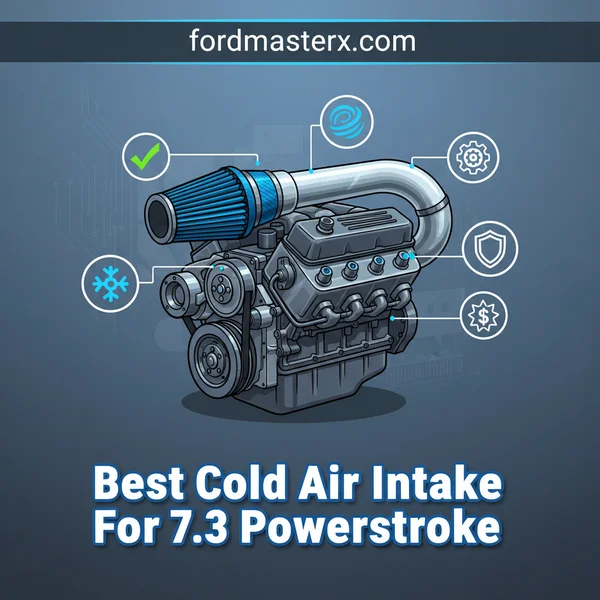
By installing a dedicated cold air intake, you solve the 7.3 engine’s biggest breathing bottleneck. You aren’t just looking for a fancy tube; you are looking for a sealed system that prevents engine bay heat soak while providing enough CFM (Cubic Feet per Minute) to support increased boost levels. These three brands offer the best seal integrity and filtration surface area on the market today, specifically designed to fit the tight engine bay of the 1999-2003 Super Duty.
Top-Tier Intake Comparisons: S&B vs. Banks Power vs. aFe Momentum
Choosing between these three giants comes down to a balance of price, filtration technology, and engineering precision. While the factory 7.3 intake struggles to provide enough air for even a stock truck, these aftermarket options are designed to handle 500+ horsepower builds. The S&B is the most popular choice for daily drivers, while Banks and aFe cater to owners who demand the highest possible material specs and air density.

S&B Filters: The Value and Flow Champion
The S&B 75-5062 is widely considered the “gold standard” for the 7.3 Powerstroke because it offers a massive jump in airflow at a competitive price point. It features a fully enclosed airbox that protects the filter from engine heat, and it includes a clear lid for quick inspections.
- Flow Increase: Approximately 45-50% more air than the stock 7.3 airbox.
- Price Point: Typically ranges between $325 and $360, making it the most budget-friendly premium option.
- Filter Options: You can choose between an 8-layer Cotton Cleanable (oiled) filter or a Dry Extendable filter for easier maintenance.
- Design: The kit includes a custom battery tray because the 7.3’s driver-side battery sits right where the massive new filter needs to live.
Banks Ram-Air and aFe Momentum: Maximum Engineering
If you want the most over-engineered solution, the Banks Ram-Air and aFe Momentum GT are the top contenders. Banks focuses on “air density,” ensuring the air isn’t just fast, but cool and packed with oxygen. The aFe Momentum uses a unique rotomolded housing to eliminate sharp bends that cause turbulence.
- Banks Ram-Air: Known for the largest filter surface area in its class. It uses a unique “bellows” design that allows the engine to shake under load without breaking the intake seal. It usually retails for $450-$500.
- aFe Momentum GT: Features the Pro 5R or Pro DRY S filter media. The Pro 5R is a 5-layer mesh that provides the highest flow rates for those chasing maximum horsepower.
- CFM Performance: Both units typically push over 500-600 CFM, significantly outperforming the restrictive factory snorkel that starves the turbo during heavy acceleration.
Performance Impact: Horsepower Gains and Turbo Spool Improvements
On a 7.3 Powerstroke, a cold air intake isn’t just about the 10-15 horsepower gain. The real magic happens in how the turbocharger behaves. Because the 7.3 uses a heavy cast-iron turbocharger, it requires significant energy to start spinning. Reducing the “vacuum” effect caused by a restrictive factory filter allows the turbine to reach operating speed much faster, which translates to immediate power at the pedal.
Lower Exhaust Gas Temperatures (EGTs)
If you use your 7.3 for towing heavy trailers, EGT management is your primary concern. A high-flow intake like the Banks or S&B introduces a higher volume of oxygen into the cylinders. This extra air helps create a more complete combustion cycle, which naturally lowers the temperature of the exhaust gases exiting the head. In practical terms, many 7.3 owners report a 50°F to 100°F drop in EGTs while pulling heavy grades. This protects your pistons and extends the life of your turbo center section.
Improved Throttle Response and Turbo Whistle
Beyond the data on a dyno, the “seat-of-the-pants” feel is where you notice the most difference. The 7.3 is a notoriously laggy engine, but a high-flow intake helps bridge that gap.
- Spool-Up Time: You will notice the turbo “hits” earlier in the RPM range, reducing the lag commonly felt when pulling away from a stoplight or merging onto a highway.
- Induction Noise: While these are sealed boxes, the high-velocity air creates a more pronounced, crisp turbo whistle. It eliminates the muffled, strained sound of the stock box.
- Passing Power: At highway speeds, the engine reacts with less hesitation. When you step on the gas to pass, the turbo can draw in the necessary air volume instantly rather than struggling through a narrow plastic snorkel.
Filtration Science: Choosing Between Oiled and Dry Media Filters
When you are upgrading your 7.3 Powerstroke, the debate between oiled and dry filters is inevitable. The “best” choice often depends more on your maintenance habits and driving environment than on the horsepower numbers alone. Both styles offer significant improvements over the stock paper element, but they handle dust and airflow differently.

The Case for Oiled Filters
Oiled filters, popularized by brands like S&B and K&N, use multiple layers of cotton gauze treated with a special tackifier oil. This oil acts as a magnet for microscopic particles, allowing for larger openings in the mesh without sacrificing filtration quality. This generally results in superior airflow, which is vital for those looking to push higher boost levels on a modified 7.3 engine.
- Longevity: These filters are washable and reusable, often lasting the life of the truck if maintained correctly.
- Flow Capacity: Typically offers the least amount of restriction for the turbocharger.
- Cost Efficiency: While the initial kit is more expensive, you won’t need to buy replacement filters every year.
Pro Tip: If you choose an oiled filter, be careful not to over-oil it after cleaning. Excess oil can occasionally migrate toward the intake sensors, though the 7.3 is far more resilient in this regard than newer, more sensitive diesel engines.
Why Dry Media is Gaining Ground
Dry filters use synthetic materials with much smaller pores to trap dirt. They have become the go-to for many 7.3 owners who work in high-dust environments, such as construction sites or gravel roads. Because there is no oil, there is zero risk of “gumming up” the intake tract or attracting extra dust to the filter surface.
- Simple Maintenance: Most dry filters can be cleaned with compressed air or a vacuum, though they are eventually replaced rather than washed.
- Filtration Efficiency: Often rated higher for “fine dust” capture compared to oiled versions.
- Reliability: Perfect for the “set it and forget it” owner who doesn’t want to deal with cleaning kits and drying times.
The 6637 DIY Intake vs. Premium Kits: Cost-Benefit Analysis
In the 7.3 Powerstroke community, the “6637” mod is legendary. It involves using a massive Donaldson industrial paper filter and a short piece of pipe to replace the stock airbox. But does this budget-friendly hack really compete with a $350 engineered cold air intake kit?
The “6637” Legend: Performance on a Budget
The primary appeal of the DIY 6637 setup is the price. For under $100, you can significantly increase the volume of air reaching your turbo. It provides that iconic turbo whistle that 7.3 owners love. However, because it is an “open” element sitting in the engine bay, it lacks a dedicated heat shield.
- Pros: Extremely cheap, easy to source parts, and offers massive surface area.
- Cons: Draws in hot under-hood air (heat soak) and can be quite loud under load.
- Best for: Budget builds or owners who prioritize the “raw” diesel sound over maximum thermal efficiency.
Premium Sealed Intakes: Efficiency and Protection
A premium kit from a manufacturer like Banks or S&B is an engineered system. These kits usually feature a fully enclosed airbox that draws cool air directly from the fender or the front grille. This ensures that the air entering your engine is as dense as possible, which is critical for keeping Exhaust Gas Temperatures (EGTs) low during towing.
- Thermal Management: Keeps intake temperatures significantly lower than an open-element DIY filter.
- Engine Protection: The sealed box prevents water splashes and heavy debris from reaching the filter media.
- Aesthetics: Provides a much cleaner, professional look under the hood compared to a massive filter clamped to a pipe.
While the DIY route is great for those on a tight budget, a premium kit is a better long-term investment for those who use their 7.3 for heavy towing or want the absolute best filtration and lowest possible air temperatures.
Conclusion
Choosing the best cold air intake for your 7.3 Powerstroke comes down to your specific goals and budget. If you want the best thermal protection and a clean look, a premium sealed kit with a dry filter is likely your best bet. If you are looking for maximum airflow and reusability on a modified truck, an oiled system is the way to go. For those just starting out, even the simple 6637 DIY mod is a massive upgrade over the restrictive and leak-prone factory airbox.
Next Steps: First, inspect your current intake boots for cracks or oil residue. Then, decide on your primary use case—towing or daily driving—and pick the filter media that matches your environment. Upgrading your intake is the easiest way to help your 7.3 breathe better and last longer, so don’t wait to make the switch!
❓ Frequently Asked Questions
Why is the S&B intake so popular for the 7.3 Powerstroke?
S&B is favored because it features a completely enclosed airbox that protects the filter from engine heat and debris. It offers massive airflow improvements over stock while maintaining a clean, factory-like fit and finish.
How does the Banks Ram-Air compare to other 7.3 intakes?
The Banks Ram-Air is engineered specifically for towing applications, focusing on maximum air density. It is often cited as the best for lowering EGTs because its design forces more cool air into the turbo under high-load conditions.
Is the DIY 6637 filter mod still worth doing?
The 6637 mod is a great budget-friendly option that provides excellent flow, but it lacks a heat shield. This means it can pull in hot under-hood air, which may negate some performance gains compared to a dedicated cold air kit.
What are the benefits of the aFe Momentum GT for the 7.3?
The aFe Momentum GT features a unique large-diameter filter and a high-quality rotomolded housing. It is known for its durability and is often chosen by owners who want a rugged, long-lasting system for off-road use.
Can a cold air intake improve the fuel economy of a 7.3 diesel?
While gains are usually modest (0.5 to 1.5 MPG), an intake improves engine efficiency by reducing pumping losses. This allows the engine to breathe easier, which can lead to better fuel economy if driving habits remain consistent.
Does an aftermarket intake require a custom tune on a 7.3?
No, a 7.3 Powerstroke does not require a tune to run an aftermarket intake. However, combining an intake with a chip or tuner will maximize the performance benefits of the increased airflow.