
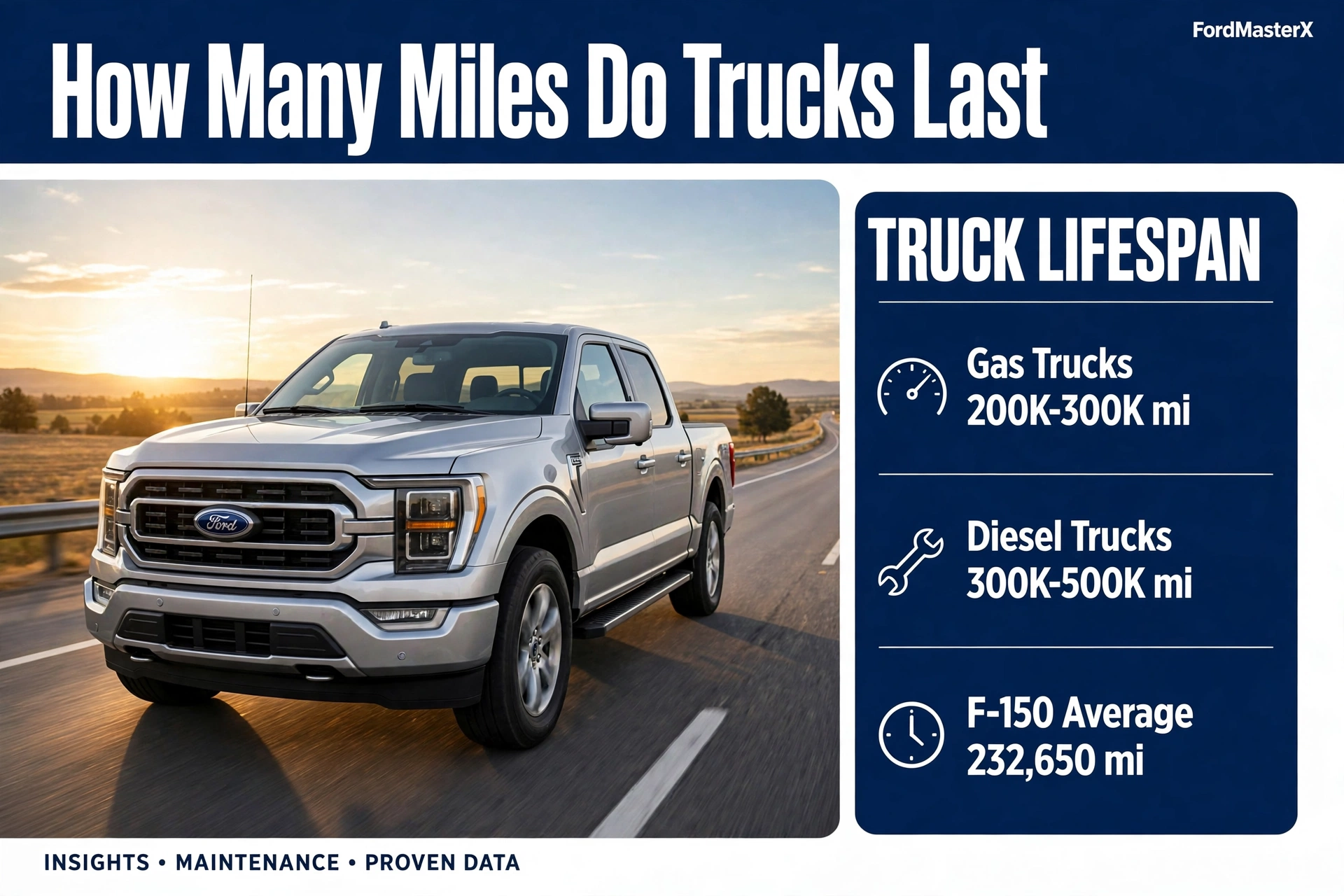
How Many Miles Do Trucks Last? 7 Proven Answers for 2026

Most trucks last 200,000 to 300,000 miles when they are maintained on schedule. Diesel trucks last longer, usually 300,000 to 500,000 miles, because their engines are built heavier and run at lower speeds.
That range covers the typical well-kept pickup. A gas truck that tows heavy loads every week or skips oil changes can wear out near 150,000 miles, while a cared-for diesel can still work hard past 400,000 miles.


If you are asking how many miles do trucks last, this guide gives you seven verified numbers, Ford F-150 data from the newest study, a gas versus diesel comparison, the five things that kill trucks early, and the maintenance schedule that pushes a truck past 300,000 miles.
7 Truck Lifespan Numbers Backed by Real Data
These seven numbers come from named studies, Ford owner manuals, and federal driving data.
| # | Number | What It Means |
|---|---|---|
| 1 | 200,000 to 300,000 miles | Typical life of a well-maintained gas pickup |
| 2 | 300,000 to 500,000 miles | Typical life of a well-maintained diesel pickup |
| 3 | 232,650 miles | Average potential lifespan of a Ford F-150, iSeeCars 2022 study |
| 4 | 15.1% | Chance a Ford F-350 Super Duty reaches 250,000 miles, iSeeCars 2026 truck study |
| 5 | 5.2% | Chance a Ford F-150 reaches 250,000 miles, iSeeCars 2026 truck study |
| 6 | 13,596 miles per year | Average annual driving distance for a US driver, Federal Highway Administration |
| 7 | 12.8 years | Average age of a light vehicle on US roads in 2025, S&P Global Mobility |
The gas and diesel ranges are the consensus across owner guides and diesel specialists. Diesel Power Products puts well-maintained diesel pickups at 300,000 to 500,000 miles.
The 2026 iSeeCars truck study on the longest-lasting trucks analyzed odometer readings from over 41 million trucks. It gives the F-350 Super Duty a 15.1% chance of reaching 250,000 miles, the best result of any Ford truck in that study.
The same study gives the F-150 only a 5.2% chance of 250,000 miles. That sounds low next to the 15.8% chance the 2024 iSeeCars study gave it, but the 2024 study covered 402 million vehicles of all types, while the 2026 study used truck-only data from 41 million pickups.
The older 2022 study gave the F-150 an average potential lifespan of 232,650 miles based on over 2 million vehicles.
S&P Global Mobility reported that the average light vehicle on US roads reached a record 12.8 years old in 2025, with light trucks averaging 11.9 years and the scrappage rate steady at 4.5%.
How Many Miles Do Trucks Last at a Glance
Figures from the iSeeCars 2026 truck study, Ford owner manuals, and Federal Highway Administration driving data. The gas and diesel ranges come from owner guides and diesel specialists.
Study note: the 2026 iSeeCars truck study used odometer readings from over 41 million trucks. The 2022 F-150 figure of 232,650 miles comes from an earlier study of over 2 million vehicles, so the two numbers describe different samples. Years math: miles divided by 13,596 miles per year, the Federal Highway Administration average.
How Long Does a Ford F-150 Last


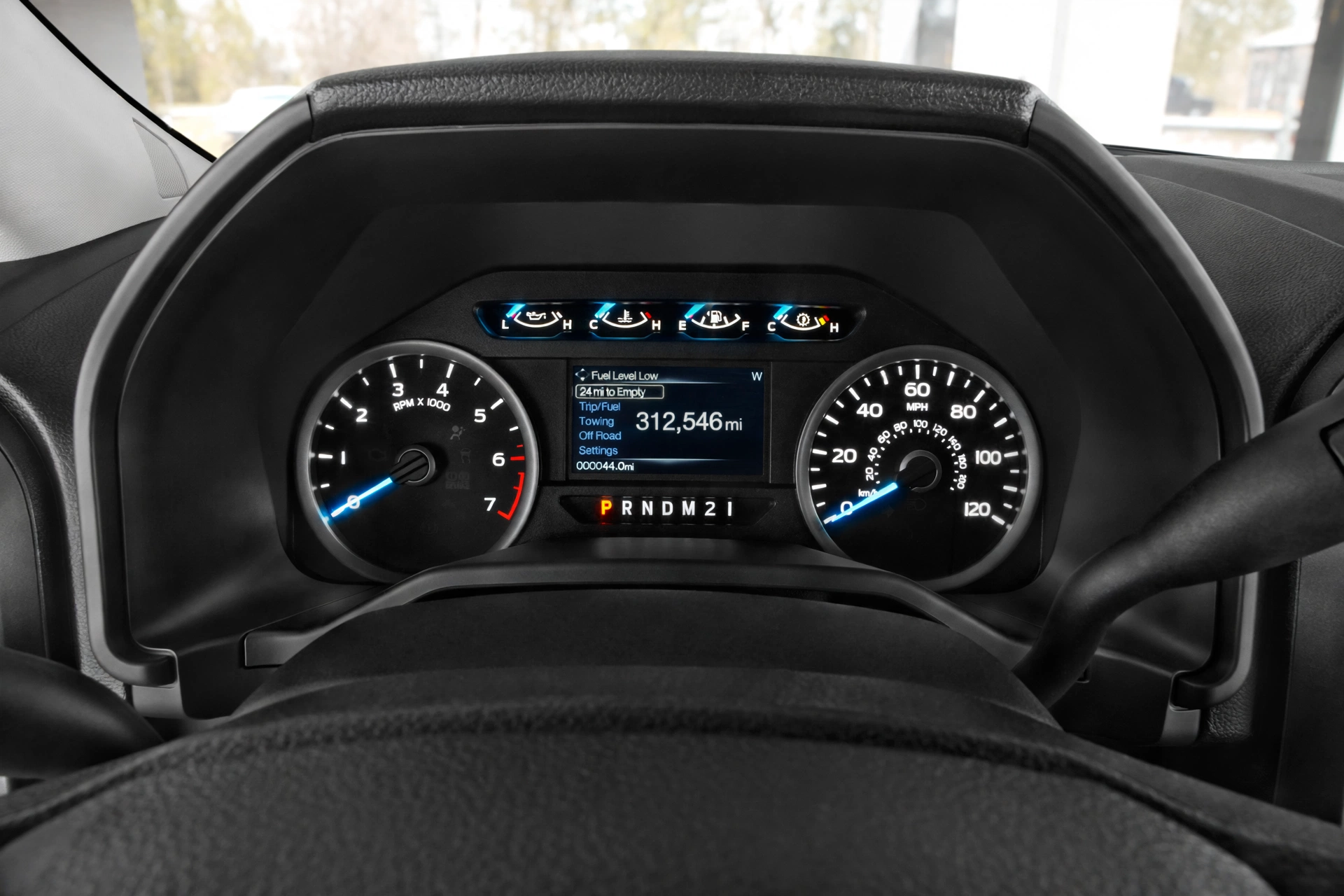
A well-maintained Ford F-150 lasts 200,000 to 300,000 miles. That is the range owners and buyer guides report most often, and it matches the truck’s position in the national longevity data.


The November 2026 iSeeCars truck study gives the F-150 a 5.2% chance of reaching 250,000 miles, below the 11.1% truck average and far behind the Toyota Tundra at 28.2%.
Consumer Reports reached a friendlier verdict in June 2026, putting the F-150 tenth on its list of the 12 vehicles most likely to reach 200,000 miles and beyond, ahead of the Chevrolet Silverado 1500 in last place.
Ford Authority’s report on the Consumer Reports list explains that the ranking comes from owner surveys and counts the share of trucks with zero problems reported in the past 12 months. The F-150 earned its place on repair history, not on a single odometer reading.


The engine matters more than the badge. Owner guides commonly report the 5.0L Coyote V8, in F-150s since 2011, reaching 250,000 to 300,000 miles with basic maintenance.
The 2.7L EcoBoost also passes 200,000 miles with strict oil service, according to the same owner guides. The 2004 to 2008 trucks with the 5.4L Triton V8 are the weak spot, with frequent engine and transmission problems.
Our guide to how many miles a Ford Fusion lasts shows the same pattern in a car: the drivetrain choice and the service history decide the outcome more than the model name does.
Gas vs Diesel Truck Lifespan Compared
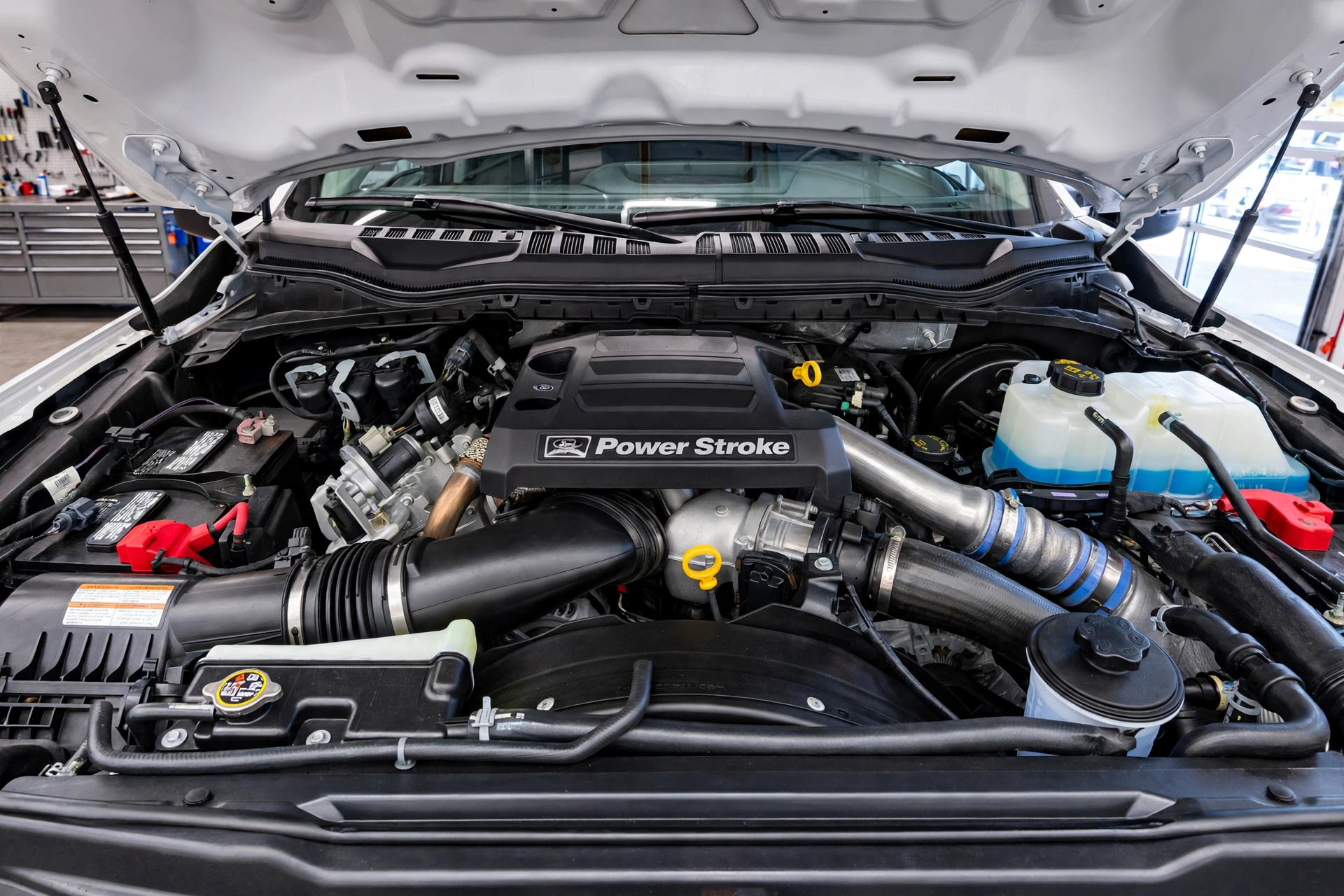
Diesel trucks last longer than gas trucks, but the gap is smaller than it used to be. Modern gas engines now pass 200,000 miles on a regular basis, while modern diesel emissions systems add repair costs old diesels never had.
| Factor | Gas Truck | Diesel Truck |
|---|---|---|
| Typical lifespan | 200,000 to 300,000 miles | 300,000 to 500,000 miles |
| Engine design | Lighter parts, higher revs | Heavier parts, lower revs, higher compression |
| Big repair risk | Transmission, timing parts | Fuel system, emissions parts |
| Best for | Daily driving, light towing | Heavy towing, high annual miles |
| Extra life vs gas | Baseline | About 50,000 to 100,000 miles today (estimate) |
Diesel engines are built for work. Heavier pistons and bearings handle high compression, and the engine turns slower at highway speed, so each mile causes less wear.
Diesel Power Products’ guide to how long diesel trucks last notes that Cummins designs many commercial diesel engines for 400,000 to 1,000,000 miles depending on maintenance and use. The 7.3L Power Stroke carries a B50 design life of 350,000 miles, and the modern 6.7L Power Stroke commonly reaches the 300,000-mile range with proper care.
Trucks built since 2007 carry diesel particulate filters, and DEF systems arrived with 2010-2011 models. Those parts can fail well before the engine wears out. A diesel still wins on engine life, but the emissions system can erase the savings.
Generation matters as much as fuel type. Our guide to 6.0 Powerstroke years to avoid shows how one troubled diesel generation can cost more than a good gas engine over the same miles.
Heavy-duty trucks beat half-ton trucks in the longevity data, with a 15.8% chance of reaching 250,000 miles against 12.6% for midsize and 9.2% for full-size trucks. Our Ford F-250 towing capacity chart shows why: thicker frames, bigger axles, and stronger cooling systems handle the work that wears a half-ton out sooner.
What Kills a Truck Before 200,000 Miles


Most trucks do not die because the engine wears out. They die because one expensive system fails, rust eats the frame, or maintenance stops.
1. Transmission Failure


The transmission is the most common reason a high-mileage truck gets scrapped. Owner guides put the 10-speed automatic at 150,000 to 200,000 miles before major work, and the older 6-speed automatic at 120,000 to 150,000 miles.
Ford lists the fluid and filter change at 150,000 miles under normal use and 60,000 miles under severe use. Many shops change it every 30,000 to 60,000 miles when the truck tows or works in heat.
Check for delayed engagement, slipping in overdrive, and burnt-smelling fluid before you buy. Our Ford transmission identification chart helps you work out which transmission your truck has and what service it needs.
2. Frame and Body Rust
Rust kills trucks that still run well. It attacks frame rails, cab corners, rocker panels, bed wheel arches, and the front core support, often from the inside out where paint hides it.
Salt-belt trucks carry the highest risk. A truck with a rotted frame is a parts truck no matter how strong the engine is, while one with a solid frame and a tired engine is still worth saving.
3. Cooling System Neglect


Cooling parts wear on a schedule, and ignoring them cooks the engine. Water pumps, radiators, hoses, and thermostats usually need attention at high mileage.
Ford’s schedule puts the first coolant change at 100,000 miles for 2015 to 2018 F-150s, then every 50,000 miles after that. Overheating from a failed thermostat or clogged radiator can end an engine in one afternoon.
4. Turbo and Fuel System Wear
Turbocharged engines add parts that wear. Early EcoBoost trucks had turbo and cam phaser trouble, and neglected oil changes make both worse, because the turbo spins on engine oil.
Diesel trucks face the same risk in the fuel system. A CP4 fuel pump failure on a 6.7L Power Stroke can send metal through the injectors and cost thousands, which is why fuel filter changes on schedule matter.
5. Heavy Towing Without Service


A truck that tows at its limit every week ages faster than one that commutes. Towing raises transmission temperatures, loads the cooling system, and wears brakes and suspension faster than normal use.
A tow truck needs the severe-use service schedule instead: shorter oil intervals, earlier transmission fluid changes, and regular checks of the brakes and cooling system.
Our Ford F-150 towing capacity chart gives the real limit for your year and engine, so you can tow inside the rating instead of past it.
5 Maintenance Milestones That Push Trucks Past 300,000 Miles
No secret product adds 100,000 miles to a truck. The trucks that pass 300,000 miles follow the service schedule and fix small problems early. These five milestones come from Ford owner manuals for 2015 to 2018 F-150s.
| Mileage | Service | Why It Matters |
|---|---|---|
| Every 7,500 to 10,000 | Oil and filter change | Clean oil protects the engine, turbo, and cam phasers |
| Every 30,000 | Engine air filter | A dirty filter costs power and fuel economy |
| Every 100,000 | Spark plugs, coolant change | Worn plugs misfire; old coolant corrodes the system |
| Every 150,000 | Transmission fluid and filter | Fresh fluid protects clutches and the torque converter |
| Every 150,000 | Transfer case and axle fluid | Heavy towing breaks these fluids down early |
Oil is the first milestone and the one owners skip most. Ford’s Intelligent Oil-Life Monitor usually calls for service between 7,500 and 10,000 miles, and Ford says never to exceed 10,000 miles or one year.
Our oil change interval guide explains what good service records look like, and our Ford engine oil recommendation chart gives the correct specification for each Ford engine.
Spark plugs and coolant share the 100,000-mile milestone. Ford lists spark plugs every 100,000 miles, and the first coolant change at 100,000 miles or six years, then every 50,000 miles or three years.
Newer trucks with yellow coolant moved the first change to 200,000 miles or ten years, so check your own manual.
Transmission fluid is the milestone owners argue about most. Ford’s normal schedule says 150,000 miles, but the severe schedule says 60,000 miles for trucks that tow, idle heavily, or work in extreme heat or cold.
Our guide on how to check transmission fluid on a 2016 F-150 shows how to read fluid condition first.
Keep every receipt, because a truck with a full service history sells for more and fails less often.
How Many Miles Is Too Many for a Used Truck
There is no single mileage number that makes a truck too old. The right question is how many miles it has per year of age, and what those miles were used for.
The Federal Highway Administration average of 13,596 miles per year gives you the math. Divide the odometer by the truck’s age: a ten-year-old truck with 136,000 miles drove an average year, while one with 200,000 miles worked 20,000 miles a year.
At that average, 200,000 miles takes about 14.7 years to reach, and 300,000 miles takes about 22.1 years. The math is simple: miles divided by 13,596 miles per year gives the years at average use.
Use these bands when you shop. Under 60,000 miles is low mileage and costs the most. From 100,000 to 150,000 miles is normal for a five to ten-year-old truck.
Over 200,000 miles is high for a gas truck. A diesel is only mid-life at the same reading if the records are complete.
Mileage alone never tells the whole story. A 150,000-mile truck with a full service history and a clean frame is a better buy than a 90,000-mile truck with no records, a rusted frame, and a slipping transmission.
High Mileage Ford Truck Stories That Prove the Point
Real trucks with real odometer readings show what the averages hide. These four cases are documented owner reports, and each one points to the same lesson: maintenance beats mileage.
A 2008 F-150 with the 5.4L Triton V8 passed 499,000 miles in February 2023 with its original engine and transmission still in service. That is notable because the 5.4L Triton is the engine buyers are warned about most.
A 2012 F-150 with the 5.0L Coyote V8 reached 326,000 miles on its original engine and transmission. The owner, a firefighter, bought it as a one-owner, dealer-maintained truck.
A 2017 F-150 with the 5.0L V8 reached 217,000 miles on 10,000-mile oil changes since new. The truck kept running strong on full synthetic oil.
Even electric trucks are joining the high-mileage list. A 2022 F-150 Lightning reached 233,930 miles before one battery module failed, and an independent shop fixed it with a recycled pack for about $5,000 instead of a $32,000 to $36,000 new-pack quote.
5 Truck Lifespan Questions Answered
What Mileage Counts as High
Over 200,000 miles is high for a gas truck, and over 300,000 miles is high for a diesel. A gas truck past 200,000 miles needs full service records to be a safe buy, while a diesel at the same mileage is often only mid-life.
Can a Truck Last 400,000 Miles
Yes, but it takes the right truck and strict maintenance. Diesel trucks reach 400,000 miles most often, and documented gas F-150s have passed 499,000 miles on the original engine and transmission.
Do Trucks Last Longer Than Cars
Yes, trucks usually last longer than cars. They are built on stronger frames with heavier drivetrains. The 2024 iSeeCars study put the overall average at 8.6% for 250,000-mile survival, against an 11.1% truck average in the 2026 study.
What Mileage Should a Used Truck Have
About 12,000 to 15,000 miles per year of age is normal. Divide the odometer by the truck’s age: a ten-year-old truck with 130,000 to 150,000 miles is average, while one with far more miles per year worked harder than normal.
Which Ford Truck Lasts the Longest
The F-350 Super Duty leads Ford in the newest iSeeCars truck study, with a 15.1% chance of reaching 250,000 miles. The F-150 follows at 5.2%, though older studies gave it a higher chance, so the generation and engine matter more than the nameplate.
Final Word on How Many Miles Trucks Last
Most trucks last 200,000 to 300,000 miles with care, and diesels reach 300,000 to 500,000 miles. The F-150 averages about 232,650 miles of potential life in the iSeeCars data, and the F-350 Super Duty leads Ford’s trucks in the newest study.
Buy the truck with the best records, not the lowest odometer. Check the frame for rust, the transmission for slipping, and the service history for the oil, coolant, and transmission fluid changes this guide lists.
A truck serviced on schedule at 200,000 miles has more life left than one neglected at 100,000 miles.