
How Many Miles Can a Ford Fusion Last in 2026 Proven Guide

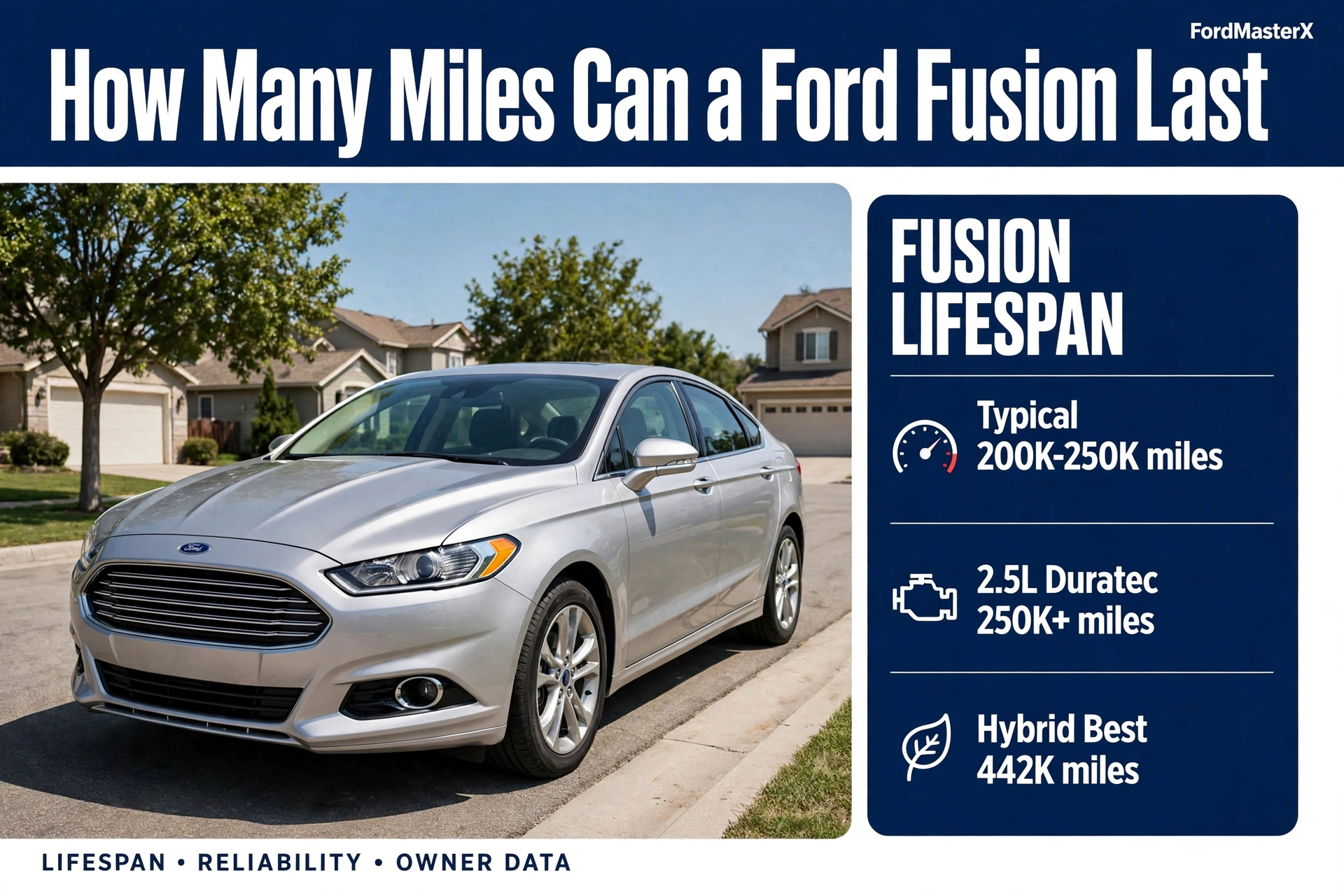
A well-maintained Ford Fusion lasts 200,000 to 250,000 miles. That is the honest answer for most cars, and it holds across both generations of the sedan, which Ford built from 2006 through the 2020 model year. The engine under the hood decides whether your car lands at the low end of that range or sails past it, and the model year matters almost as much. A 2.5-liter four-cylinder Fusion with a clean service record is a 250,000-mile car. A 2014 to 2019 Fusion with a 1.5-liter EcoBoost can still reach 150,000 to 200,000 miles, but coolant leaking into its cylinders can end the engine far sooner. This guide gives you the real mileage by engine and year, the owner reports behind the numbers, and the checks that tell you whether a used Fusion is worth your money.
What 200000 Miles Means for a Ford Fusion
Two hundred thousand miles sounds like the end of a car, but for a Fusion it is closer to a milestone than a finish line. The average American driver covers 12,000 to 15,000 miles a year, so 200,000 miles works out to roughly 13 to 16 years of normal use. Ford stopped building the Fusion after the 2020 model year, so every Fusion on the road today is at least six years old.



The data backs up the 200,000-mile figure from two directions. Owner reports collected by CarTipsDaily show well-kept Fusions reaching 200,000 to 250,000 miles. On the statistical side, iSeeCars puts the average Fusion Energi lifespan at 158,659 miles, or about 13.5 years, and gives it a 19.2 percent chance of reaching 200,000 miles. That average counts every car, including neglected ones, so a car with a full service history should beat it.
Mileage alone does not tell the whole story. A 200,000-mile Fusion that spent its life on the highway with oil changes every 5,000 to 7,500 miles is often in better shape than a 120,000-mile car that sat through short trips and missed services. Rubber seals, suspension bushings, and wiring age even when the car sits still. Judge a used Fusion by its engine, its service records, and its condition, and use the odometer as one input among several.
How Long Each Fusion Engine Lasts

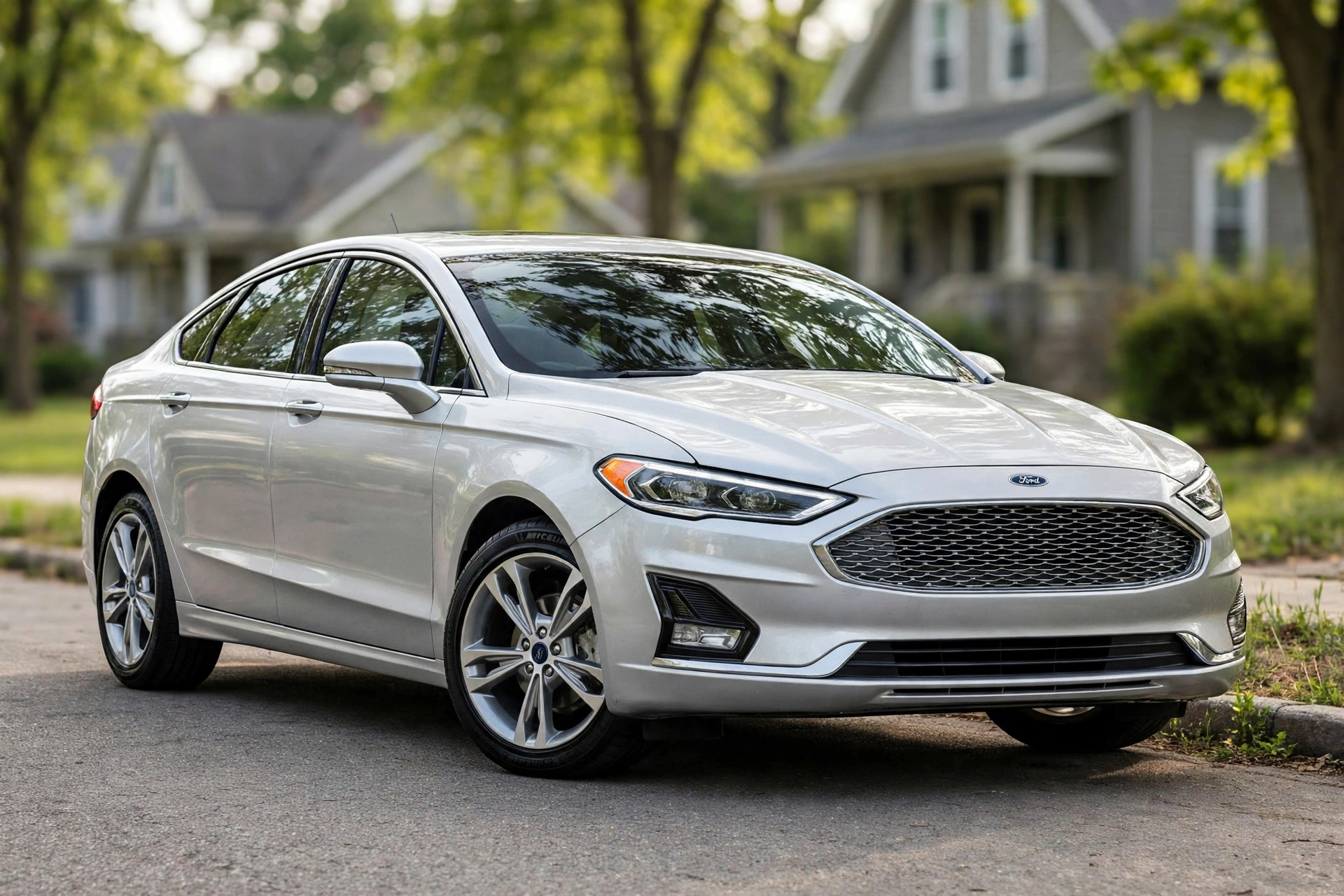
The Fusion shipped with nine engines over its production run, and their lifespans spread across more than 100,000 miles. Here is what each engine can do with proper maintenance.
| Engine | Model Years | Expected Lifespan | What to Know |
|---|---|---|---|
| 2.5L Duratec I4 | 2010-2020 | 250,000+ miles | The longevity pick. Simple, naturally aspirated, no turbo to fail |
| 2.0L Hybrid / Energi I4 | 2010-2020 | 250,000-300,000+ miles | eCVT and regenerative braking cut wear sharply |
| 3.0L Duratec V6 | 2006-2012 | 200,000-250,000 miles | Strong V6, but watch the 6-speed automatic behind it |
| 3.5L Duratec V6 | 2010-2012 | 210,000-250,000 miles | Sport-only V6; the internal water pump is the weak point |
| 2.3L Duratec I4 | 2006-2009 | 200,000+ miles | Durable early four-cylinder, now only in older cars |
| 2.0L EcoBoost I4 | 2013-2020 | 150,000-200,000 miles | Solid unless the 2017-2019 twin-scroll version has coolant intrusion |
| 2.7L EcoBoost V6 | 2017-2019 | 200,000 miles | Sport-only twin-turbo V6, 325 hp; watch carbon buildup and oil-pan leaks |
| 1.5L EcoBoost I4 | 2014-2019 | 150,000-200,000 miles | Highest coolant intrusion risk; inspect hardest |
| 1.6L EcoBoost I4 | 2013-2014 | 100,000-140,000 miles | Early turbo with overheating recalls; best avoided |
Ford Fusion Lifespan by Engine
Expected miles with proper maintenance. The engine in the car matters more than the badge on the trunk.
Longest-lived Fusion powertrain. Owner groups report examples at 300,000-600,000 miles.
The longevity pick among gas engines. No turbo, no direct-injection carbon problem.
Strong first-generation V6. Watch the 6-speed automatic behind it.
Sport-only V6, 2010-2012. The internal water pump is the weak point.
Durable early four-cylinder, found only in 2006-2009 cars now.
Solid for 2013-2016 cars. The 2017-2019 twin-scroll version can suffer coolant intrusion.
Sport-only twin-turbo V6, 2017-2019, 325 hp. Watch carbon buildup and oil-pan leaks.
Highest coolant intrusion risk, 2014-2019. Inspect hardest before buying.
Early turbo with overheating recalls, 2013-2014. Best avoided.
What the Numbers Mean
- Typical well-kept Fusion: 200,000 to 250,000 miles
- iSeeCars average Fusion Energi lifespan: 158,659 miles, 19.2% reach 200,000 miles
- Owner-reported record: a 2019 Fusion Hybrid at 442,000 miles on the original engine and transmission
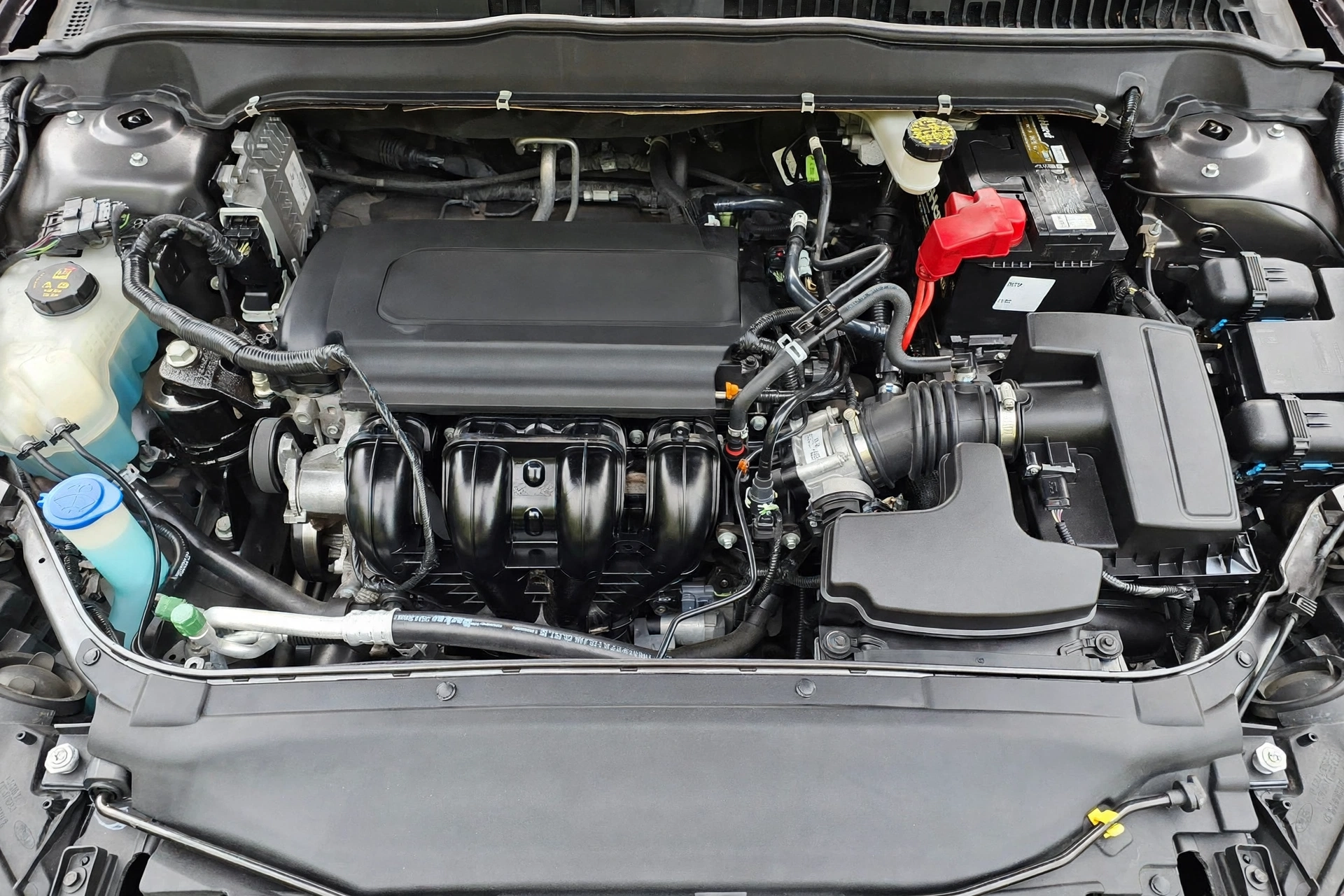
The 2.5-liter Duratec is the engine to buy if longevity is your only goal. It is a naturally aspirated four-cylinder co-developed with Mazda, with no turbocharger and no direct-injection carbon buildup problem. Owners routinely report 250,000 miles or more from this engine without major repairs, and it was available from 2010 through the final 2020 model year, so you can find it in both generations.
The hybrid powertrain is the surprise longevity champion. The Fusion Hybrid and plug-in Energi use a 2.0-liter Atkinson-cycle four-cylinder with an eCVT transmission, and the electric motor takes much of the load off the engine in city driving. Owner groups report examples at 300,000 to 600,000 miles, and one documented 2019 Fusion Hybrid reached 442,000 miles on its original engine, transmission, and even brake pads.
The turbocharged EcoBoost engines are where the range splits. The 2.0-liter EcoBoost in 2013 to 2016 cars is a sound engine that can reach 150,000 to 200,000 miles. The 1.5-liter EcoBoost and the twin-scroll 2.0-liter from 2017 to 2019 carry the coolant intrusion defect covered in the problems section, and that single fault can end an engine at 50,000 to 80,000 miles. The 1.6-liter EcoBoost from 2013 and 2014 had its own overheating recalls and the shortest expected life of the group. Two Sport-only V6s complete the lineup: the 3.5-liter Duratec in the 2010 to 2012 Fusion Sport, good for 210,000 to 250,000 miles if its internal water pump holds, and the twin-turbo 2.7-liter EcoBoost in the 2017 to 2019 Fusion Sport, a 325-horsepower engine that should reach 200,000 miles with strict oil changes. If you are shopping, the engine code on the door sticker matters more than the trim badge on the trunk.
Which Fusion Years Last the Longest


Ford built the Fusion in two generations, and reliability improved in steps rather than all at once. The first generation ran from 2006 through 2012 on the Mazda CD3 platform. The second generation ran from 2013 through 2020 with a full redesign.


The 2008, 2009, and early 2012 cars are the sweet spot of the first generation. Those years avoided the worst faults of their siblings, and owners report 150,000 to 240,000 miles with routine maintenance. The 2008 model earned an 89 out of 100 quality and reliability score from J.D. Power. Avoid the 2010 and 2011 model years, and late 2012 cars, unless you can verify their history, because the 2010 model year alone drew nearly 5,000 NHTSA complaints, the highest count of any Fusion year, mostly over power steering failures.


The second generation is a split story. The 2013 to 2016 cars brought the EcoBoost engines and the new styling, but also the early coolant intrusion cases and SYNC glitches. These years need the closest inspection of any Fusion, especially any car with a 1.5-liter or 1.6-liter engine. The 2017 to 2020 cars are the best of the second generation: the 2017 model scored 84 out of 100 and the 2018 scored 85 out of 100 from J.D. Power, while the final 2020 model earned 4 out of 5 for reliability and had just one recall. If your budget stretches to a 2017 or newer Fusion with the 2.5-liter or hybrid powertrain, that is the car to buy.
The rule is simple. Buy 2008 to 2009, early 2012, or 2017 to 2020 with the right powertrain. Inspect 2013 to 2016 cars engine by engine, and walk away from any EcoBoost car losing coolant or misfiring on a cold start. Other Ford sedans show the same pattern: our Ford Focus longevity guide shows the later years of a generation are the ones worth your money.
5 Problems That End a Fusion Early
Most Fusions die from one of five faults, and four of them give you warning first.
1. EcoBoost coolant intrusion. This is the fault that can cut a Fusion’s life in half. On 1.5-liter EcoBoost cars from 2014 to 2019 and twin-scroll 2.0-liter cars from 2017 to 2019, narrow cooling slots in the cylinder block deck let coolant seep into cylinders two and three. The first signs are a coolant level that drops with no visible leak, white smoke on a cold start, and a rough idle. The check engine light comes on with misfire codes P0316 and P0302, and the failure often strikes at 50,000 to 80,000 miles. Ford covered the fault with technical service bulletins 19-2208, 20-2100, and 22-2229, plus Customer Satisfaction Program 21N12, but there was no full safety recall. The only permanent repair is a short-block or long-block replacement with the redesigned block, typically costing $5,000 to $10,000 or more.


2. 6F35 transmission wear. The six-speed automatic in most second-generation Fusions is durable when its fluid stays fresh and fragile when it does not. Symptoms start as harsh shifts, delayed engagement, and shudder under light throttle, usually past 100,000 miles on cars that never had a fluid service. Most years have no dipstick, so owners skip the check. Our transmission fluid check guide shows what a proper level check looks like, and the Ford transmission identification chart confirms which gearbox your car carries. A fluid and filter service every 30,000 to 50,000 miles is cheap insurance against a transmission replacement that runs $5,758 to $6,267, per CarTipsDaily.
3. Electric power steering failure. First-generation Fusions, especially 2010 to 2012 cars, are known for electric power steering faults that cause sudden heavy steering or a complete loss of assist. Ford extended coverage on many of these cars, but the extension has expired for most of them by now.
4. Throttle body failure. A dirty or failing electronic throttle body causes stalling, surging, and a wrench warning light, most often on 2006 to 2012 cars. The fix is usually a cleaning or a replacement throttle body, and it is one of the cheaper repairs on this list.
5. Rust and electrical wear. In salt states, the rear subframe, brake lines, and rocker panels rust long before the engine gives up. Electrical faults follow: door actuators, SYNC modules, and blend door actuators fail with age. None of these kills the car on its own, but together they can push an older Fusion past the point where repairs make sense.
The Maintenance Habits That Add 50000 Miles
First, change the oil on time with the right specification. The Ford engine oil recommendation chart lists the correct specification for each engine, and our guide to how often a car needs an oil change explains why severe service shortens the interval.
Second, service the transmission before it complains. For the 6F35 automatic, a fluid change every 30,000 to 50,000 miles keeps shifts smooth past 200,000 miles. For the hybrid eCVT, owner groups recommend a fluid change every 30,000 miles, far sooner than Ford’s published 150,000-mile interval, and report that neglected eCVTs rarely reach 100,000 miles without trouble.
Third, watch the coolant level every month. A Fusion that loses coolant with no puddle under the car is telling you about intrusion, a hose, or a water pump. Check the level when the engine is cold and look for white residue around hose joints. These three habits, done on schedule, are what separate the 250,000-mile Fusions from the ones that stop at 120,000.
How Long a Fusion Hybrid Battery Lasts
A Fusion Hybrid battery typically lasts 8 to 10 years or 100,000 to 150,000 miles, and many go further. Ford warranties the hybrid battery for 8 years or 100,000 miles in most states, and 10 years or 150,000 miles in California-emission states, and the US Department of Energy reports that hybrid batteries retain 70 to 80 percent of their original capacity after 10 years.
Battery failure is rarely sudden. The signs are a steady drop in fuel economy, the engine running far more often than it used to, and a battery warning on the dash. A hybrid that still returns close to its original economy has a healthy battery. The 2020 Fusion Hybrid was rated at up to 43 mpg in the city, so a car still hitting the high 30s has plenty of battery life left. Replacement costs vary widely by source, so get a quote for your year before you buy a high-mileage hybrid.
Is a 150000 Mile Fusion Worth Buying
Yes, if it has the right engine and a service history you can verify. A 150,000-mile Fusion with the 2.5-liter engine, a stack of oil change receipts, and a transmission service in its past has another 100,000 miles in it.
Use this rule when you shop. Buy the 2.5-liter or the hybrid at any mileage under 200,000 if the service records check out. Buy a 2.0-liter EcoBoost from 2013 to 2016 only after a cold-start test and a coolant pressure check. Avoid the 1.5-liter EcoBoost from 2014 to 2019 unless the seller can prove the engine was replaced with the redesigned block. Whatever engine you choose, budget $500 to $1,000 for immediate maintenance: oil, transmission fluid, coolant, and a full inspection.
How to Check a Used Fusion Before You Buy
A thirty-minute inspection catches the two faults that matter most. Start the car cold and watch the exhaust for white smoke, then let it idle and listen for a rough or hunting idle. Either symptom points at coolant intrusion. Check the coolant reservoir level against the cold mark, then look for white crust around hose joints and the water pump. Pull the oil dipstick and look for milky residue, which means coolant is mixing with the oil.
Drive the car through every gear, including a slow crawl and a firm highway merge. The transmission should shift smoothly with no flare, shudder, or delay. Turn the steering lock to lock at parking speed and listen for groans or a sudden heaviness. Test every electrical item, including the SYNC screen, the blend doors, and all four windows, because these are the age-related faults that add up. Ask for service records and look for oil changes, at least one transmission service, and any cooling system work. If anything in this check worries you, spend around $100 to $200 on a pre-purchase inspection by an independent mechanic before you sign.
Frequently Asked Questions
How many miles can a Ford Fusion last?


A well-maintained Ford Fusion lasts 200,000 to 250,000 miles. Cars with the 2.5-liter engine or the hybrid powertrain often pass 250,000 miles, while the 1.5-liter EcoBoost averages closer to 150,000 to 200,000 miles.
What is considered high mileage for a Ford Fusion?
High mileage for a Fusion starts at about 200,000 miles. A car at 150,000 miles with full service records still has years of life left, while a neglected car can be worn out at 120,000 miles.
Which Ford Fusion engine lasts the longest?


The 2.5-liter Duratec four-cylinder lasts the longest among gas engines, with owners routinely reporting 250,000 miles or more. The hybrid powertrain lasts even longer, with owner-reported examples past 300,000 miles.
Do Ford Fusion hybrids last as long as gas models?
Yes, and often longer. The hybrid’s eCVT transmission and regenerative braking reduce wear on the engine and brakes, and the battery typically lasts 8 to 10 years or 100,000 to 150,000 miles.
What year Ford Fusion should I avoid?


Be most careful with 2013 to 2016 cars, especially 2014 to 2019 models with the 1.5-liter EcoBoost and 2017 to 2019 models with the twin-scroll 2.0-liter EcoBoost, because of coolant intrusion. The 2010 model year also drew the most NHTSA complaints of any Fusion year.
The Bottom Line on Ford Fusion Mileage
A Ford Fusion can last 200,000 to 250,000 miles, and the cars that do are almost always the ones with the 2.5-liter engine or the hybrid powertrain, bought in the right model years and serviced on schedule. The number is real, but it is not automatic. It comes from oil changes every 5,000 to 7,500 miles, transmission fluid changes every 30,000 to 50,000 miles, and a coolant level that gets checked every month. The one fault that can erase all of it is coolant intrusion in the 1.5-liter and twin-scroll 2.0-liter EcoBoost engines, so check the engine code before you check the price. Buy the right Fusion, keep up with the fluids, and you will get a sedan that outlasts its payments by years.