
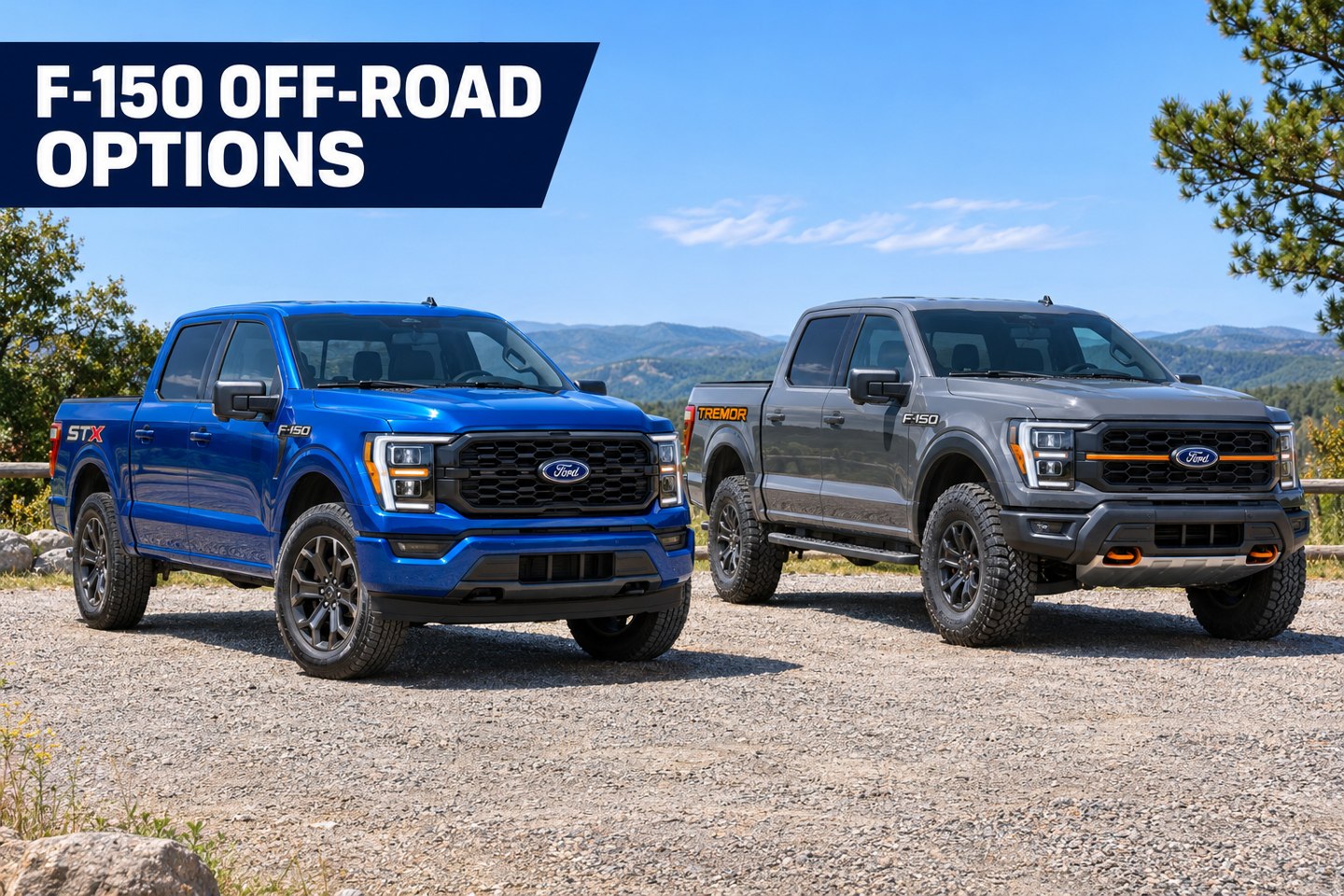
2026 Ford F-150 Package Comparison for FX4, STX, and Tremor

Choose an eligible 4×4 with FX4 option 55A if you want factory underbody protection and off-road equipment while keeping your preferred eligible trim. Choose STX if you want its styling and cabin configuration, then look for STX FX4 equipment group 201A if you also want the off-road hardware Ford specifies for that group. Choose Tremor if you want a dedicated off-road trim with its own suspension parts, 33-inch-class all-terrain tires, and trail-driving features.
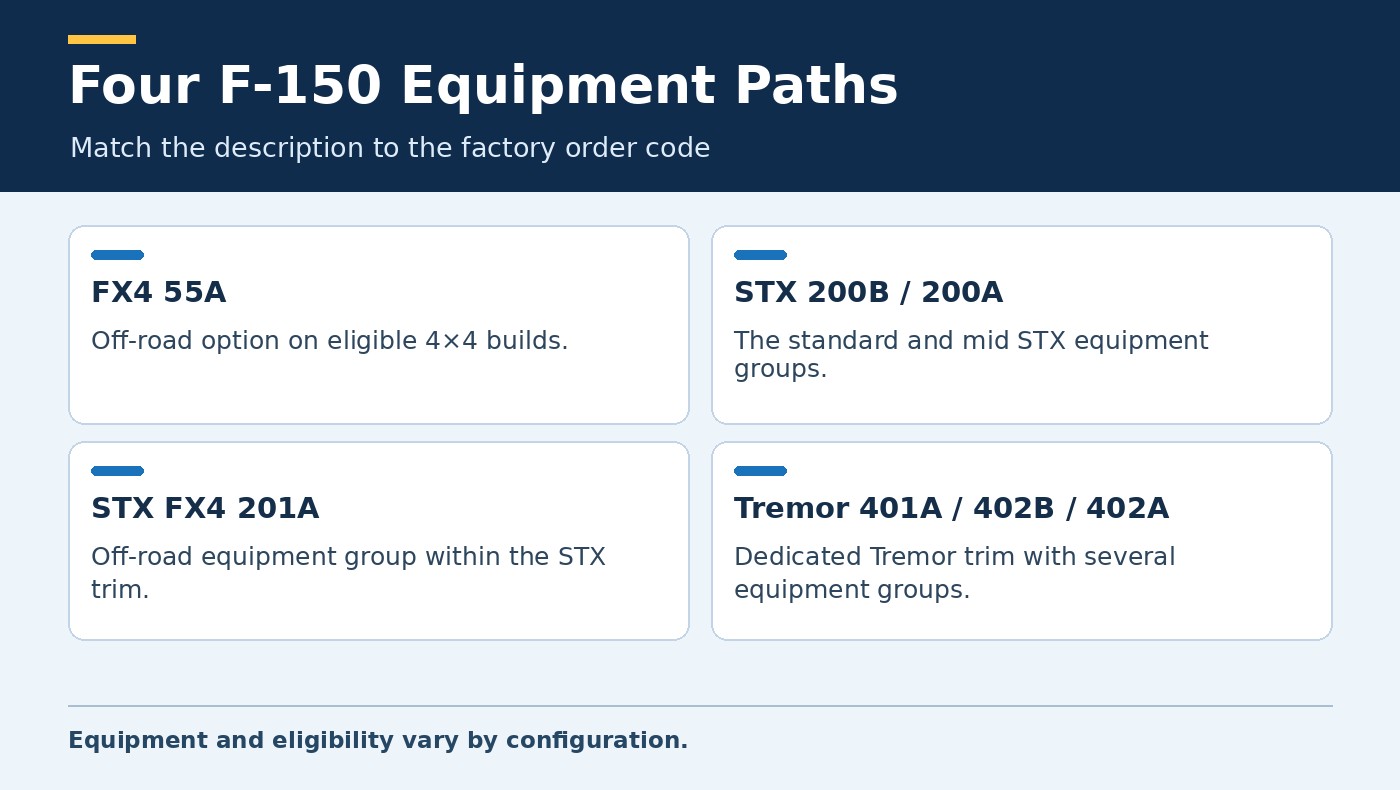
The codes matter. Ford’s 2026 U.S. order guide shows 55A as a package, 201A as an STX equipment group, and 401A, 402B, and 402A as Tremor equipment groups. A listing headline that just says “FX4” leaves you with more than one possibility. Begin with the model year and the original window sticker or dealer build record before comparing equipment.


Ford F-150 FX4 vs STX vs Tremor
| Configuration | What it is | Factory features to look for | Good fit if you want |
|---|---|---|---|
| FX4 Off-Road Package, 55A | Option on eligible 2026 4×4 builds | Underbody skid plates, off-road front shocks, monotube rear shocks, Hill Descent Control, Rock Crawl mode, and engine-dependent rear axle equipment | An eligible trim with additional trail equipment |
| STX 200B or 200A | STX equipment groups | STX styling, sport cloth seating, and wheels or tires matched to the group and drive configuration | An STX cabin and appearance with choices beyond the dedicated off-road versions |
| STX FX4, 201A | An equipment group within the STX trim | All-terrain tires, skid plates, off-road front shocks, monotube rear shocks, and a 3.55 electronic locker for the 2.7L configuration | An STX with the specific hardware listed under 201A |
| Tremor 401A, 402B, or 402A | Dedicated Tremor trim with multiple equipment groups | Tremor-specific front suspension parts, 275/70R18 tires, 3.73 electronic-locking rear axle, and trail-driving aids. Additional equipment varies by group. | A factory off-road configuration with Tremor hardware and controls |
This comparison uses the April 30, 2026 revision of the Ford F-150 order guide. Ford’s 2026 model overview also identifies STX FX4 as 201A and shows separate STX and Tremor model cards. For a broader cabin, equipment, and trim comparison, use the Ford F-150 trim levels chart.
What Comes With the 55A FX4 Off-Road Package?


The April order guide lists the FX4 Off-Road Package on XLT 301A, 302A, and 303A, as well as eligible Lariat, King Ranch, and Platinum configurations. The package requires four-wheel drive. Check the individual trim page and options before assuming that a particular wheel, cab, or equipment combination can be ordered with it. Ford lists restrictions for certain wheel and appearance combinations.
The package adds protection for the fuel tank, transfer case, and front differential. The shock setup includes off-road-tuned front units and monotube rear units. Hill Descent Control and Rock Crawl mode are listed in the same package section. This mix is useful when you want extra protection and traction features but also want to keep the seating, cabin, and other equipment available on your chosen trim.
The rear axle entry requires a closer look. Ford lists different electronic-locking ratios for different engines and shows further combinations in the optional equipment section. If axle ratio matters to you, check the ratio for the exact engine and build. An advertisement might mention a locker without identifying its ratio, and two trucks listed as XLT FX4 may have different axle and powertrain combinations.
A plain 4×4 listing gives you the drivetrain field only. Look for the 55A line when buying a truck specifically for the package. On an older truck, inspect the hardware as well. A removed skid plate or an aftermarket suspension changes what you actually see and use, even if the original build documentation still shows 55A.
How STX and STX FX4 Differ


STX 200B and 200A
Ford describes STX as a series with its own exterior and cabin details. Standard equipment described in the order guide includes a black and dark gray grille, body-color bumpers, sport cloth front seating, and gloss-black wheels. Ford lists 200B as Standard and 200A as Mid. The difference between the groups belongs in the equipment tables. Start by looking at the features that matter to you, such as seating, display, and available factory packages.
The STX standard-equipment page lists all-season tires in the 4×2 description and all-terrain tires in the 4×4 description. Tires alone therefore leave the equipment group unresolved. A seller can also change wheels and tires long after the original order. Use the sticker or build record to distinguish the original equipment from what is bolted onto the truck now.


STX FX4 equipment group 201A


Ford’s STX equipment-group table gives 201A its own column and lists it as a SuperCrew 4×4 with a 5.5-foot box. It adds front and rear shocks intended for off-road use and specifies underbody protection for the fuel tank, transfer case, and front differential. It also specifies LT265/70R18 all-terrain tires, its own wheel and bumper details, and an FX4 decal. The 3.55 electronic-locking rear axle entry has a 2.7L engine qualification in that group’s equipment table.


Compare the trim’s exact group column before assuming that a 201A truck gets every control or option from a different section of the guide. The 55A list is a separate reference. The shared FX4 wording describes similar priorities. The order codes show whether you are looking at the STX group or the standalone package.
What to check on a used STX
Ask the seller for a copy of the original window sticker or factory vehicle summary. Match the model year, drivetrain, and equipment group. Then look at the underbody protection, tire size, and off-road controls on the actual truck. If the factory sticker lists 200A but the truck wears an FX4 decal, record the discrepancy. The decal may have been added, and some trail equipment could have been installed separately. A dealer inspection can identify the installed parts without relying on a badge.
What Makes Tremor a Separate Choice?
The 2026 Tremor series is shown as a SuperCrew 4×4 with a 5.5-foot box in Ford’s order guide. The factory suspension specification includes unique front control arms and a front knuckle, off-road front and rear shocks, and increased ride height. The guide lists 275/70R18 tires and a 3.73 electronic-locking rear axle in the Tremor standard-equipment section. It identifies the 3.5L EcoBoost as standard and the 5.0L V8 as optional in the equipment-group table.


Ford also lists Trail Control, Trail 1-Pedal Drive, and Trail Turn Assist among Tremor features. Match those to how you use the truck. If you regularly drive slow trails or work on rough terrain, the mix of suspension parts and controls may matter more than any particular trim detail. On the other hand, a buyer who needs a longer box should compare eligible 4×4 configurations outside the Tremor’s listed 5.5-foot box.
Look closely at the group code if a dealer advertises a front Torsen differential. The order guide shows it in the equipment-group matrix, and Ford’s consumer model page describes it as available. Check the specific truck’s equipment group and build record. The same applies to comfort or towing equipment that appears on one Tremor listing and is absent from another. For example, Ford places the 53T Tow/Haul package as optional on 401A and 402B, and included on 402A in the April guide.
Which F-150 Configuration Fits How You Drive?
Daily driving and occasional unpaved roads


Start with the seats, cab, box, and drivetrain you need. If a basic STX configuration already covers your driving and cargo space, compare the exact group and available options before adding specialized equipment. If muddy roads, hills, or regular access to unpaved worksites are likely, compare an STX 201A with an eligible XLT 55A. Pick the truck that combines the hardware you need with the interior and bed you will use every day.
Frequent trails and rough access roads
Compare the parts and controls directly. Write down the protective plates, tire size, rear axle hardware, and suspension components on both trucks. A Tremor may suit a buyer who specifically wants its suspension configuration and trail controls. A 55A build can suit someone who would rather configure a different cab, box, or equipment group, subject to Ford’s availability rules. If an obstacle has very little margin, measure the actual lowest point and check approach and breakover geometry for the truck you plan to drive.
Towing and hauling remain a separate decision


Ford’s 2026 towing guide organizes towing limits around the actual configuration. Check the engine, axle, drivetrain, and required towing equipment. Read the load and certification labels on the truck you are considering. An FX4 badge or Tremor name does not provide a payload rating or establish the equipment needed to reach an advertised maximum.
Use the Ford F-150 towing capacity by trim guide for an overview and check the applicable Ford towing selector for the exact configuration. Verify the truck’s factory brake controller, receiver, and other items relevant to your trailer. When buying a used truck, inspect any added tow equipment before relying on it.
A Checklist for Comparing Two Listings
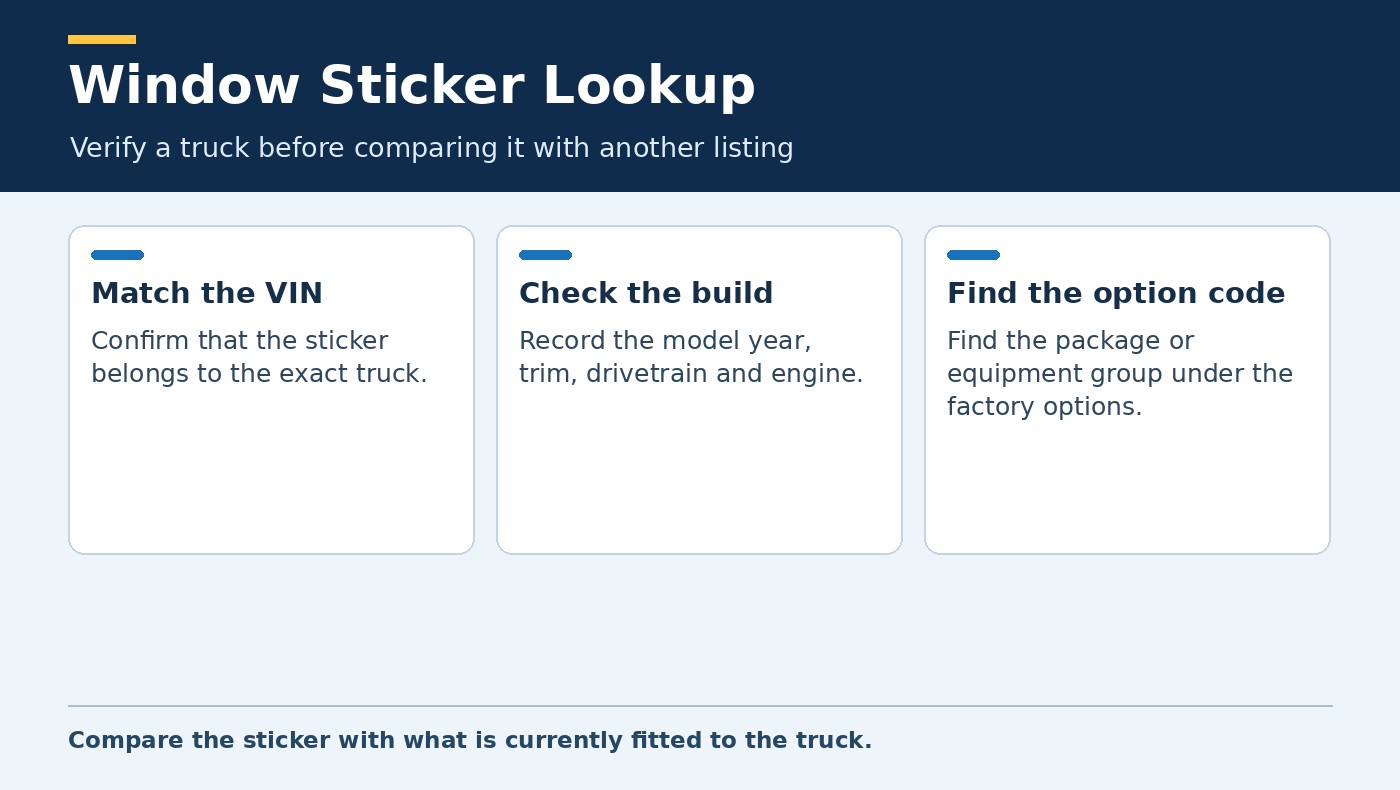
- Confirm the model year. Use the VIN and factory paperwork. Dealer photos and descriptions can carry over from other listings.
- Record the trim and equipment group. Ask for the code. Write down 200A or 201A for the STX example and the actual 401A, 402B, or 402A code for a Tremor.
- Verify 55A separately. Look for the standalone package line on eligible trucks. Cross-check its equipment in the order guide for that year.
- Match the engine, cab, box, and drive. These can change what Ford allows and what an otherwise similar truck can carry or tow.
- Inspect what is fitted. Check the tires, underbody panels, and controls. Ask about lifts, removed parts, and component replacements.
- Compare like-for-like written quotes. Ask the dealer to isolate the price for a package or group if that affects the decision. Keep rebates, freight, and dealer additions visible when comparing quoted totals.
For example, suppose one listing says “STX FX4” and another says “XLT 4×4 FX4.” The useful evidence is the first truck’s 201A equipment group and the second truck’s 55A package line, assuming both descriptions are accurate. Compare their available cab and box first, then use the relevant equipment tables to verify the parts you care about. This avoids comparing cabin equipment as if both trucks started from the same series.
A separate shopper might compare two Tremors for a trailer and long trips. Get both equipment group codes before comparing price. Look up the exact axle and towing configuration, and check payload on the vehicle labels. Then compare interior and driver-assist items on the actual listings. You may find that two trucks share the off-road hardware you want, while one group includes bed or tow equipment you would otherwise have to order. Ford’s 2026 model-year update identifies 402B as an addition for that year, so an older listing deserves a year-specific lookup.
Read the Option Codes in the Right Order
Imagine you need the 6.5-foot box for equipment you use every day and want factory skid plates. Start by filtering for the box. The 2026 order guide lists the STX 201A and Tremor choices in this comparison with a 5.5-foot box. Next, look for a suitable 4×4 with 55A and confirm that its group and other options qualify. Ask for the build sheet before visiting. It takes less time to check a code than to discover on the lot that a listing combined photos and descriptions from different trucks.
Next, prioritize the equipment you would otherwise spend money adding. A buyer who values a particular axle setup should write down the engine and axle code as a pair. A buyer who wants towing technology should verify it in the equipment group or package where Ford actually lists it. Ask the salesperson to point to those entries on the quote. If the quote uses a dealer shorthand, ask which Ford order code it represents.
Finally, separate the as-ordered equipment from the vehicle’s current condition. A window sticker establishes the original group, while inspection shows whether the original plates, tires, and shocks are still fitted. A used vehicle can satisfy one check and fail the other. Record any differences before comparing its price with a truck that still carries its original hardware.
Frequently Asked Questions
Is STX the same as FX4?
STX is a model series in Ford’s 2026 U.S. lineup. STX FX4 is the 201A equipment group within that series. Ford lists the standalone FX4 Off-Road Package for eligible 4×4 builds under 55A. Ask for the code to establish which one an advertisement refers to.
Does every STX 4×4 have 201A?
A four-wheel-drive STX can have a different equipment group. Ford’s STX series page treats 4×4 as a configuration and 201A as an equipment-group choice. Look for the group on the original window sticker or build record before buying for the 201A hardware.
Can I add the standalone FX4 package to every XLT?
Check the 2026 guide’s group eligibility and the associated restrictions. The 55A package listing names 301A, 302A, and 303A for XLT and requires 4×4. Use the exact build to resolve wheels, tires, engines, and any other option combination.
Does every Tremor have a front Torsen differential?
Ford describes the differential as available. Check the original equipment group and confirm the front axle information with a dealer before treating it as fitted. A model badge and a rear locker listing alone do not resolve the front differential.
Which model is best if bed length matters more than trail hardware?
Start by confirming the length your work requires. Ford’s 2026 Tremor series table shows a 5.5-foot box. Compare remaining options after finding an eligible cab and box that can do the work. An eligible 55A truck may give you a factory off-road package while preserving the body configuration you need.