How Long Is a Ford F-250? (Full Dimensions Guide)

The overall length of a Ford F-250 ranges from 231.8 inches to 266.2 inches depending on the specific cab and bed configuration. The most popular setup, the Crew Cab with a 6.75-foot bed, measures exactly 250 inches in total length.
🎯 Key Takeaways
Recommended Best Deal Products


- Total length varies significantly based on three cab styles and two bed lengths.
- Regular Cab models are only paired with the 8-foot long bed.
- Crew Cab Long Bed models require over 22 feet of clearance.
- A 6.75-foot ‘short bed’ reduces total vehicle length by about 16 inches.
- Standard 20-foot residential garages are often too shallow for an F-250.
The total length of a Ford F-250 ranges from 231.8 inches to 266.2 inches, depending entirely on which cab and bed combination you choose. Because the Super Duty is designed for both utility and daily driving, these dimensions vary by nearly three feet between the shortest and longest configurations. If you are measuring your garage or a parking spot, you need the exact figure for your specific setup rather than a general estimate.

Prime for Young Adults — 6 Months Free
Students and 18–24s get six months of Prime free, then half price.
Start 6 Months Free As an Amazon Associate I earn from qualifying purchases.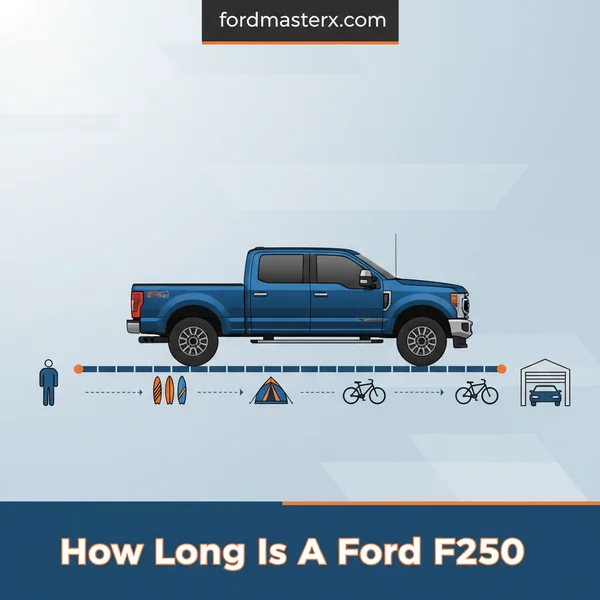
Understanding these measurements is critical for practical daily use. A Crew Cab with an 8-foot bed requires significantly more clearance for turning and parking than a Regular Cab model. This guide breaks down the precise exterior dimensions for every current F-250 configuration so you can determine exactly how much space you need on the road and in your driveway.
Ford F-250 Length by Configuration (Cab and Bed Combinations)
The Ford F-250 is available in three cab styles: Regular Cab, SuperCab, and Crew Cab. These are paired with either a 6.75-foot “Short Bed” or an 8-foot “Long Bed.” Since the wheelbase changes to accommodate these parts, the overall bumper-to-bumper length shifts significantly with each step up in size. Most modern F-250 models follow a standardized set of dimensions across the XL, XLT, Lariat, and higher trims.
Regular Cab and SuperCab Lengths
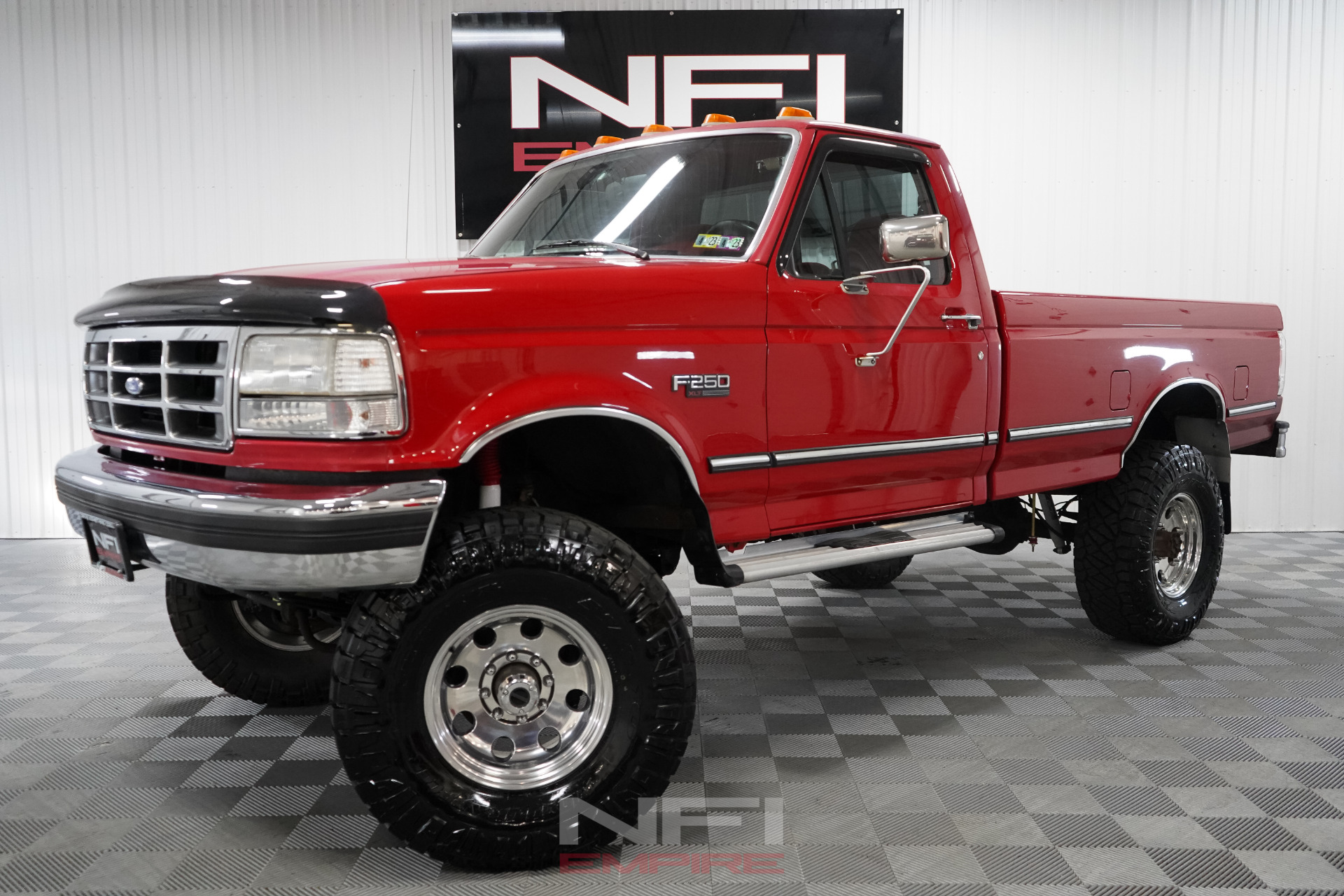
The Regular Cab is the shortest version of the F-250 because it is exclusively paired with the 8-foot bed. It is often the preferred choice for fleet use or dedicated work trucks where maneuverability is more important than passenger space. The SuperCab offers a middle ground, providing a small rear seating area while allowing for both bed sizes.
- Regular Cab with 8′ Bed: 231.8 inches (19.32 feet)
- SuperCab with 6.75′ Bed: 238.2 inches (19.85 feet)
- SuperCab with 8′ Bed: 253.2 inches (21.1 feet)
If you choose the SuperCab with the long bed, you are already exceeding 21 feet in total length. This is a crucial threshold for many standard residential garages, which often top out at 20 to 22 feet in depth.
Crew Cab Dimensions
The Crew Cab is the most popular configuration for modern truck owners, offering full-sized rear doors and significant legroom. However, this extra cabin space adds considerable length to the chassis. When you pair a Crew Cab with an 8-foot bed, you are driving one of the longest consumer vehicles on the market.
- Crew Cab with 6.75′ Bed: 250.0 inches (20.83 feet)
- Crew Cab with 8′ Bed: 266.2 inches (22.18 feet)
The 266.2-inch measurement for the Crew Cab Long Bed represents the maximum footprint of the F-250. At over 22 feet long, this configuration often requires specialized parking or “pull-through” spots in public lots, as it will likely hang out of a standard-sized parking space.
Comparing Short Bed vs. Long Bed Total Footprints
When deciding between the 6.75-foot bed and the 8-foot bed, the decision usually comes down to cargo capacity versus daily drivability. The “Short Bed” on an F-250 is actually quite large compared to mid-size trucks, but it saves you about 15 inches of total vehicle length compared to the Long Bed. That 1.25-foot difference changes the entire footprint of the truck.
Maneuverability and Turning Radius
The physical length of the truck directly impacts the wheelbase, which is the distance between the center of the front and rear wheels. A shorter footprint means a tighter turning radius. For example, an F-250 with a 6.75-foot bed is much easier to navigate through narrow city streets or tight construction sites. The Long Bed footprint, while superior for hauling plywood or equipment, requires a much wider “swing” when making U-turns or backing into a trailer hitch.
- Short Bed Footprint: Easier to fit into standard 20-foot parking stalls; fits in most modern suburban garages with minimal clearance.
- Long Bed Footprint: Offers maximum stability for fifth-wheel towing but often requires “double parking” or finding oversized spaces.
Practical Parking Realities
A standard public parking space in the United States is typically 18 to 20 feet long. If you drive a Crew Cab with a Short Bed (20.83 feet), your bumper will already be at the very edge of the line. If you opt for the Long Bed (22.18 feet), you will physically stick out into the driving lane by more than two feet. This makes the “footprint” of the truck a primary concern for owners who frequent urban areas or busy shopping centers. Choosing the Short Bed footprint is often the “sweet spot” for owners who need a heavy-duty truck that can still function as a daily driver.

Audible — Listen Free for 30 Days
One free credit a month and thousands of titles included.
Listen Free for 30 Days As an Amazon Associate I earn from qualifying purchases.The extra 15 inches of the 8-foot bed footprint doesn’t just affect length; it also shifts the weight distribution of the vehicle. While the longer footprint provides a smoother ride on the highway due to the extended wheelbase, it makes the truck significantly less agile in reverse. You must account for that extra length every time you clear a corner or pull into a driveway.
Garage and Parking Requirements for the F-250
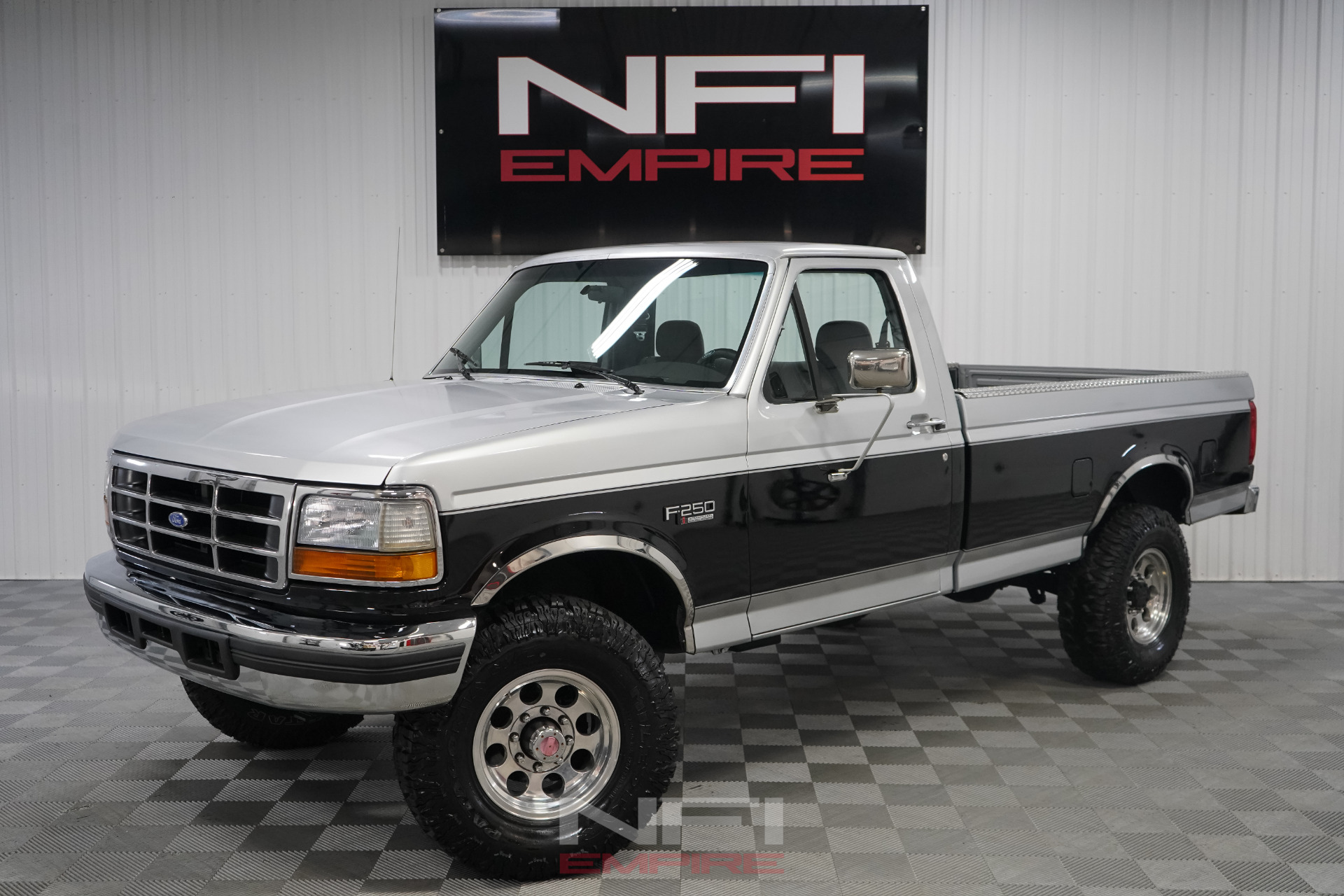
One of the most common mistakes new truck owners make is assuming their heavy-duty pickup will fit in a standard residential garage. Because the Ford F-250 can reach lengths of over 22 feet, space management is a critical factor. Most modern suburban garages are between 20 and 22 feet deep, meaning a Crew Cab model might literally be too long to close the door.
Measuring Your Space for a Heavy-Duty Truck
Before bringing an F-250 home, you need to account for more than just the bumper-to-bumper measurements. You must consider “wiggle room” for walking around the vehicle and the extra length added by accessories. Here are a few things to keep in mind when checking your parking situation:
- The Hitch Factor: A standard drop hitch can add 6 to 10 inches to your total length. If you plan to leave your hitch on, measure your garage with this in mind.
- Tailgate Access: To fully lower the tailgate, you need an additional 2 feet of clearance behind the rear bumper.
- Height Clearance: While length is the primary concern, don’t forget that many F-250s stand nearly 80 inches tall. Older garage doors may be too low, especially if the truck has a lift kit or oversized tires.
Street and Parallel Parking Reality
Parking an F-250 in a crowded downtown area or a busy shopping mall requires strategy. Because the truck is significantly longer than the average SUV, it will often stick out of standard parking stalls. When parking on the street, you will frequently need to find two consecutive open spots or look for designated “oversized vehicle” areas. Many owners prefer to park at the back of lots where they can pull through two spaces, avoiding the need to back out into narrow lanes.
Practical Impacts of Vehicle Length on Maneuverability
The length of your Ford F-250 doesn’t just dictate where you can park; it fundamentally changes how you navigate the road. A longer wheelbase—the distance between the front and rear wheels—provides incredible stability for towing heavy trailers, but it comes at the cost of a much larger turning radius.
Navigating Tight Turns and Drive-Thrus
If you are moving from a light-duty F-150 or a mid-sized SUV to an F-250, the “swing” of the truck will feel significantly different. In tight environments like bank drive-thrus or narrow urban streets, you have to delay your turn longer to ensure the rear wheels don’t clip the curb. This is often referred to as “off-tracking,” where the rear wheels follow a shorter path than the front wheels.
- U-Turns: Expect to perform three-point turns in areas where smaller vehicles can make a continuous loop.
- Blind Spots: The longer the truck, the more significant the blind spots along the sides. Using your tow mirrors effectively is non-negotiable for safe lane changes.
- Technology Assistance: Ford’s 360-degree camera system and parking sensors are highly recommended for the longer configurations to help gauge distance in tight quarters.
The Stability Advantage of a Long Truck
While the length makes the F-250 a handful in the city, it is a massive advantage on the highway. A longer vehicle is less prone to “pitching” (the rocking motion from front to back) when carrying heavy loads. If you plan on long-distance hauling or pulling a fifth-wheel camper, the extra length of the Long Box configuration provides a smoother, more composed ride. It keeps the trailer’s weight distributed more evenly across the frame, reducing the “tail wagging the dog” effect often felt in shorter vehicles.
Conclusion
Understanding exactly how long a Ford F-250 is helps you decide which cab and bed configuration fits your daily life. Whether you choose the compact Regular Cab for work or the massive Crew Cab Long Box for family hauling, the dimensions impact everything from your garage choice to your driving style. Remember that while a longer truck offers superior towing stability and cargo space, it requires extra planning for parking and urban navigation.
Next Steps: Before you head to the dealership, grab a tape measure and check your garage depth. If you’re leaning toward the Crew Cab, take it for a test drive specifically in a crowded parking lot to see if you’re comfortable with the turning radius. Choosing the right size ensures your Super Duty is a tool that helps you, rather than a logistical headache!
❓ Frequently Asked Questions
What are the specific dimensions for the 2024 Ford F-250 Crew Cab?
The 2024 Crew Cab with a 6.75-foot bed is 250 inches long, while the 8-foot bed version extends to 266.2 inches. These dimensions are consistent across most recent Super Duty model years.
Audible Premium Plus — Annual Membership
12 audiobook credits up front, plus the full Audible catalogue.
See Annual Plans As an Amazon Associate I earn from qualifying purchases.How does the F-250 length compare to the F-150?
The F-250 is significantly longer; while the longest F-150 is about 243.5 inches, the F-250 can reach up to 266.2 inches. This extra length is due to the heavy-duty chassis and larger cab designs.
Does trim level affect the exterior length of the truck?
No, the length is determined strictly by the cab style and bed length. Whether you choose an XL, Lariat, or Limited trim, the exterior dimensions remain identical for that configuration.
What is the wheelbase of a Ford F-250?
The wheelbase ranges from 141.4 inches for the Regular Cab to 175.9 inches for the Crew Cab Long Bed. The wheelbase is the distance between the center of the front and rear wheels.
Is the F-250 longer with 4WD?
No, the 4×4 drivetrain does not change the overall length of the vehicle. However, it may slightly increase the ride height and ground clearance compared to 4×2 models.
Can I park an F-250 in a public parking garage?
While it can fit in some, many public garages have a standard stall length of 18 to 20 feet. An F-250 Crew Cab will often stick out 1 to 2 feet past the end of a standard parking space.