5 Ford 6.0 IPR Valve Symptoms: Diagnostic & Data Guide

The most definitive Ford 6.0 IPR valve symptoms are no-start conditions when hot and stalling at operating temperatures. Diagnosis relies on monitoring the IPR duty cycle, where a reading of 85% during cranking indicates the valve is struggling to build the 500 PSI required for ignition.
🎯 Key Takeaways
Recommended Best Deal Products


- A hot no-start is the primary indicator of IPR or high-pressure oil failure.
- Normal IPR duty cycle at a warm idle should be 21% to 24%.
- An IPR duty cycle pinned at 85% suggests a massive pressure leak.
- Physical debris on the IPR screen often signals upstream engine component failure.
- Electrical IPR issues typically manifest as sudden stalling or ‘hunting’ idle speeds.
A failing IPR (Injection Pressure Regulator) valve on your Ford 6.0L Powerstroke typically manifests as a high-pressure oil system that can no longer maintain the 500 PSI required to fire the injectors. Because the IPR valve is a precision electromagnetic actuator responsible for dumping or holding oil pressure, even a tiny piece of debris or a torn O-ring will result in a truck that runs perfectly one minute and leaves you stranded the next. Most owners mistake these symptoms for a failing High-Pressure Oil Pump (HPOP), but identifying the specific behavior of the IPR can save you hours of unnecessary teardown.

Prime for Young Adults — 6 Months Free
Students and 18–24s get six months of Prime free, then half price.
Start 6 Months Free As an Amazon Associate I earn from qualifying purchases.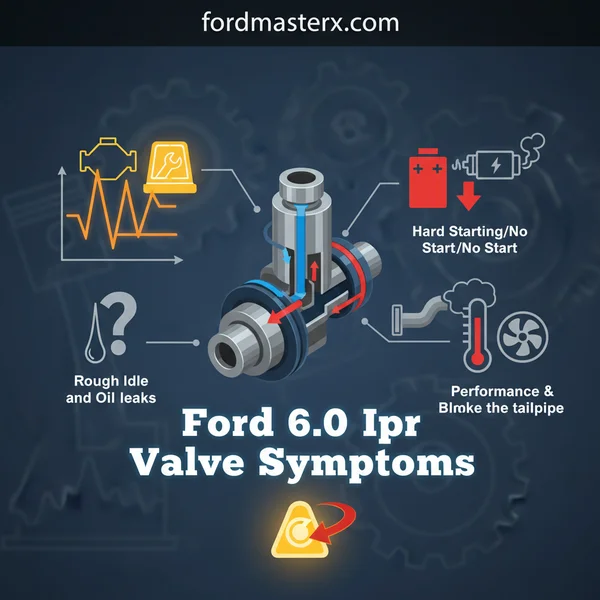
Practically speaking, diagnosing the IPR valve is about observing how your engine handles heat and oil viscosity. As the oil thins out at operating temperature, any mechanical or electrical weakness in the valve becomes magnified. If your truck struggles specifically when warm but starts fine when cold, you are likely looking at an IPR issue rather than a fuel delivery or glow plug problem. Pinpointing these symptoms early prevents the internal “hunting” for pressure that eventually wears out your HPOP and stresses your FICM.
Core Performance Symptoms of a Failing 6.0L IPR Valve
The IPR valve acts as the gatekeeper for the oil that drives your injectors. When it fails, it usually happens in one of two ways: the mechanical plunger sticks due to debris, or the electrical solenoid loses its ability to pull the plunger against the oil flow. This creates very specific driveability issues that point directly to the high-pressure oil system.
📤 Share
💾 Download
The “Hard Start” or “No Start” When Hot
This is the hallmark symptom of a 6.0L IPR valve failure. When your engine is cold, the oil is thick, which helps the IPR valve maintain enough pressure to reach the 500 PSI starting threshold, even if the valve’s O-rings are slightly damaged. However, once the engine reaches operating temperature (around 190°F – 200°F), the oil thins out significantly. If the IPR valve cannot close fully or the screen is pushed in, the thin oil escapes back to the crankcase instead of building pressure. You will notice the truck cranks for a long time without firing, or it may not fire at all until the engine block cools down for several hours.
Sudden Stalling at Operating Temperature
If your truck shuts off abruptly while idling at a red light or slowing down for a turn, the IPR valve is likely “sticking” or losing its electrical signal. Because the 6.0L requires constant high-pressure oil to keep the injectors cycling, a momentary glitch in the IPR position causes an immediate engine kill. Unlike a fuel pump failure which might cause the engine to sputter and cough, an IPR-related stall feels like someone turned off the key. Common triggers for this include:
- Deceleration: When you let off the throttle, the IPR duty cycle drops. If it sticks too far open, the pressure plummets below the stall threshold.
- Heat Soak: After a long highway pull, stopping at an exit ramp puts the most stress on a weak IPR solenoid.
- Debris in the Screen: Tiny metal flakes or carbon can wedge the valve open, preventing it from reacting to the computer’s commands.
Decoding Live Data: IPR Duty Cycle and ICP Pressure Ranges
Recommended Best Deal Products


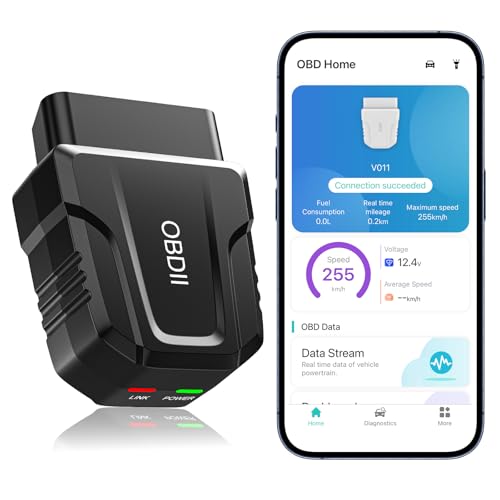
To confirm the IPR valve is the culprit, you must look at live data using a monitor like an Edge Insight, Scangauge, or Forscan. You are looking for the relationship between the IPR Duty Cycle (%) and the ICP (Injection Control Pressure). The IPR duty cycle is the percentage of time the computer is telling the valve to close to build pressure.
Understanding the “85% Rule” During Cranking
When you are cranking the engine, the PCM (Powertrain Control Module) will automatically increase the IPR duty cycle to try and reach the 500 PSI start threshold. If your truck won’t start, watch the IPR percentage. A healthy system will usually fire when the IPR is between 30% and 50%. If you see the IPR duty cycle climb to 84.7% or 85% (the maximum limit) while the ICP pressure stays below 500 PSI, the computer is “screaming” at the valve to close, but it isn’t happening. This confirms either a massive high-pressure oil leak or a mechanically failed IPR valve.
Interpreting Idle and Operating Data
Monitoring the valve while the engine is running can reveal an impending failure before it leaves you stranded. Use these baseline numbers to evaluate your valve’s health:
- Cold Idle: You should typically see an IPR duty cycle of 22% to 24%.
- Warm Idle (Fully Operating Temp): The percentage should settle around 21% to 24%. If your idle IPR is consistently hitting 30% or higher at a stoplight, the valve is working harder than it should to maintain pressure, indicating a leak or a restricted valve screen.
- The Default Value: If you see a static 14.84% on your monitor while the truck is acting up, this is often a default “limp” value from the PCM, suggesting an electrical circuit issue or a failed sensor pigtail.
By comparing these percentages to your ICP (Injection Control Pressure) voltage and PSI, you can determine if the valve is physically stuck. For example, if the IPR is at 85% but the ICP voltage is only 0.2V, the valve is wide open, and the oil is bypassing the injectors entirely.
Physical Indicators of IPR Failure: Screen Integrity and O-Rings
While electronic data tells much of the story, the physical condition of the IPR valve often reveals the “why” behind your 6.0 Powerstroke’s performance issues. Because this valve sits at the end of the high-pressure oil system, it often acts as a filter for debris that shouldn’t be there in the first place.

Audible — Listen Free for 30 Days
One free credit a month and thousands of titles included.
Listen Free for 30 Days As an Amazon Associate I earn from qualifying purchases.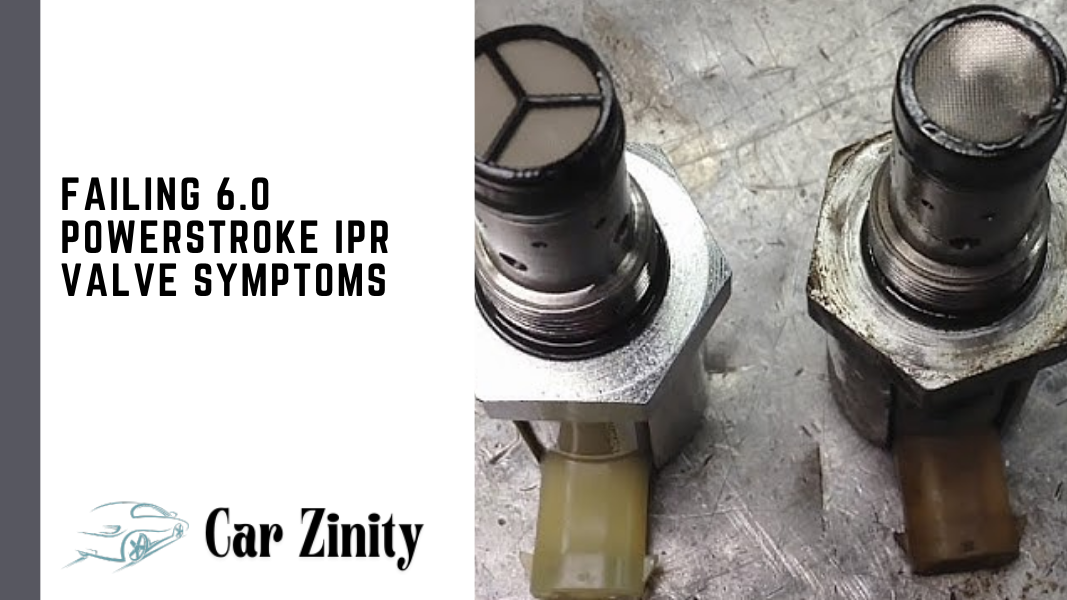
The “Canary in the Coal Mine”: The IPR Screen
The tiny stainless steel mesh screen on the tip of the IPR valve is a critical diagnostic tool. If you pull the valve and find the screen is torn, pushed in, or covered in metal shavings, you aren’t just looking at a bad valve—you’re looking at a system-wide failure. A “sucked-in” screen usually indicates that the valve was trying to compensate for a massive leak or that the high-pressure oil pump (HPOP) is starting to disintegrate.
- Metal Flakes: Often points to a failing HPOP or internal engine wear.
- Plastic Debris: Usually indicates a failing oil cooler base or a disintegrated oil filtration bypass.
- Torn Mesh: High-pressure spikes or large debris have bypassed the screen, likely jamming the internal needle.
Deteriorated O-Rings and Back-up Rings
The IPR valve relies on a set of specialized O-rings to maintain a seal against the high-pressure oil manifold. Over time, heat cycles and oil contamination can cause these seals to become brittle or “nibbled” away. Even a microscopic tear in these rings can cause a massive drop in ICP (Injection Control Pressure), leading to erratic idling or a truck that dies as soon as the oil reaches operating temperature.
Distinguishing IPR Malfunctions from HPOP and STC Fitting Leaks
Recommended Best Deal Products


One of the biggest challenges for 6.0 owners is deciding whether to replace the IPR valve or dig deeper into the engine for an HPOP or STC (Snap-to-Connect) fitting issue. Misdiagnosing this can lead to hundreds of dollars in wasted parts and hours of unnecessary labor.
Analyzing IPR Duty Cycle vs. ICP Pressure
To differentiate these issues, you must look at how the IPR reacts to the demand for pressure. If your scan tool shows the IPR duty cycle climbing to 85% (the maximum commanded limit) while the ICP pressure remains low (below 500 PSI) during cranking, you have a high-pressure oil loss. If the pressure builds slowly and the truck eventually starts, it is more likely a leak at the STC fitting or dummy plugs. However, if the IPR duty cycle is erratic and jumping around while the truck is at a steady idle, the valve’s internal solenoid is likely sticking.
- STC Fitting Leaks: Typically manifest as a “hot no-start” where the truck runs perfectly until shut off, then refuses to fire back up until the oil cools and thickens.
- HPOP Failure: Usually results in a total loss of pressure that won’t recover, often accompanied by “glitter” or metal debris found on the IPR screen.
- IPR Stickiness: Often causes “loping” or a surging idle that clears up once you tap the accelerator or increase the RPMs.
The Heat Soak Test
A practical way to narrow this down is the heat soak test. IPR valves are susceptible to heat-induced electrical failure. If your truck starts fine when cold but the IPR duty cycle starts creeping up significantly higher at idle once the oil hits 180°F, the valve is struggling to maintain a seal. If the truck dies and won’t restart until you pour cool water over the IPR location (a classic “old school” trick), you’ve confirmed a heat-sensitive mechanical failure within the valve itself.
Conclusion
The IPR valve is the heartbeat of the Ford 6.0L Powerstroke’s fuel system. Understanding the symptoms—ranging from erratic duty cycles and low ICP pressure to physical damage on the screen—is the difference between a quick fix and a lengthy stay on the side of the road. By monitoring your live data and knowing how to distinguish a valve failure from a pump leak, you can keep your truck running reliably for years to come.
Next Steps: If you suspect your IPR is failing, start by checking your ICP and IPR duty cycle percentages with a reliable monitor. If the numbers are out of spec, perform a physical inspection of the valve and screen before replacing any major high-pressure oil components. Don’t let a small valve lead to a big repair bill—stay proactive with your diagnostics!
❓ Frequently Asked Questions
How do I tell if the IPR valve or the ICP sensor is the problem?
Unplug the ICP sensor; if the truck starts, the sensor or its pigtail is likely the issue. If it still won’t start and IPR duty cycle is at 85%, the problem is likely a mechanical IPR failure or a high-pressure oil leak.
Why does my Ford 6.0 only have starting issues when the engine is hot?
Engine oil thins out as it heats up. If the IPR valve has a bad seal or the system has a small leak, the thin oil escapes more easily, preventing the system from reaching the 500 PSI needed to fire the injectors.
What are the specific IPR duty cycle numbers for a healthy 6.0 Powerstroke?
At a warm idle, you want to see 21-24%. Under a heavy load or wide-open throttle, it may reach 65-70%. Seeing 85% at idle or during a no-start is a clear sign of a system failure.
Audible Premium Plus — Annual Membership
12 audiobook credits up front, plus the full Audible catalogue.
See Annual Plans As an Amazon Associate I earn from qualifying purchases.What causes the IPR screen to collapse or get pushed in?
High-pressure oil surges or large particles of debris from a failing high-pressure oil pump (HPOP) or oil cooler screen can physically damage the delicate IPR mesh screen.
Can an electrical issue cause IPR symptoms?
Yes, the IPR pigtail is located in a high-heat area and is prone to melting or becoming brittle. A short in the wiring will cause the valve to default to an open position, resulting in an immediate stall.
Does a failing IPR valve always throw a trouble code?
No, mechanical failures like a stuck pintle or a torn screen often do not trigger a specific IPR code. You must rely on live data parameters like ICP (Injection Control Pressure) to diagnose it.