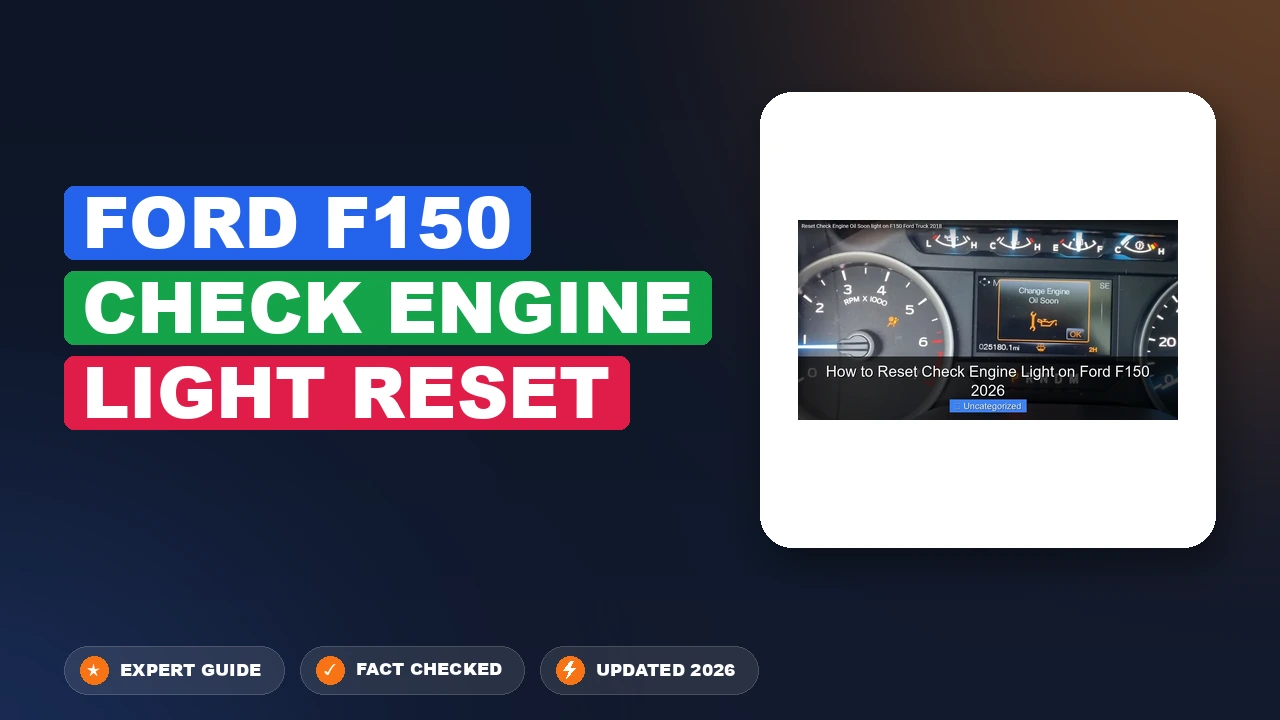
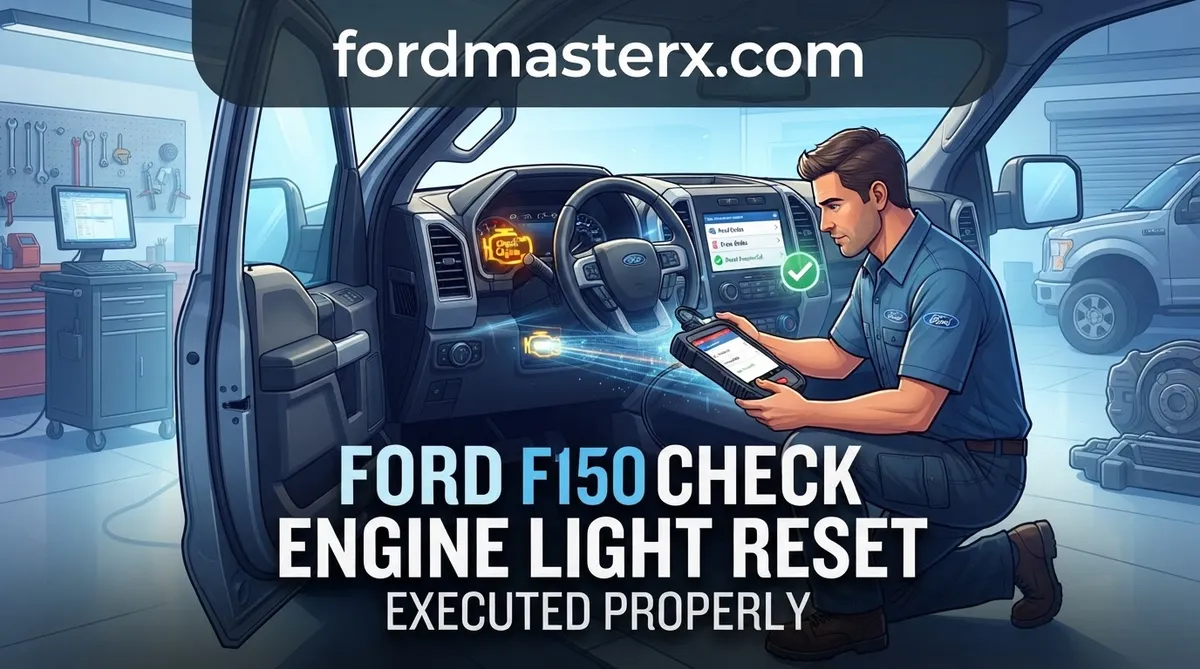
ford f150 check engine light reset: Executed Properly

Seeing a glowing amber light on your Ford F-150 dashboard can trigger instant anxiety. Whether it is a simple loose gas cap or a complex sensor failure, many drivers feel the urge to immediately clear the code without addressing the root cause. This article provides a safe, expert-backed process for performing a Ford F150 check engine light reset, while explaining the critical risks of skipping proper diagnostics.

Understanding the Logic Behind the Ford F150 Check Engine Light
Recommended Best Deal Products


📤 Share Image
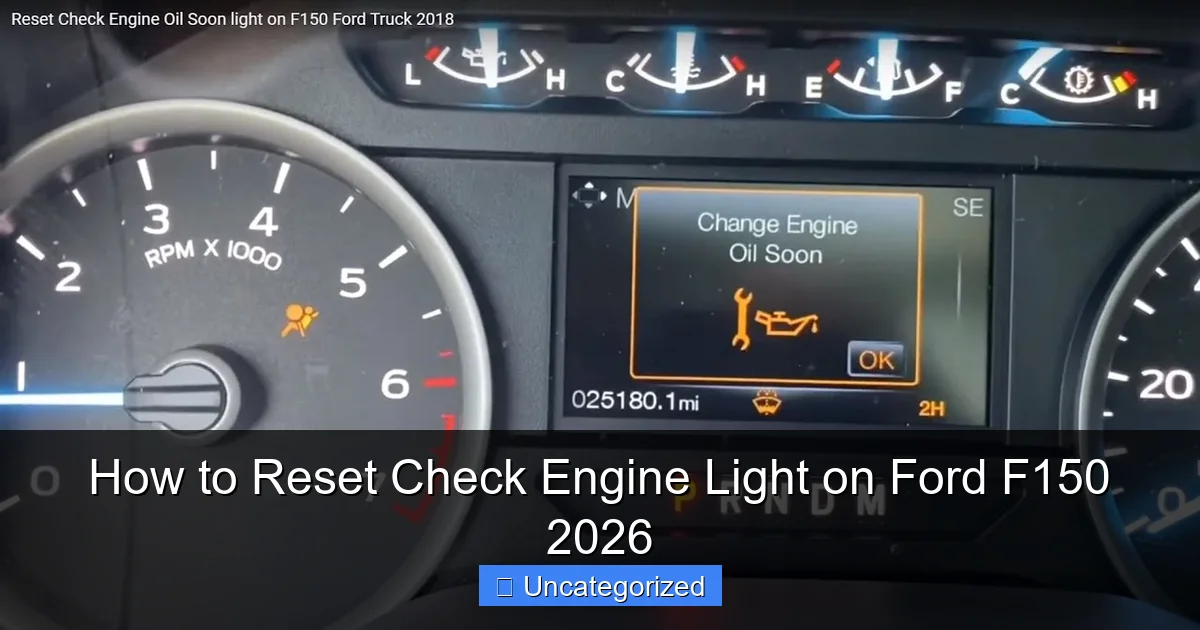
Understanding PCM and Malfunction Indicator Lamp Logic
The Powertrain Control Module (PCM) serves as the “brain” of your Ford F-150. It constantly monitors data from a network of sensors—including oxygen sensors, mass airflow sensors, and ignition systems—to ensure the vehicle operates within optimal emissions standards. When the PCM detects an anomaly that exceeds pre-programmed parameters, it logs a Diagnostic Trouble Code (DTC) and illuminates the Malfunction Indicator Lamp (MIL), commonly known as the check engine light.
Simply performing a Ford F150 check engine light reset does not “fix” the truck; it merely erases the history of the event stored in the PCM’s volatile memory. If the underlying fault—such as a failing O2 sensor or a vacuum leak—remains, the light will inevitably return once the drive cycle completes its next diagnostic monitor check.
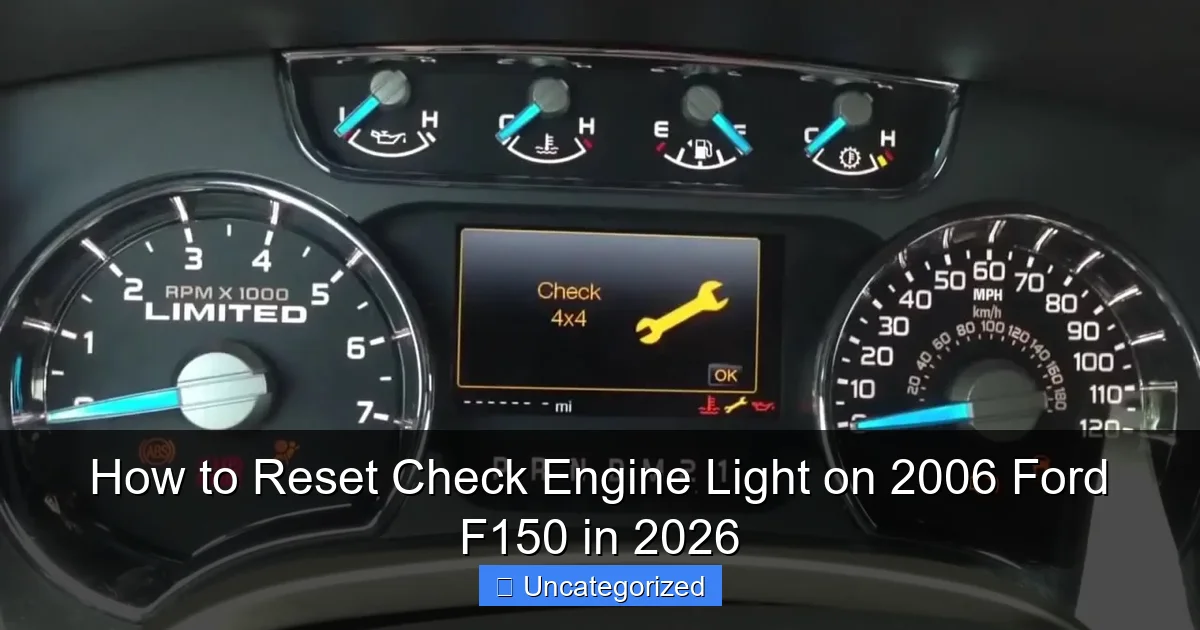
The Danger of Ignoring a Flashing Check Engine Light
There is a critical distinction between a solid illumination and a flashing MIL. A steady light suggests an emissions-related issue that requires attention soon, but a flashing light indicates a severe engine misfire. In this state, unburned fuel is being pushed into the exhaust system, which can cause near-immediate damage to the catalytic converter—a repair that can cost thousands of dollars. Never attempt a reset when the light is flashing; immediate professional diagnostic attention is required to prevent catastrophic failure.
By The Numbers
Risk of Cat Damage if Misfiring
Required Miles for Drive Cycles
How to Perform a Ford F150 Check Engine Light Reset Properly
📋
Step-by-Step Guide: Resetting the System
Recommended Best Deal Products


Before clearing anything, use an OBD-II scanner to read and document every code. Without this record, you lose the diagnostic trail, making it difficult to pinpoint the original fault if the light returns.
Connect the scanner to the OBD-II port (located under the driver-side dashboard). Navigate to the “Erase/Clear” menu. Confirm the action to initialize a factory reset of the stored codes.
The Battery Disconnect Method: When to Use It
Disconnecting the negative battery terminal for 15–30 minutes can force the PCM to lose its current cache. While this is an older method, it is often discouraged for modern F-150s (2004–present). Doing so wipes out adaptive memory, which can cause erratic transmission shifting, poor idle, and a “fresh start” period where the computer must re-learn your driving habits.
Modern F-150 electrical systems are highly sensitive. Abrupt power loss via battery disconnection can lead to “Not Ready” statuses for emissions testing and potential issues with complex electronic modules. Always use an OBD-II scan tool for a controlled reset.
Ford F150 Drive Cycles and Emissions Readiness Monitors
Understanding the Emissions Readiness Monitor State
When you clear your check engine light, you are also resetting the internal emissions readiness monitors. Inspection stations verify that these monitors have passed their diagnostic tests. If you clear the light and immediately take your F-150 to an emissions test, it will almost certainly fail due to a “Not Ready” status, regardless of whether the mechanical problem is fixed.
How a Drive Cycle Re-Initializes the PCM
To restore these monitors to a “Ready” state, you must complete a drive cycle. This involves a specific sequence of driving: cold starts, stop-and-go city traffic, and sustained highway driving. Depending on the year and engine (Ecoboost, Coyote V8, or 3.3L V6), this can take anywhere from 30 to over 100 miles. Without completing this cycle, the vehicle cannot verify that its emissions systems are functioning correctly.

Audible — Listen Free for 30 Days
One free credit a month and thousands of titles included.
Listen Free for 30 Days As an Amazon Associate I earn from qualifying purchases.Diagnostic Verification
Using a scan tool to monitor “Readiness Monitors” allows you to track exactly when your F-150 is ready for inspection.
Common Ford F150 Check Engine Light Reset Troubleshooting
Recommended Best Deal Products


Why the Light Returns After Clearing
If your check engine light returns shortly after a reset, the PCM has detected the same fault again. This is common with recurring issues like evaporative emission (EVAP) leaks, where a crack in a vacuum hose or a faulty purge valve continues to leak despite being cleared. The light is not a nuisance; it is a consistent warning of a component that has failed to operate within established parameters.
Adaptive Memory and Potential Idle Issues
After a hard reset, your truck may experience a rough idle or poor transmission shifting. This happens because the PCM has lost its long-term fuel trim values. You may need to let the engine idle for several minutes or drive for a short period so the computer can re-learn the optimal air-fuel ratio and transmission shift points.
Summary for Ford F-150 Owners
Resetting your F-150’s check engine light is a straightforward process, but it requires patience and adherence to protocol. Always record your codes before attempting any reset to ensure you are not masking a deeper issue. Remember that a reset is not a repair—if the hardware is faulty, the light will return. Furthermore, be mindful of the emissions drive cycle requirement if you are planning to take your truck for an inspection in the near future.
If you find that the light persists after multiple reset attempts or if you notice changes in performance, prioritize a professional diagnostic visit. Continued operation with a persistent fault code can lead to increased fuel consumption, decreased performance, and premature engine wear.
Schedule a diagnostic visit with a certified Ford technician to prevent long-term damage to your vehicle’s engine components.
Ford f150 Check Engine Light Reset: Frequently Asked Questions
Will disconnecting the battery clear my check engine light?
Yes, disconnecting the negative battery terminal for 15-30 minutes will often clear the Check Engine Light by forcing the PCM to lose its volatile memory. However, this is not recommended. It wipes the vehicle’s adaptive learning, which can cause erratic idle, poor transmission shifting, and will reset your emissions monitors to ‘Not Ready,’ which will cause you to fail an inspection.
Can I pass an emissions test immediately after clearing the code?
No. When you clear the diagnostic codes, you also reset the vehicle’s ‘I/M Monitors’ (Inspection/Maintenance) to ‘Not Ready.’ Emissions testing stations require these monitors to reach a ‘Ready’ state through a specific drive cycle. If you arrive immediately after clearing the code, the system will flag the computer as ‘Not Ready,’ and you will be denied a passing result.
What does a blinking check engine light mean?
A blinking or flashing check engine light indicates a severe engine misfire. This means raw fuel is likely being dumped into the exhaust system, which can cause catastrophic damage to your catalytic converters in a very short time. If your F-150 displays a flashing light, you should reduce speed, avoid heavy engine loads, and have the vehicle towed to a mechanic immediately to avoid costly repairs.
Do I need to fix the issue before clearing the code?
Absolutely. The check engine light is triggered by the Powertrain Control Module (PCM) because it detects an ‘out-of-range’ value from a sensor or system. If you clear the light without fixing the underlying issue, the PCM will detect the fault again during the next self-test cycle. The light will inevitably return, usually within a few miles of driving, making the reset a waste of time.
Audible Premium Plus — Annual Membership
12 audiobook credits up front, plus the full Audible catalogue.
See Annual Plans As an Amazon Associate I earn from qualifying purchases.Does a check engine light reset affect my truck’s performance?
Properly clearing codes via an OBD-II scanner does not negatively affect performance. However, if you trigger a reset by disconnecting the battery, your truck may experience a rough idle or unconventional shift points for the first 50 miles. This happens because the PCM has to ‘re-learn’ your driving habits and engine parameters. Use a scan tool instead to preserve these critical data tables.