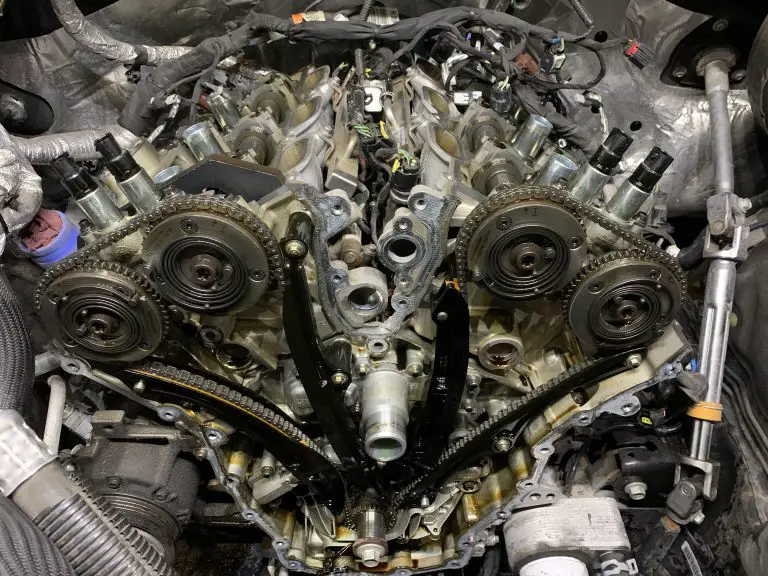
Ford 2.7 EcoBoost Firing Order & Cylinder Diagram Guide 2026

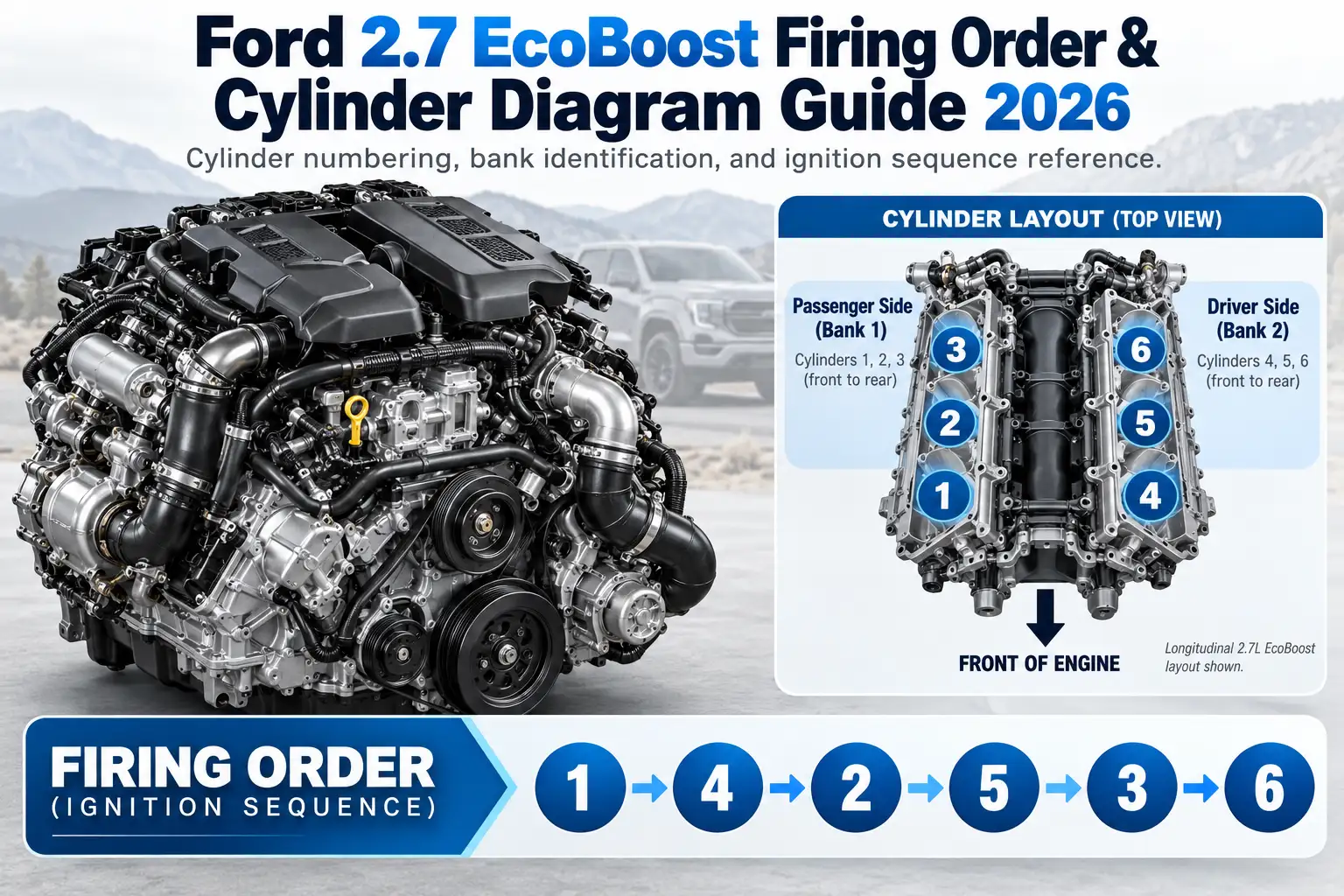
The Ford 2.7 EcoBoost firing order is 1-4-2-5-3-6. That is the order in which the six cylinders fire, not the order in which they sit under the hood. On a Ford F-150 with the longitudinal 2.7L V6, cylinders 1, 2, and 3 are on the passenger side, while cylinders 4, 5, and 6 are on the driver side.
If you are tracking down a misfire or checking a spark plug or ignition coil, both sets of numbers matter. Use the firing sequence for the engine specification and the cylinder layout for finding the actual component.
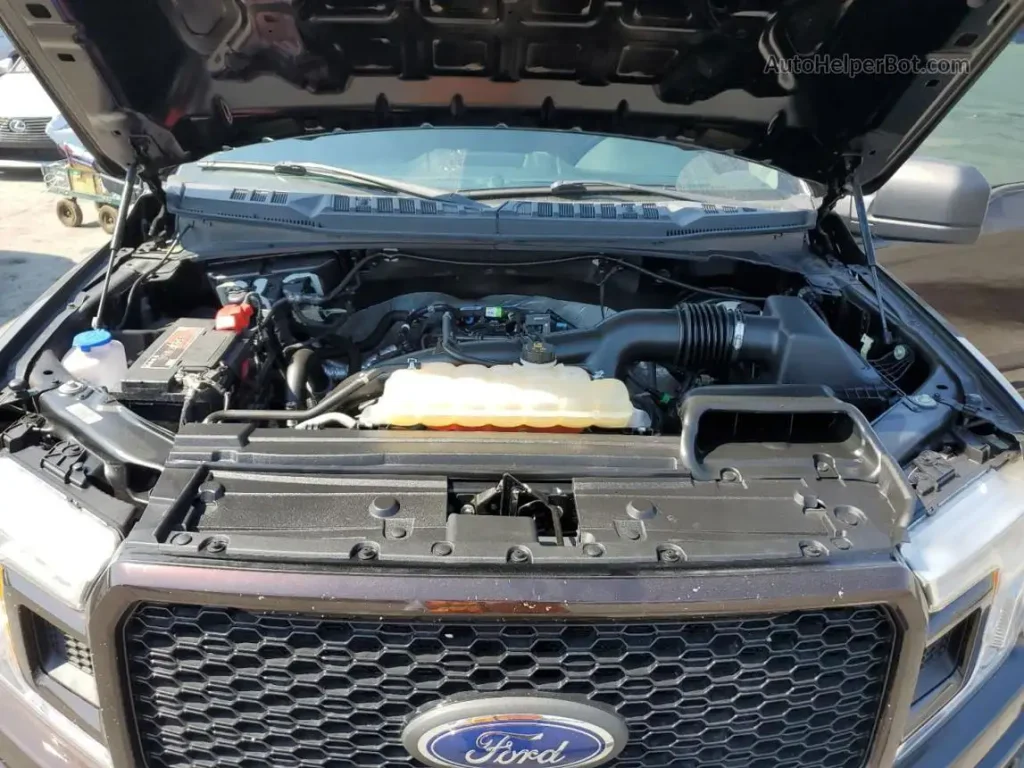
Ford F-150 / 2.7L V6 EcoBoost
Longitudinal F-150 engine reference
Firing sequence only. On mobile, read each row left to right.
Front-grille view. Left and right refer to the seated driver.
Facing the cab from the grille
Misfire code tip: P0304 identifies a misfire detected in Cylinder 4. It does not by itself prove that the ignition coil has failed.
For longitudinal F-150 2.7L only. Do not copy this bank layout to transverse vehicles. Verify service information before repairs.
What Is the Ford 2.7 EcoBoost Firing Order
Recommended Best Deal Products

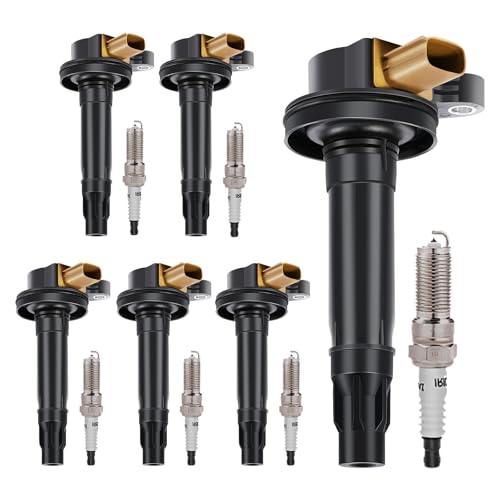

Ford specifies 1-4-2-5-3-6 for the 2.7L EcoBoost V6. Its 2016 F-150 owner’s manual also identifies the ignition system as coil-on-plug.
| Specification | Ford 2.7L EcoBoost |
|---|---|
| Engine configuration | V6, six cylinders |
| Firing order | 1-4-2-5-3-6 |
| Ignition system | Coil-on-plug |
| Bank 1 | Cylinders 1, 2, 3 |
| Bank 2 | Cylinders 4, 5, 6 |
The sequence means Cylinder 1 fires, followed by 4, 2, 5, 3, and 6, before the pattern repeats. It does not mean those cylinders are positioned in that sequence from front to back.
Each cylinder has its own ignition coil at the spark plug. There is no conventional distributor or set of spark-plug wires to arrange according to a distributor firing-order diagram. For broader details about the engine itself, see the Ford 2.7 EcoBoost specifications.
The next distinction is where those numbered cylinders actually sit in the F-150 engine bay.
Where Are Cylinders 1 Through 6 on the F-150
The 2.7L EcoBoost in the F-150 is mounted longitudinally, with the front of the engine facing the radiator. Bank 1 is on the passenger side; Bank 2 is on the driver side. Each bank is numbered from the front of the engine toward the firewall.
Here is a quick text diagram for a US-market F-150. Imagine standing at the front bumper and looking toward the cab:
             FIREWALL / CAB
               Rear of engine

     PASSENGER SIDE    DRIVER SIDE
         BANK 1          BANK 2

           [3]             [6]
           [2]             [5]
           [1]             [4]

             RADIATOR / GRILLE
                Front of engine

        FIRING ORDER: 1-4-2-5-3-6
F-150 longitudinal 2.7L EcoBoost cylinder layout. Passenger and driver sides are named from the seated driver’s perspective, not from the perspective of someone standing at the grille.
Cylinder 1 is the front cylinder on the passenger side. Cylinder 3 is the rear cylinder on that same bank, nearer the firewall. On the driver side, Cylinder 4 is at the front and Cylinder 6 is at the rear.
Use the bank layout to find an individual spark plug, coil, or injector. Use the 1-4-2-5-3-6 sequence only when you need the firing order. A scan-tool code such as P0304 refers to Cylinder 4, not the fourth cylinder in the firing sequence.
Which Side Is Bank 1 on the 2.7 EcoBoost
Recommended Best Deal Products

On a longitudinal F-150 2.7L EcoBoost, Bank 1 is the passenger-side cylinder bank. Bank 2 is the driver-side bank. The most dependable way to define Bank 1 is as the bank containing Cylinder 1.
Bank 1 Cylinder Locations
Bank 1 contains cylinders 1, 2, and 3, arranged front to rear. Cylinder 1 is closest to the radiator, Cylinder 2 is in the middle, and Cylinder 3 sits toward the firewall.
This is the bank to locate when a diagnostic code or service instruction specifically mentions Bank 1. A bank-specific code, however, is not necessarily an ignition-coil problem.
Bank 2 Cylinder Locations
Bank 2 contains cylinders 4, 5, and 6, also numbered front to rear. Cylinder 4 is closest to the radiator, Cylinder 5 is in the middle, and Cylinder 6 is nearest the firewall.
Vehicle-side terminology can be confusing when you face the truck. Ford’s passenger and driver sides are defined as if you were seated inside looking forward. That definition remains consistent even when the diagram is viewed from the grille.
Does the 2.7 EcoBoost Firing Order Change by Year
The documented firing order does not change between the early and later F-150 2.7L EcoBoost engines. The 2018 F-150 engine specifications retain 1-4-2-5-3-6, just as the earlier manual does.
| F-150 model-year reference | Firing order | Ignition type |
|---|---|---|
| 2016, first-generation 2.7L | 1-4-2-5-3-6 | Coil-on-plug |
| 2018, revised 2.7L | 1-4-2-5-3-6 | Coil-on-plug |
| 2025, later 2.7L | 1-4-2-5-3-6 | Coil-on-plug |
Ford’s 2025 F-150 2.7L specifications confirm the same sequence. These are documented model-year checkpoints, not a claim that every component is interchangeable across generations.
Ford revised the 2.7L engine for the 2018 F-150, but a revised engine does not automatically require a new firing-order diagram. The separate guide to 2.7 EcoBoost problems by model year covers generation-specific issues that matter more during broader diagnosis.
How Does the 2.7 EcoBoost Layout Vary by Model
The F-150 diagram is for a longitudinal installation, where the engine runs front to back. Other Ford vehicles have used the 2.7L EcoBoost in a transverse installation, with the engine mounted across the engine bay.
For example, the Edge and Fusion Sport have transverse 2.7L applications. In those vehicles, the banks are oriented differently relative to the radiator and firewall. The cylinder numbers still belong to their respective banks, but an F-150’s passenger-side and driver-side labels should not be copied onto a transverse engine-bay diagram.
If you own a different Ford model, confirm its exact cylinder and bank positions using the service information for that model and year before removing components. A diagram labeled for a 3.5L engine is also not proof of 2.7L component fitment, even though the 3.5 EcoBoost firing order guide shows the same firing sequence.
Which Cylinder Matches P0301 Through P0306
The last digit of a P0301 through P0306 code identifies the cylinder on which a misfire was detected. Ford’s 2024–2025 gasoline OBD system documentation covers general and cylinder-specific misfire monitoring.
| OBD-II code | Meaning | F-150 2.7L location |
|---|---|---|
| P0301 | Cylinder 1 misfire | Bank 1, passenger-side front |
| P0302 | Cylinder 2 misfire | Bank 1, passenger-side middle |
| P0303 | Cylinder 3 misfire | Bank 1, passenger-side rear |
| P0304 | Cylinder 4 misfire | Bank 2, driver-side front |
| P0305 | Cylinder 5 misfire | Bank 2, driver-side middle |
| P0306 | Cylinder 6 misfire | Bank 2, driver-side rear |
For example, P0304 points to Cylinder 4, the front cylinder on the driver’s side of a longitudinal F-150. It does not prove the ignition coil is faulty. The problem could involve the spark plug, coil, connector, injector, fuel delivery, or an engine mechanical condition.
P0300 is different: it indicates a random or multiple-cylinder misfire rather than one specific cylinder. If that is the code you have, the Ford F-150 P0300 diagnostic guide explains how to narrow down the cause before buying parts.
If the check-engine light is flashing while the engine is running roughly, avoid further driving and have the fault assessed promptly. A severe ongoing misfire can damage the catalytic converter.
How to Identify a Misfiring Cylinder in 4 Checks
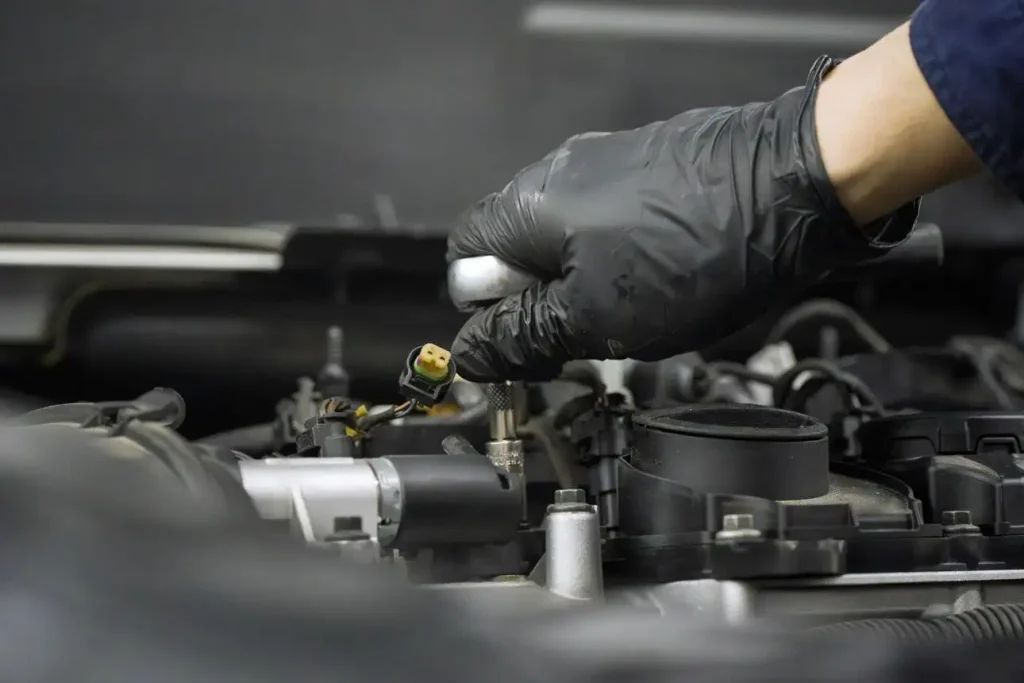
A cylinder-specific code is a starting point, not a replacement-parts recommendation. Use these four checks before working on your F-150.
- Confirm the engine. Check that your truck has the 2.7L EcoBoost, not the 3.5L EcoBoost or another F-150 engine. Use your vehicle information or the applicable owner’s manual rather than guessing from the engine cover.
- Record the scan results. Save stored and pending codes along with available freeze-frame data. Avoid clearing the codes before recording what the powertrain control module detected.
- Match the code to the layout. Use the P0301–P0306 table to find the numbered cylinder. Then use the longitudinal diagram to identify the correct bank and front, middle, or rear position.
- Inspect before replacing. With the engine off and cool, check for visible damage, loose connectors, moisture, or other obvious problems. Further coil, plug, injector, wiring, or compression testing should follow the correct model-year service procedure.
The outcome of these checks should be a correctly identified cylinder and a reasoned next diagnostic test, not a randomly selected new coil. Do not disconnect ignition components while the engine is running.
3 Firing Order Mistakes That Cause Wrong Repairs
The most common mistakes come from treating firing order, cylinder numbering, and engine orientation as if they mean the same thing.
Mistaking Firing Sequence for Cylinder Layout
The order 1-4-2-5-3-6 describes combustion sequence. It does not describe the arrangement of cylinders across the engine. Use the physical layout to locate parts.
Counting Alternately Across Both Banks
Do not count 1, 2, 3, 4, 5, 6 by moving side to side across the engine. On the F-150’s longitudinal 2.7L, the passenger bank is 1-2-3, and the driver bank is 4-5-6. Both run front to rear.
Using a Transverse Diagram on an F-150
The same engine family can appear in differently oriented vehicle installations. An Edge or Fusion Sport engine-bay drawing is not a substitute for the F-150 diagram. Check the model and viewing direction before identifying a cylinder.
How to Confirm the Correct 2.7 EcoBoost Cylinder
The Ford 2.7 EcoBoost firing order is 1-4-2-5-3-6. For a longitudinal F-150, Bank 1 contains cylinders 1, 2, and 3 on the passenger side, while Bank 2 contains cylinders 4, 5, and 6 on the driver side. Each bank is numbered from the radiator toward the firewall.
A firing-order specification tells you when the cylinders fire. It does not tell you which ignition coil or spark plug to remove. Start with the correctly oriented cylinder layout, match any diagnostic code to its numbered cylinder, and confirm the cause through testing before replacing parts.
5 Common Questions About the Ford 2.7 EcoBoost
What Is the Firing Order on a Ford 2.7 EcoBoost?
The firing order is 1-4-2-5-3-6. Ford documents this sequence for early and later 2.7L EcoBoost F-150 engines, which use individual coil-on-plug ignition.
Where Is Cylinder 1 on a 2.7 EcoBoost F-150?
Cylinder 1 is the front cylinder on the passenger-side bank of a longitudinal F-150 2.7L EcoBoost. It is closest to the radiator on Bank 1, ahead of cylinders 2 and 3.
Which Side Is Bank 2 on a 2.7 EcoBoost?
On a longitudinal F-150, Bank 2 is on the driver’s side and contains cylinders 4, 5, and 6. For transverse Ford applications, use a model-specific diagram rather than assuming the same left/right engine-bay position.
Is the 2018 F-150 2.7 EcoBoost Firing Order Different?
No. Ford lists 1-4-2-5-3-6 for the revised 2018 2.7L EcoBoost, matching the earlier engine. The engine update did not change this documented firing sequence.
Does P0304 Mean the Ignition Coil Is Bad?
No. P0304 means a misfire was detected on Cylinder 4, not that the coil has been proven faulty. On a longitudinal F-150 2.7L, that is the front cylinder on the driver-side bank; inspect and test the relevant systems before replacing components.