Ford 2.7 EcoBoost Problems: 2015-2026 Recalls, TSBs, Costs

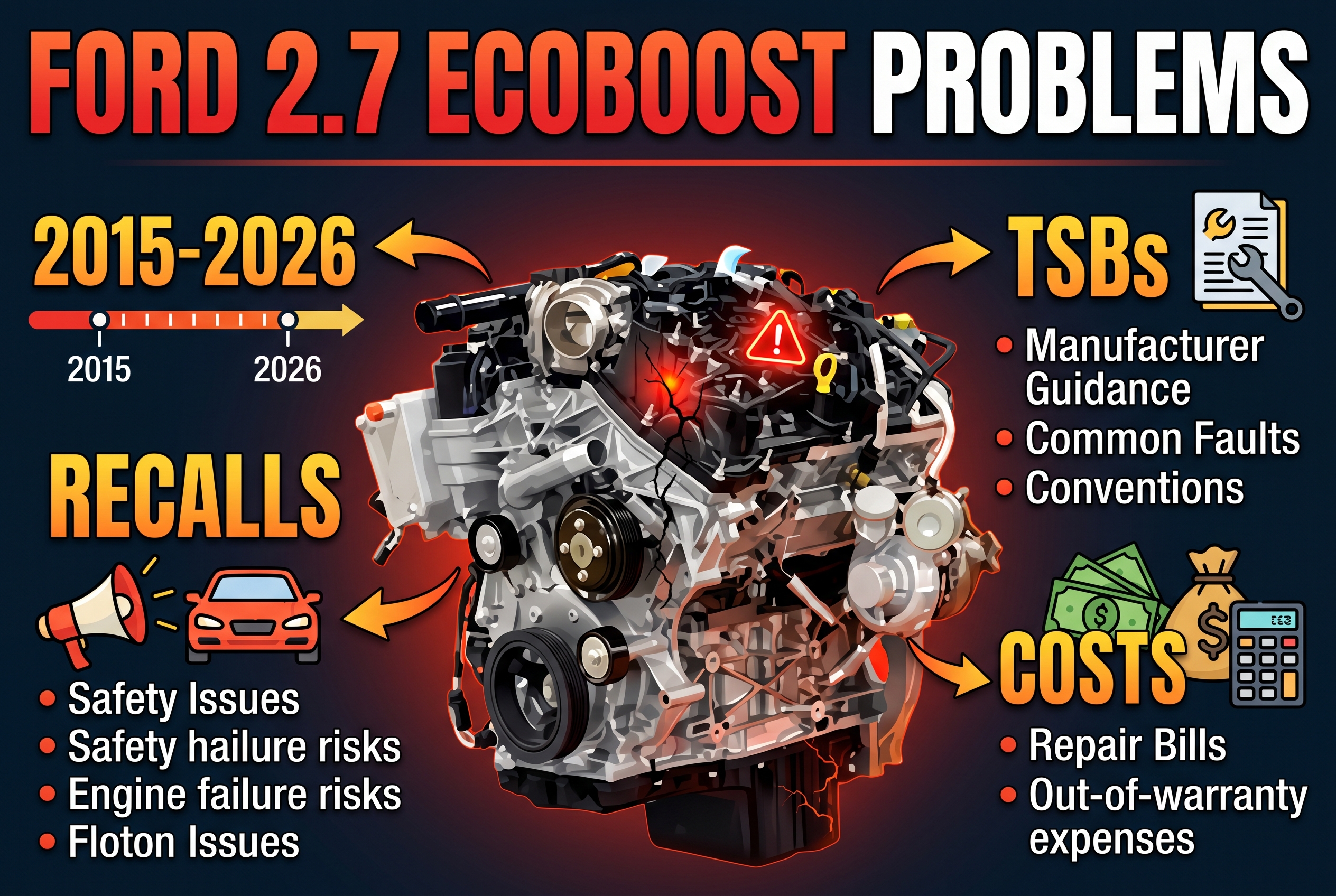
The Ford 2.7 EcoBoost has problems that depend on build year, so no single list fits every truck. Gen 1 trucks (2015 to 2017) are tied to oil pan leaks and an oil consumption bulletin. Gen 2 trucks (2018 and later) fixed most of that, but F-150s built between May and October 2021 fall under a safety recall for breaking intake valves.
Ford documents most fixes in TSBs (Technical Service Bulletins), which are repair instructions for dealers and not recalls. NHTSA’s closing resume found that the vast majority of intake valve failures happened before 20,000 miles, so mileage alone does not tell you your risk.

Prime for Young Adults — 6 Months Free
Students and 18–24s get six months of Prime free, then half price.
Start 6 Months Free As an Amazon Associate I earn from qualifying purchases.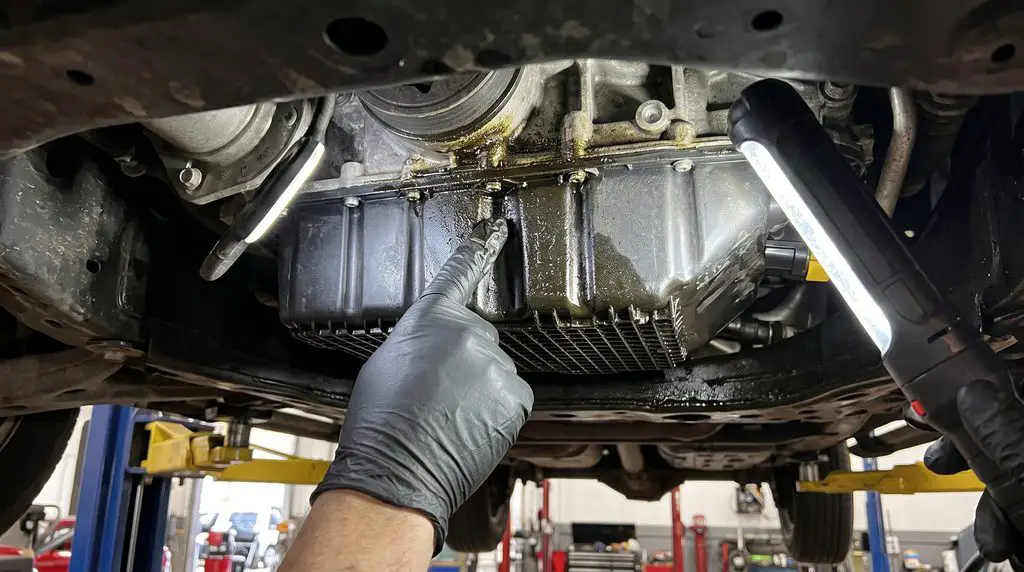
Confirm your generation first, then jump to the branch that matches your truck.
FordMasterX Engine Guide
Ford 2.7 EcoBoost Problems by Build Year
Find your build date on the timeline, then check the status and cost evidence for your truck.
Check first: F-150s built May to October 2021 (NHTSA recall 24V635)
Problem timeline by build year
- Plastic oil pan leakTSB 23-2083
- Intake valve carbon buildupNo bulletin found
- Oil consumption and valve guidesTSB 19-2384
- Oil pump belt wearNo recall found
- Intake valve fractureRecall 24V635
Sources: NHTSA ODI EA23002, Ford TSB 23-2083 and 19-2384, owner reports. Costs are owner reports or published estimates, not dealer quotes. Enter your VIN at nhtsa.gov/recalls for current status.
How to Tell Which 2.7 EcoBoost Generation You Have
Recommended Best Deal Products


Your build year decides which problems apply to your truck. The 2.7L arrived in the 2015 F-150 and was redesigned for 2018.
Gen 1 Trucks Built 2015 to 2017
Gen 1 trucks make 325 hp and 375 lb-ft of torque and use direct injection only. Blue Oval Trucks notes that port fuel injection did not arrive until 2018.

Audible — Listen Free for 30 Days
One free credit a month and thousands of titles included.
Listen Free for 30 Days As an Amazon Associate I earn from qualifying purchases.Gen 2 Trucks Built 2018 and Later
Ford added port injection alongside direct injection and raised torque to 400 lb-ft, while horsepower stayed at 325, according to Ford-Trucks.com. The redesign also brought a dual-chain camshaft drive and an electronic variable displacement oil pump, as Truck Insiders reported.
Trucks Built May to October 2021
This recall window sits inside Gen 2. It is an overlay, not a third generation. Check the build date on the certification label on the driver door jamb.
If you are not sure your truck has a 2.7 at all, read our guide on how to tell a 2.7 from a 3.5 EcoBoost. If your build date falls in the recall window, start with the recall.
Which 2021 and 2022 Trucks Fall Under the Intake Valve Recall
If your F-150 was built between May and October 2021, check this first. NHTSA recall 24V635, which Ford numbers 24S55, covers 90,736 vehicles with a 2.7L or 3.0L Nano EcoBoost engine. That includes the 2021 to 2022 Bronco, F-150, Edge, Explorer, Lincoln Nautilus, and Lincoln Aviator.
The 3.5L EcoBoost is not part of it, autoevolution reported.
Investigators traced the failures to valves with “grinding burn” near the third keeper groove, which leaves the metal hard and brittle. A fractured valve can drop into the cylinder, hit the piston, and destroy the engine. Ford switched the valve alloy from Silchrome Lite to Silchrome 1 after October 2021.
Ford gave NHTSA data on 396 complaints, 825 warranty claims, and 936 engine exchanges. The agency’s summary lists no crashes, fires, or injuries. Over half of the reported failures happened before 5,000 miles.
The typical symptom is sudden loss of power while driving, often with no restart.
The remedy is free. A dealer checks the truck’s lifetime engine cycles, runs a high-RPM engine cycle test if needed, and replaces the engine only if the truck fails. Ford also launched customer satisfaction program 24N12, which extends coverage to the earlier of 10 years or 150,000 miles.
- Enter your VIN in the NHTSA recall lookup.
- Confirm your build date falls between May 1 and October 30, 2021.
- If the recall is open, call Ford at 1-866-436-7332 or book a dealer visit for the engine cycle test.
You can also check your Ford warranty status by VIN to see what coverage remains. NHTSA closed its investigation on October 31, 2024, and recall status can change, so trust your VIN result over this page.
Audible Premium Plus — Annual Membership
12 audiobook credits up front, plus the full Audible catalogue.
See Annual Plans As an Amazon Associate I earn from qualifying purchases.Trucks outside that window face a different set of problems, starting with the earliest builds.
Most Common 2.7 EcoBoost Problems on 2015 to 2017 Trucks
If your truck is a 2015 to 2017 F-150, expect trouble in this order: oil pan leak, carbon buildup, and on a narrow build window, oil consumption.
Plastic Oil Pan Leak
Ford’s TSB 19-2205 describes an oil leak from the oil pan RTV seal caused by poor adhesion. The symptom is oil spots under the truck, though an underbody shield can hide drips.
The current fix is TSB 23-2083, dated March 17, 2023. It replaces the pan with the later style, and the valve covers too if they lack the extended plastic ribbing around the coils. Flat-rate labor runs 3.2 hours on 4×2 and 4.1 hours on 4×4 for the pan alone. Add valve covers and it becomes 6.7 and 7.6 hours.
Ford writes this bulletin for trained technicians, not do-it-yourselfers. One owner reported paying $2,110.53 out of pocket in 2024 on a 2015 truck. RepairPal’s F-150 oil pan average of $864 to $1,134 is not 2.7 specific and likely excludes valve covers.
Intake Valve Carbon Buildup
Direct injection sprays fuel into the cylinder, so nothing washes the intake valves. Oil vapor bakes on, and you get rough idle, hesitation, and misfires.
Published estimates for onset conflict. One guide puts it at 40,000 to 60,000 miles, while another says 60,000 to 100,000. We found no primary data, so treat both as rough.
CoPilot puts walnut blasting at $400 to $600, and Cherish Your Car goes up to $800.
Oil Consumption and the Valve Guide TSB
TSB 19-2384 covers 2016 to 2017 F-150s built April 1, 2016 through January 1, 2017. The symptom is a rough idle in park or neutral at operating temperature with oil consumption above 1 quart per 3,000 miles. Codes can include P0300 through P0306, P0316, P0524, and P06DD.
The bulletin blames the valve guides, and the fix is replacing both cylinder heads. An earlier version, TSB 18-2237, listed 24.2 hours for a 4×4. One owner reported a $14,000 engine rebuild quote at 65,000 miles, which is a single report.
Blue smoke only after a cold soak, with no other symptoms, does not qualify under the bulletin’s screening step. Later trucks changed several of these problems, but not all of them.
What Goes Wrong on 2018 and Newer 2.7 EcoBoost Trucks
Gen 2 trucks fixed the biggest Gen 1 problems, but a few issues still show up.
Oil Pump Belt Failures
Gen 2 engines drive the oil pump with a belt inside the engine, while the cams stay on chains. One F150Forum member said 2018 was the first year of that belt.
Failures look rare. That same thread cites one belt failure at 376,000 miles, though a BobIsTheOilGuy owner described a belt nearly worn out before 100,000 miles. The first symptom is a low oil pressure warning, so stop driving and tow the truck.
Ford’s oil life monitor typically calls for changes at 7,500 to 10,000 miles, per Truck Insiders. Check Ford’s spec for your engine in our Ford engine oil recommendation chart.
Spark Plug and Coil Wear
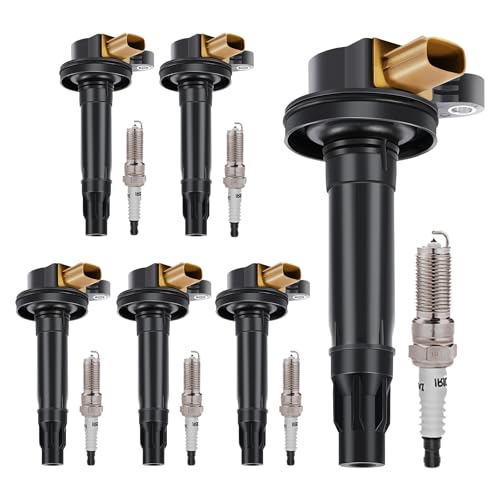
Ford’s owner’s manual reportedly lists 100,000 miles for spark plugs, according to an F150Forum member. Many owners change them at 40,000 to 60,000 miles instead, as Cochran Ford notes.
Failure evidence is anecdotal. One 2017 owner reported a load misfire at 123,000 miles after a plug change, and a 2020 owner at 112,000 miles traced a P0302 to a cracked plug and coil.
High Mileage Owner Reports
Long life is common in the reports. One 2015 SuperCrew owner reported nearly 190,000 miles with a weeping pan gasket as the main annoyance.
Knowing what fails is only half the job when you are buying used.
What to Check Before Buying a Used 2.7 EcoBoost F-150
Pull the VIN before anything else. A clean recall result and paperwork for known repairs matter more than the odometer.
- Run the VIN through NHTSA and confirm the recall is closed if the truck was built May to October 2021.
- Look for oil around the pan on any 2015 to 2017 truck, and ask if TSB 23-2083 was done.
- For 2016 to 2017 builds, ask if the valve guide TSB 19-2384 applied and was completed.
- Scan for P0300 series codes, P0524, and P06DD.
- Ask how much oil the truck uses between changes. Above 1 quart per 3,000 miles is the TSB threshold.
- Request oil change records, since a low oil pressure light is the first sign of belt trouble.
If you are still choosing between engines, our 2.7 vs 3.5 EcoBoost comparison covers the broader tradeoffs.
Quick Decision Guide to 2.7 EcoBoost Problems by Year
Find your build window in the first column, and the last two columns show what Ford and owners report.
| Build | Main Problem | Official Status | Cost Evidence |
|---|---|---|---|
| 2015 to 2017 | Oil pan leak | TSB 23-2083 | $2,110.53 owner paid, 2015 truck |
| 2015 to 2017 | Carbon buildup | No bulletin found | $400 to $600 walnut blasting |
| Apr 2016 to Jan 2017 | Oil consumption | TSB 19-2384 | 24.2 hours labor, one $14,000 quote |
| 2018 and later | Oil pump belt | No recall found | Rare, one failure at 376,000 miles |
| May to Oct 2021 | Intake valve fracture | Recall 24V635 | Free engine if the test fails |
Which 2.7 EcoBoost Problems Actually Deserve Your Attention
Most Ford 2.7 EcoBoost problems cluster in specific build windows, not across every truck. Run your VIN for the 2021 recall first, since that is the only safety issue here. Then match your build year to its known fix, and keep oil changes on schedule.
Frequently Asked Questions About 2.7 EcoBoost Problems
Is the Ford 2.7 EcoBoost reliable?
The documented failures cluster in specific build windows, and owners report high mileage without major repairs. Gen 1 trucks carry the oil pan and valve guide bulletins, and mid-2021 builds carry the recall. Check your VIN and service records before deciding.
Which 2.7 EcoBoost years should I avoid?
No single year stands out. Watch build windows instead: 2015 to 2017 for oil pan leaks, April 2016 through January 2017 for valve guide oil consumption, and May to October 2021 for the intake valve recall.
Does the 2.7 EcoBoost have a timing belt or timing chain?
The cams run on timing chains. Gen 2 trucks from 2018 also use a belt to drive only the oil pump, which is a different part. Belt trouble shows up as a low oil pressure warning, not a timing problem.
Is the 2.7 EcoBoost intake valve recall still open?
NHTSA closed its investigation on October 31, 2024, after Ford filed recall 24V635. Individual trucks may still have open work. Enter your VIN in NHTSA’s lookup to see current status for your truck.
How many miles can a 2.7 EcoBoost last?
No official figure exists. Owners report trucks near 190,000 miles on a 2015 model, and one belt failure appears at 376,000 miles on a Gen 2. Oil change discipline and completed bulletins matter more than a mileage number.