6.7 Powerstroke EGR Block Off Plates: Year & Fitment Guide

Most importantly, 6.7 Powerstroke EGR block-off plates require a custom ECM tuner to prevent limp mode and CEL codes. These kits, typically made from billet aluminum or stainless steel, are year-specific for the 2011-2014, 2015-2019, and 2020+ generations. Installing a plate stops soot accumulation and lowers exhaust gas temperatures (EGTs) for better engine longevity.
🎯 Key Takeaways

![Single - SnapPower GuideLight [For Duplex Outlets] - Replaces Plug-In Night Light…](https://m.media-amazon.com/images/I/31Cr0vHcjHL._SS500_.jpg)
- Takeaway 1:Ensure the plate matches your specific year (2011-14, 15-19, 20+).
- Takeaway 2:Always use a custom tuner to disable EGR software before hardware installation.
- Takeaway 3:Choose CNC machined billet aluminum or stainless steel for maximum durability.
- Takeaway 4:Verify that the kit includes high-temp O-rings and mounting hardware.
- Takeaway 5:Blocking the EGR prevents intake soot buildup and lowers EGTs.
Finding the right EGR block-off plate for your 6.7 Powerstroke depends entirely on your truck’s manufacturing year. While the 6.7L engine has been Ford’s diesel powerhouse since 2011, the EGR cooler designs and exhaust manifold port shapes have evolved across three distinct generations. Installing an incompatible plate is not just a minor inconvenience; it will result in persistent exhaust leaks and soot accumulation throughout your engine bay.
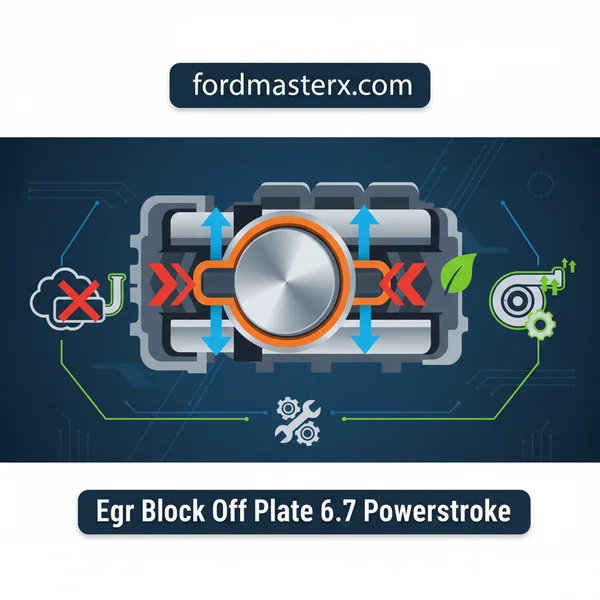
You need a plate that matches the specific bolt pattern and flange thickness of your manifold to ensure a permanent, airtight seal. This guide breaks down the exact fitment requirements for each 6.7 Powerstroke generation, the material choices available, and the mandatory software adjustments required to make these physical plates function without triggering a permanent limp mode.
6.7 Powerstroke Generation Fitment: Choosing the Correct Plate


The 6.7 Powerstroke is categorized into three main eras regarding its emissions hardware. You cannot “universal fit” these plates. Before purchasing, verify your production date on the door jamb sticker, as mid-year changes can occasionally occur.

Fitment Breakdown by Model Year
- 2011–2014 Models: These first-generation 6.7 engines feature a specific rectangular flange pattern. The plates for these years are generally the most common but will not bolt onto later models due to different spacing on the manifold studs.
- 2015–2016 Models: Ford updated the turbocharger and modified the EGR bypass valve during this window. The plates for these years often include specific provisions for the revised coolant crossover pipes.
- 2017–2024 Models: These trucks utilize a redesigned high-pressure EGR system. The block-off plates for the newest generation are typically thicker to handle increased exhaust pressures and have a distinct trapezoidal bolt pattern.
The Essential Role of ECM Tuning
You cannot simply bolt on a block-off plate and drive the truck. The 6.7 Powerstroke’s Engine Control Module (ECM) monitors EGR flow via mass airflow and temperature sensors. As soon as you install a physical plate, the sensors will detect zero flow and immediately trigger a “Check Engine” light and Speed Limited limp mode. To use these plates, you must have an ECM tuner (such as an EZ LYNK or SDR device) with “delete-capable” software. The tuner tells the computer to ignore the missing EGR data and keeps the truck running at full power. Always secure your tuning solution before physically installing the plates.
Material and Hardware Specifications: Billet vs. Stainless Steel


Once you know which year you need, you must choose between billet aluminum and stainless steel plates. While both serve the same purpose—physically stopping exhaust gas from entering the intake—they differ in durability and thermal expansion properties.
Billet Aluminum vs. Stainless Steel Plates
Billet Aluminum plates are usually CNC-machined from 6061-T6 aluminum. They are popular because they are thick (often 1/2 inch) and resist warping under high heat. Aluminum plates also tend to look “cleaner” in the engine bay and are easier to tap for an EGT (Exhaust Gas Temperature) sensor probe if you want to monitor your manifold temperatures directly.
Stainless Steel plates are thinner but incredibly resilient. Because stainless steel has a similar expansion rate to the factory exhaust manifold, these plates provide an excellent long-term seal. However, because they are thinner, you must ensure you are using high-quality gaskets to prevent “hissing” leaks under high boost levels.
Hardware and Gasket Requirements
- High-Temp Gaskets: Never reuse the factory metal gaskets if they show signs of compression or soot bypass. Most high-quality kits include a multi-layer steel (MLS) gasket.
- Grade 10.9 Bolts: The heat cycles of a diesel engine are extreme. Only use high-grade hardware to prevent the bolts from snapping or backing out over time.
- NPT Ports: Many high-end block-off plates come pre-tapped with a 1/8″ NPT port. This allows you to screw in an EGT probe, which is vital for tuned trucks to ensure you aren’t melting engine components during heavy towing.
Regardless of the material, the fitment must be flush. Any gap in the plate will lead to a drop in boost pressure and a significant increase in cabin noise as exhaust gases escape directly from the manifold.
Essential Support Hardware: The Role of ECM Tuners and Gaskets
Installing an EGR block-off plate on your 6.7 Powerstroke is a major physical modification, but it is only half of the equation. Because these trucks are governed by incredibly complex computer systems, you cannot simply block the flow of exhaust and expect the vehicle to run normally. Understanding the “software” side of the installation is just as critical as the “hardware” side.

The Critical Need for Custom ECM Tuning
The 6.7 Powerstroke uses a variety of sensors to monitor exhaust flow and pressure. When you install a block-off plate, the Mass Air Flow (MAF) and EGR sensors will immediately detect that the recirculated gas is missing. This triggers an immediate Check Engine Light (CEL) and, in most cases, forces the truck into “Limp Mode.” In this state, the computer severely de-rates the engine’s power to prevent what it perceives as a mechanical failure.
To avoid this, a custom ECM tuner (such as an EZ LYNK, SCT, or Mini Maxx) is mandatory. The tuner recalibrates the engine control module to operate without the EGR signal. This ensures the truck runs smoothly, maintains full power, and avoids constant dashboard warnings.
- Practical Tip: Always verify that your specific tuner supports “EGR delete” functions for your specific model year, as software capabilities vary between the 2011-2014 and 2015+ platforms.
- Warning: Never drive the truck on a stock tune once the plates are installed, as it can cause the Diesel Particulate Filter (DPF) to clog prematurely if the entire system isn’t synchronized.
Gaskets and Hardware: Preventing Post-Install Leaks
A common mistake during installation is reusing old, compressed gaskets or using low-quality hardware. The exhaust manifold on a 6.7 Powerstroke reaches extreme temperatures and high pressures. If the block-off plate doesn’t have a perfect seal, you will experience a high-pitched “exhaust whistle” or see black soot spraying across your engine bay.
- Use MLS Gaskets: Opt for kits that include Multi-Layer Steel (MLS) gaskets. These are far superior to paper or thin aluminum gaskets at maintaining a seal during heat cycles.
- Stainless Steel Hardware: Standard bolts can corrode and seize over time due to the heat. Ensure your kit uses high-grade stainless steel hardware to prevent future headaches if you ever need to perform maintenance in that area.
Performance Gains and Longevity Benefits of EGR Block-Offs
The primary reason most 6.7 Powerstroke owners seek out block-off plates isn’t just for a slight bump in horsepower; it is about the long-term survival of the engine. The EGR system is notorious for being “hard” on diesel engines, and blocking it off addresses several fundamental reliability issues.
Lower Exhaust Gas Temperatures (EGTs) and Efficiency
By preventing hot, spent exhaust gases from being re-routed back into the combustion chamber, the engine is able to breathe 100% fresh, oxygen-rich air. This results in naturally lower Exhaust Gas Temperatures (EGTs). Lower EGTs are vital for those who use their trucks for heavy towing, as it reduces the thermal stress on the pistons, valves, and the turbocharger.
Reducing Carbon Buildup and Oil Contamination
Soot is essentially abrasive carbon. In a stock 6.7 Powerstroke, this soot is pumped directly into the intake manifold, where it mixes with oily vapors from the crankcase vent. This creates a thick, black “sludge” that cakes the intake valves and narrows the air passages over time. Installing block-off plates stops this cycle immediately.
- Cleaner Oil: Owners often report that their engine oil stays “amber” significantly longer after blocking the EGR, as there is less soot blowing past the rings and into the crankcase.
- Improved Throttle Response: With the intake manifold no longer acting as a trash can for exhaust soot, the air path stays clean, leading to more responsive turbo spool-up and crisper acceleration.
- VGT Longevity: Reducing the overall soot load helps keep the vanes of the Variable Geometry Turbo (VGT) moving freely, preventing the common “stuck vane” issues that plague high-mileage 6.7s.
Conclusion: Making the Right Choice for Your 6.7
Choosing the correct EGR block-off plate for your 6.7 Powerstroke is a straightforward process once you identify your truck’s specific year range. Whether you are dealing with the early 2011-2014 configurations or the updated 2015-2022 layouts, the goal remains the same: protecting your engine from soot-heavy exhaust gases. Remember that the plates are only one piece of the puzzle; pairing them with high-quality gaskets and a reputable ECM tuner is the only way to ensure a reliable, leak-free, and code-free result.
Next Steps: Start by verifying your truck’s production date on the door jamb sticker. Once you have the right fitment, source a complete kit that includes stainless hardware and MLS gaskets. By taking these steps, you are investing in the longevity and efficiency of your Powerstroke for years to come. Get out there and give your truck the clean air it deserves!
❓ Frequently Asked Questions
What is the difference between EGR plates for 2011-2014 and 2015-2019 models?
While similar, the 2015+ models often feature different mounting points and updated turbo configurations that require specific plate shapes. Always double-check your VIN or manufacturing date before purchasing to ensure a proper seal.
Why are high-temperature O-rings important in a block-off kit?
The EGR system operates under extreme pressure and heat; standard rubber seals will fail quickly and cause leaks. Professional kits use Viton or high-temp silicone O-rings to ensure a long-lasting, airtight seal against the manifold.
Can I install a block-off plate while keeping the rest of the EGR cooler intact?
Technically yes, this is often called a ‘stealth’ delete, but you still require a tuner to prevent error codes. However, removing the entire cooler is usually preferred to clear up engine bay space and reduce weight.
What happens if I install the plate without a tuner?
Your 6.7 Powerstroke will immediately enter ‘limp mode,’ significantly reducing power and throwing several diagnostic trouble codes (DTCs). The computer must be reprogrammed to recognize the lack of exhaust flow.
Are there specific brands recommended for 6.7 Powerstroke block-off plates?
Look for reputable diesel performance brands like Pusher Intakes, GDP Tuning, or Sinister Diesel, which offer CNC-machined components. Ensure the brand provides a full hardware kit including stainless steel bolts and specialized plugs.
Does blocking the EGR improve fuel mileage?
Many owners report a slight increase in MPG because the engine breathes only fresh, oxygen-rich air. This leads to more efficient combustion compared to the oxygen-depleted air provided by recycled exhaust gases.