
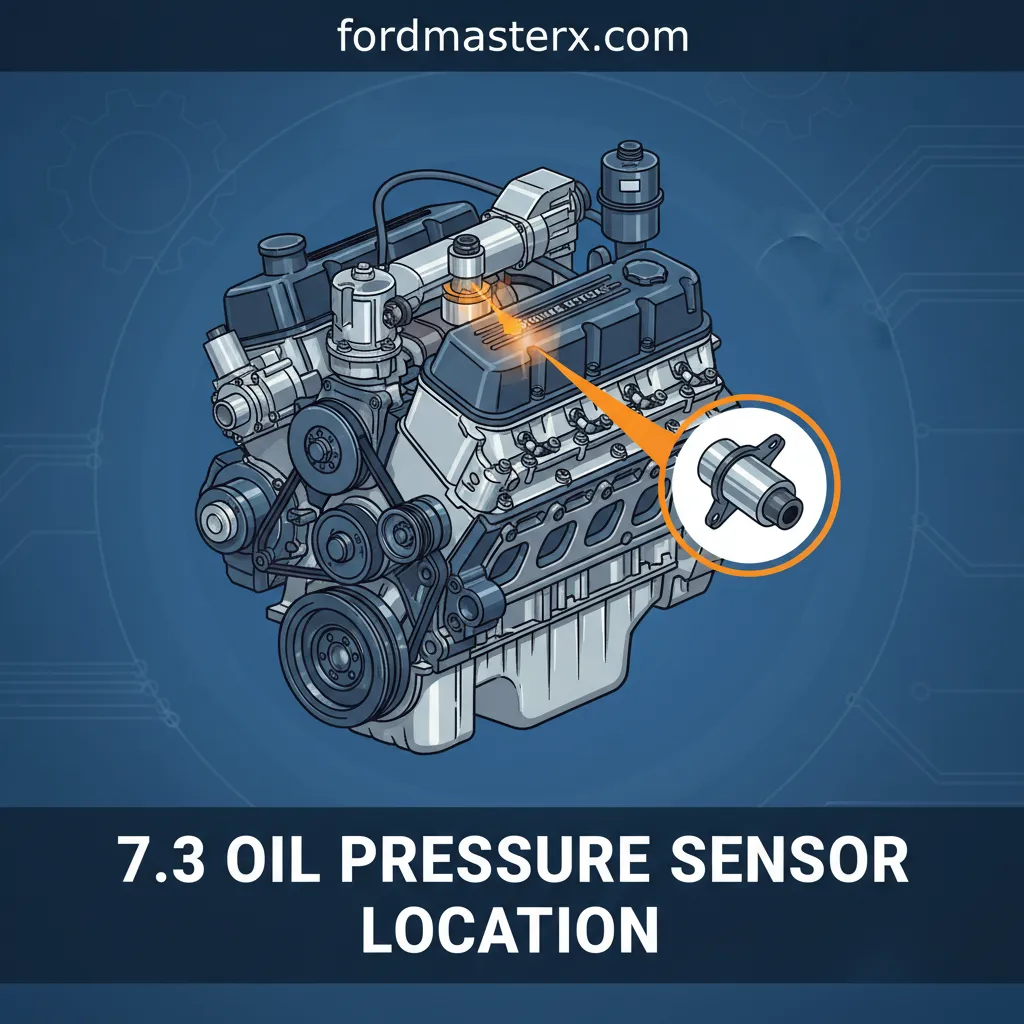
7.3 Oil Pressure Sensor Location And Power Stroke Diagnostic Guide

For owners of the legendary 7.3L Power Stroke, few things are as unnerving as watching your oil pressure gauge drop to zero while hauling a heavy load. This heart-stopping moment often suggests a catastrophic engine failure, yet more often than not, the culprit is a simple electrical component. The 7.3 oil pressure sensor—technically a pressure switch—is a notorious failure point that can lead to false warnings, yet its location is frequently confused with other high-pressure components clustered in the engine valley. In this guide, we will pinpoint the exact 7.3 oil pressure sensor location, detail the symptoms of failure, and provide a technical walkthrough for replacement to get your truck back on the road with confidence.
Section 1: Identifying the 7.3 Power Stroke Oil Pressure Sensor Location and Components
📤 Share Image
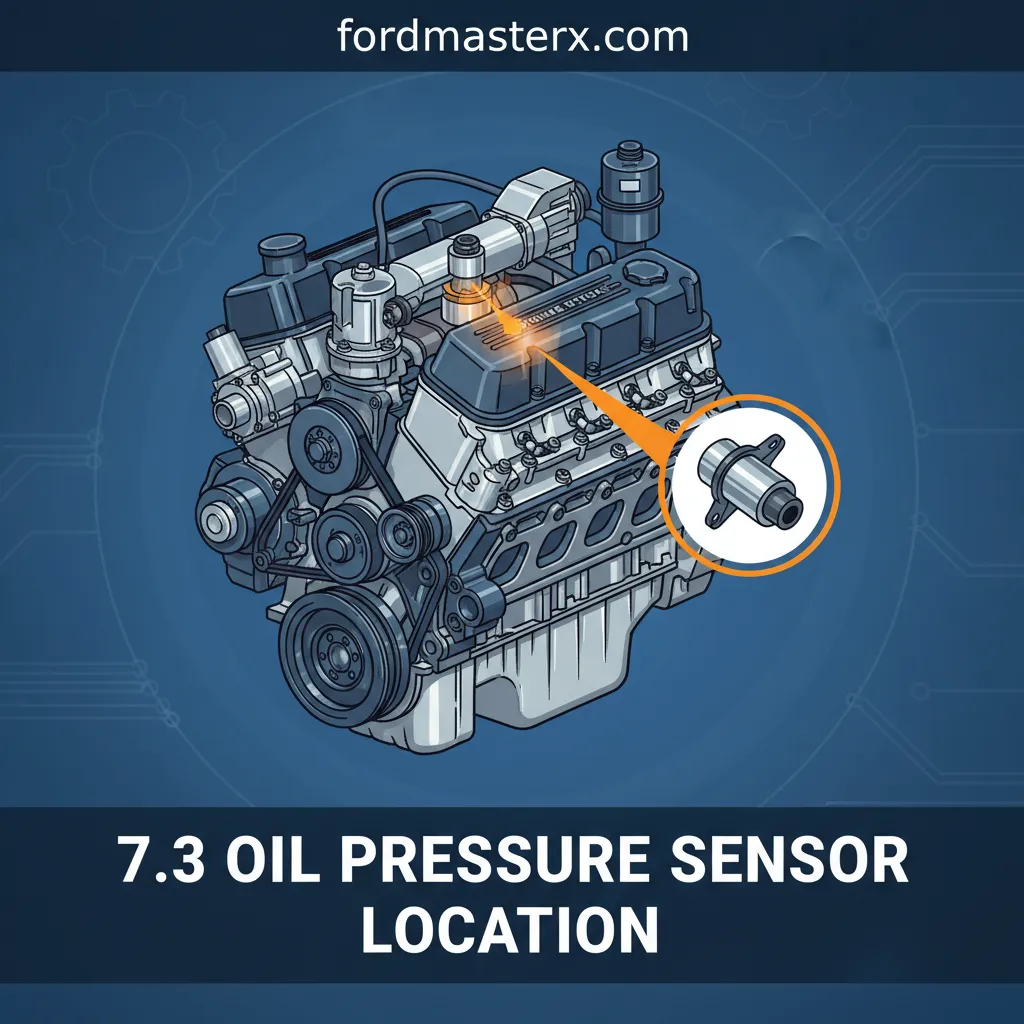
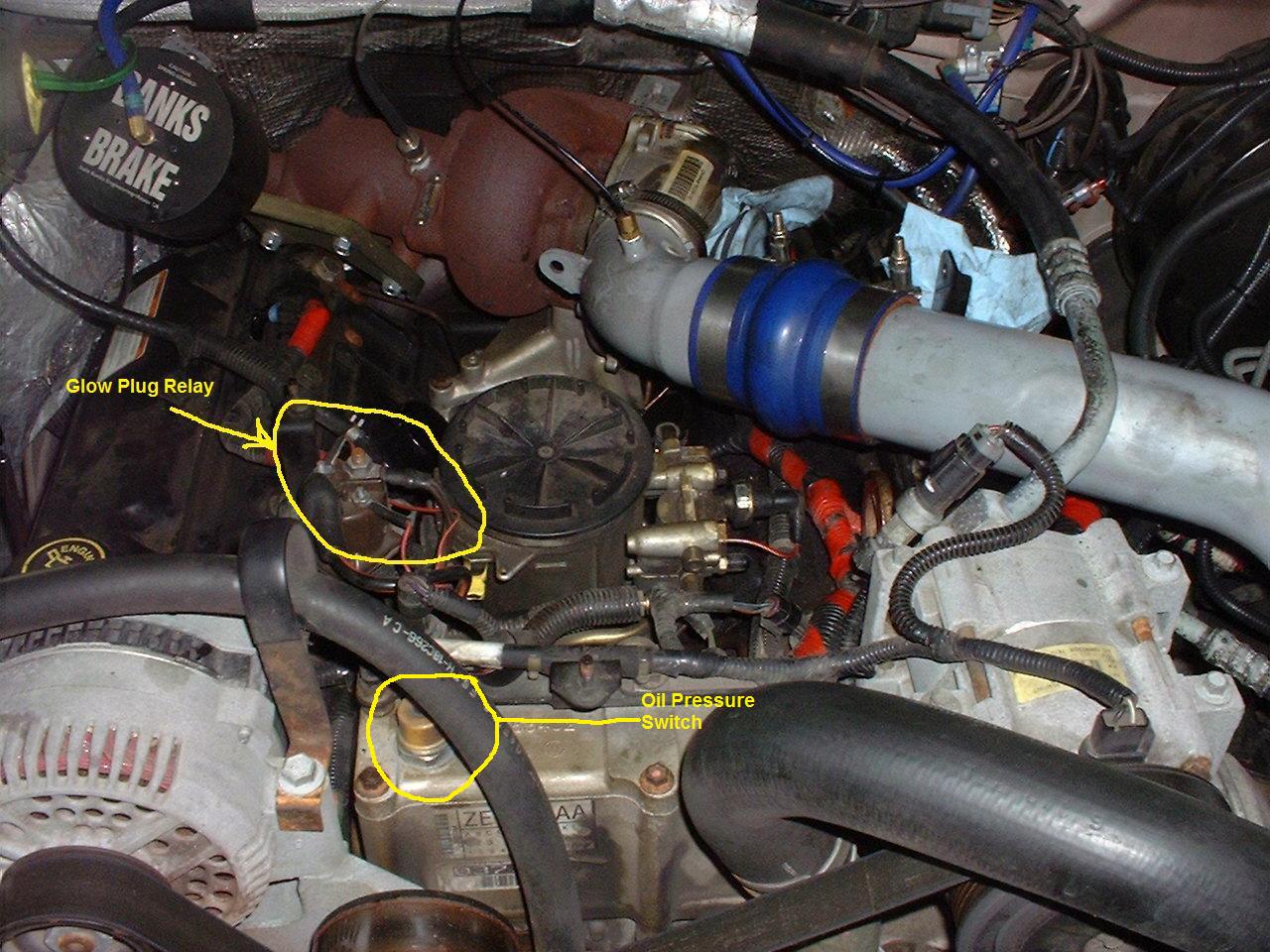
Precision is paramount when diagnosing a 7.3L Power Stroke. To find the Engine Oil Pressure (EOP) sensor, you must look toward the front-center of the engine valley. The sensor is seated directly atop the High-Pressure Oil Pump (HPOP) reservoir. This rectangular aluminum box serves as a critical staging area, holding approximately one quart of oil to ensure the high-pressure system has a constant supply for the injectors.
Visual landmarks are your best guide here. Locate the large fuel bowl assembly; the HPOP reservoir is positioned immediately in front of it (toward the radiator). The oil pressure sensor is the small, cylindrical component threaded into the top of this reservoir, featuring a single-wire electrical connector. It is often covered in a layer of “valley gunk”—a mix of dust and spilled diesel—which can make it blend into the surrounding casting.
Distinguishing the EOP from the ICP Sensor
One of the most common pitfalls for DIYers is misidentifying the sensor. Many owners mistakenly pull the Injection Control Pressure (ICP) sensor when trying to fix a gauge issue. While the EOP sensor sits on the HPOP reservoir, the ICP sensor is located on the forward end of the driver-side cylinder head (on 1999-2003 models) or near the fuel bowl on earlier models. A key visual distinction is the wiring: the factory EOP unit uses a single-wire connector, whereas the ICP sensor uses a three-wire harness.
A common scenario involves a technician replacing the driver-side ICP sensor to fix a flickering dashboard gauge. Because the ICP sensor regulates fuel injection timing and the EOP sensor only operates the dash gauge, this mistake leads to wasted parts and an unresolved diagnostic issue.
Accessibility varies between the Old Body Style (OBS, 1994.5–1997) and the Super Duty (1999–2003) layouts. On Super Duty trucks, the intake piping and improved cowl clearance make the HPOP reservoir relatively easy to reach. On OBS trucks, the tighter engine bay and different fuel filter setups can require more reaching, but the location on the HPOP reservoir remains consistent across the 7.3L production run.
Section 2: Recognizing Symptoms of a Faulty 7.3 Oil Pressure Switch
To diagnose this component effectively, you must understand a fundamental truth about the 7.3L Power Stroke: the factory oil pressure gauge is a “dummy” gauge. It does not provide a linear reading of actual pressure. Instead, the sensor acts as a binary switch. If the engine produces more than 7 PSI of oil pressure, the switch closes, and the needle on your dash moves to a “normal” mid-range position. If pressure drops below 7 PSI, the needle drops to zero.
By The Numbers: Oil Pressure Thresholds
Dash Gauge Activation Trigger
Typical Healthy Hot Idle Pressure
The ‘Flickering Needle’ Phenomenon
The most frequent symptom of a failing sensor is an intermittent “zero” reading. This often manifests as a flickering needle during idle, especially after the engine has reached full operating temperature. Since oil thins as it heats up, a marginal sensor may struggle to maintain the electrical connection at the lower pressures found at idle. Consider the case of a truck that shows zero pressure at a stoplight, but the gauge returns to “normal” the moment the throttle is touched. While this could indicate a worn oil pump, it is almost always a failing sensor or a loose wire pigtail.
External signs are also telling. Check the electrical connector for “wicking”—a condition where oil leaks through the internal seal of the sensor and fills the plastic connector. If you unplug the sensor and find oil inside the harness plug, the sensor’s internal diaphragm has failed, and replacement is the only solution.
Sensor Failure
Gauge flickers or drops to zero, but the engine runs smoothly and quietly.
Mechanical Failure
Gauge drops to zero accompanied by loud injector “clatter” or the engine stalling.

Section 3: Required Tools and Replacement Protocol for 7.3 Diesel Owners
Replacing the sensor is a straightforward task, provided you have the right tools and adhere to cleanliness standards. Because the sensor is located on the HPOP reservoir, any dirt or debris that falls into the hole during replacement goes directly into the high-pressure oil system. This can damage the expensive HPOP or clog injector screens.
📋
Replacement Protocol
Use compressed air and brake cleaner to thoroughly clear the area around the HPOP reservoir. Ensure no loose grit can fall into the port once the sensor is removed.
Squeeze the locking tab on the single-wire pigtail and pull it away. Use a 1-1/16 inch deep well socket to unthread the sensor counter-clockwise.
Genuine Motorcraft sensors come with pre-applied thread sealant. If using an unsealed part, apply a small amount of diesel-rated PTFE tape, ensuring the first two threads are left bare to maintain electrical grounding.
The HPOP reservoir is made of cast aluminum. Over-tightening the sensor can easily crack the housing. Hand-tighten the sensor first, then use your wrench to turn it only until snug (approx. 10-12 lb-ft). A cracked reservoir is an expensive mistake, costing upwards of $300 in parts alone plus significant labor.
Section 4: Finding Reliable Parts and Support Nearby for Your 7.3 Power Stroke
When it comes to 7.3L electronics, the “buy cheap, buy twice” rule is absolute. While generic $10 sensors are available through massive online marketplaces, they have a failure rate significantly higher than OEM components. For long-term reliability, always source Motorcraft (Part #F81Z-9278-AA) or genuine International T444E parts.
Sourcing these parts locally is often the best strategy. Many heavy-duty truck supply houses and specialized diesel shops serving your community will have these in stock, as the 7.3L remains a staple of the American work truck fleet. A trusted local diesel parts counter can also provide the correct pigtail connector if your original wiring has become brittle or oil-soaked.
Leveraging Your Local Diesel Community
Engaging with your local diesel enthusiast community can uncover convenient resources. Often, a nearby shop that specializes in International Harvester engines will carry the same sensor at a more accessible price point than a Ford dealership. By shopping at a trusted local retailer, you also ensure that you have immediate recourse if a part is defective, avoiding the long lead times and shipping hassles of national e-commerce sites.
✅ Pros of OEM Motorcraft
- Correct 7 PSI trigger threshold
- High-quality internal diaphragm
- Pre-applied thread sealant
- Tested for 200,000+ mile longevity
❌ Cons of Generic Parts
- Often leak oil within months
- Inaccurate pressure triggers
- Thin plastic connectors that crack
- Potential to cause gauge “flutter”
Section 5: Advanced Diagnostics: Testing the Oil Pressure Circuit and HPOP Health
If you have replaced the sensor and still face gauge issues, it is time to move beyond the part and test the system. The 7.3L oil system is divided into Low Pressure Oil (LPO) and High Pressure Oil (HPO). The dash sensor monitors the LPO system, which is responsible for lubricating the engine bearings and keeping the HPOP reservoir full.
The Mechanical Pressure Test
To confirm your engine’s health, perform a mechanical oil pressure test. Remove the sensor and thread in a mechanical gauge with a 1/8″ NPT fitting. A healthy 7.3L LPO system should maintain 10–20 PSI at hot idle and climb to 40–60 PSI at cruising speeds. If the mechanical gauge shows healthy pressure but the dash remains at zero, you have an electrical circuit problem.
Electrical Circuit Troubleshooting
Since the sensor is a single-wire grounding switch, you can test the dashboard gauge easily. With the ignition on (engine off), use a jumper wire to ground the sensor connector to a clean spot on the engine block. If the dashboard needle sweeps to the “normal” position, your wiring harness and instrument cluster are functioning correctly, pointing back to a faulty sensor or low physical pressure. If the needle does not move, inspect the harness for chaffing—a common occurrence in the 7.3 engine valley where wires rub against the fuel bowl or HPOP lines.
In rare cases, the Low Pressure Oil Pump (located behind the harmonic balancer) may be worn, or the oil pick-up tube inside the pan may be cracked. These mechanical issues usually present with a “No Start” condition because the HPOP reservoir cannot stay full enough to fire the injectors. If your truck runs perfectly but the gauge is dead, the sensor or the wire is your 99% probability.
Conclusion
The 7.3 oil pressure sensor is located atop the HPOP reservoir and is a critical, though simple, diagnostic component for any Power Stroke owner. While the sight of a zero-pressure gauge is frightening, understanding that this component is merely a 7-PSI switch allows for calm, methodical troubleshooting. Replacing a flickering gauge with a genuine OEM sensor ensures long-term reliability for your Power Stroke and prevents the frustration of “wicking” oil leaks. Remember that proper tooling and a light touch with torque are essential to avoid damaging the aluminum housing during the swap. If your gauge continues to fluctuate after replacement, contact a local diesel specialist nearby to perform a mechanical pressure test and ensure your engine’s longevity.
Frequently Asked Questions
Is the 7.3 oil pressure sensor the same as the ICP sensor?
No, they are different components. The oil pressure sensor (EOP) is located on the HPOP reservoir and triggers the dashboard gauge. The Injection Control Pressure (ICP) sensor is located on the driver-side cylinder head and provides data to the PCM for fuel injection timing. Misidentifying these can lead to unnecessary costs and failed repairs.
What socket size do I need for the 7.3 oil pressure sensor?
The 7.3L Power Stroke oil pressure sensor requires a 1-1/16 inch deep well socket. Because of its location near the fuel bowl and HPOP lines, a deep socket is necessary to clear the electrical terminal. Ensure you use a 6-point socket if possible to avoid rounding the brass flats of the sensor during removal.
Why is my 7.3 oil pressure gauge reading zero but the truck still runs?
Since the 7.3L engine requires oil pressure to fire the injectors (via the HPOP), a truck that is running but showing zero pressure almost always has a failed sensor or a wiring fault. If the engine had truly lost all oil pressure, it would stall immediately as the high-pressure oil system would be starved of its supply.
Can I use an aftermarket sensor for my 7.3 diesel?
While aftermarket sensors are widely available nearby at most parts stores, the 7.3L engine is notoriously sensitive to sensor tolerances. Using a genuine Motorcraft or International sensor is highly recommended by the diesel community to ensure accurate gauge operation and to prevent the common issue of oil leaking through the sensor body into the connector.
Does the 7.3 oil pressure sensor affect engine performance?
The factory oil pressure switch does not send data to the PCM; it only communicates with the dashboard gauge. Therefore, a failure will not cause a ‘limp mode’ or poor performance. However, ignoring it is risky, as you lose the ability to monitor for a genuine mechanical oil pump failure that could catastrophicly damage the engine.