
6.7 Powerstroke CCV Delete: Benefits and Kit Comparison

A 6.7 Powerstroke crankcase filter delete is essential for preventing oily mist from entering the intake, which causes detrimental sludge buildup in the turbocharger and intercooler. By rerouting these gases, you lower crankcase pressure and eliminate the common ‘Crankcase Filter Full’ dashboard warning.
🎯 Key Takeaways
- Eliminate oil mist recirculation to keep the turbo and intercooler clean.
- Prevent ‘Crankcase Filter Full’ messages and associated engine limp modes.
- Reduce internal pressure that often leads to blown engine seals.
- VTA kits offer simplicity, while catch cans provide a cleaner environment.
- Improve overall engine longevity by ensuring only clean air enters combustion.
Performing a 6.7 Powerstroke CCV delete is the most effective way to prevent oil vapor from saturating your intake system and clogging your turbocharger. By removing the factory crankcase ventilation box and installing a re-route kit, you eliminate the “Crankcase Filter Full” message and stop sludge buildup in its tracks. This modification ensures that only clean, fresh air enters your turbo, which is essential for maintaining long-term engine reliability and peak performance.
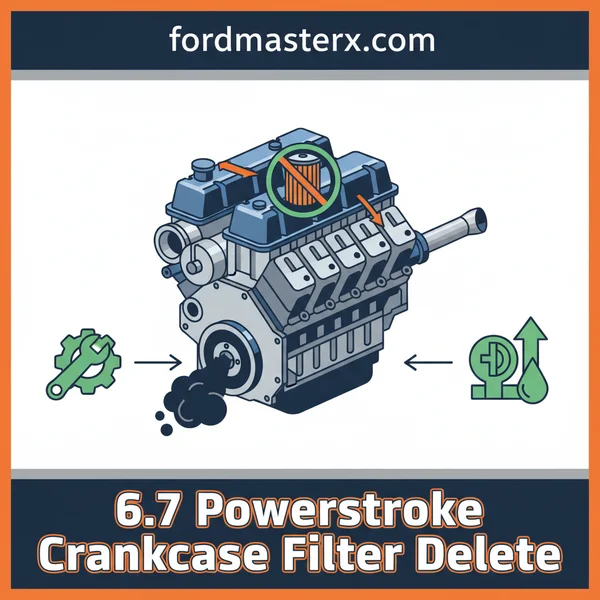
Practically, this matters because the factory setup is a “closed” system that forces oily mist back into the air floor. Over time, this mist coats the intercooler, gums up the intake valves, and can even lead to premature turbo failure. If you want to stop spending hundreds of dollars on replacement filters and prevent expensive seal leaks caused by excessive crankcase pressure, a CCV delete kit is your best solution. Disclaimer: This modification is intended for off-road or competition use only; check your local emissions regulations before proceeding.
Understanding the Factory 6.7 Powerstroke CCV System Failures
The factory Crankcase Ventilation (CCV) system on the 6.7L Powerstroke is designed to capture oil mist from the engine block and recirculate it. However, the design is fundamentally flawed for high-mileage diesel engines. The system uses a filter box located on the driver-side valve cover. On 2011-2016 models, this was a sealed unit that required replacing the entire assembly. On 2017 and newer models, Ford moved to a “serviceable” box, but the underlying issues remain the same.

The “Crankcase Filter Full” Warning and P04DB Code
When the internal mesh filter becomes saturated with oil and soot, it restricts airflow. This restriction triggers the “Crankcase Filter Full” message on your dashboard. More importantly, it often throws the P04DB diagnostic trouble code, which indicates “Crankcase Ventilation System Disconnected.” This happens because the pressure sensors detect an abnormal flow rate. If you ignore this warning, the pressure inside the engine will rise, eventually looking for the weakest point to escape.
Excessive Pressure and Oil Leaks
A clogged CCV filter doesn’t just trigger lights; it creates physical damage. When crankcase pressure cannot vent, it puts immense stress on your engine seals. You will often see the following technical issues:
- Lower Oil Pan Leaks: The increased pressure often pushes oil past the RTV seal on the lower pan.
- Rear Main Seal Weeping: High internal pressure is a leading cause of premature rear main seal failure.
- Turbo Seal Contamination: Pressure can back up into the turbo oil drain line, causing oil to bypass the turbo seals and enter the exhaust or intake.
Key Benefits of Eliminating Oil Recirculation in Diesel Engines
Eliminating the factory CCV system provides immediate mechanical relief to your 6.7 Powerstroke. By installing a bypass or re-route kit, you are venting those crankcase gases to the atmosphere or a catch can rather than shoving them back into your precision engine components. This keeps your entire “cold side” of the engine pristine.
Protecting the Turbocharger and Intercooler
In the factory configuration, oil vapor travels directly into the turbocharger inlet. As this hot oil mist hits the cold spinning compressor wheel, it can cause “slugging” or a buildup of gunk on the blades. Furthermore, this oil travels through the Charge Air Cooler (CAC). Oil is an insulator; when it coats the inside of your intercooler, the unit becomes less efficient at cooling the compressed air. A CCV delete ensures your intercooler stays dry and maintains maximum cooling efficiency, which helps keep your Exhaust Gas Temperatures (EGTs) lower under load.
Improved Intake Valve Longevity
Diesel engines naturally produce a small amount of soot through EGR (Exhaust Gas Recirculation). When you mix that dry soot with the oily mist from the factory CCV, it creates a thick, tar-like substance. This sludge builds up on your intake valves and inside the intake manifold. This restriction narrows the air passages, reducing volumetric efficiency. By removing the oil from this equation, you ensure that the intake remains clean, and the valves can seat properly without carbon interference. Key benefits include:
- Consistent Boost Levels: Cleaner sensors provide more accurate data to the ECM.
- Zero Maintenance: You will never have to buy a $150-$400 CCV filter box again.
- Engine Bay Cleanliness: High-quality kits prevent the “oily film” often found on the driver-side valve cover.
By venting the gases externally, you also ensure that the engine is always breathing “thin” air rather than air saturated with heavy hydrocarbons. This leads to a smoother idle and better throttle response over time, as the mass airflow (MAF) and manifold absolute pressure (MAP) sensors stay free of oil contamination.
Comparing Vent-to-Atmosphere (VTA) vs. Oil Catch Can Kits
Choosing the right setup for your 6.7 Powerstroke depends on how you use your truck and your tolerance for maintenance. Both options solve the primary issue of oil entering the intake, but they do so in very different ways. Understanding these differences is key to making the right investment for your engine’s longevity.

Vent-to-Atmosphere (VTA): Simplicity and Cost-Effectiveness
The VTA kit is the most popular choice for owners looking for a “set it and forget it” solution. This setup routes the crankcase gases through a hose that typically exits near the frame rail, venting directly into the air. It is the ultimate way to ensure zero oil mist ever reaches your turbocharger again. Because there are no moving parts or filters, it is virtually maintenance-free once installed.
- Pros: Extremely affordable, no filters to ever replace, and zero chance of crankcase pressure backup.
- Cons: You may notice a slight “diesel smell” when idling and occasional oil drips on your driveway or garage floor.
- Practical Tip: To minimize odors in the cabin, route the exit hose as far back as possible toward the transmission area, ensuring it is secured away from hot exhaust components.
Oil Catch Can Kits: The Clean Alternative
If you want to keep your engine bay and driveway spotless, a catch can is the way to go. Instead of venting to the ground, the gases pass through a canister that traps the oil while allowing the air to continue through the cycle. This keeps the system “closed” and eliminates the external mess associated with VTA kits. It is the preferred choice for those who live in urban areas or prefer a more refined look.
- Pros: Keeps the environment and your driveway clean, prevents oily residue under the truck, and maintains a factory-like appearance.
- Cons: You must remember to manually drain the reservoir periodically, and the initial kit cost is significantly higher.
- Real-World Example: During heavy towing or cold winter months, you might find yourself draining the catch can every 1,000 miles due to increased moisture and blow-by condensation.
Long-Term Reliability and Maintenance Impact of a CCV Delete
Beyond the immediate performance gains, a CCV delete is a long-term investment in the structural integrity of your 6.7 Powerstroke. By removing the factory filter, you are effectively eliminating a major point of failure that has been known to cause blown seals and expensive oil leaks due to excessive internal pressure.
Protecting the Turbo and Intercooler System
In the stock configuration, the oil mist acts as a coating on the internal components of your intercooler. Over time, this “oil film” reduces the efficiency of the heat exchanger, leading to higher Exhaust Gas Temperatures (EGTs). By deleting the CCV filter, your intercooler stays bone dry and operates at peak cooling efficiency. This is vital for trucks that frequently tow heavy loads.
- Turbo Blade Integrity: Oil mist can attract fine dust particles that act like sandpaper on high-speed turbo compressor wheels, causing premature wear.
- Boot Failures: Excessive oil in the intake tracks softens the rubber intercooler boots over time, causing them to slip off or “blow” under high boost pressures.
Ending the “Sludge” Cycle
The most significant long-term benefit is the prevention of intake sludge. When oily CCV mist mixes with dry soot from the EGR system, it creates a thick, black paste. This paste restricts airflow into the cylinders and can eventually cause the Manifold Absolute Pressure (MAP) sensor to fail or provide inaccurate readings, which triggers “limp mode” or poor fuel economy.
- Lower Maintenance Costs: You no longer have to spend $80–$120 every 30,000 miles on a replacement Ford CCV filter box.
- Sensor Longevity: Keeping the intake dry ensures sensors stay clean and the engine’s computer receives accurate data for optimal fuel tuning.
- Clean Engine Bay: This modification eliminates the common “seepage” often seen around the factory CCV box on the driver-side valve cover.
Conclusion: Is the CCV Delete Right for Your 6.7 Powerstroke?
A CCV delete is one of the most practical upgrades for any 6.7 Powerstroke owner concerned with long-term reliability. By removing the restrictive factory filter and stopping oil from entering the intake, you ensure your turbo, intercooler, and sensors remain in top-tier condition. Whether you choose the rugged simplicity of a VTA kit or the refined cleanliness of an oil catch can, the result is a healthier, more efficient engine that is no longer “choking” on its own vapors.
Ready to take the next step? Evaluate your truck’s usage and decide which kit style fits your lifestyle. If you’re tired of replacing expensive filters and cleaning oily intake boots, it’s time to make the switch. Protect your Powerstroke investment today—your turbo will thank you!
❓ Frequently Asked Questions
How often should the factory 6.7 Powerstroke crankcase filter be replaced?
Ford recommends replacement every 75,000 miles, but many filters clog much sooner, leading to high pressure and potential oil leaks.
What is the difference between a VTA kit and a catch can?
A VTA (Vent-to-Atmosphere) kit vents gases via a hose to the ground, while a catch can traps the oil in a reservoir for manual disposal.
Can a clogged crankcase filter cause oil leaks?
Yes, high crankcase pressure caused by a clogged filter can push oil past engine seals and gaskets, resulting in external leaks.
Will deleting the CCV filter throw a Check Engine Light?
Most 6.7 Powerstroke models require a bypass sensor or specific tuning to prevent a ‘Crankcase Pressure Sensor’ error code after deletion.
Is the CCV delete legal for street use?
Modifying emissions equipment is generally restricted to off-road or competition use; always check your local and federal regulations before installing.
Does the delete kit require permanent engine modifications?
Most high-quality kits are bolt-on and utilize factory mounting points, meaning the modification is typically reversible if you keep the original parts.