6.0 Powerstroke Fuel Filter Location: Finding Both Filters

The 6.0 Powerstroke diesel engine utilizes two distinct fuel filter locations that must be serviced together: the primary filter on the driver-side frame rail and the secondary filter on the top of the engine. Both are critical for protecting the injectors from debris and water contamination.
🎯 Key Takeaways
Recommended Best Deal Products


- Primary filter is inside the HFCM on the driver-side frame rail.
- Secondary filter is on top of the engine near the oil filter.
- Always drain the HFCM water separator before removing the frame filter.
- A 36mm socket is required for the engine-top fuel cap.
- The frame-side filter requires a 24mm socket for the housing cap.
The 6.0 Powerstroke engine uses a sophisticated dual-filter system to protect its sensitive HEUI injectors from debris and moisture. To find your filters, you need to look in two distinct places: the driver’s side frame rail and the top of the engine block. The primary filter is housed within the Horizontal Fuel Conditioning Module (HFCM) under the truck, while the secondary filter sits in a plastic canister right next to the oil filter housing under the hood.

Prime for Young Adults — 6 Months Free
Students and 18–24s get six months of Prime free, then half price.
Start 6 Months Free As an Amazon Associate I earn from qualifying purchases.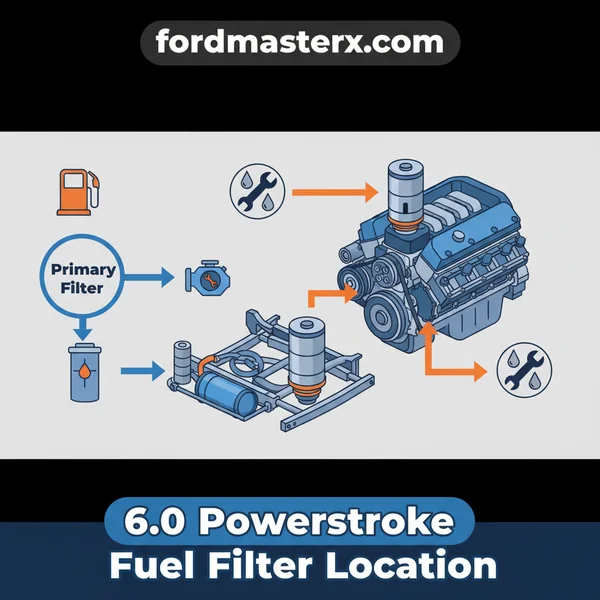
Knowing these exact locations is critical for routine maintenance and troubleshooting fuel pressure issues. Because the 6.0 Powerstroke relies on fuel to cool and lubricate its injectors, a clog in either location can lead to “stiction,” expensive injector failure, or a damaged fuel pump. You will need a 36mm socket and a short extension to access both filter caps properly, as they are often torqued tight and located in somewhat cramped quarters.
Understanding the Dual-Filter System Design
The 6.0 Powerstroke design separates the filtration process into two stages. This isn’t just for redundancy; each filter serves a specific purpose in the fuel flow path. The system is designed to catch larger contaminants and water at the frame level before sending “pre-cleaned” fuel up to the engine for a final high-efficiency polish.
📤 Share
💾 Download
Micron Ratings and the Flow Path
The fuel journey begins at the tank and moves toward the front of the truck. The fuel first enters the primary filter, which is designed to handle the heavy lifting. Once it passes through the frame-mounted pump, it travels up to the secondary housing on the engine. Using the correct filters is vital because the two stages have different filtration capabilities:
- Primary Filter (Frame Rail): This is a 10-micron element. Its main job is to stop large debris from reaching the electric fuel pump and to separate water from the fuel.
- Secondary Filter (Engine Top): This is a much finer 4-micron element. It catches microscopic particles that could otherwise score the internal components of your fuel injectors.
- Integrated Design: The secondary filter housing also contains the fuel pressure regulator, which ensures the injectors receive a steady 45-55 PSI.
When you buy a filter kit, you should always replace both at the same time. Using high-quality OEM filters like Motorcraft is highly recommended for this engine. Aftermarket filters often lack the patented water-blocking media or use “will-fit” caps that can lead to air leaks or unfiltered fuel bypassing the system entirely.
The Ultimate 6.0 Powerstroke Fuel Filter Walkthrough
Recommended Best Deal Products


The 6.0L Powerstroke diesel engine is a powerhouse, but it is notoriously sensitive to fuel quality and pressure. Unlike many vehicles that feature a single fuel filter, the 6.0 Powerstroke utilizes a dual-filter filtration system designed to protect its high-pressure oil-fired injectors. Neglecting these filters can lead to expensive injector failure, “stiction,” and fuel pump strain. This guide provides a comprehensive walkthrough on locating both the primary and secondary filters and explains exactly how to replace them to keep your Ford Super Duty running at peak performance. Following these steps ensures you don’t introduce air into the system or damage the fragile plastic housings found on these trucks.
Step 1: Gathering Tools and Safety Preparation
What you need: A 36mm socket (low profile is best), a 24mm socket (or 15/16″), a 6mm Allen wrench (or an upgraded brass drain plug), a large drain pan, shop rags, and a fresh Motorcraft FD-4616 filter kit.
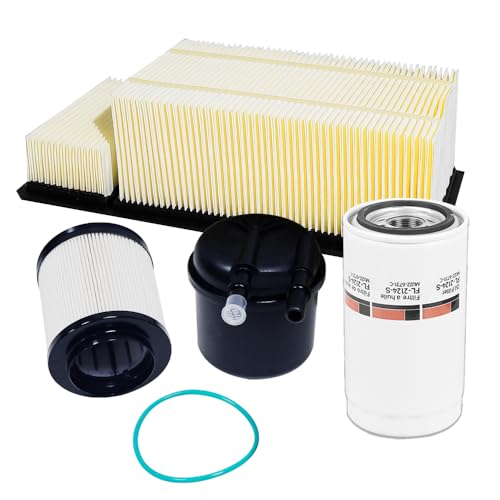
Instructions: Before you begin, ensure your truck is parked on a level surface with the parking brake engaged. The engine should be cool to the touch to avoid burns from the cooling system components near the secondary filter. Lay out your tools and open your new filter kit. You should find two filters: a larger, square-bottomed filter with a white “Aquabloc” membrane (the primary) and a smaller cylindrical filter (the secondary), along with two new rubber O-rings. It is highly recommended to use only Motorcraft filters for the 6.0 Powerstroke, as aftermarket filters often lack the patented water-separator technology and can cause fitment issues that lead to “drain-back” problems and hard starts.
Pro Tip: Place your drain pan directly under the driver’s side frame rail before you even open the hood. Fuel will begin to spill as soon as you loosen the primary drain plug, and having your pan positioned early prevents a massive diesel mess on your driveway.
Step 2: Locating and Accessing the Primary Fuel Filter (HFCM)
What you need: A flashlight and a creeper or cardboard to lie on.

Audible — Listen Free for 30 Days
One free credit a month and thousands of titles included.
Listen Free for 30 Days As an Amazon Associate I earn from qualifying purchases.Instructions: The primary fuel filter is housed within the Horizontal Fuel Conditioning Module (HFCM). To locate it, crawl underneath the truck on the driver’s side. Look at the inside of the frame rail, roughly parallel to the driver’s door. You will see a black metal box with several fuel lines entering and exiting it; this is the HFCM. On the side of this module facing the rear of the truck, you will see a large plastic circular cap with a nut molded into the center. This is the primary fuel filter housing. Adjacent to this cap, you will see a small brass or steel plug—this is the water separator drain plug. Understanding this location is critical because this filter is the first line of defense against water and large debris coming from the fuel tank.
Pro Tip: If your truck has a transfer case skid plate, access might be tight. Using a swivel joint on your socket extension can help you get the 36mm socket onto the cap without stripping the plastic nut.
Step 3: Draining the Water Separator
What you need: 6mm Allen wrench and a drain pan.
Instructions: Before removing the filter cap, you must drain the fuel and accumulated water from the HFCM. Use your 6mm Allen wrench to loosen the drain plug on the side of the module. Turn it counter-clockwise until fuel begins to flow into your pan. Let it drain for at least two to three minutes or until the flow stops. This step is vital because if you remove the main 36mm cap without draining the module first, approximately a quart of diesel fuel will rush out all at once, likely soaking your arm and the frame rail. Inspect the drained fuel for signs of rust, debris, or a “cloudy” appearance which indicates significant water contamination. Once drained, you can leave the plug out or lightly thread it back in to prevent dripping while you swap the filter.
Pro Tip: Many 6.0 owners replace the stock 6mm Allen plug with an “International” version that features a large knurled thumb screw. This allows for tool-free draining in the future, which is helpful since Ford recommends draining the water separator monthly.
Step 4: Removing the Primary Filter and O-Ring
What you need: 36mm socket, ratchet, and shop rags.
Instructions: Fit your 36mm socket onto the plastic nut of the HFCM cap. Slowly turn counter-clockwise. Be careful not to apply sudden “jerking” force, as the plastic cap can become brittle over time and snap. Once the cap is unscrewed, pull it straight back. The filter is clipped into the cap and should come out with it. Use a rag to catch any remaining drips. Pop the old filter out of the cap and discard it. Crucially, remove the old black rubber O-ring from the cap threads. Clean the cap thoroughly with a clean rag to ensure no grit or sand remains in the threads, as this could prevent a proper seal and cause a fuel leak under pressure.
Pro Tip: Always inspect the “teeth” inside the HFCM where the filter seats. If you see chunks of plastic or heavy sludge, use a lint-free cloth to wipe the interior of the housing before installing the new filter.
Step 5: Locating and Removing the Secondary Fuel Filter
What you need: 24mm socket (or 36mm depending on your specific cap) and an extension.
Instructions: Move to the engine bay. The secondary fuel filter is located on top of the engine, slightly to the driver’s side of the center line. It is situated directly next to the much larger oil filter housing. The secondary fuel filter housing is the smaller of the two black canisters. Using your 24mm socket, unscrew the cap. Note that as you unscrew it, the fuel level inside will slowly drop as the check valve opens. Once the cap is loose, lift it up. The secondary filter is usually not attached to the cap; it sits inside the housing. Reach in and pull the filter straight up. Be very careful not to drop any dirt into the open housing, as this fuel goes directly to your injectors.
Audible Premium Plus — Annual Membership
12 audiobook credits up front, plus the full Audible catalogue.
See Annual Plans As an Amazon Associate I earn from qualifying purchases.Pro Tip: Lay a thick shop rag around the base of the secondary housing before opening it. Even after the fuel drains down, the filter will be saturated and will drip across your engine’s intake manifold as you remove it.
Step 6: Installing New Filters and Lubricating Seals
What you need: New Motorcraft filters, new O-rings, and a small amount of clean diesel fuel or motor oil.
Instructions: Start with the secondary filter (the one under the hood). Drop the new cylindrical filter into the housing; it doesn’t matter which way it faces, but ensure it sits flush. Put the new O-ring on the cap and lubricate it with a bit of clean oil or diesel. Screw the cap back on by hand first to avoid cross-threading, then tighten to 11 lb-ft (snug, but do not overtighten). Now, move back under the truck. Snap the new primary filter into the 36mm cap until it clicks. Lubricate the large O-ring and place it on the cap. Thread the cap back into the HFCM. Tighten until the cap flange meets the housing. Finally, reinstall and tighten the 6mm drain plug.
Pro Tip: Never “dry fit” the O-rings. If the rubber is dry, it can bunch up or tear as you torque the cap down, leading to a “suction leak.” A suction leak will pull air into the fuel lines, causing the engine to sputter or fail to start.
Step 7: Priming the Fuel System (The Most Important Step)
What you need: Your ignition key and patience.
Instructions: Do NOT attempt to start the engine immediately. Because you have drained the housings, the lines are full of air. Air is compressible, whereas diesel is not; trying to start a “dry” system can damage the fuel injectors. Insert the key and turn it to the “ON” position (do not crank the engine). You will hear the fuel pump on the frame rail hum. Leave the key in this position for 30 seconds. You might hear air bubbling through the lines. After 30 seconds, turn the key off. Repeat this process at least three to five times. This “cycles” the pump, pushing fuel from the tank, through the primary filter, into the secondary housing, and back through the return lines, effectively purging the air from the system.
Pro Tip: On the third cycle, listen closely. The pump’s pitch will change from a high-pitched whine to a lower, more solid hum once the air is purged and the system is fully pressurized with liquid fuel.
✅ Final Checklist
- Primary (HFCM) cap is tightened and no fuel is weeping from the O-ring.
- The 6mm (or brass) water separator drain plug is fully tightened.
- Secondary fuel filter cap (engine bay) is snug and the O-ring is seated correctly.
- The fuel system has been primed with at least 3-5 key cycles (30 seconds each).
- The engine starts and idles smoothly without stumbling or surging.
Important Notes:
- Safety Warning: Diesel fuel is slippery and a fire hazard. Clean up all spills immediately and dispose of old filters and fuel according to local environmental regulations.
- When to seek help: If the truck fails to start after 10 priming cycles, or if you see a steady stream of fuel leaking from the HFCM, you may have a pinched O-ring or a cracked housing. Do not continue to crank the engine, as this can burn out the starter or damage injectors.
- Estimated Time: 30 to 45 minutes for a beginner.
- Cost Range: $60 – $90 for the OEM Motorcraft FD-4616 filter kit. Avoid “cheap” $20 filters found on discount sites; they lack the water-blocking media required for the 6.0 engine.
Identification of the HFCM and Primary Filter Housing
The primary fuel filter is tucked away inside the Horizontal Fuel Conditioning Module (HFCM). This module is the nerve center of your low-pressure fuel system. It houses the electric fuel pump, the primary filter, and the water-in-fuel (WIF) sensor. To find it, you will need to get under the truck and look at the inner driver’s side frame rail, roughly beneath the area where the driver’s feet would be.

Locating the Frame Rail Housing
Once you are under the vehicle, look for a rectangular black metal unit bolted to the frame. You will see several fuel lines connected to it and an electrical harness. On the forward-facing side of the module (pointing toward the front bumper), you will see a large, circular black plastic cap. This cap features a 36mm nut molded into the center, allowing you to unscrew the primary filter element from the housing.
The Critical Water Separator Drain
Before you attempt to unscrew the primary filter cap, you must address the water separator. This is the most important step of the process. If you open the filter housing without draining the module first, you will be met with a high-volume splash of diesel fuel that can be difficult to manage. Furthermore, draining the module allows you to remove any accumulated water that the filter has successfully trapped.
- The Drain Plug Location: Look on the side of the HFCM facing the driveshaft. You will see either a yellow plastic lever or a brass plug with a 6mm Allen head.
- Draining the System: Place a catch pan directly under the module. Turn the yellow lever or remove the brass plug completely. Let the fuel drain until it stops dripping.
- Contaminant Check: Examine the drained fuel. If you see bubbles at the bottom of the pan or a cloudy “milky” appearance, you have a significant water contamination issue that needs to be addressed immediately.
- Sealing the Module: Once the flow stops, reinstall the brass plug or close the yellow lever. Only then should you use your 36mm socket to remove the primary filter cap.
Accessing the HFCM is generally straightforward on 4×4 models due to the increased ground clearance. However, if you have a 2WD truck, you may find that the frame sits lower, making it helpful to use a jack and jack stands to give yourself more room to work with your socket and catch pan.
Secondary Filter Proximity to Engine Components
Recommended Best Deal Products


While the primary filter handles the heavy lifting down by the frame, the secondary filter is situated right in the heart of the engine bay. Knowing exactly where it sits in relation to other engine components prevents confusion and helps you navigate the crowded top-end of the 6.0 Powerstroke during a quick inspection.
Identifying the Secondary Housing
The secondary fuel filter housing is located on the top of the engine, slightly to the driver’s side. It sits directly next to the much larger oil filter housing. On the 6.0 Powerstroke, these two housings are often referred to as the “filter duo.” The fuel filter cap is the smaller of the two and is typically made of black reinforced plastic. Identifying it is easier when you look for the silver fuel lines entering and exiting the base of the housing.
- Proximity to Oil Filter: It is usually positioned just forward and slightly to the left (driver’s side) of the oil filter.
- Near the FICM: It sits in close quarters with the Fuel Injection Control Module (FICM), which is mounted on the driver’s side valve cover.
- Intake Manifold: The housing is integrated into the fuel bowl assembly, which is bolted near the front of the intake manifold, right behind the cooling fan area.
Visual Landmarking and Tips
A common mistake for new owners is mistaking the secondary fuel filter for a component of the cooling system because of its proximity to the degas bottle (the coolant reservoir). However, if you follow the fuel lines leading away from the engine toward the firewall, they will lead you straight back to this housing. Practical Tip: Always ensure the area around the cap is free of debris before opening it. Because of its central location, road dust and oil residue tend to settle near the seal, and you don’t want that falling into the fuel bowl.
Tools and Clearance Specifications for Filter Access
Accessing the 6.0 Powerstroke fuel filters requires specific tools to ensure you don’t damage the fragile plastic caps or struggle with the limited space provided by Ford’s engineering. Having the right tools on hand makes the difference between a quick check and a frustrating afternoon.
Essential Socket Sizes for Both Housings
Precision is key when dealing with the fuel system. Using the wrong size or a 12-point socket can easily round off the plastic nut molded into the top of the filter caps. Most experienced 6.0 owners keep a dedicated set of sockets just for this task to avoid any “rounded-off” nightmares.
- Primary (HFCM) Cap: Requires a 36mm socket. Some owners find that a 1 1/8-inch socket works in a pinch, but a true 36mm 6-point socket is the gold standard for avoiding damage to the horizontal cap.
- Secondary (Engine) Cap: Requires a 24mm socket. Interestingly, many OEM and high-quality aftermarket caps also feature a 1/2-inch square drive hole in the center, allowing you to use a breaker bar or ratchet directly, though a socket provides more even pressure.
- Drain Valve: The brass primary drain plug on the HFCM usually requires a 6mm Allen wrench, though many owners replace this with a specialized “thumb-turn” plug for easier access.
Navigating Tight Clearances
The primary filter on the frame rail is notoriously tight. You are working in the narrow gap between the front driveshaft (on 4×4 models) and the frame rail. This leaves very little “swing room” for a standard-length ratchet. Using a “stubby” 36mm socket or a universal joint can be a lifesaver here. On the engine side, clearance is much better, but you still have to navigate around the large air intake ducting and various wiring harnesses. Using a 6-inch extension on your ratchet will allow you to clear the surrounding components and get a straight, vertical grip on the secondary cap, which prevents cross-threading during reinstallation.
Conclusion
Locating the dual fuel filters on a 6.0 Powerstroke is the first step in mastering the maintenance of this legendary engine. By finding the primary filter on the driver’s side frame rail and the secondary filter on top of the engine, you ensure your fuel system remains pressurized and free of harmful contaminants. Remember that the 6.0 is incredibly sensitive to fuel quality; neglecting these two locations can lead to expensive injector failures down the road.
To keep your truck running at peak performance, consider these next steps:
- Check your records: Verify if you are within the recommended 15,000-mile change interval for both filters.
- Inspect for leaks: Take a flashlight to the frame rail and the top of the engine to ensure both housings are dry and secure.
Stay proactive with your maintenance, and your Powerstroke will reward you with years of heavy-duty service. Happy wrenching!
❓ Frequently Asked Questions
Why does the 6.0 Powerstroke have two fuel filters?
The dual-filter design provides multi-stage filtration, with the primary filter removing water and large debris at the frame rail while the secondary filter catches finer particles right before the injectors. This setup is crucial for protecting the sensitive High-Pressure Oil System and fuel injectors.
How do I identify the Horizontal Fuel Conditioning Module (HFCM)?
The HFCM is a metal box mounted on the inner driver-side frame rail with several fuel lines entering and exiting it. It is easily recognizable by the large plastic screw-on cap for the filter and the nearby water separator drain plug.
Is the engine-top fuel filter the same as the oil filter?
No, although they are located next to each other, the fuel filter housing is smaller and sits slightly lower and to the driver’s side of the larger oil filter housing. Both use a 36mm socket, but the canisters are distinct units.
What happens if I can’t find the frame-side drain plug?
On older models, it is a brass 6mm Allen plug, while newer or updated versions use a yellow plastic thumb lever. If it is missing or seized, the HFCM manifold may need an update to ensure you can drain water safely.
Can I access the frame filter without a lift?
Yes, the primary filter is accessible by crawling under the driver’s side of the truck; however, there is limited clearance, so using a socket extension and a drain pan is highly recommended for cleanliness.
Why is the secondary filter location so close to the oil filter?
This centralized location allows for easier top-side maintenance and keeps the fuel lines short between the final filtration stage and the fuel rails. It also utilizes the engine’s heat to help prevent fuel waxing in extremely cold temperatures.