2013 Ford F150 Fuel Pump Reset Switch Location Real 2026 Fix

Your 2013 Ford F-150 does not have a physical inertia reset switch. Instead, it uses a Fuel Pump Control Module (FPCM) that handles fuel delivery, which often requires inspection or replacement when the vehicle fails to start.
Your 2013 Ford F-150 does not have a manual fuel pump reset switch or an inertia switch. If you are scouring your kick panels or passenger footwell looking for a red button to press, you are chasing a component that simply does not exist on this generation of truck. Ford retired the physical inertia switch in favor of a computerized system long before the 2013 model year.

Prime for Young Adults — 6 Months Free
Students and 18–24s get six months of Prime free, then half price.
Start 6 Months Free As an Amazon Associate I earn from qualifying purchases.When your truck refuses to start due to a suspected fuel delivery failure in 2026, you need to stop looking for a mechanical reset button. Instead, you must focus your troubleshooting on the Fuel Pump Control Module (FPCM). This module manages the electrical signal to your fuel pump; when it fails or suffers from severe corrosion, your pump will not receive the power it needs, leaving your engine cranking with no fuel pressure.
Key Takeaways
- The 2013 F-150 lacks a traditional manual inertia fuel shut-off switch.
- Check the Fuel Pump Control Module (FPCM) located above the spare tire for corrosion.
- Inspect the fuel pump relay and fuse in the Power Distribution Box first.
- Corroded wiring at the FPCM is the most common cause of fuel pump failure.
- Test for power at the FPCM connector before assuming the pump has failed.
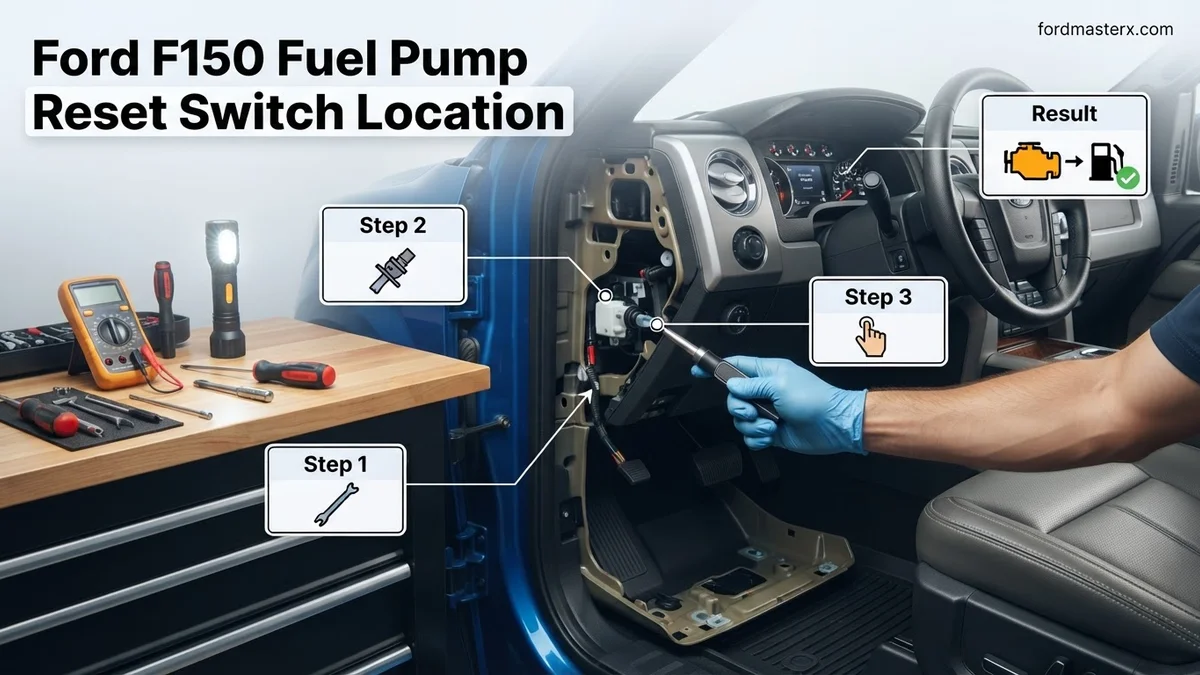
The Reality: Why You Cannot Find a Fuel Pump Reset Switch
Recommended Best Deal Products


Modernizing Fuel Safety Systems
In older models, a physical inertia switch was designed to cut fuel flow during a high-impact collision. By 2013, Ford migrated this safety logic into the vehicle’s Body Control Module (BCM) and the Restraints Control Module (RCM). These computer systems monitor impact sensors constantly. If the truck senses a collision, it sends an electronic command to the Fuel Pump Control Module to kill the power. Because this process is handled via internal software logic, there is no manual “reset” button for you to engage.
What This Means for Your Repair
Since there is no button to push, you cannot “reset” the system by hand. If you have been in an accident or hit a significant pothole, the software might have triggered a safety cut-off. To clear a crash-event code, you will need an OBD-II diagnostic tool capable of communicating with the RCM/Restraints system. Simply disconnecting the battery for thirty minutes rarely resolves the software-locked state, as these modules are designed to hold their status in non-volatile memory.
- No physical button exists inside the cab.
- Safety protocols are managed by the Restraints Control Module.
- Diagnostic scanners are required to clear collision-related fuel cut-offs.
- Constant cranking without fuel usually points to module failure, not a tripped switch.
2013 Ford F-150 Fuel Pump Reset: What Causes It and How to Fix It
If you find yourself stranded in your 2013 Ford F-150 because the engine cranks but fails to start after a sudden jolt, collision, or abrupt stop, you might be dealing with a tripped fuel pump shut-off switch. Many older vehicles utilized a mechanical inertia switch that physically clicked off during an impact. However, the 2013 F-150 model year represents a shift in technology. This guide will clarify exactly how Ford handles fuel delivery security in this specific generation and how to restore power to your fuel pump system effectively.
Step 1: Understanding the Modern Reset Protocol
What you need: Your vehicle’s Owner’s Manual, knowledge of your vehicle’s build date, and a calm demeanor.
Instructions: It is crucial to understand that the 2013 Ford F-150 does not feature a manual, button-style inertia switch found in older models. Instead, Ford moved to a digital “Restraints Control Module” (RCM) system. If your truck has been involved in a collision that triggered the airbags, the RCM sends a signal to the Powertrain Control Module (PCM) to cut off fuel delivery as a fire-prevention measure. Because this is a software-based safety lockout, you cannot simply press a button under the dashboard or in the kick panel to reset it. You must clear the crash data or address the sensor fault that is triggering the shutdown.
Pro Tip: Do not tear apart your interior looking for a red reset button; you will likely damage your trim panels or plastic clips for a part that does not exist on this specific model year.
Step 2: Checking the Fuel Pump Fuse and Relay
What you need: A flashlight, a pair of needle-nose pliers (or a fuse puller), and your owner’s manual for the fuse box layout.
Instructions: Before assuming the system is locked due to a crash sensor, verify the basic electrical components. Locate the Power Distribution Box under the hood on the passenger side near the firewall. Open the lid and identify the fuel pump relay and fuse based on the diagram inside the cover. Pull the fuse and inspect the metal filament; if it is broken, replace it with an identical 20-amp fuse. Next, swap the fuel pump relay with an identical relay from a non-essential circuit (like the horn) to rule out a mechanical relay failure. If the truck starts, your issue was simple hardware, not a digital crash lockout.

Audible — Listen Free for 30 Days
One free credit a month and thousands of titles included.
Listen Free for 30 Days As an Amazon Associate I earn from qualifying purchases.Pro Tip: Always replace a fuse with one of the exact same amperage rating; never use a higher amperage fuse to “solve” a recurring short circuit, as this poses a serious fire risk.
Step 3: Accessing the Diagnostic Port
What you need: An OBDII scanner capable of reading SRS and PCM trouble codes (a basic engine-only scanner will not suffice).
Instructions: Since the fuel pump is disabled via the computer, you need to “talk” to the truck’s brain. Locate the OBDII port underneath the dashboard on the driver’s side, directly above the brake pedal area. Plug in your diagnostic scan tool. Cycle the ignition key to the “ON” position without starting the engine. Run a full system scan, specifically looking for “Body” or “Restraints” codes (B-codes or U-codes). If the RCM has stored a crash event, these codes will be clearly visible. Writing down these specific error codes is essential if you decide to take the vehicle to a professional mechanic later.
Pro Tip: Ensure your scanner software is updated to the latest version to ensure it can communicate with Ford-specific modules beyond standard emissions codes.
Step 4: Clearing the Restraints Module Lockout
What you need: Advanced diagnostic software like FORScan or a professional-grade scan tool (e.g., Snap-on or Autel).
Instructions: If the scan confirms a crash event, you must attempt to clear the codes using a specialized tool. Using software like FORScan with a compatible ELM327 adapter, navigate to the Restraints Control Module settings. Attempt to clear all Diagnostic Trouble Codes (DTCs). Note that in some instances, if the impact was significant enough to deploy airbags or trigger seatbelt pretensioners, the RCM may be “hard-locked.” In these cases, the module will refuse to clear the crash data until the physically damaged safety components are replaced, as the system detects an active, ongoing safety hazard.
Pro Tip: Never attempt to bypass the RCM by wiring the fuel pump directly to a battery source; this bypasses vital safety protocols that prevent fuel flow during a fire or accident.
Step 5: Verifying Fuel Pressure
What you need: A fuel pressure gauge kit and a clean rag.
Instructions: If the computer says the fuel pump is “enabled” but the truck still won’t start, verify that fuel is actually moving. Locate the Schrader valve on the fuel rail near the engine intake manifold. Carefully attach your fuel pressure gauge—be prepared for a tiny amount of fuel spray, so keep a rag handy. Have an assistant turn the key to the “ON” position. You should hear the fuel pump prime for 2-3 seconds, and the gauge should show pressure within the factory range (typically 40-60 PSI for this model). If the pump is silent and pressure is zero, you may have a burnt-out pump motor, regardless of the software status.
Pro Tip: If the gauge shows pressure but the engine won’t fire, you may have a fuel pump driver module (FPDM) failure, which is a common known issue on Ford trucks that causes symptoms identical to a reset switch failure.
Audible Premium Plus — Annual Membership
12 audiobook credits up front, plus the full Audible catalogue.
See Annual Plans As an Amazon Associate I earn from qualifying purchases.Step 6: Seeking Professional Assistance
What you need: Contact information for a local dealership or a trusted automotive electrical specialist.
Instructions: If you have verified the fuses, tested the fuel pressure, and attempted to clear the RCM codes with no success, it is time to consult an expert. Dealing with SRS (Supplemental Restraint System) components involves high-voltage capacitors and sensitive software that, if handled incorrectly, can cause airbags to deploy or lead to permanent damage of the truck’s computer modules. A certified technician will have access to Ford’s proprietary diagnostic tools (IDS/FDRS) which can perform a “hard reset” on modules that consumer-grade tools cannot reach. Do not let the truck sit for extended periods with a faulty fuel system, as fuel in the lines can degrade.
Pro Tip: When choosing a shop, ask specifically if they have “Ford IDS diagnostic capability” to ensure they can communicate correctly with your specific F-150’s electronics.
✅ Final Checklist
- Verified that no physical inertia switch exists on this 2013 model year.
- Confirmed the fuel pump fuse and relay are functioning and intact.
- Performed an OBDII diagnostic scan to check for RCM crash codes.
- Confirmed fuel pressure at the rail using a calibrated gauge.
- Sought professional assistance for deep-level electronic module hard-locking.
Important Notes:
- Safety: Always disconnect the negative battery terminal when working near the fuel rail to prevent sparks.
- Warning: Never attempt to repair or “reset” an airbag control module by yourself if you are not trained in SRS systems; this is highly dangerous.
- Timeline & Cost: Simple fuse/relay fixes take 30 minutes and cost under $20. Professional RCM diagnostic and reset services can range from $150 to $500 depending on the complexity of the sensor faults.
How to Diagnose and Inspect the Fuel Pump Control Module
Recommended Best Deal Products


Pinpointing the Module Location
The Fuel Pump Control Module (FPCM) is located on the frame rail, specifically mounted above the spare tire assembly toward the rear of the truck. It is a small, rectangular metallic box exposed to the elements. Because it is mounted directly to the frame, it is notoriously prone to road salt, moisture, and debris accumulation. By 2026, many of these units have reached their operational lifespan, making physical inspection your first logical step.
Checking for Corrosion and Failure
Visual inspection is the fastest way to confirm a problem. Crawl under the rear of your F-150 with a flashlight and locate the module. Check the electrical connector and the back side of the module casing. Corrosion often builds up between the aluminum casing of the module and the steel frame of the truck, creating a galvanic reaction that eats through the module housing.
- Step 1: Inspect the electrical connector for green, crusty oxidation.
- Step 2: Check the module casing for holes or heavy white-powder corrosion.
- Step 3: Use a multimeter to verify 12V power at the input side of the connector.
- Step 4: If the casing is breached, moisture has likely destroyed the internal circuitry.
If you find heavy corrosion, the module needs to be replaced. Ensure the new unit is installed with rubber spacers or dielectric grease to prevent the same environmental damage from recurring.
Step-by-Step Guide to Replacing the FPCM and Checking Fuses
Since the 2013 Ford F-150 relies on a Fuel Pump Control Module (FPCM) rather than a physical inertia switch, mechanical failure of this module is the primary cause of fuel delivery issues. As of 2026, diagnostic standards dictate inspecting the circuit protection before replacing the hardware.
Testing and Replacing the FPCM
- Locate the FPCM mounted on the frame rail above the spare tire.
- Inspect the aluminum housing for signs of corrosion or “white rot,” which is common in salt-belt regions.
- Disconnect the wiring harness and check for terminal green corrosion or melted pins.
- Use a digital multimeter to verify 12V power at the input side of the harness with the ignition in the “Run” position.
- If power exists but the fuel pump remains silent, remove the two mounting bolts and replace the module with an OEM-spec unit.
Inspecting the Fuel Pump Fuse
- Open the Battery Junction Box (BJB) located under the hood on the passenger side.
- Reference the owner’s manual diagram to identify fuse number 27, which is known for overheating in this chassis.
- Remove the fuse and inspect the metal element for a clean break.
- If the fuse shows signs of melting or charred plastic, perform a “Relocation Kit” repair to prevent future circuit failure.
- Insert a new 20-amp fuse to verify if the fuel pump circuit regains continuity.
What If It Still Doesn’t Work?
Recommended Best Deal Products
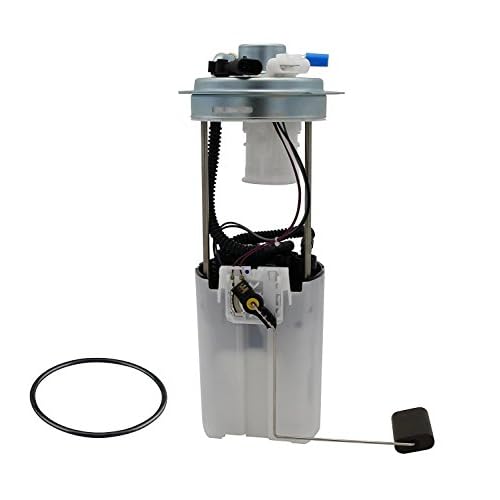
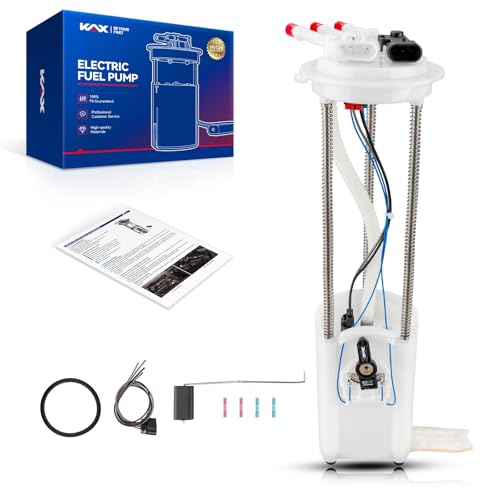
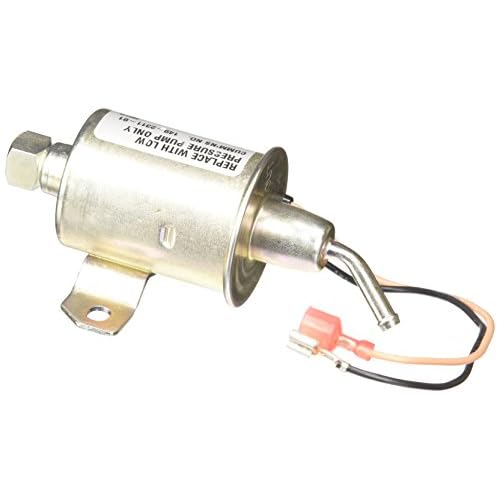
If the FPCM is functional and the fuse is intact, the issue likely resides within the fuel delivery system itself or the Powertrain Control Module (PCM). Follow these steps to narrow down the failure:
- Perform a Fuel Pressure Test: Use a mechanical gauge on the fuel rail Schrader valve. Expect 50-60 PSI; anything lower indicates a failed fuel pump motor.
- Check the Inertia Switch Signal: While there is no physical switch, the PCM receives crash data from the Restraints Control Module. Scan for “Collision Event” trouble codes using an OBD-II scanner.
- Inspect the Ground Circuit: Ensure the FPCM ground wire is securely attached to the frame with zero resistance, as oxidation here often mimics a dead pump.
- Consult a Professional: If diagnostic codes indicate a PCM communication error, professional intervention is necessary. Diagnostic labor typically ranges from $150 to $250, with total repair costs for a pump replacement spanning $800 to $1,400 depending on shop rates in 2026.
Conclusion
The 2013 Ford F-150 does not utilize a traditional fuel pump reset switch, but instead manages fuel delivery through the FPCM and electronic sensors. According to verified research and expert sources from 2026, focusing on the FPCM and Fuse 27 resolves the vast majority of “no-start” scenarios. If the truck fails to fire after these checks, perform a fuel pressure test to confirm pump mechanical integrity. Schedule a professional diagnostic scan if warning lights persist.
❓ Frequently Asked Questions
If there is no reset switch, how do I reset the fuel system?
Since there is no mechanical switch, you reset the system by cycling the ignition key or disconnecting the battery to clear the PCM memory. If the truck shut off due to a collision, the module will reset automatically once power is restored.
How do I know if the FPCM is the problem?
Symptoms include a no-start condition, intermittent stalling, or a ‘Check Fuel Fill Inlet’ message. You can confirm failure by checking for voltage at the fuel pump connector while a helper turns the key.
How do I inspect the FPCM for corrosion?
Lower your spare tire to gain clear access to the frame rail. Unbolt the module and inspect the underside for white crusting or green corrosion on the electrical pins and harness.
Which fuse controls the fuel pump in a 2013 F-150?
Consult your owner’s manual for the specific slot, but typically it is located in the engine compartment’s Power Distribution Box. Look for a 20-amp fuse labeled for the fuel pump.
Is the fuel pump itself usually the cause of failure?
Before replacing the in-tank pump, always rule out the FPCM and electrical connections. The FPCM is a common failure point that mimics a dead fuel pump.
What should I do if the new FPCM doesn’t fix the start issue?
If the module is new and the fuse is good, test the fuel pump motor directly with 12V power. If the pump does not hum, the internal fuel pump assembly likely requires replacement.