
2002 Ford F150 Oil Type, Capacity, and Filter Guide

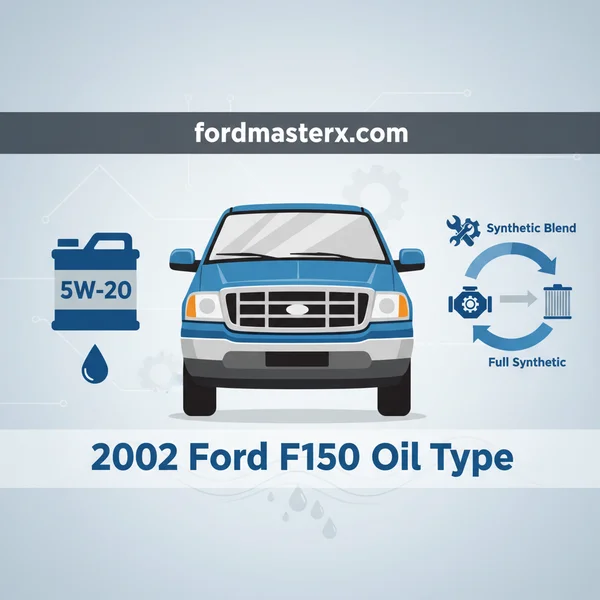
The 2002 Ford F150 specifically requires 5W-20 viscosity oil for all available engine sizes (4.2L, 4.6L, and 5.4L). Regardless of the engine choice, the standard oil capacity is 6.0 quarts when performing a full oil and filter change.
🎯 Key Takeaways
- Use 5W-20 viscosity for optimal engine protection and fuel efficiency.
- All 2002 F-150 engines require exactly 6.0 quarts of oil.
- Use Motorcraft FL-820S for V8s and FL-400S for V6 models.
- High-mileage synthetic oil is recommended for older Triton engines.
- Always replace the oil drain plug gasket to prevent slow leaks.
For the 2002 Ford F-150, the manufacturer-recommended oil type for all available engines—the 4.2L V6, 4.6L V8, and 5.4L V8—is 5W-20 synthetic blend motor oil. Regardless of which engine is under your hood, the total oil capacity remains a consistent 6.0 quarts when you are performing a standard oil and filter change. Sticking to these precise specifications ensures that your Triton or Essex engine maintains the proper oil pressure and lubrication required to protect critical internal components from friction and heat.
Following the manufacturer’s specific viscosity and volume requirements is essential for the long-term health of your truck. Using the incorrect oil weight can lead to decreased fuel economy or increased wear on the cam phasers and valvetrain. This guide provides the exact data points and technical parts information you need to complete a professional-grade oil change on your 2002 F-150 without the guesswork.
Understanding Oil Viscosity: Why 5W-20 for the 2002 F-150
The Shift from 5W-30 to 5W-20
While some older Ford manuals originally listed 5W-30 as an acceptable weight, Ford later issued Technical Service Bulletin (TSB) 02-1-9. This bulletin specifically updated the recommendation to 5W-20 for the 2002 model year. This thinner oil is designed to flow more efficiently through the tight tolerances found in the 4.6L and 5.4L Triton V8 overhead cam engines. Using a heavier oil than recommended can lead to restricted flow through the small oil passages that feed the camshafts and hydraulic timing chain tensioners. In the long run, using the correct 5W-20 weight helps prevent premature engine rattling and expensive timing-related repairs.

Cold Start Protection and Flow Efficiency
The “5W” rating is critical for F-150 owners who operate their trucks in colder climates. This number represents the oil’s flow characteristics at low temperatures. A 5W-20 synthetic blend ensures that the lubricant reaches the top of the cylinder head almost instantly after you turn the ignition key. This rapid flow significantly reduces metal-on-metal contact during those first few seconds of operation, which is when the majority of engine wear occurs. Additionally, the lower viscosity of 20-weight oil reduces internal fluid drag. This allows your engine to rotate more freely, providing a slight but measurable boost in fuel efficiency compared to using a thicker 10W-40 or 5W-30 alternative.
2002 Ford F150 Oil Type Made Easy: Your Essential Action Plan
Maintaining a 2002 Ford F150 requires a specific understanding of its lubrication needs to ensure the longevity of the Triton V8 or the 4.2L V6 engines. This guide covers everything from selecting the correct 5W-20 viscosity oil to the actual physical process of performing the oil change. By following these detailed steps, you ensure that your high-mileage workhorse continues to run smoothly, prevents internal engine wear, and maintains optimal fuel efficiency. Neglecting the specific oil type requirements of this model year can lead to premature timing chain wear or cam phaser issues, making this routine maintenance one of the most important tasks you can perform as an owner.
Step 1: Identify and Purchase the Correct Oil and Filter
What you need: 6 quarts of 5W-20 Motorcraft Synthetic Blend Motor Oil, an oil filter (Motorcraft FL-820-S for V8 engines or FL-400-S for the V6), and your vehicle owner’s manual for verification.
Instructions: For the 2002 model year, Ford transitioned specifically to 5W-20 weight oil to improve cold-start lubrication and fuel economy. While some older forums might suggest 5W-30, Ford’s official technical service bulletins for the 2002 F150 emphasize 5W-20. You must purchase exactly 6 quarts, as all three engine options for this year—the 4.2L V6, 4.6L V8, and 5.4L V8—share the same 6.0-quart capacity when changing the filter. Stick with the Motorcraft brand if possible, as it contains the specific additives designed for Ford’s seal materials and internal tolerances.
Pro Tip: Always double-check your oil filter part number at the counter. The V8 engines use the larger FL-820-S which has a built-in bypass valve specifically tuned for the Triton engine’s oil pressure curves.
Step 2: Prepare Your Workspace and Vehicle
What you need: Wheel chocks, a floor jack (optional for the F150 due to high clearance), jack stands, and a large oil drain pan (at least 7-quart capacity).
Instructions: Drive your truck for about 5 to 10 minutes to bring the engine to operating temperature. Warm oil flows more freely and carries away more contaminants than cold, sluggish oil. Park the truck on a level surface, engage the parking brake, and place wheel chocks behind the rear tires. While the F150 usually has enough ground clearance to crawl under without a jack, using one can provide more “elbow room.” If you do lift the vehicle, never rely on the jack alone; always secure it with heavy-duty jack stands rated for at least 3 tons. Open the hood and remove the oil fill cap to allow air to enter, which prevents a vacuum and allows the oil to drain faster.
Pro Tip: Lay down a piece of cardboard or a specialized oil mat beneath the drain area. The 2002 F150 oil stream can sometimes “burp” or shoot out further than expected when the plug is first removed.
Step 3: Drain the Old Oil Safely
What you need: A 13mm or 16mm wrench (depending on your specific drain plug), safety glasses, and nitrile gloves.
Instructions: Position your drain pan directly beneath the oil pan drain plug, which is located at the rear of the engine’s oil pan. Using your wrench, loosen the plug by turning it counter-clockwise. Once it is loose enough to turn by hand, apply slight inward pressure while unscrewing it the rest of the way. This prevents the oil from leaking out until the very last thread is clear. Quickly pull the plug away to allow the oil to flow into the pan. Inspect the drain plug for any metal shavings, which could indicate internal engine wear. Let the oil drain until it is a very slow drip; this usually takes about 10 to 15 minutes. Wipe the drain hole area clean with a lint-free rag.
Pro Tip: If your drain plug gasket is crushed or plastic-molded and looks flattened, replace the entire plug or the copper washer. A $3 part can prevent a frustrating persistent leak.
Step 4: Remove the Old Oil Filter
What you need: An oil filter wrench (cup style or strap style) and shop towels.
Instructions: On the 2002 F150, the oil filter is located on the driver’s side of the engine block. It is often positioned horizontally or at a slight angle. Position the drain pan beneath the filter, as oil will spill out as soon as the seal is broken. Use the filter wrench to loosen the filter. Once loose, unscrew it by hand slowly. Be careful, as the filter will be heavy and full of hot oil. Once removed, check the filter mounting surface on the engine block. Ensure the old rubber gasket did not stick to the engine; this is called “double-gasketing” and will cause a massive oil leak and potential engine failure the moment you start the truck.
Pro Tip: Keep the old filter upright as you pull it out to avoid spilling oil over the steering linkage and frame components, which can be difficult to clean later.
Step 5: Install the New Filter and Drain Plug
What you need: Your new Motorcraft oil filter and a small amount of fresh 5W-20 oil.
Instructions: Dip your finger into a bottle of fresh 5W-20 oil and smear a thin, even layer of oil onto the rubber gasket of the new filter. This ensures a proper seal and allows for easier removal during your next oil change. If the filter is mounted vertically, you can “pre-fill” it halfway with oil to reduce dry-start time, but on the 2002 F150 V8s, the horizontal mounting makes this difficult. Screw the new filter onto the threaded stud by hand. Tighten it until the gasket touches the base, then turn it an additional 1/2 to 3/4 of a turn. Reinstall the oil drain plug by hand to avoid cross-threading, then tighten it with your wrench to approximately 10-15 lb-ft of torque.
Pro Tip: Never use a wrench to tighten an oil filter. Over-tightening can deform the gasket or make it nearly impossible to remove next time.
Step 6: Add Fresh 5W-20 Oil
What you need: A clean funnel and 6 quarts of 5W-20 oil.
Instructions: Insert the funnel into the oil fill neck on the passenger side valve cover. Begin pouring your 6 quarts of oil. It is recommended to pour the first 5 quarts, wait a minute for the oil to settle into the pan, and then add the final quart. Using 5W-20 is critical here; the 2002 Ford engines use narrow oil passages to lubricate the overhead cams. Heavier oil can struggle to reach these components during cold starts. Once all 6 quarts are in, remove the funnel and replace the oil fill cap securely. Clean up any spills on the engine covers to prevent smoke or odors when the engine heats up during your test drive.
Pro Tip: Buy the 5-quart “jug” and a single 1-quart bottle. This is usually more cost-effective than buying six individual quart bottles.
Step 7: Final Verification and Level Check
What you need: The vehicle’s dipstick and a clean rag.
Instructions: Start the engine and let it idle for about 2 minutes. Watch the oil pressure gauge on the dashboard; it should rise to the normal range within seconds. Look under the truck while it is running to ensure there are no leaks from the drain plug or the filter. Shut the engine off and let the truck sit for 5 minutes to allow the oil to drain back into the pan. Pull the dipstick (marked with a yellow handle), wipe it clean, reinsert it fully, and pull it back out. The oil level should be exactly between the two holes or within the crosshatched area. If it is slightly low, add the remaining oil from your last quart. Note the mileage for your records.
Pro Tip: Don’t be alarmed if the oil on the dipstick is hard to see. New oil is very clear; hold the dipstick at an angle against the light to see the “wet” line.
✅ Final Checklist
- Verified that exactly 6 quarts of 5W-20 oil were used.
- Confirmed the old oil filter gasket was removed from the engine block.
- Checked that the drain plug and oil filter are snug and leak-free while the engine is running.
- Verified the oil level is within the crosshatch marks on the dipstick after the engine has rested.
- Ensured the oil fill cap and dipstick are fully seated and secure.
Important Notes:
- Safety: Always use eye protection. Used motor oil is a known carcinogen; wash your hands thoroughly after the job.
- Recycling: Never pour used oil down the drain or into the ground. Take your used oil and filter to a local auto parts store for free recycling.
- Professional Help: If you notice heavy metallic flakes in the oil or if the drain plug threads are stripped, consult a professional mechanic immediately.
- Estimated Time: 30 to 45 minutes.
- Estimated Cost: $40 – $65 depending on whether you choose synthetic or synthetic blend oil.
Comparison of 4.2L, 4.6L, and 5.4L Engine Oil Specifications
Primary Engine Specifications and Capacities
Consistency is a hallmark of the 2002 F-150 engine lineup. Whether you are driving the base-model V6 or the heavy-duty V8, the volume requirements are identical across the board. Below is the breakdown of the specific requirements for every engine option available for this model year:
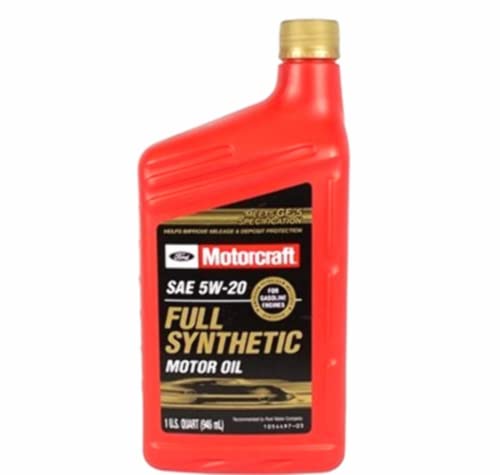
- 4.2L V6 (Essex Engine): This engine requires exactly 6.0 quarts (5.7 liters) of 5W-20 motor oil. It is a pushrod design that relies on consistent oil pressure to maintain lifter performance.
- 4.6L V8 (Triton Engine): This overhead cam engine requires 6.0 quarts (5.7 liters) of 5W-20 oil. It is commonly found in the XLT trims and requires high-quality oil to keep the valvetrain quiet.
- 5.4L V8 (Triton Engine): The 5.4L engine, including the naturally aspirated version and the supercharged version found in the SVT Lightning and Harley-Davidson editions, requires 6.0 quarts (5.7 liters) of 5W-20.
- High Mileage Requirements: If your 2002 F-150 has surpassed the 150,000-mile mark, you should continue using 5W-20. However, switching to a “High Mileage” synthetic blend can provide extra conditioners for aging seals and gaskets to prevent slow leaks.
Technical Parts Data: Filters and Torque Specs
Selecting the right oil is only the first step; using the correct filter and securing the hardware to the right specifications is what prevents leaks and engine damage. Ford recommends using Motorcraft filters because they feature a silicone anti-drainback valve. This valve keeps oil in the filter when the engine is off, preventing “dry starts” that can damage your engine bearings over time. Using a generic filter without this valve is a common cause of engine knock in Triton engines.
- 4.2L V6 Oil Filter: Use a Motorcraft FL-400S or a high-quality equivalent.
- 4.6L & 5.4L V8 Oil Filter: Use a Motorcraft FL-820S. This filter is specifically designed for the higher flow rates of the V8 engines.
- Oil Drain Plug Torque: You should tighten the oil drain plug to 19–25 lb-ft (26–34 Nm). Over-tightening can easily strip the threads on the factory oil pan, leading to a costly pan replacement.
- Filter Installation: Always lubricate the rubber gasket of the new filter with a thin film of clean oil. Tighten the filter by hand until the gasket makes contact with the engine block, then turn it an additional 1/2 to 3/4 turn. Never use a filter wrench to tighten the new filter, as this can crush the internal housing.
Oil Filter Selection and Technical Torque Specifications
While picking the right oil is half the battle, selecting a high-quality filter is just as vital for your 2002 Ford F-150. For the 4.6L and 5.4L Triton engines, the gold standard remains the Motorcraft FL-820-S. This filter features a silicone anti-drainback valve, which prevents oil from draining out of the engine’s upper reaches when the vehicle is parked. This is crucial for avoiding “dry starts”—those first few seconds of engine operation where metal-on-metal contact can occur before the oil pump fully pressurizes the system.
Choosing the Right Filter Brand
If you cannot find a Motorcraft filter, look for premium alternatives that meet or exceed OEM specifications. You want a filter with high-efficiency synthetic media and a robust housing that can handle the pressure of a V8 engine. Some highly-regarded choices among F-150 enthusiasts include:
- WIX 51372: Renowned for its excellent filtration efficiency and heavy-duty internal construction.
- Mobil 1 M1-210A: Designed specifically for extended drain intervals and high-capacity contaminant trapping.
- Purolator Boss PBL24651: A top-tier synthetic filter designed to maximize engine protection in extreme temperatures.
Critical Torque and Sealing Tips
Overtightening the drain plug is a common mistake that can lead to stripped threads in the oil pan—an expensive and frustrating repair. For most 2002 F-150 engines, the oil drain plug should be tightened to approximately 10 to 14 lb-ft (14–19 Nm). This ensures a secure seal without putting undue stress on the aluminum or steel pan. Always inspect the integrated rubber gasket on the plug; if it looks flattened, cracked, or brittle, replace the plug or the gasket immediately to prevent annoying slow leaks on your driveway.
Synthetic vs. Conventional: Best Choices for High-Mileage 2002 Engines
By now, most 2002 F-150s have clocked significant mileage, often well into the six-figure range. Deciding between conventional, synthetic blend, or full synthetic oil can impact how many more years you get out of your truck. While Ford originally recommended a synthetic blend, modern full synthetic oils offer far superior protection against the heat and sludge buildup that plagues older engines.
The High-Mileage Formula Advantage
If your odometer has crossed the 75,000 or 100,000-mile mark, a high-mileage specific oil is highly recommended. These formulations contain special additives known as “seal conditioners.” As the gaskets and O-rings in your 20-year-old engine age, they tend to shrink and become brittle. Seal conditioners help gently swell these components, which can reduce or even stop minor oil leaks and prevent the oil “burning” often seen in high-mileage Triton V8s.
Why Full Synthetic Wins
Even though it costs more per quart, full synthetic oil is a smart investment for an aging engine. It maintains its viscosity much better than conventional oil, providing instant lubrication during cold winter mornings. Key benefits for your 2002 F-150 include:
- Enhanced Thermal Stability: Synthetic oil doesn’t break down as quickly when you are towing heavy trailers or hauling loads in the summer heat.
- Internal Engine Cleanliness: Synthetic formulas have fewer impurities and better detergents, which help scrub away existing carbon deposits on valves and pistons.
- Long-Term Protection: Because it is more stable, it offers a safety net for your engine’s internal components if you occasionally exceed your planned service interval.
Conclusion
Maintaining your 2002 Ford F-150 doesn’t have to be a guessing game. By sticking to the recommended 5W-20 oil viscosity, using a high-quality Motorcraft FL-820-S filter, and opting for high-mileage synthetic formulas, you are giving your truck the best chance at hitting the 300,000-mile milestone. These simple choices preserve the power and reliability that made the tenth-generation F-Series a legend on the road.
The next time you pull your truck into the garage, double-check your oil levels and ensure you have the correct filter on hand. Regular maintenance is the single most effective way to keep your Triton engine purring. Now, go grab your supplies and give that F-150 the care it deserves!
❓ Frequently Asked Questions
Is full synthetic oil better for a 2002 Ford F-150?
Yes, full synthetic oil offers superior protection against heat and sludge, which is beneficial for the 2002 Ford F-150’s overhead cam engines. It helps maintain engine cleanliness over longer intervals compared to conventional oil.
What is the oil capacity for the 4.2L V6 engine?
The 4.2L V6 engine has an oil capacity of 6.0 quarts when replacing the filter. Using the Motorcraft FL-400S filter is the standard recommendation for this specific powertrain.
Can I use high-mileage oil in my 2002 F-150?
High-mileage oils are excellent for the 2002 F-150 as they contain seal conditioners to prevent leaks in aging engines. They also feature extra detergents to clean out carbon deposits common in older Triton engines.
Why did Ford change the recommendation from 5W-30 to 5W-20?
Ford updated the recommendation to 5W-20 to improve fuel economy and ensure faster oil flow to the cylinder heads during cold starts. This viscosity provides the necessary protection for the tight tolerances in modular engines.
What oil filter should I use for the 5.4L V8?
The 5.4L V8 requires a Motorcraft FL-820S oil filter or an equivalent aftermarket filter like the Mobil 1 M1-210. This filter includes a silicone anti-drainback valve to prevent dry starts.
How often should the oil be changed in a 2002 F-150?
While the manual suggests longer intervals, many experts recommend changing the oil every 3,000 to 5,000 miles for older trucks. Regular changes are crucial to prevent timing chain tensioner issues in the V8 engines.