1990 Ford F350 7.3 Diesel: Specs, Reliability & Buyer Guide

The 1990 Ford F350 with the 7.3L IDI diesel is a legendary heavy-duty workhorse known for its mechanical simplicity and long-term durability. While it lacks the power of modern turbos, its all-mechanical fuel system makes it highly reliable if you maintain the cooling system to prevent cylinder wall cavitation.
🎯 Key Takeaways
Recommended Best Deal Products


- Takeaway 1:The 7.3L IDI is a fully mechanical engine with no electronic computer control.
- Takeaway 2:Cooling system additives (SCA) are mandatory to prevent engine-killing cylinder cavitation.
- Takeaway 3:The ZF5 manual transmission is highly preferred over the early E4OD automatic.
- Takeaway 4:Expect reliable but modest performance with roughly 180 horsepower and 345 lb-ft torque.
- Takeaway 5:Fuel system air leaks at the return lines are a common hard-start culprit.
The 1990 Ford F350 equipped with the 7.3L diesel is a masterclass in mechanical simplicity. Unlike the later Powerstroke engines that rely on high-pressure oil and complex electronics, the 7.3L in this era is an Indirect Injection (IDI) powerhouse. It is a completely analog machine. If you have fuel, air, and a little bit of compression, this truck will run. For a buyer today, this means you are looking at one of the last heavy-duty trucks you can truly maintain in your own driveway with a basic set of wrenches.

Prime for Young Adults — 6 Months Free
Students and 18–24s get six months of Prime free, then half price.
Start 6 Months Free As an Amazon Associate I earn from qualifying purchases.
However, owning a 30-plus-year-old diesel requires a specific set of knowledge. You aren’t buying this truck for its 0-60 mph time or its towing speed on steep grades. You are buying it for its legendary longevity and its ability to survive conditions that would brick a modern pickup. To keep one on the road, you must understand the difference between its “bulletproof” reputation and the very real maintenance requirements that keep it from the scrapyard.
The 7.3L IDI Engine: Understanding Performance and Mechanical Simplicity
The Specs of a Pure Mechanical Workhorse
The 7.3L IDI was manufactured by International Harvester for Ford. By 1990, it had become the go-to choice for contractors and farmers who needed reliable torque without the complexity of a turbocharger. It uses a Stanadyne DB2 mechanical injection pump to deliver fuel to the injectors. Because there is no computer managing the timing or fuel delivery, the engine is remarkably resilient to electrical failures. Once it is started, you could theoretically pull the battery out of the truck and it would continue to run until you cut off the fuel supply.

- Horsepower: 180 hp @ 3,300 RPM
- Torque: 345 lb-ft @ 1,400 RPM
- Compression Ratio: 21.5:1
- Injection Type: Indirect Injection (IDI) via pre-combustion chambers
- Timing: Fully gear-driven (no timing belt or chain to service)
Why Simplicity Equals Longevity
The beauty of the 1990 7.3 IDI lies in what it lacks. There is no Turbocharger (on factory models), no Intercooler, no Engine Control Unit (ECU), and no expensive HEUI injectors. The internal components are incredibly overbuilt. The engine block features a deep-skirt design and the crankshaft is massive for the amount of power it produces. This “under-stressed” nature is why many of these engines easily surpass 300,000 miles. As long as you keep the oil clean and the cooling system maintained, the bottom end of the engine is virtually indestructible under normal operating conditions.
The Ultimate 1990 Ford F350 7.3 Diesel Walkthrough
Recommended Best Deal Products


The 1990 Ford F350 equipped with the 7.3L International Harvester IDI (Indirect Injection) diesel engine is a legendary workhorse known for its mechanical simplicity and bulletproof longevity. Unlike modern diesels, this engine relies on a mechanical injection pump and glow plugs rather than complex computers. This guide covers the essential maintenance and operational procedures required to keep this vintage beast on the road, ensuring you maximize its 300,000-mile-plus potential. Following these steps is vital because the 7.3 IDI has specific requirements—particularly regarding its cooling system and glow plug health—that can mean the difference between a reliable hauler and a stationary lawn ornament.
Step 1: Perform a Comprehensive Fluid and Filter Audit
What you need: 10 quarts of 15W-40 heavy-duty diesel engine oil, a high-capacity oil filter (Motorcraft FL-1995 is preferred), a fuel filter, and a basic socket set.
Instructions: Start by draining the old engine oil while the engine is slightly warm to ensure all contaminants flow out. The 1990 7.3 IDI takes approximately 10 quarts, so ensure your catch pan is large enough. Replace the oil filter with a high-quality unit; many owners upgrade to the Powerstroke-sized FL-1995 for better filtration. Next, locate the fuel filter on the passenger side of the engine. Unscrew the old filter, fill the new filter with clean diesel or a fuel additive (like Diesel Kleen) to prevent air-locking the system, and screw it on hand-tight. This “pre-filling” step is critical because these mechanical systems do not have an electric primer pump to bleed air automatically.
Pro Tip: Always inspect the old oil for a milky appearance or the smell of diesel. A milky look indicates coolant intrusion, while a strong diesel smell suggests a leaking injector or a failing mechanical lift pump.
Step 2: Validate and Test the Cooling System SCA Levels
What you need: SCA (Supplemental Coolant Additive) test strips, a bottle of SCA (such as Motorcraft FW-16 or Fleetguard DCA4), and fresh heavy-duty coolant if needed.
Instructions: One of the few “Achilles heels” of the 7.3 IDI is cylinder wall cavitation. Because of the high compression, the cylinder walls vibrate, creating tiny vacuum bubbles that can pit the metal until a hole forms. To prevent this, you must maintain a specific level of Supplemental Coolant Additives. Dip a test strip into your radiator (when cold) and compare the color to the chart provided with the strips. If the SCA levels are low, add the recommended amount of additive. If the coolant looks rusty or hasn’t been changed in years, flush the entire system and refill with a 50/50 mix of distilled water and heavy-duty diesel coolant containing the necessary additives.

Audible — Listen Free for 30 Days
One free credit a month and thousands of titles included.
Listen Free for 30 Days As an Amazon Associate I earn from qualifying purchases.Pro Tip: Never use “extended life” OAT (Organic Acid Technology) coolants meant for modern cars unless they are specifically rated for older diesel engines, as they can degrade the specialized seals used in the 1990 IDI.
Step 3: Inspect and Test the Glow Plug System
What you need: A 12V test light, a 1/4-inch drive socket set (deep 10mm or 3/8-inch socket), and Motorcraft/Beru ZD-9 glow plugs.
Instructions: If your truck is difficult to start when cold, the glow plugs or the controller are likely at fault. To test, disconnect the wire leads from each glow plug. Connect your test light’s clip to the positive battery terminal and touch the probe to the spade terminal of the glow plug itself. If the light glows, the plug has continuity; if not, it is dead. If you find dead plugs, replace them ONLY with Motorcraft ZD-9 plugs. These are specifically designed for the 1990 controller and will not “swell” or burn out prematurely. Remove the old plugs carefully to avoid snapping them off in the head, and torque the new ones to 10-12 ft-lbs.
Pro Tip: Avoid Autolite or off-brand glow plugs at all costs. They are known to “mushroom” at the tip, making them impossible to remove without pulling the cylinder head if they fail.
Step 4: Check for Fuel Return Line Air Leaks
What you need: A fuel return line “install kit” (includes O-rings, plastic caps, and hoses) and a pair of needle-nose pliers.
Instructions: If your 7.3 IDI starts up fine but dies after 30 seconds and won’t restart without significant cranking, you have “air intrusion.” This usually happens at the small plastic caps on top of the injectors. Over time, the rubber O-rings underneath these caps dry out and allow air to enter the fuel system while the truck is parked. To fix this, remove the return lines and pop off the plastic caps. Remove the two old O-rings from each injector body, lubricate the new ones with a bit of diesel or Vaseline, and slide them on. Snap the new caps over the O-rings and reconnect the rubber hoses. This simple maintenance item solves 90% of “hard start” issues on these trucks.
Pro Tip: Be very careful not to nick the new O-rings during installation. Even a microscopic tear will allow air to enter and ruin the prime of the fuel system.
Step 5: Service the Air Intake and CDR Valve
What you need: A replacement air filter element and a can of carburetor cleaner or mineral spirits.
Instructions: The 1990 F350 relies on a massive air filter housed in a metal “soup bowl” on top of the engine. Open the housing and replace the filter if it is dark or clogged with debris. While you are there, locate the CDR (Crankcase Depression Regulator) valve, which is the diesel equivalent of a PCV valve. It is a tuna-can-shaped object at the back of the intake manifold. If this valve sticks, it can cause the engine to consume its own oil, leading to excessive smoke or even a “runaway” condition. Remove the CDR, soak it in mineral spirits to dissolve oily residue, let it dry completely, and reinstall it. If it still whistles or shows signs of a ruptured diaphragm, replace it immediately.
Pro Tip: If you see a large amount of oil pooling in the intake manifold, your CDR is definitely failing and should be replaced to protect the engine’s internals.
Audible Premium Plus — Annual Membership
12 audiobook credits up front, plus the full Audible catalogue.
See Annual Plans As an Amazon Associate I earn from qualifying purchases.Step 6: Assess Battery and Starter Health
What you need: A multimeter, a wire brush, and potentially two Group 65 batteries (minimum 850 CCA each).
Instructions: Diesel engines require massive amperage to turn over, especially with the high 21.5:1 compression ratio of the 7.3 IDI. A 1990 F350 uses two batteries wired in parallel. Use your wire brush to clean all four terminals and the grounds on the engine block. A common mistake is having one strong battery and one weak one; the weak battery will eventually drain the strong one. Use a multimeter to ensure both batteries are holding at least 12.6V when the truck is off and that the alternator is putting out 13.5V to 14.2V while running. If the truck cranks slowly even with good batteries, the starter motor (likely a heavy Mitsubishi-style gear reduction unit) may be wearing out.
Pro Tip: Check the “fender-mounted solenoid” on the passenger side inner fender. These frequently fail or develop loose connections, causing a “no-click” or “no-start” scenario.
✅ Final Checklist
- Check that the coolant SCA level is within the 1.5 to 3.0 units per gallon range to prevent cavitation.
- Verify that the fuel filter is snug and there are no visible diesel leaks around the injector return caps.
- Ensure the glow plug controller clicks on and off correctly (usually staying on for 10-15 seconds when the engine is cold).
- Confirm that the oil level is exactly at the “Full” mark on the dipstick (10 quarts total).
- Inspect the air intake housing to ensure the wing nut is tight and no unfiltered air can enter the engine.
Important Notes:
- Safety first: Never work on the cooling system when the engine is hot. Diesel fuel is under high pressure near the injectors; never use your hand to check for leaks, as fuel can be injected into your skin.
- When to seek professional help: If you suspect the DB2 injection pump is failing (indicated by a “hot no-start” condition) or if you hear a heavy “knock” that sounds like a hammer hitting a rail, consult a diesel specialist.
- Estimated Time and Cost: A full service (fluids, filters, glow plugs) takes 3–5 hours. Expect to spend $250–$400 in high-quality parts and fluids.
Critical Reliability Factors: Cavitation, Glow Plugs, and Fuel Systems
The Silent Killer: Cylinder Wall Cavitation
The 7.3L IDI has one significant design flaw that every owner must know: cavitation. Because the cylinder walls are thinner than the previous 6.9L version, the vibration of the engine causes tiny bubbles to form in the coolant. When these bubbles implode, they act like tiny jackhammers against the outside of the cylinder wall. Over time, they can pit the metal until a pinhole develops, allowing coolant to leak directly into the combustion chamber. This is often referred to as “porous block syndrome.”
To prevent this, you must use a Supplemental Coolant Additive (SCA) or a Diesel Coolant Additive (DCA). These additives create a protective film on the cylinder walls that absorbs the impact of the bubbles. When inspecting a 1990 F350, you should look for evidence of regular cooling system flushes. If the current owner has never heard of SCAs, you are taking a risk on the integrity of the block.
Glow Plug Failures and “Air Intrusion” Issues
If your 7.3 IDI won’t start when it is cold, you are likely dealing with one of two common issues. First is the glow plug system. The 1990 model uses a “solid-state” controller that is prone to sticking. If the glow plugs stay on too long, they can burn out or, worse, swell up. A swollen glow plug can get stuck in the cylinder head, turning a $15 repair into a nightmare. Always use Motorcraft/Beru ZD-9 glow plugs. Avoid cheap aftermarket brands, as they are notorious for “mushrooming” and breaking off during removal.
The second common headache is air intrusion in the fuel system. The fuel return lines on the 7.3 IDI use small rubber O-rings and plastic “caps” on top of the injectors. Over 30 years, these O-rings dry out and crack. This allows air to enter the fuel lines while the truck is parked. If the truck starts easily but dies after 10 seconds and refuses to restart, you have air in the lines. Replacing the return line kit is a cheap and essential “rite of passage” for any new 1990 F350 owner.
- Pro Tip: Always check the fuel filter header for leaks; the heater element O-ring is a common spot for air to enter the system.
- Maintenance Check: Inspect the rubber fuel lines for wetness or a lingering smell of diesel, which indicates a failing seal.
- Battery Health: This engine requires high cranking speeds to start cold; ensure you have two healthy Group 65 batteries with at least 850 CCA each.
Chassis and Towing: GVWR, Transmission Options, and Capacity
Recommended Best Deal Products


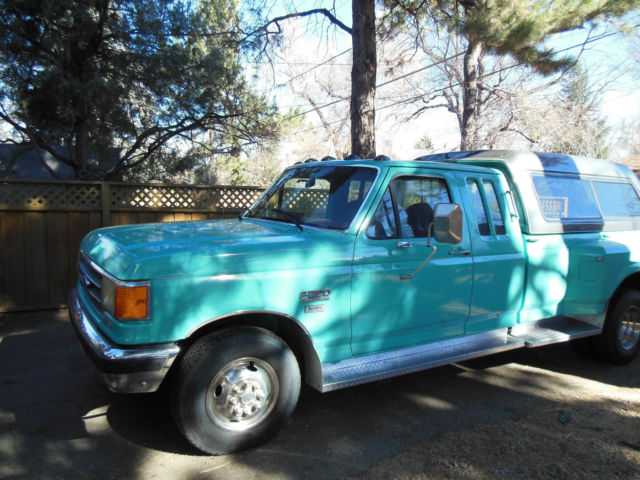
The 1990 Ford F350 was engineered for the long haul, built on a heavy-duty C-channel frame that defines the “Old Body Style” (OBS) era. Unlike modern trucks that prioritize ride comfort, this F350 was designed as a dedicated tool for farmers, contractors, and long-distance towers. Its capability is rooted in its Gross Vehicle Weight Rating (GVWR), which typically ranges from 9,000 to 11,000 pounds depending on the specific configuration and whether it features a dually rear axle.
Heavy-Duty Foundations and Axles
The backbone of this truck is its suspension and axle setup. Most 1990 F350s come equipped with the legendary Sterling 10.25-inch rear axle. This full-floating design is incredibly robust, meaning the axle shafts don’t carry the weight of the vehicle—they only transmit torque. If you are looking at a 4WD model, you will likely find a Dana 60 solid front axle, which is highly coveted by off-road enthusiasts for its strength compared to the independent front suspension found on lighter models.
Transmission Options: Manual vs. Automatic
Choosing the right transmission is vital for your driving experience. In 1990, Ford offered two primary choices for the 7.3 IDI:
- ZF5 5-Speed Manual: Widely considered the “gold standard” for these trucks. It features a granny gear for starting heavy loads and an overdrive gear for highway cruising. It is remarkably durable and simple to maintain.
- E4OD 4-Speed Automatic: This was Ford’s first electronically controlled automatic. While it offers smooth shifting, it is more sensitive to heat and electrical issues. If you choose an automatic, ensuring it has an auxiliary transmission cooler is a must for towing.
Market Value and Buying Tips: What to Inspect Before Purchasing
The market for 1990 Ford F350s has shifted from “cheap work truck” to “collectible classic.” While you can still find deals, well-maintained 4×4 models with low mileage are fetching premium prices. Because these trucks are over 30 years old, your inspection process must be rigorous to avoid a “money pit” scenario.
Engine Health and the “Blow-By” Test
The 7.3 IDI is a million-mile engine if cared for, but it has one specific enemy: cavitation. This occurs when air bubbles in the coolant erode the cylinder walls. Always ask the seller if they have used Supplemental Coolant Additives (SCAs). Additionally, perform a quick “blow-by” check. With the engine running at operating temperature, flip the oil fill cap upside down over the hole. If it dances around but stays put, the engine is healthy; if it gets blown off by pressure, the piston rings may be worn.
Critical Inspection Points
Beyond the engine, the chassis and body require a close look to ensure the truck is worth your investment:
- Frame and Body Rust: Check the cab corners, wheel arches, and the radiator support bracket. Surface rust on the frame is normal, but deep scaling or holes are deal-breakers.
- Cold Start Performance: Ask the seller not to warm up the truck before you arrive. A healthy 7.3 IDI should start relatively quickly with functioning glow plugs, even in cold weather. Excessive white smoke upon startup can indicate injector or timing issues.
- Dual Tank Functionality: These trucks feature two fuel tanks. Ensure the selector switch on the dash actually works and the truck draws fuel from both tanks without stalling.
- Maintenance Records: Look for evidence of recent fuel return line replacements, as the O-rings on these often dry out and cause starting issues.
Conclusion
The 1990 Ford F350 7.3 Diesel remains a standout choice for those who value mechanical simplicity and classic American styling. While it lacks the lightning-fast acceleration of modern common-rail diesels, it makes up for it with a bulletproof reputation and a chassis built to work for decades. By understanding the nuances of the 7.3 IDI engine and the importance of a solid transmission, you can find a truck that serves as both a reliable workhorse and a piece of automotive history.
If you are ready to pull the trigger, your next steps should be to verify the maintenance history of any potential purchase and test the cooling system for proper additive levels. Don’t be afraid to walk away from a truck with significant rust, as clean OBS Fords are getting harder to find. Start your search on enthusiast forums and local listings today—your dream diesel rig is out there!
❓ Frequently Asked Questions
What exactly is cavitation in the 7.3 IDI and how do I prevent it?
Cavitation occurs when tiny air bubbles form and implode against the cylinder walls, eventually eroding holes into the coolant jacket. It is prevented by using Supplemental Coolant Additives (SCA) like DCA-4 to maintain a protective lining on the metal surfaces.
Why does my 1990 F350 struggle to start when it is cold?
This is usually caused by a faulty glow plug controller or burnt-out glow plugs; it is critical to use Motorcraft/Beru plugs to avoid them swelling and getting stuck. Air entering the fuel return lines while sitting can also cause hard starts.
How does the 1990 7.3 IDI compare to the later 7.3 Powerstroke?
The IDI is fully mechanical and easier to repair with basic tools, but lacks the turbo-driven power of the Powerstroke. The Powerstroke, introduced in 1994.5, is electronically controlled and offers significantly higher towing performance.
What should I look for when test-driving a high-mileage 1990 F350?
Check for ‘blow-by’ by resting the oil cap on the filler neck while idling; if it’s blown off by pressure, the rings are worn. Also, ensure the E4OD automatic shifts smoothly, as early versions were prone to overheating and failure.
What is the towing capacity of a 1990 Ford F350 7.3 diesel?
Depending on the rear axle ratio and truck configuration, the towing capacity generally ranges from 8,000 to 10,000 pounds. It is a capable hauler, though it will be much slower on steep grades than modern diesel engines.
Are replacement parts still easy to find for this 30-year-old truck?
Yes, because the 7.3 IDI engine was used in many school buses and medium-duty trucks, mechanical parts remain widely available and relatively affordable. Body and interior parts are also plentiful due to the high production volume of the Ford OBS (Old Body Style) trucks.